The ₹5,000 Crore Battery Swap: How Sun Mobility Built a 600‑Station Network, Changed the Way India Charges Its EVs—and Became a Unicorn While Nobody Was Looking
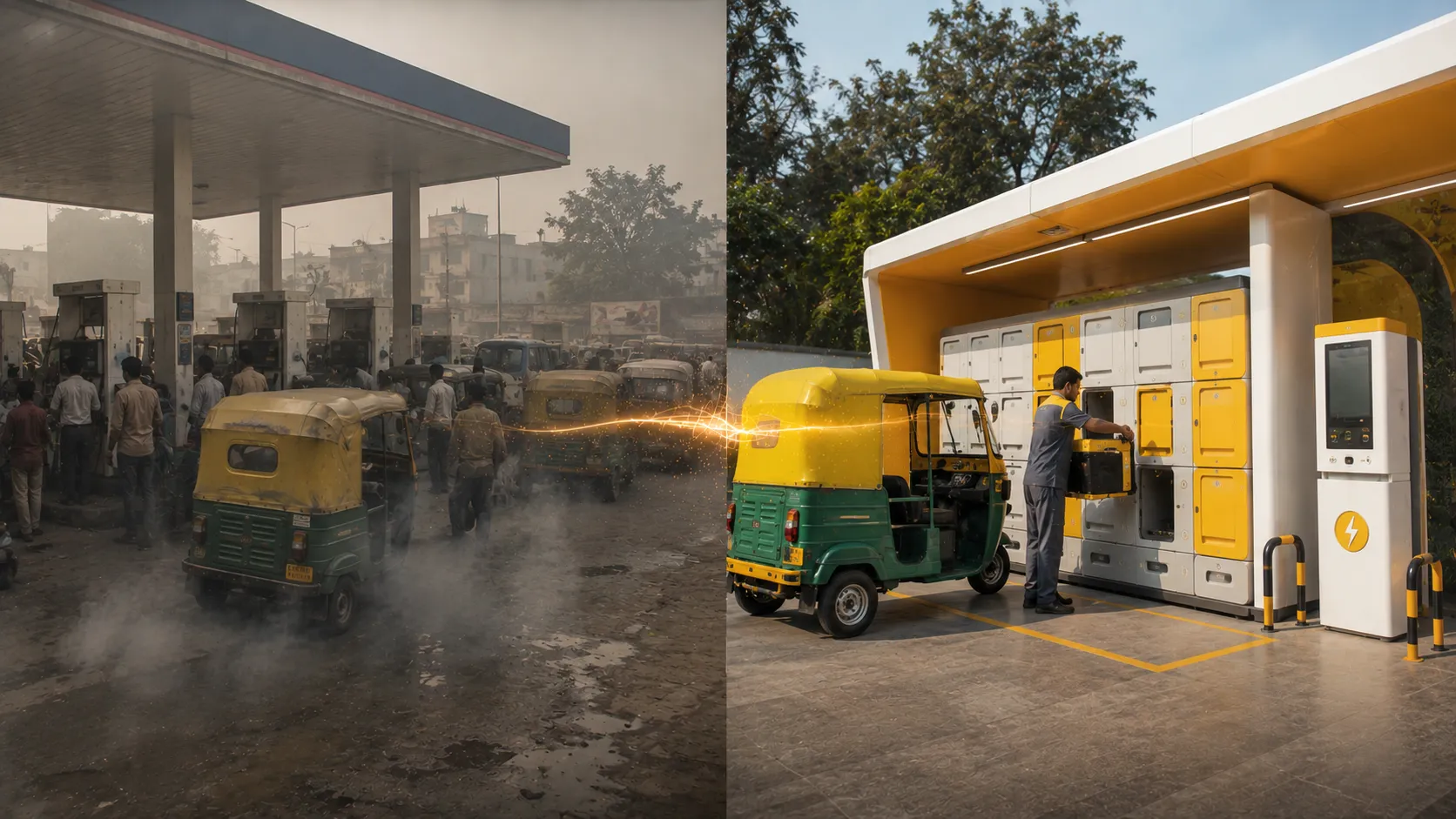
In the autumn of 2022, a tiny electric three‑wheeler pulled into a brightly coloured station on the outskirts of Bengaluru, its battery pack nearly depleted after a morning of ferrying passengers. The driver, who had been operating an electric auto‑rickshaw for approximately six months, did not plug the vehicle into a charger and wait. He removed the drained battery, lifted a fully charged replacement from a locker, slid it into the vehicle, and was back on the road in under two minutes. The station was operated by Sun Mobility, a Bengaluru‑based startup that had been founded five years earlier by Chetan Maini—the man who had built India's first electric car, the Reva—and Uday Khemka, a vice‑chairman of the SUN Group. The company's proposition was simple: electric‑vehicle batteries should be swapped, not charged. The swap should take less time than filling a tank of petrol. And the battery should be owned by the company, not by the driver, reducing the upfront cost of the vehicle and eliminating the single largest barrier to EV adoption in India.