
Trending
Future of Work Shaped by AI and AutomationQuantum Computing Breakthroughs Bring Commercial Use CloserExplaining The 15-Minute Saree: Quick Commerce's Unlikely Fashion HeroGreen Hydrogen Gold Rush: How Reliance and ReNew Are Betting $30 Billion on India's Next Energy ExportThe Fastest $100M in SaaS HistorySilicon Sovereignty: How India's First Chip Fab Is Rewriting Global Supply Chains (And Breaking Taiwan's Monopoly)Future of Work Shaped by AI and AutomationQuantum Computing Breakthroughs Bring Commercial Use CloserExplaining The 15-Minute Saree: Quick Commerce's Unlikely Fashion HeroGreen Hydrogen Gold Rush: How Reliance and ReNew Are Betting $30 Billion on India's Next Energy ExportThe Fastest $100M in SaaS HistorySilicon Sovereignty: How India's First Chip Fab Is Rewriting Global Supply Chains (And Breaking Taiwan's Monopoly)
The Hidden Gap That Could Break Moore's Law—And the Global Race to Close It
new

The Hidden Gap That Could Break Moore's Law—And the Global Race to Close It

Future Tech

The Hidden Gap That Could Break Moore's Law—And the Global Race to Close It

For half a century, the semiconductor industry has been governed by a single, relentless principle: make the transistor smaller, and everything gets better. Smaller transistors switch faster, consume less power, and pack more densely onto a chip. Moore's Law, the observation that transistor density doubles roughly every two years, has been the drumbeat of progress, and the industry has marched to it with extraordinary discipline.

Revathy Pandian

Author

The Chronological Feed

Sorted by: Latest
The Molten Salt Alchemy: How a 160x Conductivity Breakthrough Just Unleashed the Next Generation of Ultra-Thin Materials
Future Tech

The Molten Salt Alchemy: How a 160x Conductivity Breakthrough Just Unleashed the Next Generation of Ultra-Thin Materials

In 2011, a team of materials scientists at Drexel University discovered a new family of ultra-thin materials that seemed almost too good to be true. Called MXenes, these atomically thin layers of transition metal carbides and nitrides promised extraordinary electrical conductivity, mechanical strength, and chemical versatility. They were touted as candidates for next-generation batteries, supercapacitors, electromagnetic shields, water purification membranes, and more. Papers proliferated. Patents were filed. Excitement built.

16 May 2026
The $600 Billion Machine: Inside the AI Infrastructure Boom That's Reshaping the Global Economy—and Flirting With a Bust
Future Tech

The $600 Billion Machine: Inside the AI Infrastructure Boom That's Reshaping the Global Economy—and Flirting With a Bust

Some numbers are too large to feel. The human mind can grasp a hundred, a thousand, perhaps a million with effort. Beyond that, the figures blur into abstraction. So when the five largest technology companies on Earth—Amazon, Microsoft, Alphabet, Meta, and Oracle—announce that their combined capital expenditures will exceed $600 billion in 2026, a 36% increase over 2025, the number floats past comprehension. It is roughly the GDP of Sweden. It is more than the world spends on primary education. It is, by any historical measure, the largest concentrated infrastructure buildout in the history of private industry

16 May 2026
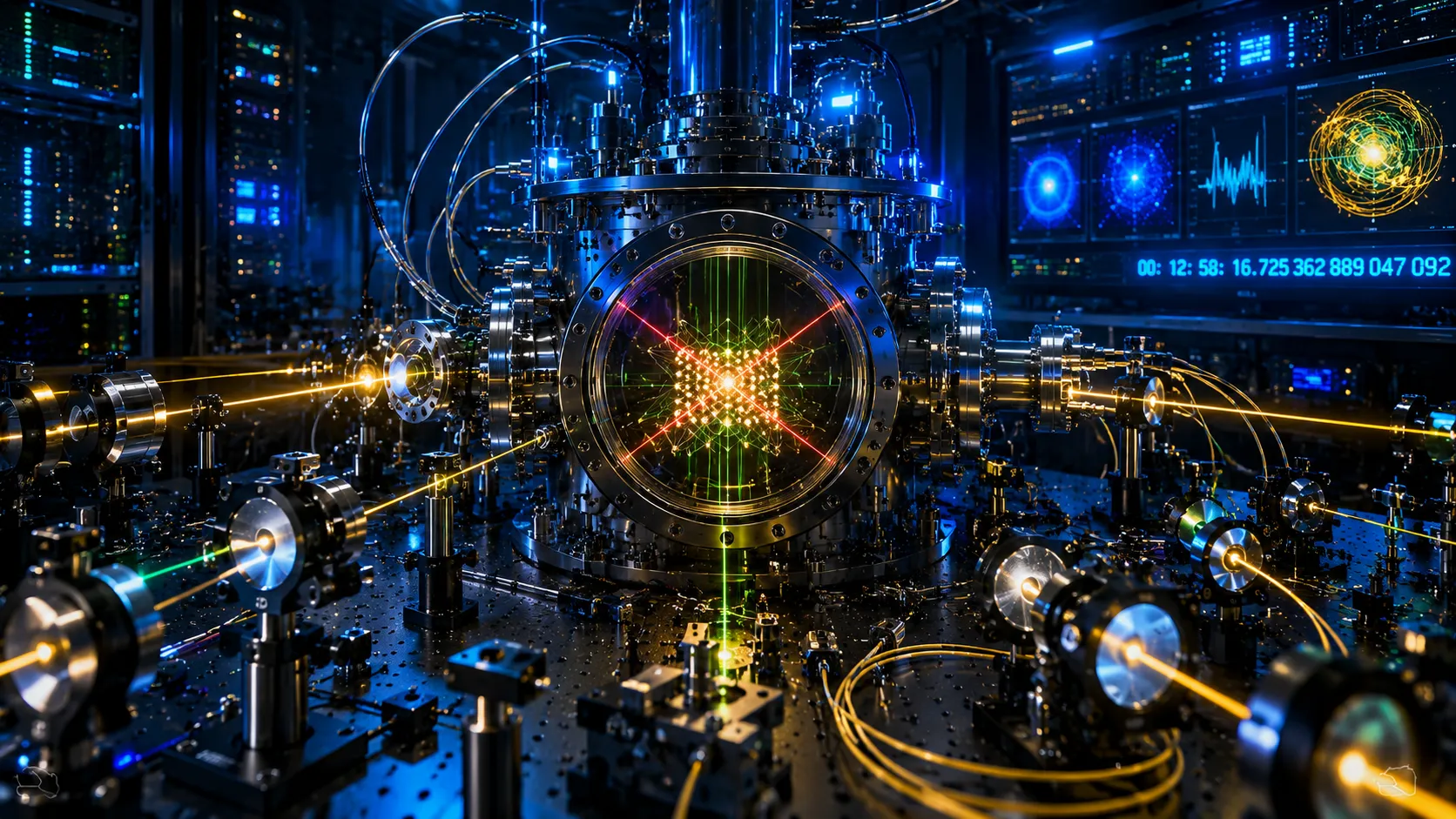
The Photon, the Quantum Dot, and the 270-Meter Miracle That Just Brought the Quantum Internet One Giant Leap Closer
Future Tech

The Photon, the Quantum Dot, and the 270-Meter Miracle That Just Brought the Quantum Internet One Giant Leap Closer

Two university buildings in Rome, separated by 270 meters of open air, a busy street, and the accumulated atmospheric chaos of an ancient city. In one building, a quantum dot—a semiconductor particle small enough to be governed by the strange laws of quantum mechanics—emitted a single photon. In the other building, a second quantum dot, physically different from the first, waited. What happened next, measured by instruments sensitive enough to detect the polarization state of a single particle of light, was something no one had ever done before: the quantum state of the first photon was teleported to the second, across the open-air gap, without either photon ever physically crossing the space between them.

16 May 2026
Future Tech

The Metal That Could Not Be Explained: How a Hong Kong Lab Built a Super Steel to Unlock the Hydrogen Economy

For more than a century, stainless steel has protected itself the same way. Chromium inside the alloy reacts with oxygen to form an invisible, corrosion-resistant film—a passive shield no thicker than a few atoms, yet strong enough to guard bridges, ships, and surgical tools from the relentless assault of rust. It is one of the quiet miracles of materials science, a trick of chemistry so reliable that humanity has come to take it entirely for granted.

16 May 2026
The 138-Vulnerability Wake-Up Call: How a Single Patch Tuesday Exposed the AI Security Arms Race
Future Tech

The 138-Vulnerability Wake-Up Call: How a Single Patch Tuesday Exposed the AI Security Arms Race

On the second Tuesday of May, at precisely 10:00 a.m. Pacific Time, Microsoft released its monthly security update. The cadence was familiar. The scale was not. One hundred and thirty-eight vulnerabilities. Two zero-days actively exploited in the wild before patches were available. The affected systems spanned the entire Microsoft ecosystem: Windows, Office, Edge, Azure, .NET, Visual Studio. The release was not the largest in the company's history, but it was the most symbolically charged. Because buried in the technical details of CVE-2026-1142 and CVE-2026-1143—the two zero-days—was evidence of something new. The attacks had been generated, at least in part, by AI.

16 May 2026
Future Tech

The Great AI Paradox of 2026: Private Startups Are Worth 20x Revenue, Hyperscalers Are Spending $725 Billion, and Every Gadget Is Turning Into a Chatbot

Somewhere between a Googlebook launch event on Tuesday, an Amazon Alexa announcement on Wednesday, and a Microsoft Edge overhaul on Thursday, the technology industry crossed an invisible threshold. It happened quietly, buried in product blogs and earnings calls, but its implications will reverberate for the rest of the decade. AI is no longer something you use. It is something you inhabit. And the price the world is paying—in venture capital, in cloud infrastructure, and in the wholesale redesign of everyday digital life—is unlike anything the technology industry has ever seen.

16 May 2026
Future of Work Shaped by AI and Automation
Future Tech

Future of Work Shaped by AI and Automation

New York: The rapid adoption of artificial intelligence (AI) and automation is fundamentally transforming the global workforce, compelling organizations to rethink traditional talent strategies, skill development frameworks, and the very nature of work itself.

4 mins read29 Apr 2026