The Silent Network: How Underground Mesh Radio Is Becoming America's Backup Internet
When the fiber goes down and the cell towers go dark, a quiet community of amateur radio operators, preppers, and privacy activists is building something that works when nothing else does.
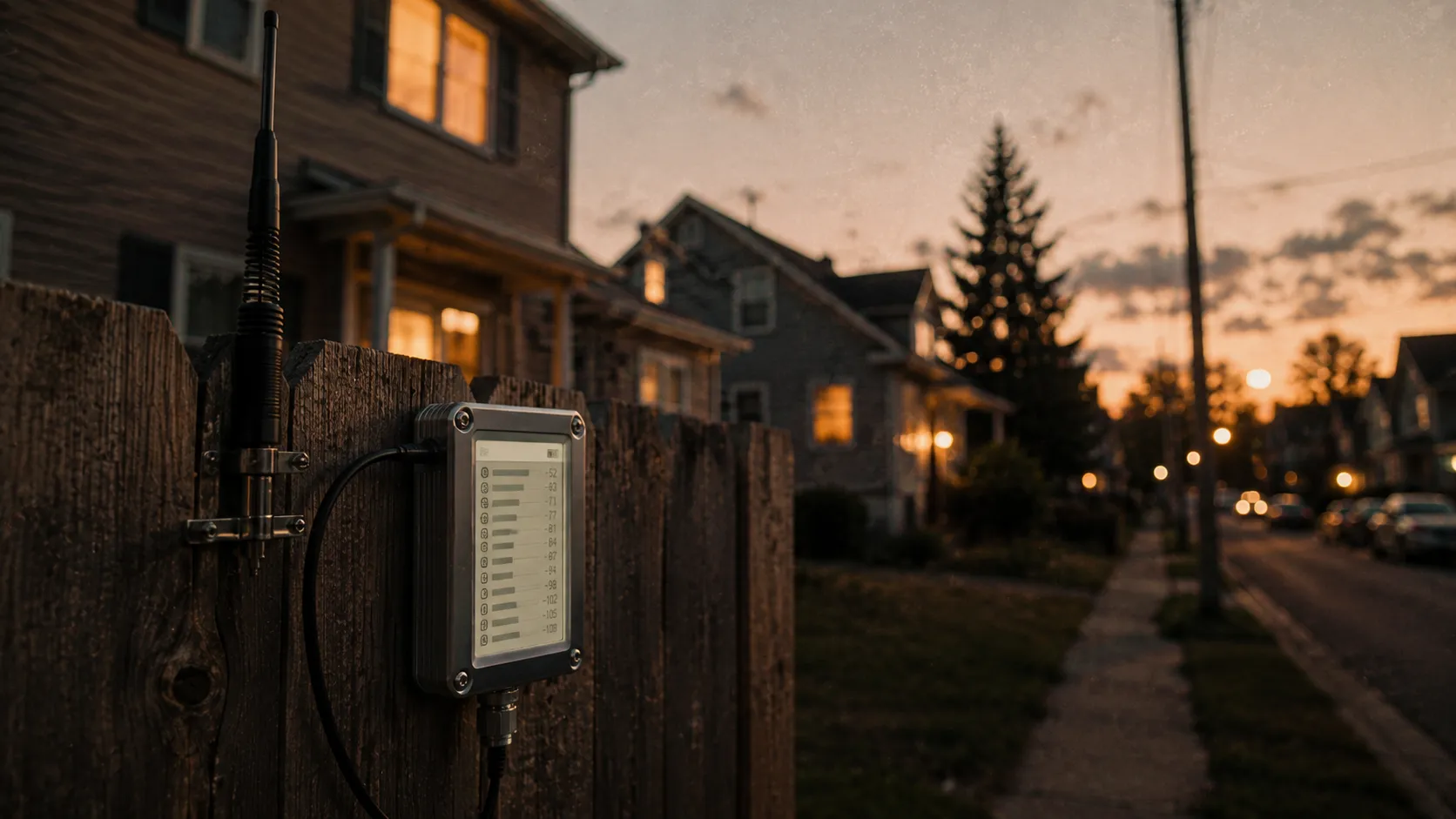
PORTLAND, Ore. — May 26, 2026 — The first thing you notice is the antenna. It is not the sleek, white plastic of a Starlink dish or the black mast of a cellular repeater. It is a collapsible, military‑surplus whip antenna, clamped to a balcony railing with a hardware‑store bracket, connected by a thick coax cable to a small metal box no larger than a paperback novel. The box contains a LoRa radio chip—a low‑power, long‑range transceiver originally designed for agricultural sensors and smart meters—running custom firmware. The screen shows a list of nodes: KF7XYZ (range 4.2 miles), WA6ABC (range 7.8 miles), N8DEF (range 11.3 miles). No internet. No cellular. No central server. Just a mesh of neighbors, passing text messages and small files from one antenna to another, hop by hop, until they reach their destination.
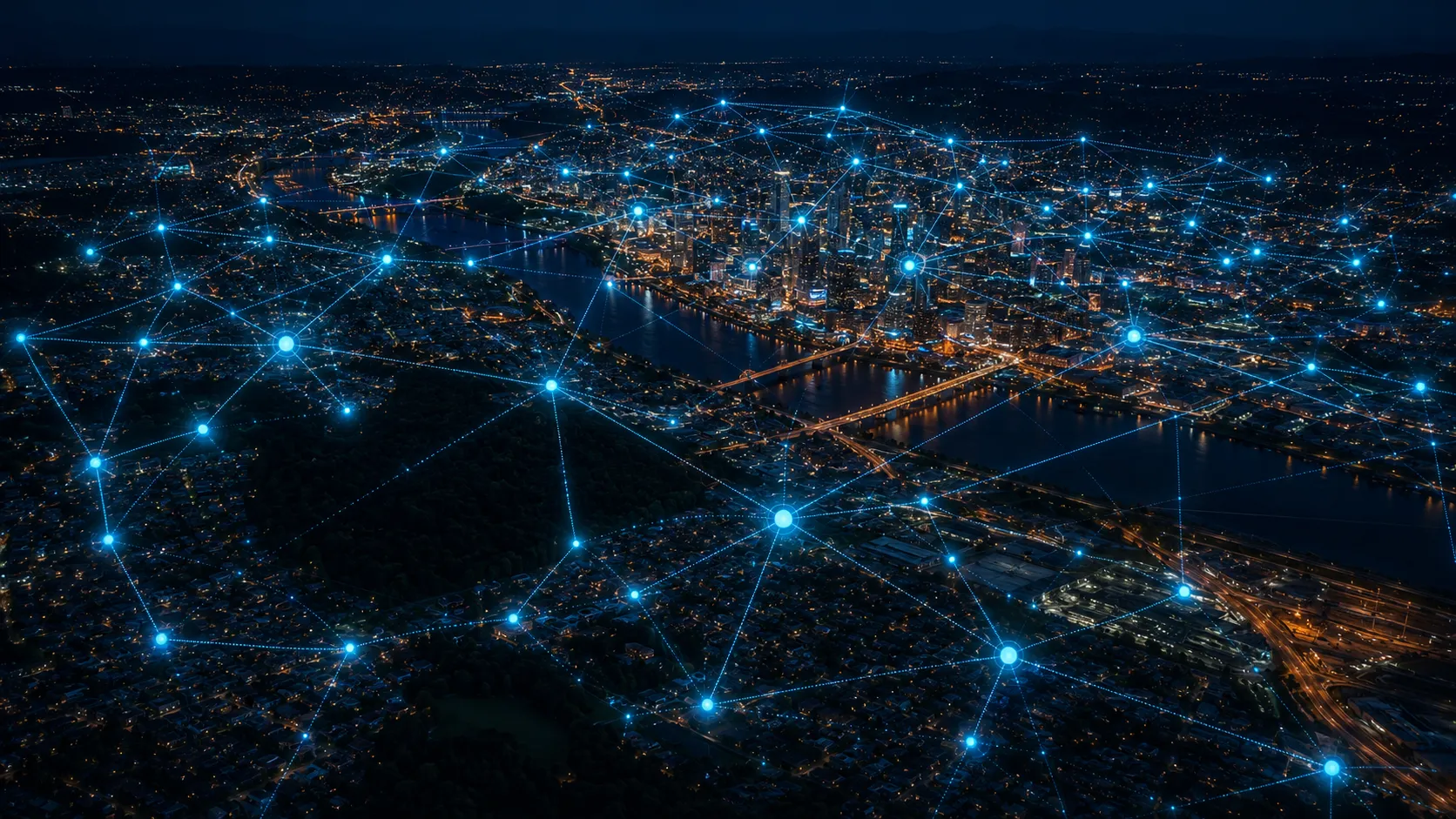
Welcome to the world of mesh radio—a quiet, decentralized counter‑culture that is growing faster today than at any time since the dawn of the commercial internet. Across the United States, from the hurricane‑prone coasts of Florida to the earthquake‑ready hills of California, from the off‑grid homesteads of Idaho to the privacy‑conscious co‑ops of Brooklyn, tens of thousands of Americans are building their own networks. They are using open‑source software, unlicensed spectrum, and donated hardware to create what they call the "People's Internet"—a network that has no central point of failure, no single company that can turn it off, and no need for fiber, cell towers, or satellite links to function.
"It's not about hating the internet," said Marcus Thorne, a 42‑year‑old software engineer and the founder of Portland Mesh Collective. "It's about having a Plan B. Every time a hurricane hits, or a wildfire burns through a fiber backbone, or a protest shuts down a city, we are reminded that our communications infrastructure is fragile. It's a single point of failure disguised as a network. Mesh radio is the opposite. Every node is both a user and a relay. The more people join, the stronger the network becomes."
What Exactly Is Mesh Radio?
The term "mesh radio" covers a family of technologies, but the core idea is simple. Instead of connecting directly to a centralized tower or router (the way your phone connects to a cell tower or your laptop to a Wi‑Fi access point), each device in a mesh network connects to every other device within range. When you send a message, it hops from one node to the next until it finds the shortest path to its destination. If a node goes offline—because a tree falls on it, or the power goes out, or the police seize it—the network simply routes around the gap.
The most popular platform today is Meshtastic, an open‑source project that runs on inexpensive LoRa radio modules (as cheap as $25 each). LoRa is not fast—you cannot stream video or browse the web. It is designed for small packets: text messages, GPS coordinates, weather data, emergency alerts. A single message might take a few seconds to hop across a city, but it will arrive without needing any infrastructure beyond the radios themselves. Range depends on terrain; a node on a hill might reach 20 miles, while a node in a basement might only reach a mile. But because the network is a mesh, a chain of nodes can extend coverage across an entire metropolitan area.
"We joke that it's like Twitter for the apocalypse," said Thorne, pulling up the Meshtastic app on his phone. The app showed a list of channels: #weather, #emergency, #community‑info, #offtopic. Messages scrolled by: "Tree down on SE 12th, avoid area." "Anyone have a generator to loan? St. Johns area." "Free firewood, curb at 45th and Division." None of these messages had touched the commercial internet. They had traveled from radio to radio, passing through the antennas of strangers.
The Portland Mesh Collective has grown from 12 nodes in 2023 to over 600 nodes in 2026. During the ice storm of January 2024, when the power was out for a week and cellular networks were overloaded, the mesh network became the only reliable way for many Portlanders to communicate. The city's emergency management office quietly requested a liaison to the collective.
The Three Tribes of the Mesh
The mesh radio movement is not monolithic. It draws from three overlapping subcultures, each with its own priorities and its own vocabulary.
The Preparedness Tribe is the largest. These are people who have lived through disasters—Hurricane Sandy in New York, the Camp Fire in California, the 2021 Texas freeze—and who refuse to be caught without communications again. They stock mesh radios alongside water filters and solar panels. They practice "field deployments," setting up temporary nodes in parks and parking lots to simulate post‑disaster conditions. Their credo: "When the grid goes down, the mesh stays up."
The Privacy Tribe is smaller but more vocal. They view the commercial internet as a surveillance engine, and they see mesh radio as a way to communicate without any third party having access to metadata. Because mesh networks are decentralized and use end‑to‑end encryption, there is no central company that can be subpoenaed, no data retention policy, no advertising profile. "The internet knows where I am, who I talk to, and what I say," said Lena Schwartz, a privacy advocate in Brooklyn who runs a node from her fire escape. "My mesh network knows only that some radio somewhere sent a packet to another radio. That's it."
The Experimenter Tribe is the technical core. These are the amateur radio operators, open‑source developers, and hardware hackers who build the software and design the antennas. They treat the mesh as a living laboratory. They are experimenting with solar‑powered nodes, long‑range directional antennas, and protocols that can carry small files (like maps and PDFs) without clogging the network. Many hold amateur radio licenses, although the LoRa spectrum (915 MHz in the US) is unlicensed and open to anyone.
The boundaries between these tribes are porous. A prepper might become a privacy advocate after reading about data brokers. A tinkerer might become a prepper after a close call with a wildfire. What unites them is a shared belief that communication is too important to leave to corporations and governments.
The Limits of the Mesh
Mesh radio is not a replacement for the internet. It cannot be. The bandwidth is too low—typically less than 50 kilobits per second, shared across all nodes in an area. That is roughly one‑thousandth the speed of a slow home broadband connection. You will not stream Netflix, browse Instagram, or download a software update over the mesh. You will not make a phone call or join a Zoom meeting. The mesh is for what matters: short text messages, location sharing, emergency alerts, and collaborative documents (like a list of open shelters or available medical supplies).
"The biggest mistake people make is thinking of this as a competitor to Starlink or 5G," said Thorne. "It's not. It's a complement. It's the network you use when all the other networks have failed, or when you don't want the other networks to know what you're saying."
There are also technical challenges. Mesh networks become slower as they grow; more nodes mean more hops and more congestion. Urban environments are noisy; every microwave oven, baby monitor, and garage door opener competes for the same spectrum. And because the network is decentralized, there is no one to call when something breaks. If a node misbehaves—sending spam, for example, or dropping packets—the community must self‑police.
The Portland Collective has developed a rudimentary reputation system: nodes that relay packets for others earn "trust credits"; nodes that fail to relay lose trust and are eventually ignored. It works, but it requires active participation. "You can't just buy a radio, turn it on, and forget about it," said Thorne. "The mesh needs you to be a good neighbor. Relay packets. Keep your node powered. Help troubleshoot. It's a community, not a service."
The Future: From Hobby to Critical Infrastructure
The mesh radio movement is at an inflection point. What began as a hobbyist curiosity is now being taken seriously by emergency managers, local governments, and even the military. The US Army has experimented with mesh radio for battlefield communications. FEMA has funded studies on community mesh networks for disaster response. And several states—including California, Florida, and North Carolina—have incorporated mesh radio into their emergency communications plans.
"We used to think of amateur radio as the backup," said Tom Wu, a former FEMA communications coordinator who now advises the Portland Collective. "But amateur radio requires a license, specialized equipment, and training. Mesh radio requires a $25 device and a phone. It scales in ways that traditional ham radio cannot."
The commercial sector has also taken notice. A startup called GoTenna raised millions of dollars for a consumer‑friendly mesh radio product before pivoting to enterprise. A Chinese manufacturer, Heltec, now sells LoRa‑enabled devices with built‑in GPS and OLED screens for under $50. And Amazon lists dozens of Meshtastic‑compatible radios, many with five‑star ratings and hundreds of reviews.
But the growth brings risks. Law enforcement agencies have expressed concern that mesh networks could be used to coordinate illegal activities outside of surveillance. The Portland Collective has a clear policy: the network is for emergency and community communication only; illegal content is reported to the administrators, who will block offending nodes. So far, the policy has worked—the community self‑polices effectively, and local police have been cooperative rather than adversarial.
"There's always a tension between privacy and accountability," said Schwartz, the Brooklyn privacy advocate. "But the mesh isn't anonymous. Every node has a public key. If you do something harmful, the community can identify you and cut you off. It's not the Wild West. It's a small town."
How to Join
For readers who want to experience the mesh themselves, the barrier to entry is low. A starter kit—two LoRa radios (one for you, one for a friend), plus two USB cables—costs about $60 on Amazon. Download the Meshtastic app (iOS, Android, or desktop), flash the firmware, and you are online. In most major cities, you will find other nodes within range. In rural areas, you may need to recruit neighbors or build a high‑altitude node.
"It's like planting a tree," said Thorne. "The best time to join the mesh was five years ago. The second‑best time is today. Every node you add makes the network stronger for everyone."
The mesh radio movement is not about escaping the modern world. It is about preparing for its fragility. It is a bet that the future of communication is not more centralization, but less. It is a reminder that the internet, for all its magic, is a physical thing—fiber in the ground, towers on the hills, servers in climate‑controlled buildings—and that physical things break. When they break, the mesh keeps talking.
The antenna on the balcony in Portland glows faintly in the dusk. A message arrives: "Red Cross shelter opening at Grant High School, 8 PM. Bring blankets." The message hops from node to node, never touching a commercial server. It is not fast. It is not pretty. But it works. And that, for the people building it, is enough.


