The Concrete That Heals Its Own Cracks: How Self‑Repairing Buildings Are Ending the Age of Crumbling Infrastructure
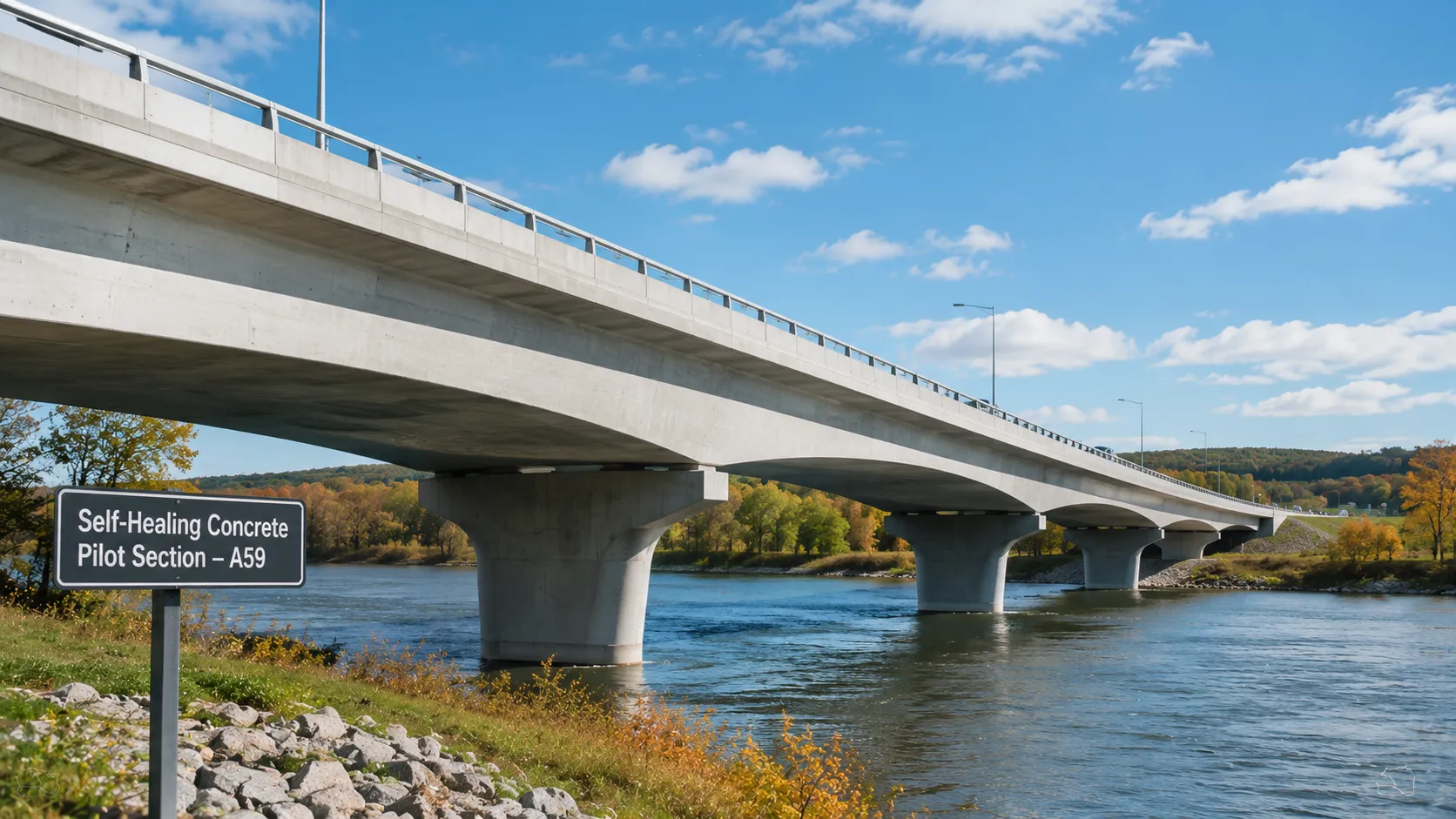
DELFT, Netherlands — May 26, 2026 — The crack appears overnight. It is thin—barely a millimeter wide—the result of a freeze‑thaw cycle that stressed a concrete bridge support beyond its elastic limit. In a conventional structure, that tiny fissure would be the beginning of the end. Water would seep in, freeze again, widen the crack. Chlorides would reach the rebar, triggering rust. The rust would expand, spalling the concrete. Within a decade, the bridge would need expensive repairs or replacement. But this is not a conventional bridge. This is a pilot section of the A59 highway near Delft, and the concrete is alive.
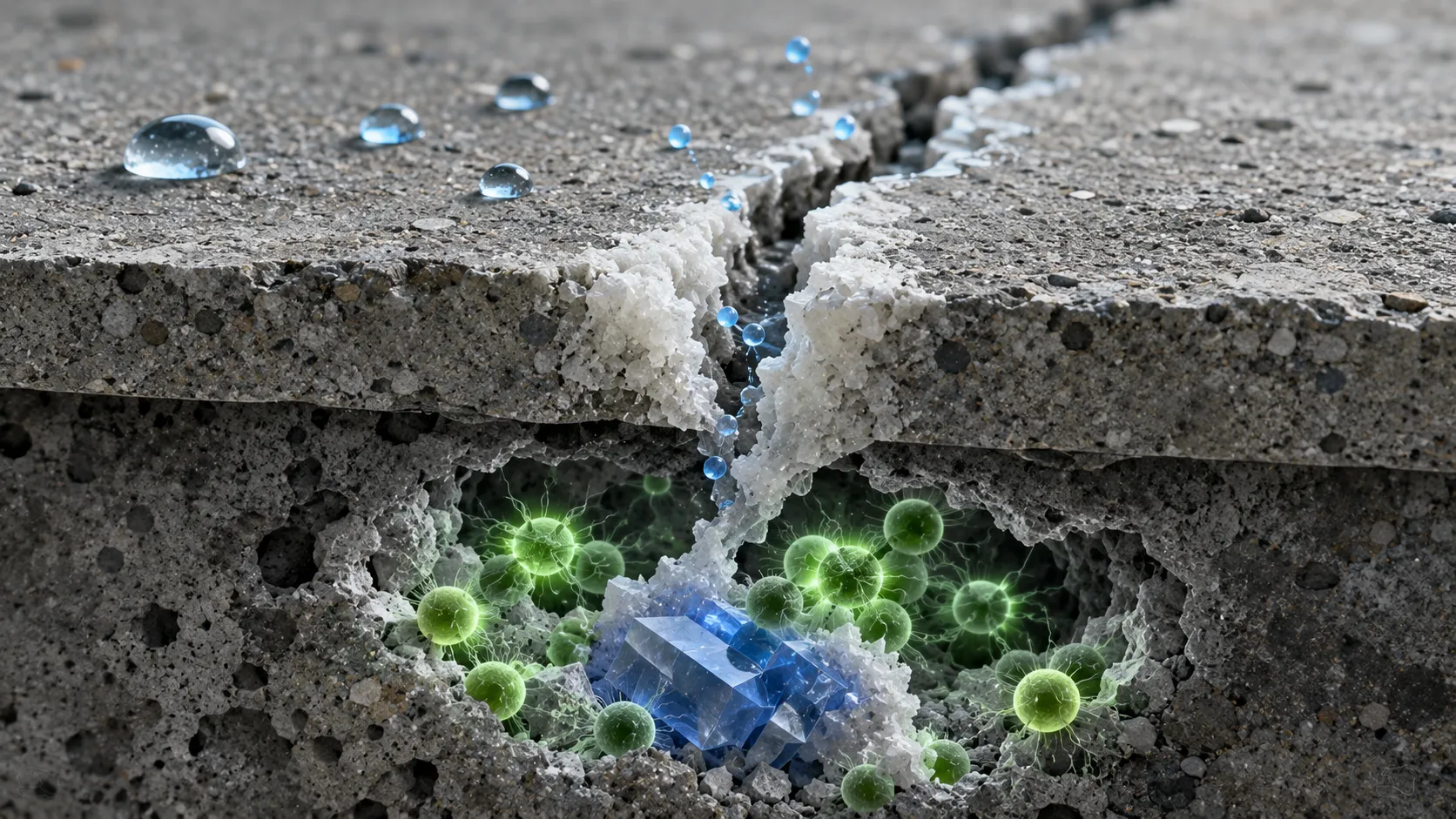
Twenty‑four hours after the crack formed, nothing visible has happened. But beneath the surface, dormant bacterial spores—Bacillus pseudofirmus, a strain originally isolated from a volcanic lake in Italy—have been awakened by the moisture seeping into the fissure. They begin to metabolize, feeding on calcium lactate embedded in the concrete mix. Their metabolic byproduct is calcite, the same mineral that makes up limestone. The calcite crystals grow, bridging the crack from both sides. Within two weeks, the fissure is completely sealed, filled with a material chemically identical to the original concrete. The bridge has healed itself, without human intervention, without traffic disruption, without a single dollar of repair cost.
"Self‑healing concrete is not science fiction," said Dr. Erik Schlangen, a civil engineer at Delft University of Technology and a pioneer in the field. "It is already deployed in dozens of pilot projects across Europe and Asia. The question is no longer whether it works. The question is why we are not using it everywhere."
The Crumbling Crisis
America's infrastructure is failing. The American Society of Civil Engineers gives the nation's infrastructure a grade of C‑minus, and that is an improvement from the D+ of a decade ago. One in three bridges is over 50 years old. Forty‑three percent of public roads are in poor or mediocre condition. The average age of a dam is 57 years, and 15 percent are considered high‑hazard potential. The repair backlog is estimated at nearly $4 trillion.
The culprit is concrete. For all its strength in compression, concrete is brittle. It cracks. And cracks are the enemy of durability. Every crack is an invitation for water, chlorides, sulfates, and carbon dioxide to penetrate to the steel reinforcement. Once the steel rusts, the structure begins a slow, expensive decline. The traditional solution is inspection, patching, and eventual replacement—a cycle that consumes billions of dollars and endless traffic jams.
Self‑healing concrete breaks that cycle. If a crack can seal itself when it is still small—when it is less than 0.3 millimeters wide—then water never reaches the rebar. The structure lasts decades longer. Maintenance costs drop by as much as 80 percent. And the carbon footprint of concrete (which alone accounts for 8 percent of global CO₂ emissions) is dramatically reduced, because fewer repairs mean fewer new batches of cement.
Three Ways to Make Concrete Live
Researchers have developed three distinct approaches to self‑healing concrete, each with its own strengths and trade‑offs.
Bacterial concrete is the most biomimetic. The Delft approach, commercialized as Basilisk (named for the mythical reptile that kills with a glance), mixes concrete with bacterial spores and their food source—calcium lactate. The spores remain dormant for decades, protected by the concrete's high alkalinity. When a crack admits water, the spores germinate, metabolize the lactate, and precipitate calcite. The process is self‑limiting; once the crack is sealed, water stops flowing, and the bacteria return to dormancy. Basilisk has been used in a parking garage in the Netherlands, a tunnel in Germany, and a quay wall in the Port of Rotterdam. In each case, cracks up to 0.8 millimeters sealed within 28 days.
Microcapsule concrete takes a different tack. Developed at the University of Rhode Island and now commercialized by a startup called CrackStopper, this approach embeds tiny polymer capsules (50 to 100 micrometers in diameter) filled with a healing agent—typically a sodium silicate solution or a polymer precursor. When a crack propagates through the concrete, it ruptures the capsules in its path, releasing the healing agent. The agent flows into the crack, reacts with the calcium hydroxide in the concrete, and forms a calcium silicate hydrate gel that fills the void. The gel hardens within 24 hours. Microcapsule concrete has been used in bridge decks in Rhode Island and military runways in Florida.
Shape‑memory polymer concrete is the most high‑tech. Developed at the University of Pittsburgh, this approach uses polymer fibers that have been pre‑strained and then fixed. When a crack opens, the fibers are heated (either by a small electric current or by embedded heating elements), causing them to contract back to their original length. That contraction pulls the crack closed. The shape‑memory effect can close cracks up to 1.5 millimeters wide—far larger than bacterial or microcapsule systems can handle. The technology is more expensive and requires an external energy source, but it is ideal for high‑value structures like nuclear containment buildings and offshore oil platforms.
"We don't see these as competitors," said Dr. Schlangen. "They are tools in a toolbox. For most civilian infrastructure, bacterial concrete is the sweet spot—low cost, no energy input, proven durability. For high‑risk or high‑load structures, microcapsules or shape‑memory polymers may be worth the premium."
The Cost Barrier Is Falling
The biggest obstacle to self‑healing concrete has always been cost. Bacterial concrete adds roughly 15 to 20 percent to the price of a standard cubic meter of concrete. For a bridge project that already costs $50 million, an extra $10 million is a hard sell—especially when the benefits (reduced maintenance, extended lifespan) accrue over decades, while the upfront cost hits the budget immediately.
But the math is changing. Several factors are driving costs down. First, bacterial production has scaled up; the spores can now be grown in industrial fermenters at a fraction of the cost of a decade ago. Second, concrete producers have learned to optimize the mix; less bacterial additive is needed than originally thought. Third, and most important, owners are beginning to calculate life‑cycle costs rather than just initial construction costs.
"The Texas Department of Transportation did a pilot study comparing a conventional bridge deck with a bacterial concrete deck," said Dr. Maria Flores, an infrastructure economist at the University of Texas. "They assumed a 75‑year lifespan. The bacterial concrete had a higher upfront cost but much lower maintenance costs—no sealing of cracks every five years, no patching of spalls. Over 75 years, the bacterial concrete was 25 percent cheaper. That is a compelling business case."
The Federal Highway Administration has taken notice. In 2025, it launched a $50 million demonstration program to deploy self‑healing concrete in at least 20 highway projects across 10 states. The program includes rigorous monitoring—sensors embedded in the concrete will measure crack sealing rates and structural health—with the goal of producing a national specification by 2028.
Beyond Bridges: Foundations, Dams, and Nuclear Waste
The potential applications extend far beyond transportation. Self‑healing concrete is ideal for any structure where water infiltration is a problem—which is almost every concrete structure.
Dams are a particularly urgent case. The average US dam is nearly 60 years old, and many are showing signs of seepage. Repairing a dam typically requires draining the reservoir—an expensive, disruptive, and ecologically damaging process. Self‑healing concrete could be used in new dam construction or even injected into existing cracks in a liquid slurry that hardens in place.
Nuclear waste storage is another frontier. Concrete is used to encase low‑level radioactive waste. Over centuries, cracks could allow groundwater to reach the waste, mobilizing radioactive isotopes. Self‑healing concrete, with its ability to seal cracks indefinitely, could provide a much more reliable barrier. The Department of Energy is funding research into bacterial concrete formulations that remain viable for centuries, not decades.
Foundations for offshore wind turbines are a third application. These massive concrete structures are subjected to constant wave action, saltwater corrosion, and cyclic loading. Cracks are inevitable. Repair is nearly impossible underwater. A self‑healing foundation could extend turbine life from 25 to 50 years, dramatically improving the economics of offshore wind.
"We are talking about changing the fundamental relationship between humans and concrete. For 2,000 years, we have built with stone that crumbles. Now we are building with stone that lives." — Dr. Maria Flores
The Living Future
The philosophers of the Anthropocene have noted that concrete is the signature rock of our era—a human‑made stone that will define the geological record for millions of years. Self‑healing concrete adds a new chapter to that story. It is a rock that breathes, that responds to damage, that repairs itself. It blurs the line between the built and the biological.
"I think we will look back on conventional concrete as a primitive material," said Dr. Schlangen. "We poured it, it cracked, we patched it. That is a linear, extractive, wasteful relationship. Self‑healing concrete is circular. It maintains itself. It lasts longer. It uses less cement over the lifecycle. It is simply smarter."
The crack on the A59 highway in the Netherlands is now invisible. The bacteria that sealed it have returned to dormancy, waiting for the next breach. They may wait years or decades. They are patient. They are, in a sense, immortal—their spores can survive for centuries. The bridge above them will eventually wear out, as all things do. But it will wear out much, much later, and at much lower cost, because of the tiny living miners working silently in its pores.
The Romans built concrete that has lasted 2,000 years. Their secret was volcanic ash that reacted with seawater to form rare minerals that strengthened over time. They did not understand the chemistry; they stumbled upon it. We have the advantage of knowledge and genetic engineering. We can build concrete that lasts not 2,000 years, but 10,000. The bacteria are ready. The only question is whether we are ready to pay a little more now to save a fortune later—and to leave a living infrastructure for our children.


