The ₹5,000 Crore Battery Swap: How Sun Mobility Built a 600‑Station Network, Changed the Way India Charges Its EVs—and Became a Unicorn While Nobody Was Looking
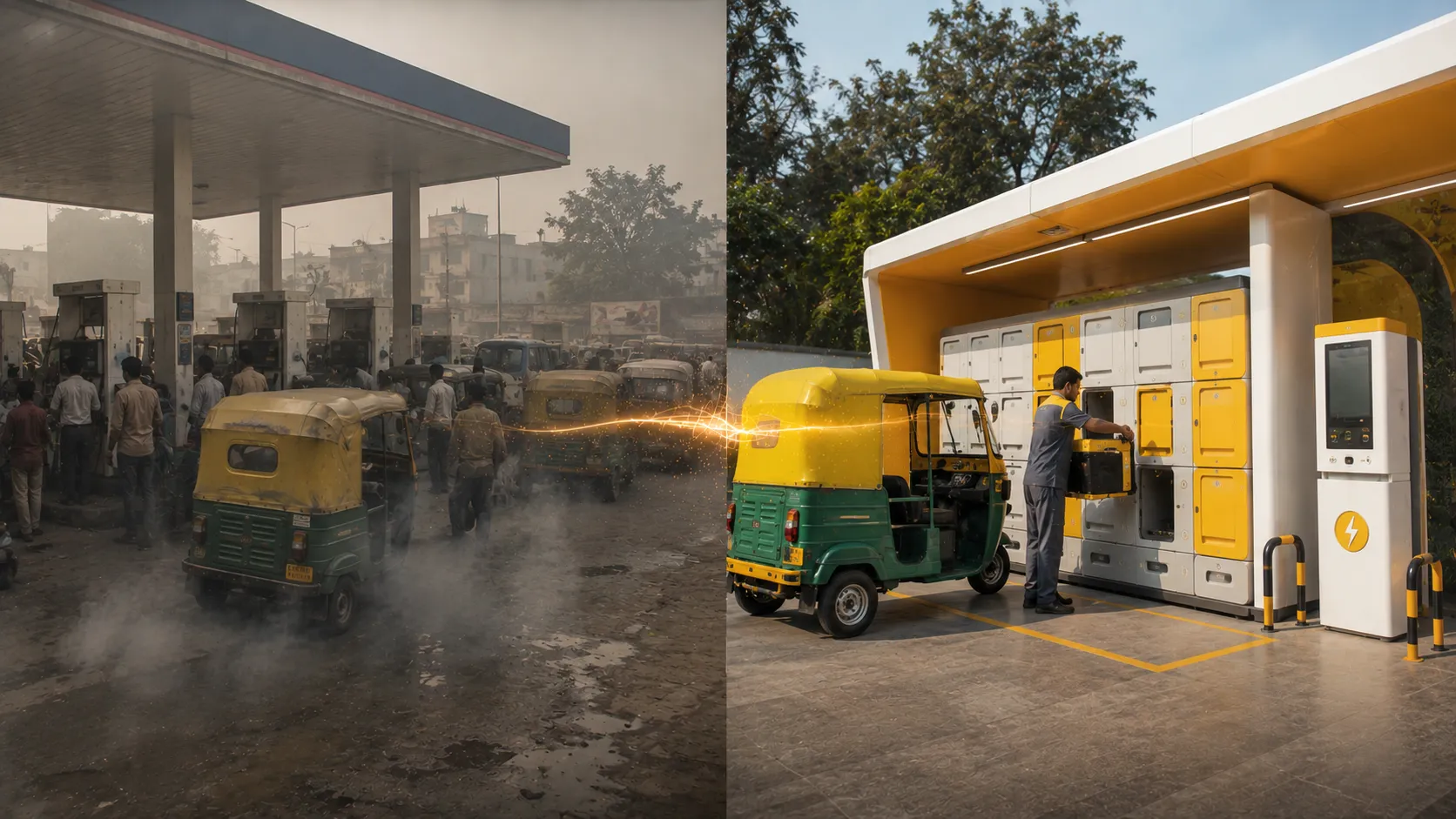
BENGALURU — May 30, 2026 — In the autumn of 2022, a tiny electric three‑wheeler pulled into a brightly coloured station on the outskirts of Bengaluru, its battery pack nearly depleted after a morning of ferrying passengers. The driver, who had been operating an electric auto‑rickshaw for approximately six months, did not plug the vehicle into a charger and wait. He removed the drained battery, lifted a fully charged replacement from a locker, slid it into the vehicle, and was back on the road in under two minutes. The station was operated by Sun Mobility, a Bengaluru‑based startup that had been founded five years earlier by Chetan Maini—the man who had built India's first electric car, the Reva—and Uday Khemka, a vice‑chairman of the SUN Group. The company's proposition was simple: electric‑vehicle batteries should be swapped, not charged. The swap should take less time than filling a tank of petrol. And the battery should be owned by the company, not by the driver, reducing the upfront cost of the vehicle and eliminating the single largest barrier to EV adoption in India.
Four years later, Sun Mobility is a unicorn, valued at approximately $1.2 billion (₹10,000 crore) after a $150 million Series D funding round led by the International Finance Corporation and a consortium of climate‑focused investors. It operates over 600 battery‑swapping stations across 18 Indian cities, supports a network of more than 80,000 electric two‑ and three‑wheelers, and is processing over 200,000 swaps per day—a figure that is growing at a compound annual rate of approximately 70 percent. It has partnerships with every major Indian electric‑vehicle manufacturer, including Bajaj Auto, Piaggio, and Mahindra, and it is expanding into the four‑wheeler and light‑commercial‑vehicle markets. It has signed memoranda of understanding with state governments in Karnataka, Tamil Nadu, Maharashtra, and Delhi to build swapping infrastructure at scale. It has also launched a franchise‑based micro‑entrepreneurship model, allowing individuals to own and operate single‑bay swapping stations in Tier‑2 and Tier‑3 cities. And it has done all of this while most of the global conversation about EV charging has been focused on the plug‑in, fast‑charging model that Tesla and its competitors have been promoting for a decade. The battery‑swapping startup that was once dismissed as a niche solution for a niche market has become the most significant EV‑infrastructure company in India—and the model it has built is being studied by governments and automakers around the world.
The Swap vs. Charge Debate
The most fundamental strategic decision that Sun Mobility made was to bet on battery swapping rather than plug‑in charging. The decision was controversial when the company was founded in 2017, and it remains controversial today. The global EV industry's dominant model, promoted by Tesla and adopted by virtually every major automaker, is the plug‑in charger—a fixed installation that delivers electricity to a vehicle's permanently installed battery, typically over a period of several hours. The model works brilliantly for the private‑vehicle owner who has a garage, who drives predictable distances, and who can charge overnight while the vehicle is not in use. It works less well for the commercial‑vehicle operator who drives unpredictable distances, who needs the vehicle to be on the road earning money for as many hours as possible, and who cannot afford to wait for a battery to charge. The Indian electric‑vehicle market—which is dominated by two‑ and three‑wheelers, which are used primarily for commercial purposes, and which are operated by drivers who earn daily wages—is structurally unsuited to the plug‑in model. The swap is, for this market, not merely a convenience. It is an economic necessity.
The economics of the swap are compelling. The driver who swaps a battery pays a per‑swap fee that is comparable to the cost of the electricity that a plug‑in charge would consume—approximately ₹30 to ₹50 for a two‑wheeler, ₹80 to ₹120 for a three‑wheeler—but the swap takes two minutes rather than four hours, and the driver can complete six or eight swaps in a day, keeping the vehicle on the road and generating revenue for the entire working day. The battery that is swapped is owned by Sun Mobility, not by the driver, which means the driver does not bear the upfront cost of the battery—approximately ₹40,000 for a two‑wheeler, ₹1.2 lakh for a three‑wheeler—that is the single largest component of an electric vehicle's purchase price. The battery‑as‑a‑service model reduces the upfront cost of the vehicle by 40 to 50 percent, making it competitive with the petrol‑powered alternatives that still dominate the Indian commercial‑vehicle market.
The swap model also solves the battery‑degradation problem. The battery that is owned by the driver and charged daily on a plug‑in charger will degrade over time—losing capacity, reducing range, and eventually requiring replacement at a cost that the driver may not be able to afford. The battery that is owned by Sun Mobility is managed by the company's battery‑management system, which monitors the health of every cell in real time, rotates batteries through the network to ensure even usage, and retires batteries when their capacity falls below a threshold that the company has determined is commercially optimal. The driver never has to worry about battery degradation, because the battery is not the driver's asset. It is the company's, and the company's business model depends on keeping the batteries healthy and the swaps reliable. The alignment of incentives is structural, and it is the foundation of the trust that Sun Mobility has built with its drivers.
The Infrastructure Flywheel
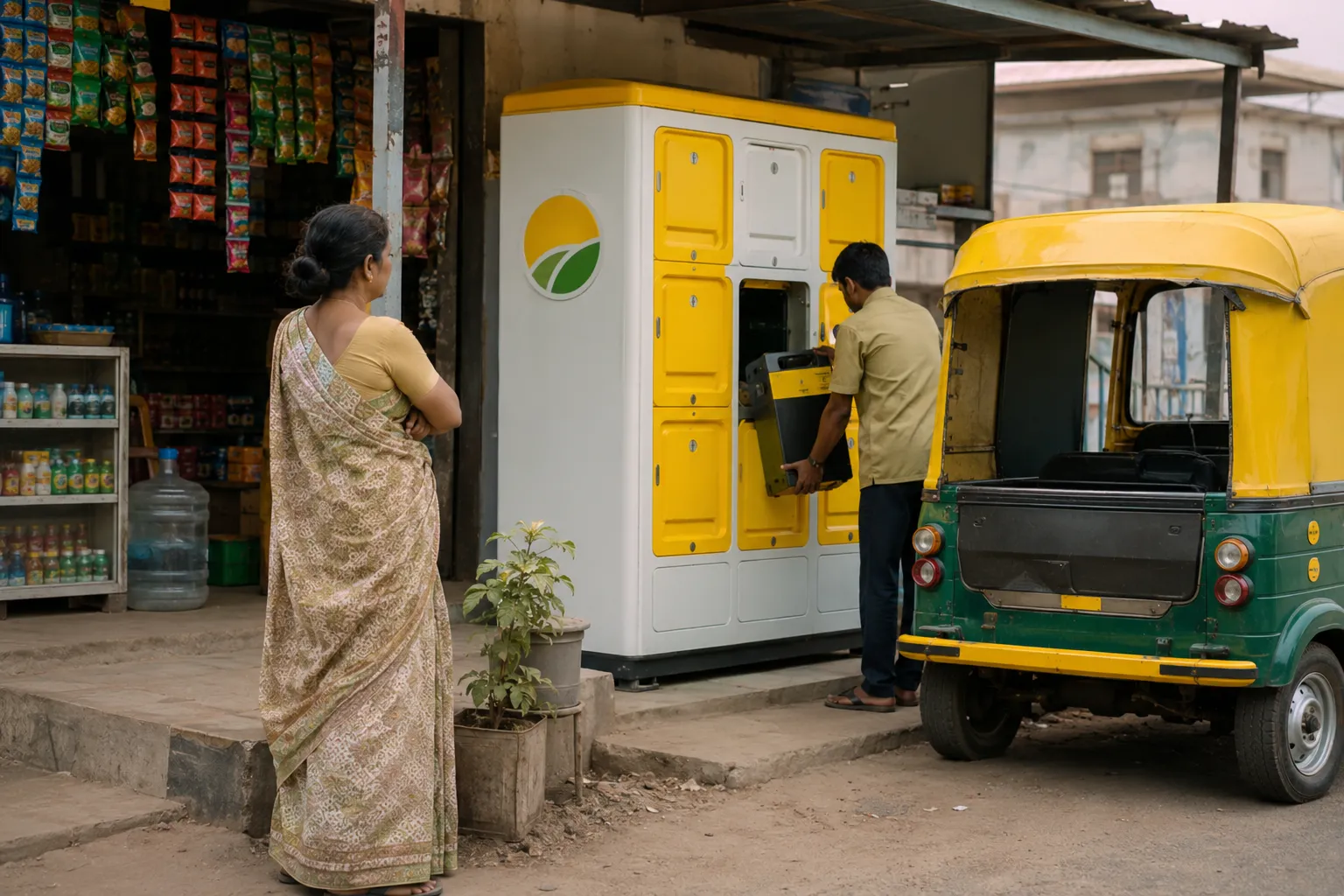
The most important competitive advantage that Sun Mobility has built is its network of swapping stations. The 600 stations that the company currently operates are concentrated in the 18 Indian cities where electric‑vehicle adoption is highest, but the network is expanding rapidly into Tier‑2 and Tier‑3 cities, driven by the franchise model that the company launched in 2025. The franchise model allows an individual entrepreneur—a small‑business owner, a petrol‑station operator, a farmer with access to land and electricity—to purchase a single‑bay swapping station for approximately ₹3 lakh, install it on their property, and earn a share of the per‑swap revenue that the station generates. The franchisee does not need to understand battery technology. They need to understand their local market, and they need to be able to maintain the station and keep it stocked with charged batteries. The company provides the batteries, the technology, and the brand. The franchisee provides the location and the local customer relationships.
The franchise model is designed to solve the single most difficult problem in the EV‑infrastructure business: the capital cost of building a nationwide network of charging or swapping stations. The company that attempts to build and own every station itself will require billions of dollars in capital and years of construction, and the return on that capital will be constrained by the utilisation rates of the stations. The company that franchises the stations to local entrepreneurs transfers the capital cost to the franchisee, accelerates the pace of network expansion, and aligns the incentives of the local operator with the performance of the station. The franchise model has been used to build the petrol‑station networks, the fast‑food chains, and the retail franchises that dominate every consumer market in the world. Sun Mobility is applying the same model to the EV‑battery market, and the model is scaling faster than any centrally planned network could.
The infrastructure flywheel is self‑reinforcing. More stations attract more drivers, because the drivers can be confident that a charged battery will be available when they need one. More drivers generate more swaps, which increases the revenue per station and makes the franchise more attractive to potential franchisees. More franchisees build more stations, which attracts more drivers. The flywheel is not theoretical—it is visible in the company's growth metrics, which show that the utilisation rate of the existing stations is increasing as the network expands, and that the payback period for a new franchisee is declining as the density of drivers in the network grows. The infrastructure flywheel is the moat, and the moat is deepening with every station that the company builds.
The Competitive Landscape
Sun Mobility is not alone in the battery‑swapping market. RACEnergy, a Hyderabad‑based startup, has been building a swapping network for three‑wheelers and is scaling rapidly in the southern states. BatteryPool, a Pune‑based startup, has been focusing on the two‑wheeler market with a pay‑as‑you‑go model that allows drivers to rent batteries on a daily or weekly basis. Ola Electric, the dominant player in the electric‑two‑wheeler market, has been building its own charging and swapping infrastructure, leveraging its control over the vehicle platform to create an integrated ecosystem. The competitive landscape is intensifying, and the market is large enough to support multiple players. India has over 2 million electric two‑ and three‑wheelers on its roads, and that figure is expected to grow to over 10 million by 2030. The swapping‑infrastructure market that serves those vehicles is projected to be worth over ₹25,000 crore by 2030, and the companies that are building their networks today are competing for a share of a market that is growing faster than any of them can build.
The government's role in the battery‑swapping market is evolving. The NITI Aayog's draft battery‑swapping policy, published in 2022 and finalised in 2024, established the regulatory framework for the industry—the technical standards for batteries and swapping stations, the interoperability requirements that allow drivers to swap batteries across different networks, and the incentives for manufacturers and operators. The policy framework is designed to prevent the fragmentation that would result from incompatible, proprietary swapping systems, and to create a market in which multiple operators can compete on a level playing field. Sun Mobility has been an active participant in the policy process, and its technology platform is designed to be compatible with the standards that the policy requires. The government's support for the swapping model is a significant competitive advantage for the companies that are building swapping networks—and a significant challenge for the companies that are betting on the plug‑in model, which the government's policy framework treats as a complementary rather than a primary charging solution for the commercial‑vehicle market.
What This Signals
The Sun Mobility story is not primarily about a startup. It is a story about the structural transformation of the Indian electric‑vehicle market—a shift from a model that was designed for the private‑vehicle owner in the developed world to a model that is designed for the commercial‑vehicle operator in the developing world, from a charging infrastructure that was built around the plug to an infrastructure that is built around the swap, and from an EV market that was limited to the affluent early adopters to a market that is accessible to the mass of Indian drivers who earn their living on two and three wheels. The 600 stations, the 80,000 drivers, the 200,000 daily swaps—these are not merely metrics. They are the evidence that the swapping model works, that the market is real, and that the company that built the model has a structural advantage that its competitors will struggle to replicate. The battery‑swapping unicorn that nobody saw coming has arrived, and the industry it is building will outlast the sceptics who said it could not be done.


