The Speech That Never Was: How AI Voice Cloning Is Preserving—And Stealing—Our Most Human Attribute.
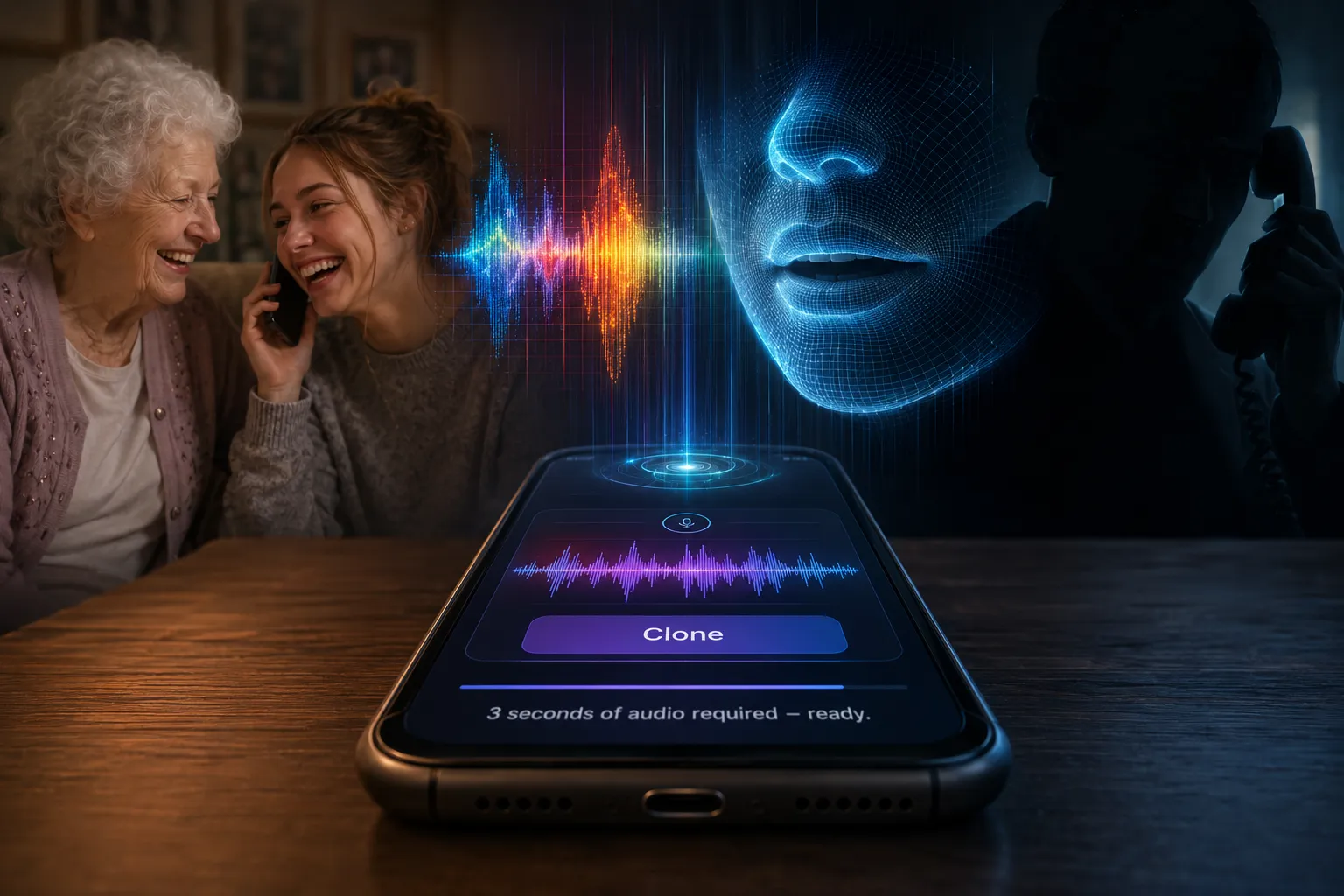
ATLANTA, Ga. — May 26, 2026 — The voice on the phone was unmistakable. It had the rasp of a lifetime of cigarettes, the soft Southern drawl that rounded off consonants, the particular rhythm of a woman who had told a million bedtime stories. "Baby, it's Grandma," the voice said. "I need you to listen carefully. I'm in trouble. I was driving home and there was an accident. I'm fine, but the other driver is hurt. The police say I need to post bail. I'm at the station. Can you send $5,000? I'll pay you back. Please, baby. Don't call anyone else. Just send it."
The granddaughter, a 24‑year‑old nurse named Chloe, froze. Her grandmother was 78, lived three states away, and never drove after dark. But the voice was hers. The intonation, the pet name, the way she said "baby"—it was uncanny. Chloe asked a few questions. The voice answered, slightly impatient, slightly scared. She transferred the money. Then she called her grandmother's cell phone. Her grandmother answered, safe at home, watching television. The voice on the phone had been a deepfake—generated by an AI that had cloned the grandmother's voice from a 30‑second TikTok video Chloe had posted last Christmas. The scammer had used a freely available tool, a voice conversion model trained on public data. The $5,000 was gone. The trust was shattered.
This is the new reality of voice. Synthetic speech has advanced so dramatically in the past 24 months that the human ear can no longer distinguish real from fake. The technology has legitimate uses: restoring the voice of a stroke patient, dubbing movies without losing the actor's emotional timbre, preserving the vocal identity of aging loved ones. But the same tools that give a mute person a voice also give a scammer a grandmother. The same models that allow a dying child to speak at her own funeral allow a dictator to manufacture a declaration of war. Voice, the most intimate and authentic signature of human presence, has become infinitely replicable.
"We have crossed a threshold," said Dr. Rupal Patel, a speech scientist at Northeastern University and the founder of VocaliD, a company that builds personalized synthetic voices for people with speech disorders. "We can now clone any voice with three seconds of audio. That is not a future prediction. That is a current capability. The question is not whether we can do it. The question is how we manage the consequences."
"We can now clone any voice with three seconds of audio. That is not a future prediction. That is a current capability. The question is how we manage the consequences." — Dr. Rupal Patel, Northeastern University
The Technology: Three Seconds to Identity Theft
The breakthrough is built on a class of AI models called diffusion vocoders, adapted from image generation. Just as Stable Diffusion learns to generate realistic images by repeatedly denoising random pixels, a voice diffusion model learns to generate realistic speech by converting noise into a mel‑spectrogram—a visual representation of sound—and then converting that spectrogram into audio. The key innovation is speaker conditioning: the model can be trained to mimic a specific voice by feeding it a few seconds of that person's speech as a "prompt." The model extracts a speaker embedding, a compact numerical representation of the voice's unique characteristics—pitch, timbre, rhythm, accent, even breath patterns.
The leading open‑source model, Bark (from Suno), can clone any voice from a three‑second sample, generate speech in dozens of languages, add nonverbal vocalizations (laughing, sighing, crying), and even sing. ElevenLabs offers a commercial API that produces studio‑quality voice clones for $5 per hour of audio. Microsoft's VALL-E and Google's AudioLM require only one second. The output is so good that in blind listening tests, human judges correctly identify the synthetic voice only 52 percent of the time—no better than chance.
"The models have ingested hundreds of thousands of hours of speech," said Dr. Patel. "They have learned the underlying statistics of human vocal production. They are not memorizing snippets. They are generating new speech that sounds like the target person would have said, even if that person never uttered those words. That is why it is so dangerous. You are not just replaying a recording. You are putting words into someone's mouth that they never spoke."
The Miracles: Giving Voice to the Voiceless
Before we dwell on the dangers, we should honor the good. Voice cloning has already transformed the lives of people who cannot speak.
Stroke and ALS patients who have lost their natural voice can now reclaim it. Companies like VocaliD and Acapela Group work with families to record a few hours of a patient's pre‑loss speech, then train a model that allows the patient to type and hear their own voice. For patients who lost their voice before high‑quality recordings existed, researchers can reconstruct a voice from family members' speech (siblings share vocal tract anatomy) or from old voicemails.
"I had a patient who had not heard his own voice in 12 years," said Dr. Patel. "He had a tracheostomy and used a text‑to‑speech device that sounded robotic. When we played him his synthesized voice, he cried. His wife cried. The first thing he typed was 'I love you.' She heard it in his voice. That is not a gimmick. That is a human right."
Children with congenital speech disorders can now choose a voice that fits their identity, rather than being stuck with a generic default. A teenage girl with cerebral palsy can have a voice that sounds like her peers, not like a 40‑year‑old newscaster. A young boy with apraxia can have a voice that sounds like his neighborhood, his accent, his family's intonation.
Dubbing and localization is another legitimate use. Movie studios can now dub foreign films while preserving the original actor's vocal performance. The AI learns the actor's emotional range—anger, joy, sorrow—and applies it to the translated script. The result sounds like the actor speaking fluent Japanese or Spanish, not like a voice actor impersonating them.
Preserving the dead is the most ethically contested frontier. A startup called HereAfter AI allows users to record their voice and train a model before they die. After death, loved ones can "talk" to the model, asking questions and hearing answers in the deceased's voice. The answers are generated from the deceased's own recorded stories and opinions. Critics call it grief technology—a crutch that prevents closure. Proponents call it a new form of legacy.
"When we played him his synthesized voice, he cried. His wife cried. The first thing he typed was 'I love you.' That is not a gimmick. That is a human right." — Dr. Rupal Patel
The Catastrophes: Fraud, Manipulation, and Erosion of Truth
The same week that Chloe lost $5,000 to a voice clone, a major European bank fell victim to a more sophisticated attack. A scammer cloned the voice of a regional manager and called a branch employee, instructing her to transfer $800,000 to an "acquisition account." The employee recognized the manager's voice, his tone, his casual phrasing. She authorized the transfer. The money was laundered within hours. The bank is suing the AI model provider.
Phone scams are the most visible threat. The Federal Trade Commission reported a 1,200 percent increase in AI‑voice‑based fraud complaints between 2024 and 2025. The average loss per incident is $4,700. The elderly are the most vulnerable, because they are more likely to trust a familiar voice and less likely to have seen news about voice cloning. The FTC has launched a public awareness campaign: "Your Mother's Voice Can Be Faked. Hang Up and Call Back."
Political disinformation is the most dangerous threat. A voice clone of President Biden could announce a nuclear strike. A clone of Volodymyr Zelenskyy could surrender to Russia. A clone of Donald Trump could call for violence. The models are already good enough to fool most listeners, and bad actors have no incentive to disclose that the audio is synthetic. The 2024 election cycle saw several localized voice‑clone robocalls—a fake mayor telling residents to vote on the wrong day, a fake school superintendent announcing a false lockdown. The technology is becoming a standard tool of political sabotage.
Corporate espionage is the quietest threat. A voice clone of a CEO can instruct a subordinate to send trade secrets. A clone of a lawyer can pressure a witness. A clone of a journalist can extract information from a source. The victims may never know they were deceived, because the conversation was one‑way (the clone only needs to speak, not listen) and the recording sounds authentic.
"We are in an arms race," said Dr. Hany Farid, a digital forensics expert at UC Berkeley. "Detection models are getting better, but generation models are getting better faster. It is a classic adversarial game. The only reliable defense is behavioral: verify out‑of‑band. Call back on a known number. Use a code word. Assume that any voice requesting money, secrets, or action is fake until proven otherwise."
The Detection Arms Race
The forensics community has responded with audio deepfake detectors. These models analyze recordings for artifacts that humans cannot hear but AI leaves behind: unnatural frequency transitions, missing breath sounds, mismatched vocal tract resonances. The best detectors, such as WaveFake and AASIST, achieve 95 percent accuracy on standard benchmarks.
But the cat‑and‑mouse game is relentless. Each new detector is quickly defeated by a new generator that has been trained to fool it. The leading generators now use adversarial training—they are optimized not just to sound real, but to evade the specific detectors they expect to face. The detection community has responded with ensemble methods (combining multiple detectors) and watermarking (embedding an inaudible digital signature in synthetic audio at generation time). Several major AI companies, including OpenAI and Google, have committed to watermarking all synthetic speech generated by their APIs.
"Watermarking is not perfect," said Dr. Farid. "Watermarks can be stripped. But they raise the bar. A casual scammer will not know how to remove a watermark. A sophisticated state actor will. We are not looking for perfect security. We are looking for risk reduction.
The Legal Void
The law has not caught up. There is no federal law in the United States that specifically prohibits the creation or use of voice clones for fraud, though existing laws against wire fraud and identity theft apply. California passed a law in 2024 criminalizing the use of AI voice clones to deceive, but enforcement is difficult (scammers are often overseas). The European Union's AI Act classifies real‑time voice cloning as "high risk," requiring disclosure, but the law only applies to companies, not individuals.
"The legal framework is a patchwork," said Professor Jennifer Granick, a surveillance and cybersecurity law expert at the ACLU. "We need a federal statute that makes it a crime to clone a voice without consent for fraudulent or harassing purposes. We also need platform liability: if a service like ElevenLabs is used to defraud someone, the platform should be required to trace the origin and assist victims. The technology is moving faster than Congress. That is a dangerous gap."
The Psychological Toll
Beyond fraud and disinformation, voice cloning attacks something deeper: the fundamental trust in sound. The human voice is the oldest signaling system. A baby recognizes its mother's voice before it recognizes her face. A soldier takes orders from a commander's voice. A lover whispers in the dark, trusting that the voice on the other end is real. Voice cloning makes that trust obsolete.
"I don't answer my phone anymore," said Chloe, the granddaughter who lost $5,000. "I screen every call. I text back and ask for a code word. My grandmother thinks I'm paranoid. She doesn't understand that her voice is not hers anymore. It's a weapon that anyone can use."
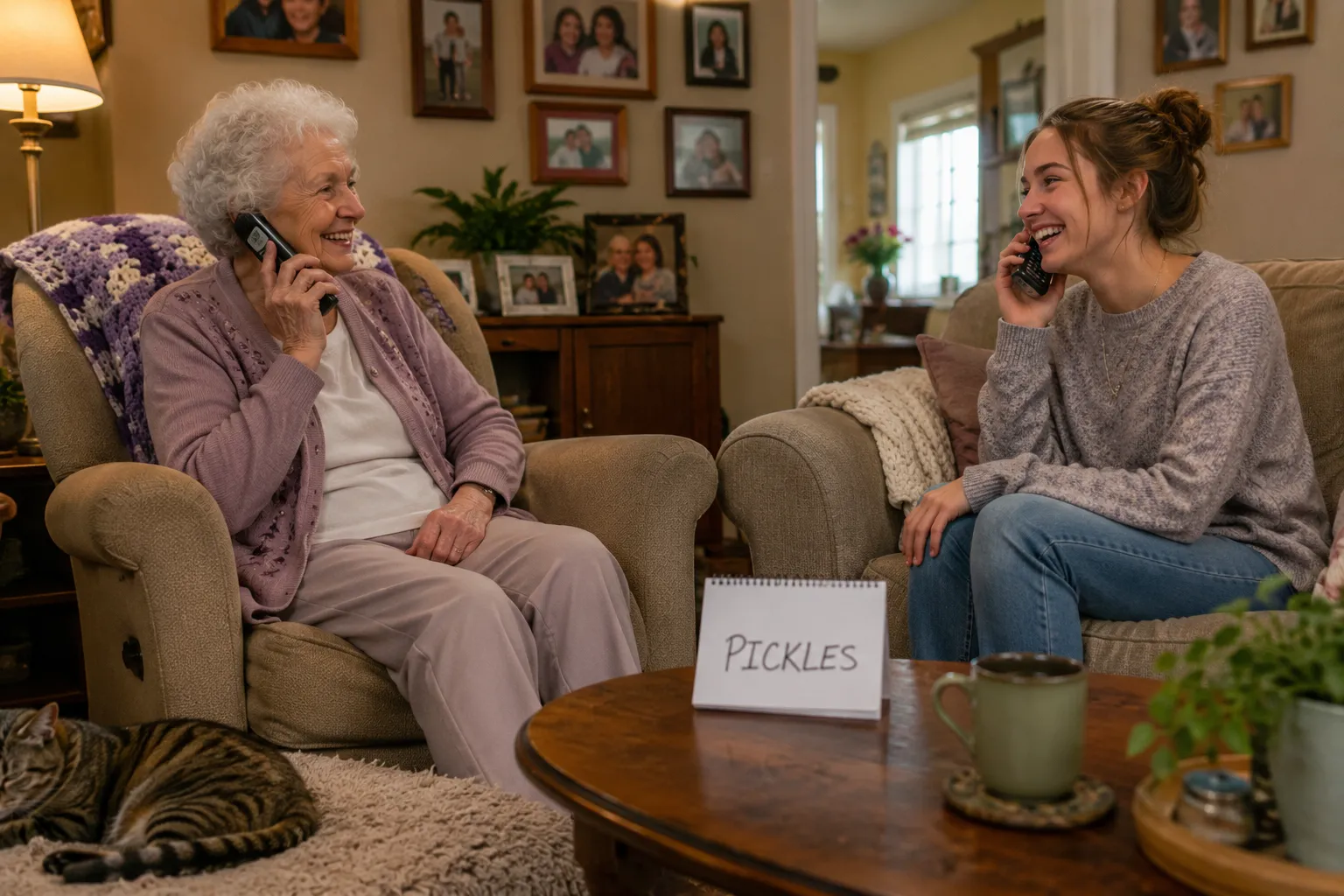
The grandmother now carries a laminated card with a family code word. She will not say it over the phone. She will only text it. The family has a rule: if you call and ask for anything—money, information, action—you must first text the code word. The caller cannot text because they are a scammer using voice only. The system works. But it is a sad system, a confession of defeat. The voice, once the emblem of authentic human connection, is now suspect.
The Path Forward: Authentication, Education, Legislation
The solution to voice cloning will not be purely technological. It will require a triad: authentication, education, and legislation.
Authentication means cryptographic signing of genuine voice recordings. A future phone could embed a digital signature in every outgoing call, proving that the voice matches the device's verified owner. The signature would be invisible to the user but verifiable by the recipient's phone. Several companies are working on this standard; Apple has filed patents for "biometric voice authentication over telephony."
Education means public awareness campaigns, like the FTC's "Hang Up and Call Back." The message must be simple and memorable: never trust a voice asking for money or secrets. Always verify through a separate channel. Establish family code words. Assume synthetic audio is possible.
Legislation means criminalizing malicious voice cloning, requiring platforms to watermark synthetic speech, and giving victims a private right of action. The proposed No Fakes Act in the U.S. Senate would do some of this, but it has stalled. Public pressure may move it forward.
The Unclonable Essence
Perhaps there is something in the human voice that AI cannot clone—not technically, but existentially. A voice clone can replicate the sound, but not the breath that carries it. It can mimic the intonation, but not the fear that sharpens a mother's cry. It can produce the words, but not the weight of a life lived behind them. When a grandfather says "I'm proud of you," the words matter, but the history matters more. The AI knows neither.
"I work with people who have lost their voices," said Dr. Patel. "They are not the same as their clones. The clone is a tool. It is a bridge. It is not the person. The person is the one choosing the words, feeling the emotion, deciding to reach out. That is the unclonable part. The soul. The intention. We should not confuse the voice with the self."
The grandmother in Georgia still calls her granddaughter. The phone rings. Chloe hesitates. She looks at the caller ID. She answers. "Hi, Grandma. What's the code word?" The grandmother laughs—a real laugh, breathy and warm. "It's 'pickles,' baby. Now let me tell you about my day." The voice is real. The trust is damaged but not destroyed. And in a world of infinite copies, the original still matters. It just needs a little help proving it.


