The Pan‑Indian Dubbing Economy: How a ₹3 Crore Malayalam Film Earned ₹120 Crore in Hindi—And Why Every Studio Is Now Building a Dubbing Division
KOCHI — May 30, 2026 — In the winter of 2025, a Malayalam‑language survival thriller called Manjummel Boys was released in Kerala to strong reviews and a respectable ₹35 crore theatrical run. The film—about a group of friends trapped in a cave—was culturally specific, linguistically rooted, and designed primarily for a Malayalam‑speaking audience. Its producers had budgeted approximately ₹3 crore for the Hindi dubbed version, which they assumed would generate modest returns on the satellite and streaming after‑markets. They were wrong. The Hindi dubbed version, released simultaneously with the original, earned ₹120 crore at the North Indian box office—nearly four times the film’s domestic Malayalam gross. The dubbed version accounted for 63 percent of the film’s total all‑India revenue. The producers, who had treated the Hindi dub as an afterthought, are now building an in‑house dubbing division. The Malayalam film that was never supposed to travel has become the most profitable dubbed release in Indian cinema history—and the industry is scrambling to replicate its success.
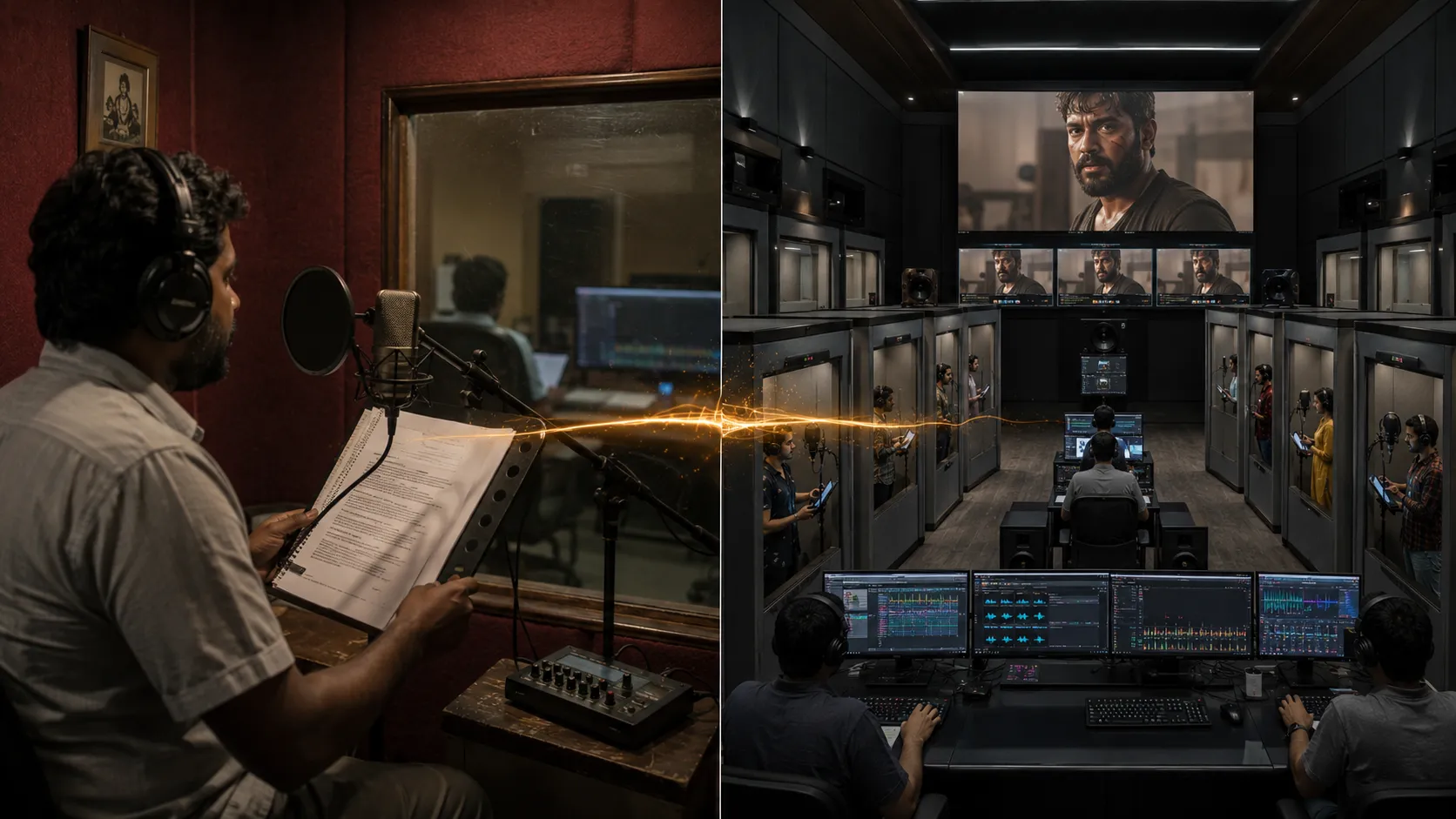
The pan‑Indian dubbing economy has grown, in the space of three years, from a niche after‑market to a ₹1,500‑crore‑a‑year business that is reshaping the economics of regional cinema. Every major South Indian studio—Hombale, Mythri, Vyjayanthi, Lyca—now employs a dedicated team of dubbing supervisors, voice artists, and quality‑control specialists whose sole job is to ensure that the studio’s films are released in at least four languages simultaneously. The streaming platforms—Netflix, Amazon Prime Video, JioHotstar—have built their own dubbing infrastructure, commissioning Hindi, Tamil, Telugu, and English versions of every major regional‑language acquisition. The technology that enables high‑quality dubbing—AI‑powered voice matching, automated lip‑sync, real‑time translation—has improved so rapidly that the cost of dubbing a film into five languages has fallen from approximately ₹2 crore to less than ₹50 lakh. The economics of the dubbed release have been transformed, and the transformation is opening markets that were previously inaccessible to regional cinema.
The Economics of the Polyglot Release
The most important structural change in the dubbing economy has been the collapse of the cost barrier. The AI‑powered tools that are now standard in the major dubbing studios—automated voice matching, machine‑learning‑driven lip‑sync, real‑time translation engines—have reduced the time required to dub a film from six to eight weeks to approximately ten days, and have reduced the cost by a factor of approximately four. The Malayalam film that once cost ₹75 lakh to dub into Hindi can now be dubbed for less than ₹20 lakh. The economics are compelling enough that the studios are dubbing films that would never have been considered for a multi‑language release even three years ago—mid‑budget dramas, comedies, thrillers—and discovering that the audience for these films, in languages the filmmakers never intended, is larger than anyone assumed.
The streaming platforms have been the primary drivers of the dubbing revolution. Netflix, which began dubbing its Indian original series into multiple languages in 2019, now automatically commissions Hindi, Tamil, and Telugu dubs for every major regional‑language acquisition. Amazon Prime Video has followed the same strategy. JioHotstar, with its multi‑lingual user base and its dominance of the mass market, has made dubbing a central pillar of its content strategy—ensuring that every major title on the platform is available in at least five languages. The platforms have also been investing in the dubbing of their international content libraries into Indian languages, creating a pipeline of content that flows in both directions—Indian films dubbed into global languages for the diaspora and beyond, and global films dubbed into Indian languages for the domestic mass market.
The theatrical market has been slower to adopt the polyglot release model, but the success of films like Manjummel Boys, Kantara, Pushpa, and the K.G.F franchise has demonstrated that the audience is willing to pay for dubbed content in theatres as well as at home. The Hindi dubbed version of Manjummel Boys earned approximately 60 percent of its revenue from single‑screen theatres in Tier‑2 and Tier‑3 cities—the same theatres that have been struggling to survive the multiplex revolution, and that have found, in the dubbed regional film, a product that their audiences will pay to watch. The single‑screen theatre that cannot compete with the multiplex on ticket prices or amenities can compete on content—and the dubbed film, with its lower acquisition cost and its built‑in audience, is the content that gives the single‑screen theatre a fighting chance.
The Voice‑Actor Economy
The most underappreciated dimension of the dubbing revolution is the voice‑actor economy that it has created. The Indian film industry has, for decades, employed a small, specialised workforce of dubbing artists—men and women who could match their voices to the lip movements of a star, who could convey the emotional range of a performance they had not given, and who were paid modestly for a skill that was essential but invisible. The dubbing revolution has transformed that workforce. The demand for voice actors has increased by approximately 400 percent over the past three years, driven by the explosive growth of the streaming platforms and the theatrical dubbing market. The voice actor who once earned ₹5,000 to ₹10,000 per film can now earn ₹50,000 to ₹1 lakh per project—and the most sought‑after voices, the ones that are associated with the biggest stars, can command significantly more.
The voice‑actor economy has also become more regionalised. The Hindi dubbing of South Indian films was once dominated by a handful of Mumbai‑based artists who worked primarily for the major studios. The growth of the regional dubbing market—Tamil films dubbed into Telugu, Telugu films dubbed into Kannada, Kannada films dubbed into Malayalam—has created demand for voice actors in every major Indian language, and the supply of skilled artists has struggled to keep pace. The studios that are building their own dubbing divisions are competing for a limited pool of talent, and the competition is driving up wages, improving working conditions, and professionalising a workforce that was once treated as an afterthought.
The technology that is enabling the dubbing revolution is also threatening to disrupt the voice‑actor economy. The AI‑powered voice‑matching tools that are now standard in the major dubbing studios can, in some cases, generate a synthetic voice that is indistinguishable from a human performer—raising the same questions about labour displacement that are being asked in every other corner of the entertainment industry. The voice actors who are fighting for better pay and better conditions are also fighting, in the background, against a technology that could, within a decade, make them obsolete. The future of the dubbing economy will be shaped by the resolution of that conflict—between the human performers who bring the films to life in new languages, and the machines that can do the same job faster, cheaper, and, increasingly, better.
The Studio Response
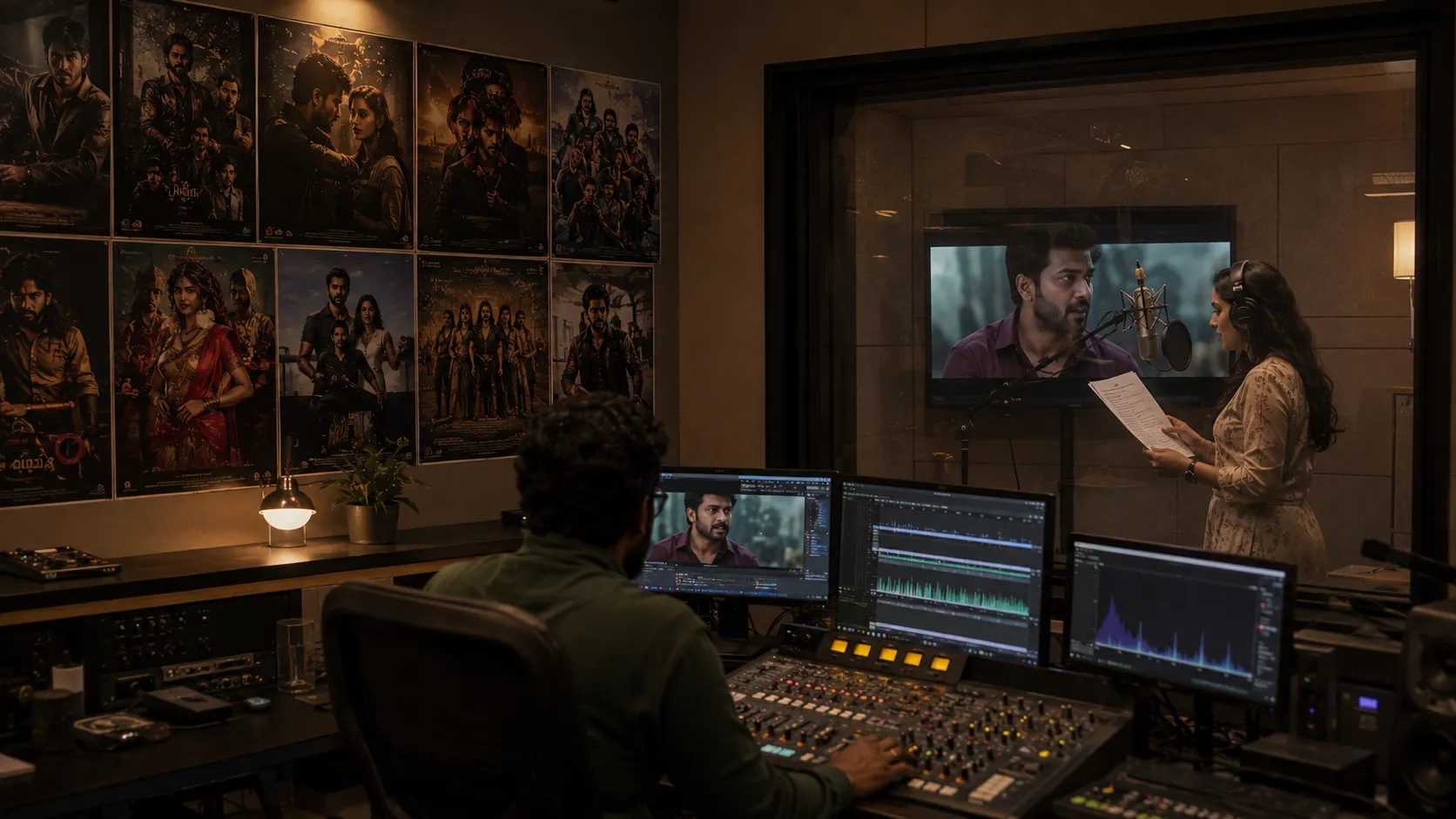
The major South Indian studios have responded to the dubbing revolution with a speed and aggression that Bollywood, for all its size and resources, has been unable to match. Hombale Films, the studio behind K.G.F and Kantara, now automatically budgets for a four‑language release—Kannada, Hindi, Tamil, and Telugu—on every film it produces, and its in‑house dubbing division employs over 50 full‑time voice artists and technicians. Mythri Movie Makers, the producer of Pushpa, has built a similar infrastructure for its Telugu‑language releases. The studios that once treated the Hindi market as an aspirational afterthought—something to be pursued after the film had succeeded in its home language—now treat it as a co‑primary market, to be targeted from the earliest stages of development. The script that is written in Kannada or Telugu is now written with the Hindi audience in mind—the cultural references calibrated, the humour adjusted, the star cameos designed to appeal to a multi‑lingual viewership.
Bollywood, by contrast, has been slow to adopt the polyglot release model. The major Hindi studios—YRF, Dharma, T‑Series—have historically treated their films as Hindi‑first products, with dubbed versions in Tamil, Telugu, and Kannada released as an afterthought. The South Indian dubbing revolution has exposed the vulnerability of that strategy. The Hindi film that is released only in Hindi is competing against a South Indian film that is released in five languages simultaneously—and the South Indian film, with its broader linguistic reach, its deeper cultural resonance in the regional markets, and its more efficient dubbing economics, is increasingly winning. The Hindi studios that are adapting—that are investing in dubbing infrastructure, that are commissioning multi‑language scripts, that are treating the South Indian market as a co‑primary rather than a secondary concern—are the ones that will survive the dubbing revolution. The ones that are not are the ones that will find themselves competing in a single language against competitors who speak five.
The Global Dubbing Frontier
The most ambitious dimension of the dubbing revolution is the global frontier. The Indian film that is dubbed into Mandarin, Spanish, Arabic, or French can reach audiences that no theatrical distributor could ever access—and the streaming platforms, which are investing heavily in the dubbing of Indian content into global languages, are building the infrastructure to make that reach possible. Netflix has been dubbing its Indian originals into over 30 languages, and the response from international audiences—particularly in Latin America, Southeast Asia, and the Middle East—has been stronger than the platform anticipated. The Indian film that travels globally through a well‑executed dub is not merely an Indian film. It is a global product, competing with the best content in the world for the attention of a global audience—and the studios that are investing in global dubbing infrastructure are the ones that are positioning themselves for that competition.
The global dubbing frontier also opens a new revenue stream for the regional industries that have historically been confined to their home markets. The Tamil film that is dubbed into Spanish and released on Netflix in Mexico is generating revenue from a market that the producer never imagined reaching. The Telugu film that is dubbed into Arabic and streamed in Saudi Arabia is capturing an audience that has no prior exposure to Indian cinema, but that is hungry for the kind of spectacle, emotion, and scale that the South Indian studios are uniquely equipped to provide. The global dubbing frontier is not merely a revenue opportunity. It is a cultural bridge—a way of connecting the stories that are being told in Chennai, Hyderabad, and Bengaluru with audiences who have never heard of those cities, but who will respond to the stories they produce if the stories are made accessible in a language they understand.
What This Signals
The pan‑Indian dubbing economy is not primarily a story about language. It is a story about the structural unification of the Indian film market—a shift from a fragmented collection of linguistically distinct industries to a single, integrated, multi‑lingual content marketplace. The technology that makes that unification possible—the AI‑powered dubbing tools, the streaming platforms, the polyglot release strategies—is collapsing the barriers that have separated Indian audiences from each other for decades. The Malayalam film that earns ₹120 crore in Hindi, the Kannada film that grosses ₹500 crore in five languages, the Telugu franchise that commands a pan‑Indian opening of ₹200 crore—these are not anomalies. They are the leading edge of a structural shift that is redefining what it means to be an "Indian film." The film that speaks only one language is increasingly a niche product. The film that speaks five is the new mainstream. The dubbing revolution is not over. It has only just begun.


