The Small Nuclear Revolution: How Tiny Modular Reactors Are Finally Ready to Replace Coal
KEMMERER, Wyo. — May 26, 2026 — The coal plant has been running since 1972. Its boilers are scaled, its turbines worn, its air permits a constant battle. The town of Kemmerer grew up around it; the miners' homes, the union hall, the diner where shift workers eat breakfast at 3 PM. Coal is identity here. But coal is also dying. The plant's owner, PacifiCorp, plans to shutter it by 2030. Then, something unexpected happened. A different kind of power plant broke ground across the road. It will not have cooling towers or a smokestack. It will not burn anything. It will be smaller than the coal plant's parking lot. And it will employ half as many people, but those jobs will last decades longer, and the electricity will be cheaper, cleaner, and more reliable than anything coal ever produced.
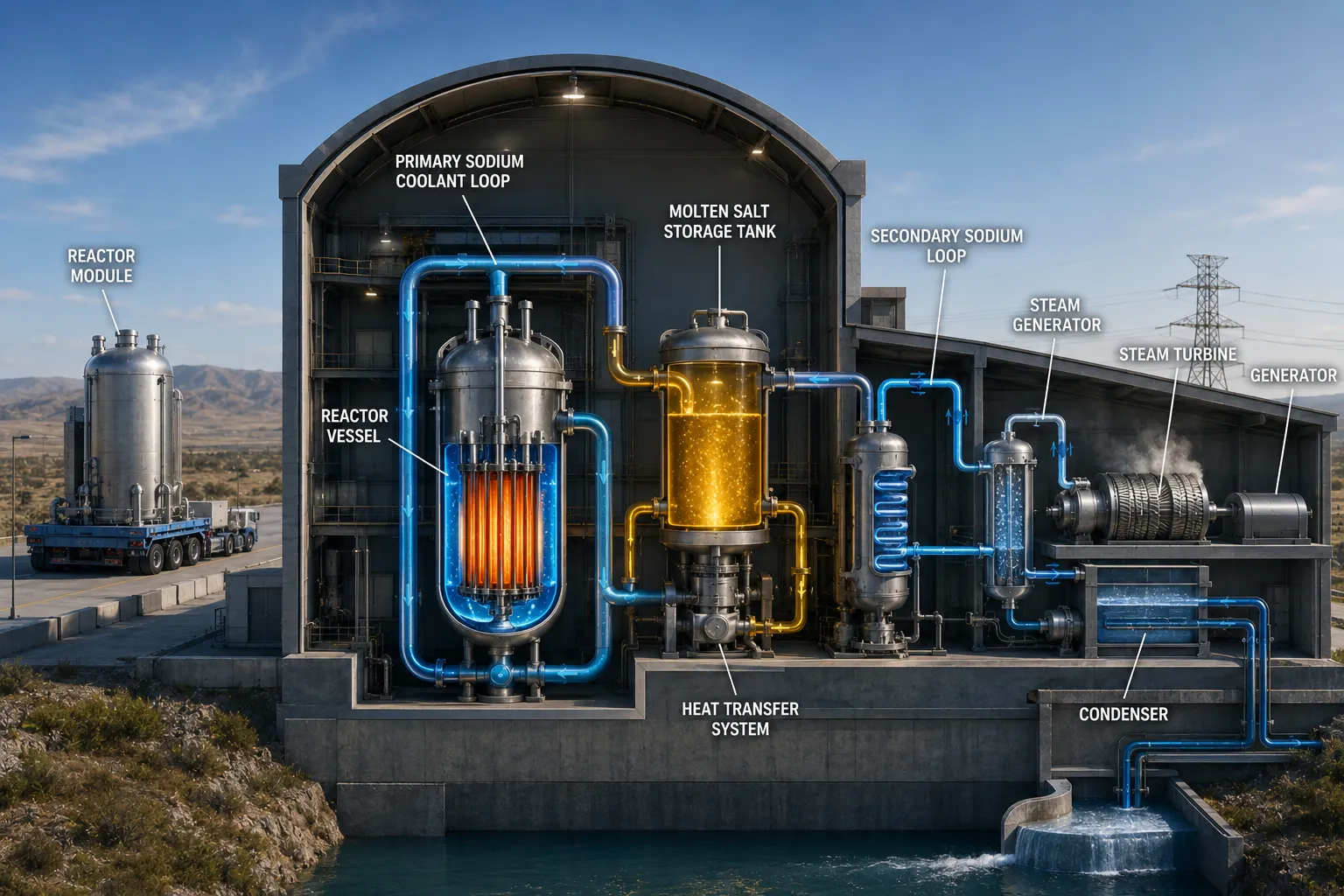
This is the Natrium reactor, a 345‑megawatt sodium‑cooled fast reactor with an integrated molten salt energy storage system. It is being built by TerraPower, a company founded by Bill Gates. It is the first of a new generation of small modular reactors (SMRs) to break ground in the United States. Unlike the sprawling, custom‑built, multi‑billion‑dollar gigawatt plants of the past, SMRs are designed to be manufactured in factories, shipped on flatbed trucks, and installed in modules. They are smaller—typically 50 to 300 megawatts—which means lower upfront capital costs, shorter construction times, and the ability to match generation to local demand. They can be added incrementally, like batteries in a backup power wall. And they can be sited on the footprints of retiring coal plants, reusing the grid connections, cooling water, and skilled workforce.
"We are at the beginning of the third nuclear age," said Jeff Navin, TerraPower's chief external affairs officer. "The first was the post‑war era of big government labs and weapons proliferation. The second was the 1970s boom of giant light‑water reactors, which stalled after Three Mile Island and Chernobyl. The third is the SMR era—small, inherently safe, factory‑built, and designed to pair with renewables. This is the nuclear that works."
"We are at the beginning of the third nuclear age—small, inherently safe, factory‑built, and designed to pair with renewables. This is the nuclear that works." — Jeff Navin, TerraPower
Why Big Nuclear Failed
To understand the SMR revolution, you must first understand why conventional large nuclear plants became unbuildable in the United States. The last reactor to start construction before the Kemmerer project was Vogtle Units 3 and 4 in Georgia, begun in 2009. They came online in 2023 and 2024, a decade late and $17 billion over budget. The final price tag: $35 billion for 2.2 gigawatts. That is $16,000 per kilowatt—more than ten times the cost of a natural gas plant, and five times the cost of utility‑scale solar.
The reasons are well known. Large reactors are custom‑engineered for each site, requiring years of design and licensing. The supply chain for forgings (the massive steel vessels that contain the reactor core) is limited to a few factories worldwide. Construction is a one‑off project management nightmare, with thousands of workers, concrete pours, and inspections. And the regulatory framework—the Nuclear Regulatory Commission's licensing process—was designed for these large custom plants, with requirements that change mid‑construction.
SMRs flip the model. By making the reactor small enough to be built in a factory, you shift most of the construction from the muddy field to a clean, climate‑controlled assembly line. You build the same reactor design dozens or hundreds of times, driving down costs through repetition. You ship completed modules on trucks, then assemble them on site like Legos. The NRC has created a new licensing pathway for "design certification" that allows a single design to be approved once and then built anywhere.
The Players and Their Designs
The Kemmerer Natrium reactor is one of several SMR designs now nearing commercialization.
Natrium (TerraPower/GE Hitachi): A 345 MWe sodium‑cooled fast reactor. Sodium has a much higher boiling point than water, so the reactor operates at atmospheric pressure (no high‑pressure containment vessel needed). The reactor is coupled to a molten salt energy storage system that can boost output to 500 MWe for five and a half hours—enough to follow solar and wind lulls. Fuel is high‑assay low‑enriched uranium (HALEU), which is more efficient than standard reactor fuel. Target cost: $4,000 per kilowatt.
VOYGR (NuScale Power): A 77 MWe light‑water reactor, cooled by ordinary water. Up to 12 modules can be combined in a single plant. NuScale's design is the first and only SMR to receive full NRC design approval. The company's first plant, the Carbon Free Power Project in Idaho, was canceled due to rising costs, but NuScale is pivoting to smaller, customer‑driven projects. Target cost: $5,000 per kilowatt.
BWRX-300 (GE Hitachi): A 300 MWe boiling water reactor, a simplified version of existing GE designs. It uses natural circulation (no pumps needed for emergency cooling) and has a 24‑hour grace period before any operator action is required. The Polish government has selected the BWRX-300 for six sites. Target cost: $3,600 per kilowatt.
Xe-100 (X‑energy): A 80 MWe high‑temperature gas‑cooled reactor, using helium as coolant and pebble fuel (tennis‑ball‑sized spheres that are continuously cycled). The high outlet temperature (750°C) makes it suitable not just for electricity but for industrial heat—cement, steel, hydrogen production. Target cost: $4,500 per kilowatt.
"The diversity of designs is a strength," said Dr. Kathryn Huff, a nuclear engineer and former US Department of Energy official. "Different customers have different needs. A utility that wants to replace a coal plant needs heat and power. An industrial park needs process heat. A remote community needs small, simple, rugged units. We are seeing a flowering of innovation that the nuclear industry has not experienced since the 1960s."
The Coal‑to‑Nuclear Superhighway
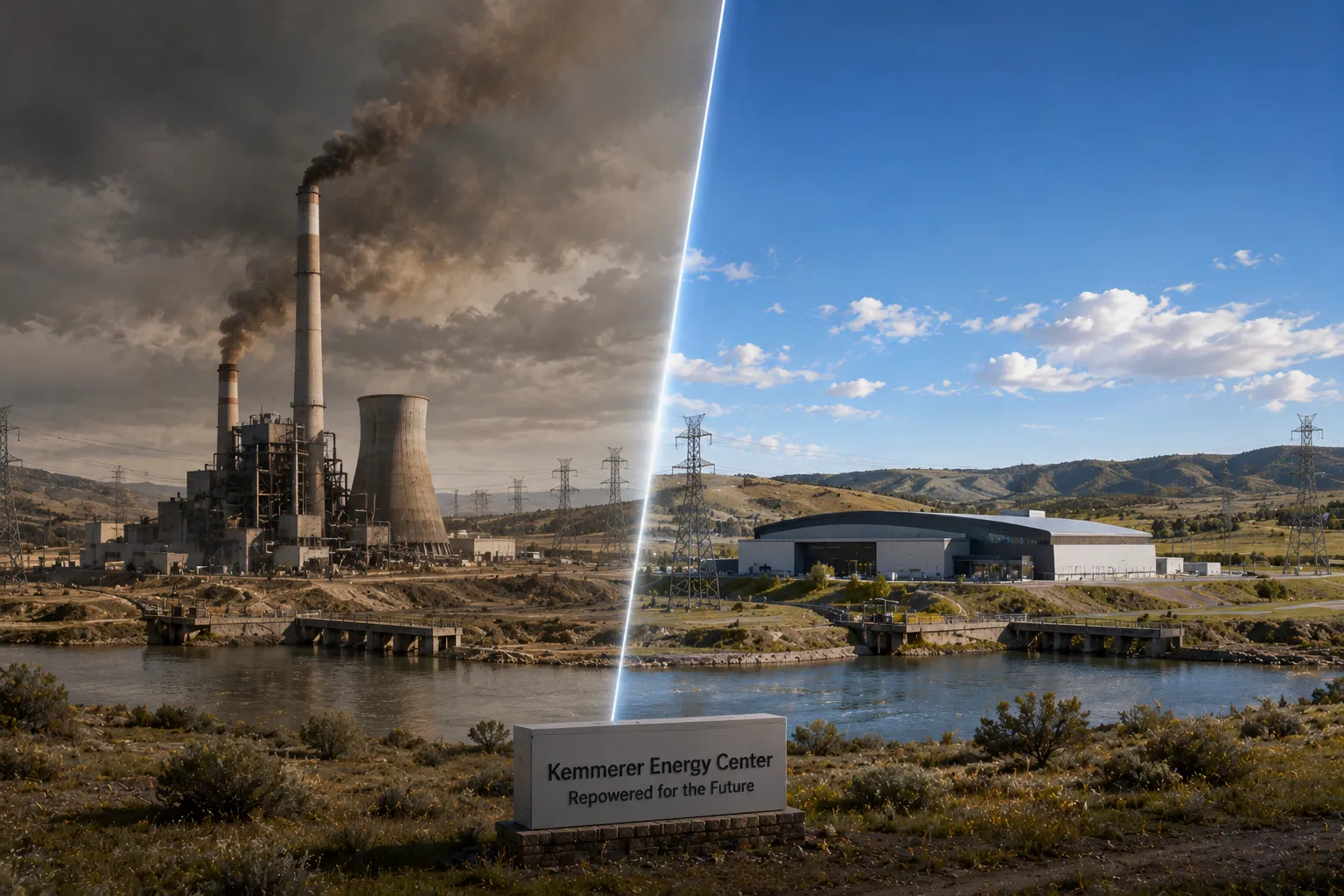
The most promising near‑term market for SMRs is coal plant repowering. The United States has more than 300 retired or retiring coal plants, each with existing grid connections, cooling water, and a trained workforce. Many are in rural areas where the local economy depends on the plant. Replacing a coal plant with an SMR keeps the tax base, the transmission lines, and the jobs—though fewer of them, and different ones.
"Coal communities are dying," said Navin. "They don't need pity. They need investment. An SMR on the site of a retired coal plant is a lifeline. It's good for the climate, good for the grid, and good for the town."
A 2022 DOE study found that converting a coal plant site to nuclear could reduce construction costs by up to 35 percent, thanks to existing infrastructure. More than 80 percent of coal plant sites are suitable for SMRs. The Kemmerer plant is the first; TerraPower has announced four more coal‑to‑nuclear sites in Wyoming, Montana, and West Virginia.
The economics are compelling. A new natural gas plant costs about $1,000 per kilowatt, but natural gas prices are volatile and the fuel is a carbon emitter. Solar and wind cost $1,000–1,500 per kilowatt, but require storage or backup for reliability. An SMR at $4,000 per kilowatt is more expensive upfront but produces reliable, dispatchable, carbon‑free power for 60 years. When you factor in the cost of carbon (which is increasingly priced), or the cost of batteries for wind and solar, SMRs become competitive.
The Safety Question That Will Not Go Away
Every article about nuclear power must address safety. The SMR answer is different from the large‑reactor answer. SMRs are designed with inherent safety—they do not rely on active systems (pumps, valves, diesel generators) to prevent meltdown. Instead, they use physics.
The Natrium reactor, for example, uses metallic fuel that expands as it heats. When the fuel expands, neutrons are less likely to cause fission, so the reaction slows down—automatically. If the reactor gets too hot, the sodium coolant expands and rises, pushing fuel out of the core—again, automatically. No operator action, no electricity, no moving parts. The reactor can be shut down by passive means and cooled by natural circulation of air around the containment vessel. The fuel itself is more robust than conventional ceramic fuel, and the sodium is chemically inert under normal conditions (though it reacts violently with water and air, requiring careful handling).
"The safety case for SMRs is radically different from legacy reactors," said Dr. Huff. "We are not just making the same thing smaller. We are using different physics, different materials, different geometries. The risk of a large release of radioactive material is orders of magnitude lower."
The NRC agrees. All the leading SMR designs have passed pre‑application safety reviews, and NuScale's design has full approval. Opponents argue that no new nuclear is safe enough, and that renewable energy plus storage is cheaper and faster. Supporters counter that the wind does not always blow, the sun does not always shine, and batteries are not yet capable of multi‑day storage at grid scale. A low‑carbon grid needs firm, dispatchable power. SMRs can provide it.
The Fuel Puzzle
One challenge that keeps SMR proponents awake at night is fuel. Most SMRs require HALEU—uranium enriched to between 5 and 20 percent uranium‑235 (conventional reactor fuel is below 5 percent). HALEU is not currently produced commercially in the United States. The only large‑scale HALEU production is in Russia, a geopolitical nightmare.
The DOE has launched a HALEU demonstration program, funding two domestic enrichment facilities. Centrus Energy is building a cascade of centrifuges in Ohio, and Urenco is expanding its New Mexico plant. The goal is to produce enough HALEU for the first fleet of SMRs by 2028. The fuel will be expensive initially, but costs will fall with scale.
"We are not going to trade dependence on foreign oil for dependence on foreign uranium," said Navin. "We are building a domestic fuel supply chain from mining to enrichment to fabrication. It's a national security imperative."
The Waste Question
Spent nuclear fuel remains a political, not a technical, problem. SMRs produce about the same amount of waste per unit of electricity as large reactors—though some designs (like the Natrium fast reactor) can actually burn existing waste as fuel, reducing its volume and longevity. The United States still has no permanent repository; waste sits in dry casks at reactor sites. The SMR industry argues that its smaller, modular nature makes waste easier to manage, and that a single repository (Yucca Mountain or an alternative) would be sufficient for centuries.
"You cannot solve climate change without nuclear, and you cannot do nuclear without waste," said Dr. Huff. "The waste is manageable. It is a solid, stable ceramic. It can be stored safely for decades while we decide on a permanent solution. The alternative—burning coal—puts the waste directly into the air we breathe. There is no comparison."
The Road to 2030
The Kemmerer plant is scheduled to be online in 2028. TerraPower has already broken ground and received its construction permit from the NRC. The project is on time and on budget—so far. NuScale is pursuing smaller projects, including a contract to supply six modules to a data center developer in Ohio. X‑energy has partnered with Dow to provide process heat for a chemicals plant on the Gulf Coast.
The Biden administration has made SMRs a key part of its climate agenda. The Inflation Reduction Act included tax credits for new nuclear (the same credits available for solar and wind). The DOE's Advanced Reactor Demonstration Program has awarded over $3 billion to TerraPower and X‑energy. And the NRC has streamlined its licensing process, reducing the time from application to approval from several years to about 30 months.
"Five years ago, SMRs were a PowerPoint slide," said Navin. "Today, they are a construction site. Ten years from now, they will be a normal part of the energy mix. We are not waiting for a breakthrough. We are just building."
The Return of the Atom
The coal plant in Kemmerer will be demolished, its boilers cut up for scrap, its smokestack felled. The miners will retire or retrain. The town will grieve. But across the road, the new plant will rise. It will not smoke. It will not rumble. It will produce 345 megawatts, quietly, cleanly, for 60 years. It will employ 250 people—fewer than the coal plant, but with higher skills and better pay. The high school will stay open. The diner will serve breakfast to a new generation of workers.
Nuclear power has been a ghost at the feast of clean energy—too expensive, too slow, too scary. The small modular reactor is exorcising those ghosts. It is not the only solution. It is not even the largest solution. But it is a solution that works when the sun does not shine and the wind does not blow. And in a world racing to zero carbon, that is enough. The atom is back. This time, it is small.


