Results (109 found)

The ₹300 Crore Zombie That Almost Didn't Rise: How a FWICE Ban, a Don 3 Exit, and a ₹45 Crore Compensation Demand Turned Ranveer Singh's 'Pralay' Into Bollywood's Most Dramatic Pre-Production—Before a Single Frame Was Shot
MagazineMay 28, 2026

The ₹300 Crore Zombie That Almost Didn't Rise: How a FWICE Ban, a Don 3 Exit, and a ₹45 Crore Compensation Demand Turned Ranveer Singh's 'Pralay' Into Bollywood's Most Dramatic Pre-Production—Before a Single Frame Was Shot

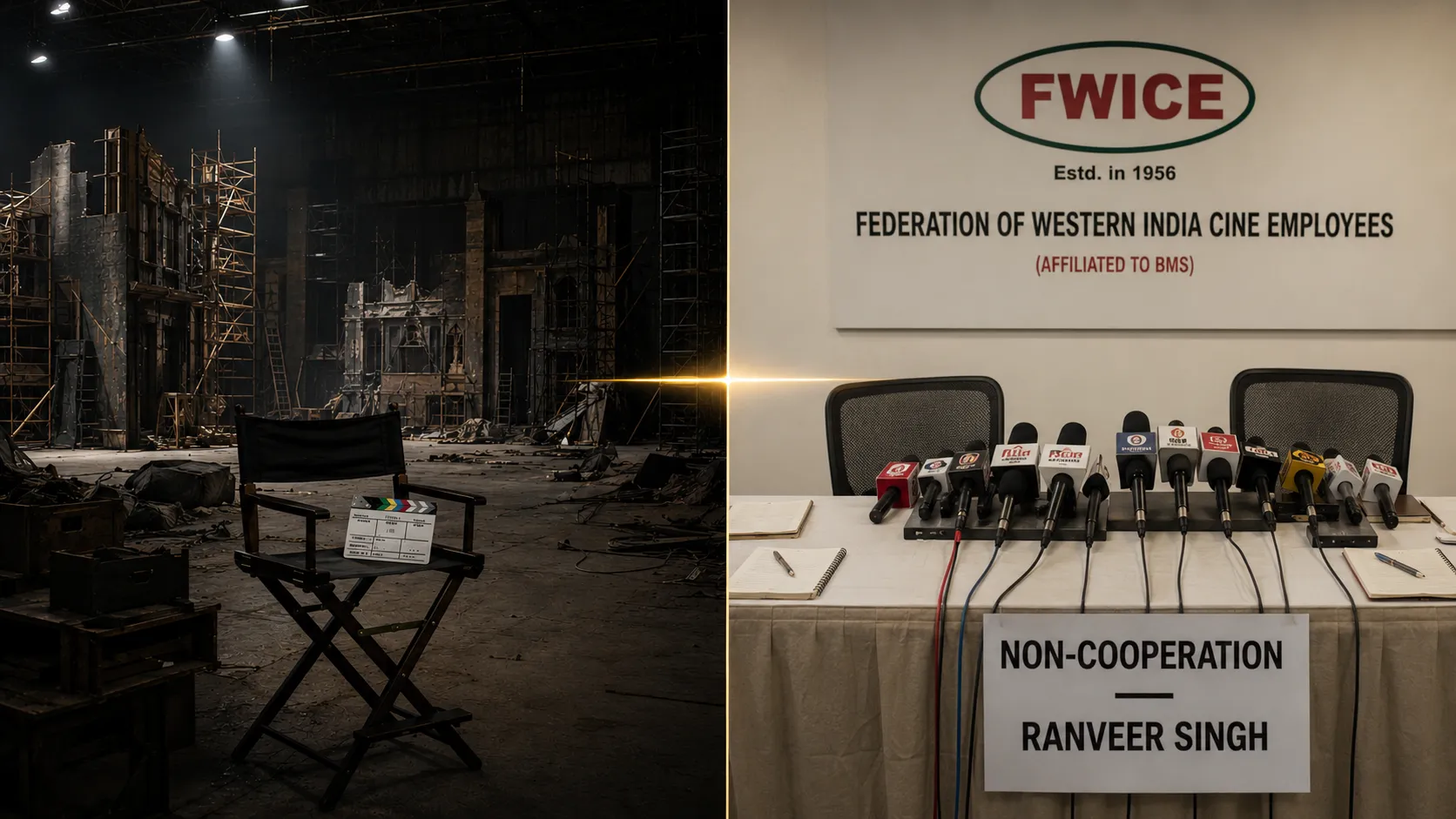
Sometime in the early weeks of 2026, as Dhurandhar 2: The Revenge was completing its historic rampage through the global box office, the producers of Ranveer Singh's next film received a phone call that transformed their project from an ambitious creative gamble into a geopolitical standoff. Ritesh Sidhwani, co-founder of Excel Entertainment, had reached out to Birla Studios—the newly established production house that was set to back Pralay, the ₹300 crore zombie epic that was supposed to cement Ranveer's status as the most commercially potent star in Hindi cinema. Sidhwani's message was direct and unambiguous: do not fund this film. Do not begin shooting. Do not proceed with pre-production. Not until the actor who had walked out of Don 3—who had, in Excel's telling, abandoned a project after months of pre-production and left the studio holding ₹40 crore in sunk costs—had resolved the dispute he had created.
The Rental System Is Dead: How Ram Charan's ₹350 Crore 'Peddi' Became the Battleground for Telangana's Single-Screen Survival—And How Chiranjeevi Stepped In to Save It
MagazineMay 28, 2026

The Rental System Is Dead: How Ram Charan's ₹350 Crore 'Peddi' Became the Battleground for Telangana's Single-Screen Survival—And How Chiranjeevi Stepped In to Save It

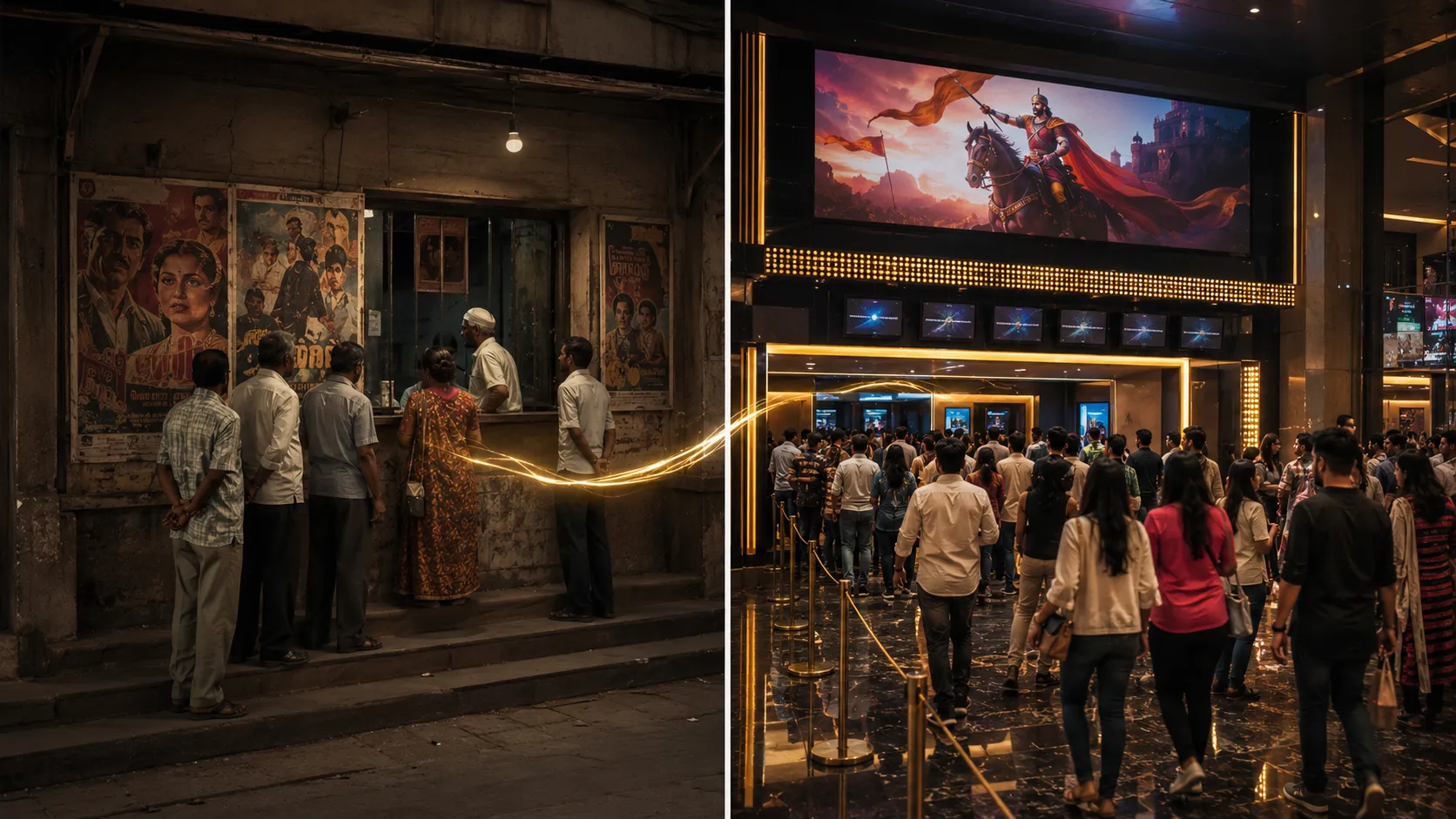
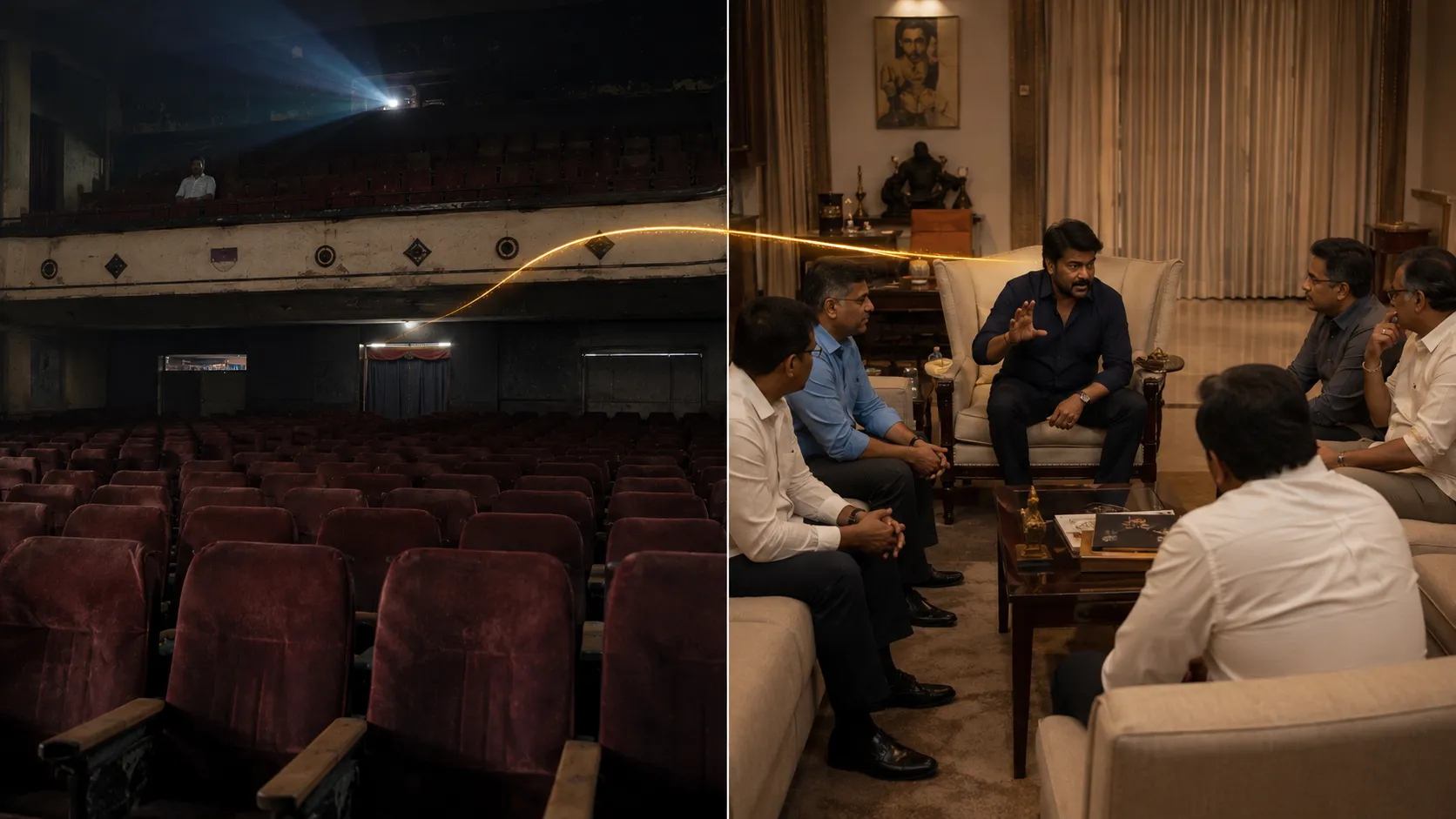
For nearly four decades, the single-screen theatres of Telangana have operated on a principle so simple it was never questioned: the exhibitor pays a fixed rent, the producer collects it, and the box office—whether triumphant or tragic—belongs to whoever took the risk. The system was designed for an era when audiences had nowhere else to go, when the only screen in town was the one with the faded posters and the creaking seats, and when the relationship between the man who made the film and the man who screened it was governed by handshake and habit rather than contract and calculation. That era is now over. The system that sustained it is being dismantled. And the film that finally broke it—or, more precisely, the film whose near-death experience finally forced the industry to acknowledge that the system was already broken—is Ram Charan's Peddi, a ₹350 crore sports action drama that was never meant to be a revolutionary document but has become one anyway.

The God-Hero, The Comedian-Director, and The ₹260 Crore Resurrection
MagazineMay 28, 2026

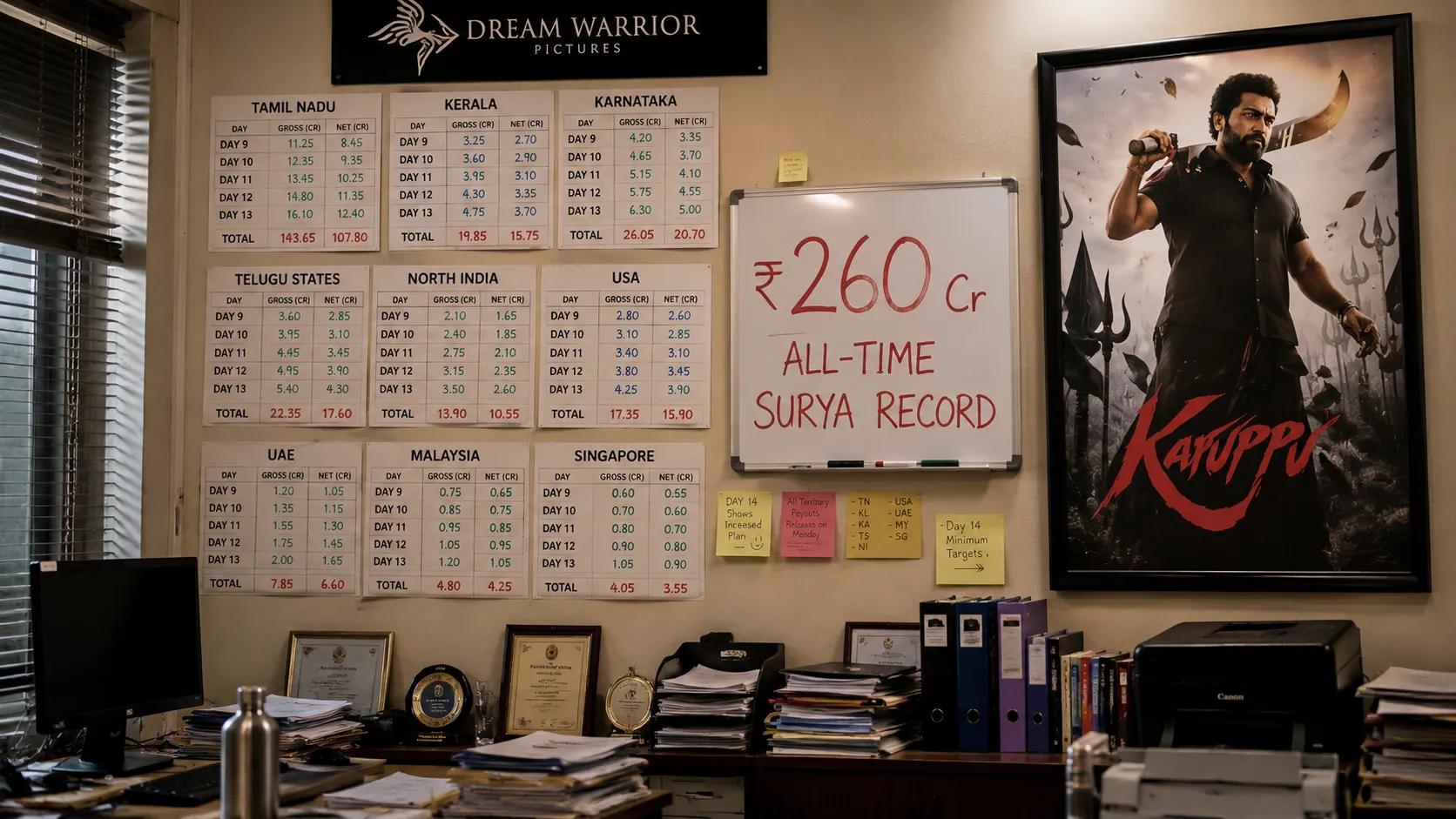
The God-Hero, The Comedian-Director, and The ₹260 Crore Resurrection

For more than ten years, Suriya Sivakumar has been the most confounding figure in Tamil cinema. He is, by any measure, one of the finest actors of his generation—a performer who has oscillated between the raw intensity of Kaakha Kaakha and the quiet dignity of Soorarai Pottru, who has carried films on his shoulders with a conviction that few of his contemporaries can match, and who has built a body of work that any actor in any language would be proud to claim. And yet, for more than a decade, the one thing that had eluded him was the thing that the industry measures most obsessively: a blockbuster.

The ₹100 Crore Regional Rebellion: How a Riteish Deshmukh Historical Drama Became the First Marathi Film to Crack the Century Mark—And What It Means for Every Language That Isn't Hindi
MagazineMay 28, 2026

The ₹100 Crore Regional Rebellion: How a Riteish Deshmukh Historical Drama Became the First Marathi Film to Crack the Century Mark—And What It Means for Every Language That Isn't Hindi

For decades, the ₹100 crore club has been the ultimate marker of commercial success in Indian cinema—a threshold that separates the blockbusters from the also-rans. It was created by Hindi films, dominated by Hindi stars, and calibrated to Hindi box-office economics. Over the years, Tamil and Telugu cinema breached it with increasing regularity. Kannada cinema cracked it with the KGF franchise. Malayalam cinema, long the critical darling of Indian film, crossed the line with 2018 and Manjummel Boys. But Marathi cinema—the industry that produced V. Shantaram, that gave India its first film to win the Golden Lotus at the National Film Awards, that has been making sophisticated, literate cinema for over a century—had never produced a single film that earned ₹100 crore in net collections. Until now.

The Superstar, The Chief Minister, and The ₹10,000 Crore Mirage: Inside Salman Khan's Audacious Township Bet—And the Clarification That Followed
MagazineMay 27, 2026

The Superstar, The Chief Minister, and The ₹10,000 Crore Mirage: Inside Salman Khan's Audacious Township Bet—And the Clarification That Followed

On December 8, 2025, the first day of the Telangana Rising Global Summit, a press release landed in the inboxes of journalists across the country that momentarily rewrote the ceiling of what a Bollywood star could build. Salman Khan Ventures Private Limited—the business arm of the actor whose films have grossed over ₹5,000 crore at the Indian box office and whose net worth is estimated at ₹3,225 crore—had signed a Memorandum of Understanding with the Telangana government. The announcement was staggering in its scale: a ₹10,000 crore integrated township and world-class film studio, spread across 500 acres in the proposed Bharat Future City on the outskirts of Hyderabad. It was, by a factor of roughly ten, the largest single real estate bet ever announced by an Indian film personality, and it promised to transform not just the actor's business empire but the geography of India's creative economy.

The ₹4,000 Crore Prayer: Inside the Most Expensive Gamble in Indian Cinema History—And the 42,000 Screens It Has to Fill to Break Even
MagazineMay 27, 2026

The ₹4,000 Crore Prayer: Inside the Most Expensive Gamble in Indian Cinema History—And the 42,000 Screens It Has to Fill to Break Even

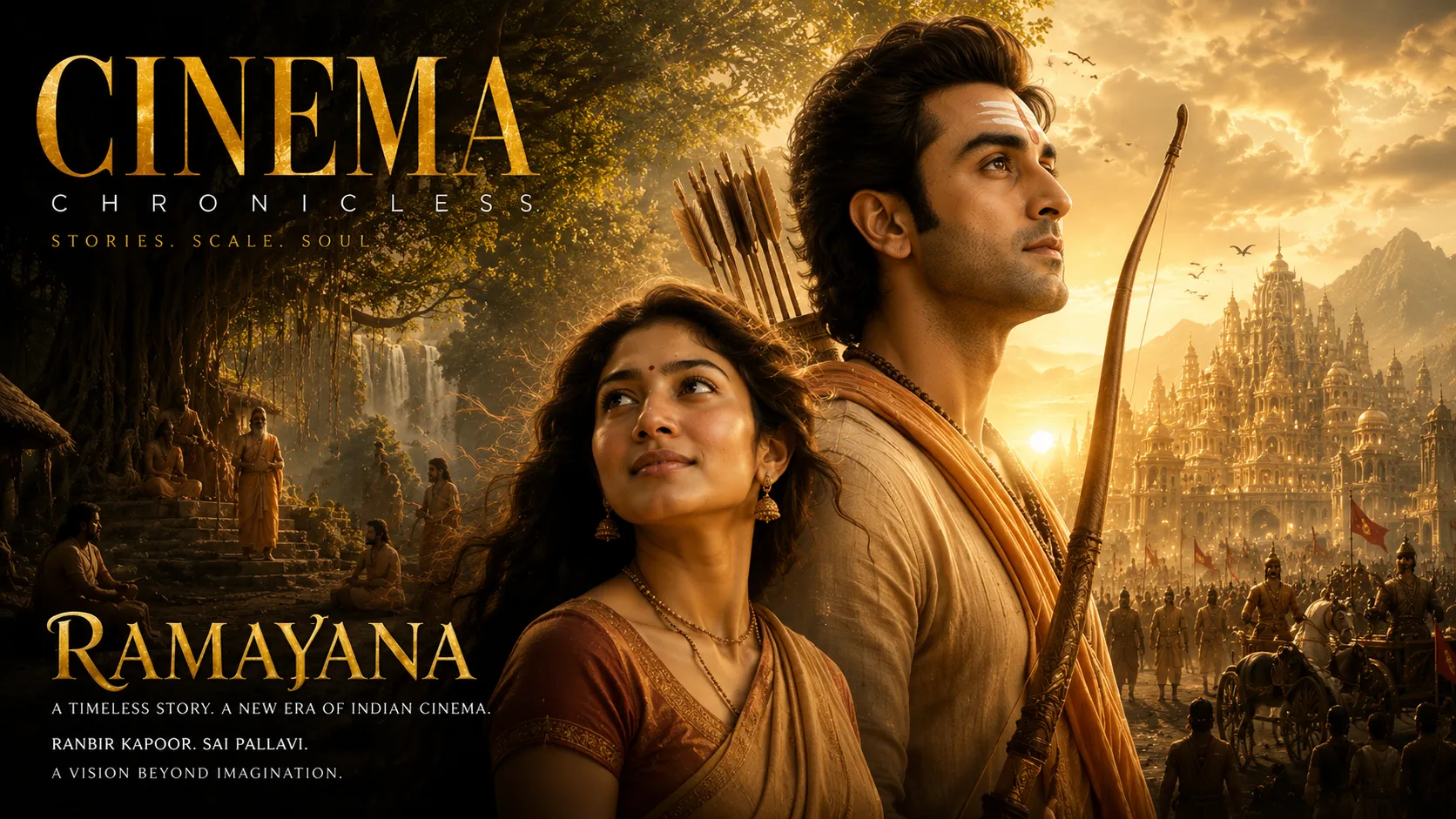
Sometime in the next five months, the first images from a film set will be released to a public that has been waiting for them with a mixture of reverence, curiosity, and anxiety. The film is Nitesh Tiwari's Ramayana, and it is, by any financial measure, the most audacious bet in the history of Indian cinema. The two-part epic carries a production budget of approximately ₹4,000 crore—roughly $480 million—which makes it not just the most expensive Indian film ever made, but one of the most expensive films ever made anywhere on Earth. The first part is scheduled for Diwali 2026. The second will follow in 2027. And the question that now hangs over every conversation in every trade circle in Mumbai is not whether the film will be good. It is whether the economics of global cinema can support a bet this large.