The ₹100 Crore Regional Rebellion: How a Riteish Deshmukh Historical Drama Became the First Marathi Film to Crack the Century Mark—And What It Means for Every Language That Isn't Hindi
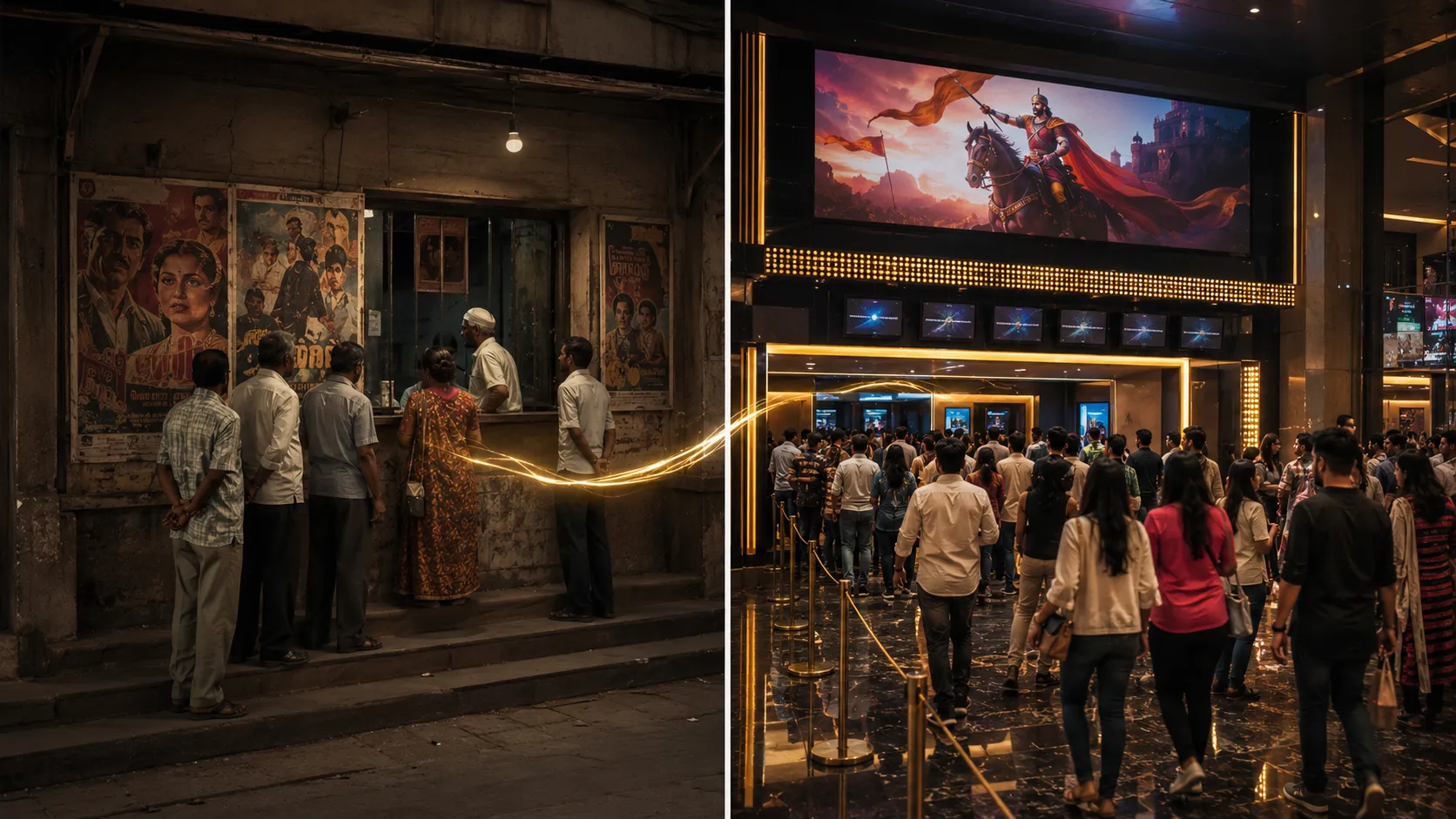
MUMBAI — May 28, 2026 — For decades, the ₹100 crore club has been the ultimate marker of commercial success in Indian cinema—a threshold that separates the blockbusters from the also-rans. It was created by Hindi films, dominated by Hindi stars, and calibrated to Hindi box-office economics. Over the years, Tamil and Telugu cinema breached it with increasing regularity. Kannada cinema cracked it with the KGF franchise. Malayalam cinema, long the critical darling of Indian film, crossed the line with 2018 and Manjummel Boys. But Marathi cinema—the industry that produced V. Shantaram, that gave India its first film to win the Golden Lotus at the National Film Awards, that has been making sophisticated, literate cinema for over a century—had never produced a single film that earned ₹100 crore in net collections. Until now.
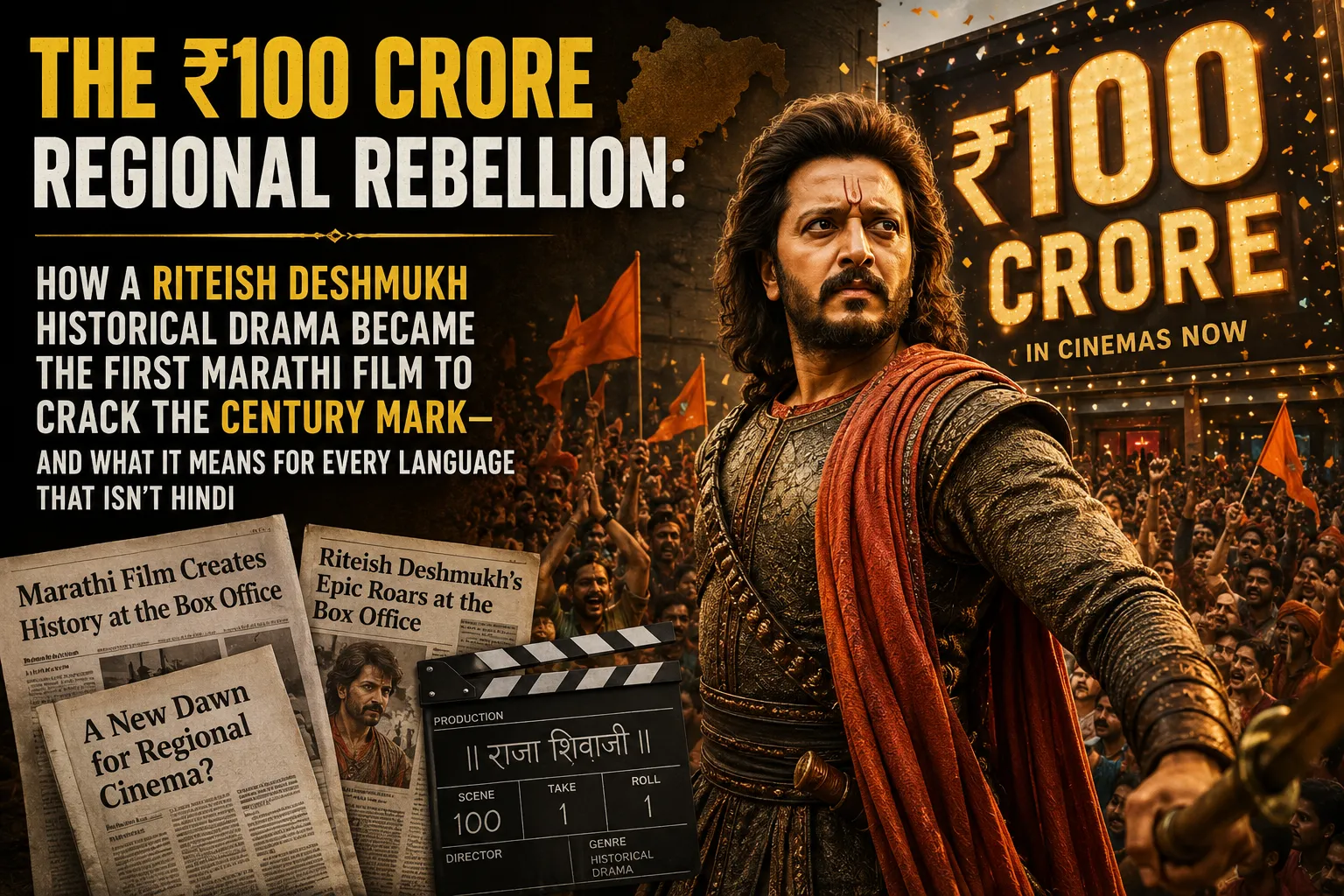
On May 25, Raja Shivaji, Riteish Deshmukh's historical action drama about the founder of the Maratha Empire, crossed the ₹100 crore mark in India net collections, becoming the first Marathi-language film in history to achieve the milestone. The film, released on May 1, has been on a steady, unhurried march through the box office for nearly four weeks—the kind of sustained run that regional cinema, with its deeper cultural roots and its more patient audiences, has always been better positioned to achieve than the front-loaded Hindi blockbuster. At a time when Hindi cinema is grappling with structural questions about what kind of films audiences will pay to watch, a Marathi historical epic—rooted in regional pride, made with conviction, and marketed with ambition—has quietly written itself into the record books.
Trade analysts now project a final lifetime net of ₹120 crore to ₹130 crore, which would place Raja Shivaji not merely above the century mark, but comfortably beyond it—in territory that most Hindi films released this year have failed to reach. "The film's success marks the first time that a Marathi film has achieved this in India net collections—a historic feat that underscores the growing commercial potential of regional cinema," noted trade analyst Taran Adarsh.
The Regional Cinema Breakout
The ₹100 crore milestone for Raja Shivaji is not merely a box-office statistic. It is a structural signal. For years, the Indian film industry has been defined by a hierarchy in which Hindi cinema occupied the centre—commercially, culturally, and financially—and the regional industries orbited around it. Tamil, Telugu, Kannada, and Malayalam cinema each had their own stars, their own audiences, and their own economic logic, but the ₹100 crore club remained, for most of its history, a Hindi-dominated institution. The Baahubali franchise shattered that hierarchy in 2015 and 2017, demonstrating that a Telugu film could earn more than any Hindi film had ever earned. KGF 2, RRR, and Pushpa 2 widened the breach. Marathi cinema was the last major linguistic film industry in India that had not produced a ₹100 crore film—until Raja Shivaji.
The breakthrough is particularly significant because it was achieved not by a pan-Indian spectacle designed to appeal across linguistic boundaries, but by a film deeply rooted in the history, culture, and pride of a single linguistic community. Chhatrapati Shivaji Maharaj is, for Marathi-speaking audiences, not merely a historical figure. He is the founder of the Maratha Empire, the symbol of resistance against Mughal expansion, and a figure of near-religious reverence across Maharashtra. The film's success suggests that the market for culturally specific, linguistically rooted cinema is larger than the industry has assumed—and that the audience for such films is willing to show up in numbers that rival the biggest Hindi releases.
The film's trajectory also challenges the conventional wisdom that regional-language films must be dubbed or remade in Hindi to achieve pan-Indian success. Raja Shivaji was released primarily in Marathi, with limited dubbed versions in Hindi and other languages. Its collections were driven overwhelmingly by audiences in Maharashtra, where the film has become a cultural event as much as a commercial one. The lesson for producers in other regional industries—Gujarati, Punjabi, Bengali, Bhojpuri—is that the ceiling for regional-language cinema is higher than they have been led to believe, and that the audience for stories told in their own languages, about their own histories, is larger, more passionate, and more willing to pay for a theatrical experience than the box-office data of previous years would suggest.
The Riteish Deshmukh Gamble
Raja Shivaji is, in one sense, a Riteish Deshmukh vehicle. The actor, who has spent two decades oscillating between Hindi comedies (Housefull, Dhamaal) and Marathi dramas (Lai Bhaari, Ved), produced and starred in the film at a scale that no Marathi production had previously attempted. The budget—estimated at ₹40 crore to ₹50 crore—was among the largest ever for a Marathi film, and it required Deshmukh to bet his own capital, his own credibility, and his own understanding of what the Marathi audience wanted on a project that could have failed spectacularly.
The film was directed by a team that understood the visual language of the historical epic—sweeping battle sequences, grand sets, a heroic central performance—and that was willing to invest in the production values required to make the Maratha era feel alive on screen. The battle scenes, in particular, have been singled out by critics as among the most ambitious ever attempted in a Marathi film. The marketing campaign, which positioned the film as a cultural event rather than merely a movie release, drew audiences from across the state, including older viewers who had not been to a cinema in years and younger viewers who had grown up on a diet of pan-Indian spectacles.
The film's success represents a vindication of Deshmukh's dual identity as both a Hindi film star and a Marathi cultural icon. Unlike many of his contemporaries who have abandoned regional cinema entirely in pursuit of pan-Indian success, Deshmukh has continued to invest in Marathi-language projects, using the wealth and visibility generated by his Hindi film career to fund productions that would not otherwise have been made. Raja Shivaji is the most ambitious expression of that commitment, and its success is likely to encourage other Marathi stars—and stars from other regional industries—to attempt similarly scaled productions.
The broader question raised by the film's success is whether the future of Indian cinema lies not in the erasure of linguistic boundaries but in their reinforcement—whether the most commercially potent films of the next decade will be those that speak to a specific community, in a specific language, about a specific history, rather than those that attempt to appeal to everyone at once. Raja Shivaji suggests that the answer may be yes, and that the regional-language film, made with ambition and conviction, may be the most underappreciated growth story in the Indian entertainment economy.


