The ₹4,000 Crore Prayer: Inside the Most Expensive Gamble in Indian Cinema History—And the 42,000 Screens It Has to Fill to Break Even
MUMBAI — May 27, 2026 — Sometime in the next five months, the first images from a film set will be released to a public that has been waiting for them with a mixture of reverence, curiosity, and anxiety. The film is Nitesh Tiwari's Ramayana, and it is, by any financial measure, the most audacious bet in the history of Indian cinema. The two-part epic carries a production budget of approximately ₹4,000 crore—roughly $480 million—which makes it not just the most expensive Indian film ever made, but one of the most expensive films ever made anywhere on Earth. The first part is scheduled for Diwali 2026. The second will follow in 2027. And the question that now hangs over every conversation in every trade circle in Mumbai is not whether the film will be good. It is whether the economics of global cinema can support a bet this large.
The numbers are staggering in their scale and sobering in their implications. Producer Namit Malhotra is seeking ₹450 crore for the Hindi theatrical distribution rights alone—a figure that is nearly double the current record of ₹250 crore, which was set by Shah Rukh Khan's upcoming film King. Major distribution houses—Dharma Productions, AA Films, and Pen Studios—are in active negotiations. Separately, Malhotra has reportedly turned down a ₹700 crore offer from Netflix for the combined digital rights of both parts, holding out for a landmark deal of ₹1,000 crore for digital rights alone. The global distribution plan envisions a footprint of over 42,000 screens with dubs in more than 45 languages. Warner Bros. is rumoured to be in talks to handle distribution in the United States and Canada, while the China Film Group could oversee promotion in China. The combined revenue target—from theatrical, digital, satellite, and music rights—is a worldwide gross of ₹2,500 crore. To put that in perspective: only one Indian film in history, Aamir Khan's Dangal, has ever crossed the ₹2,000 crore mark globally.
The ₹4,000 Crore Question
To understand the scale of the Ramayana bet, one must first understand what ₹4,000 crore actually means in the context of Indian cinema. The highest-grossing Indian film of all time, Dangal, earned approximately ₹2,000 crore worldwide—roughly half of what Ramayana needs to generate just to break even, assuming a standard revenue split between producers and exhibitors. The highest-grossing Indian film of 2026 so far, the Ranveer Singh spy thriller Dhurandhar 2, has collected approximately ₹1,789 crore globally—a figure that would need to be surpassed by more than ₹700 crore for Ramayana to meet its target.
The budget is not a marketing number. Reliable sources close to the producer have confirmed that the Ramayana franchise is being designed on a budget of ₹1,600 crore for the first part alone, excluding print and publicity costs. The two-part saga, when completed, will have consumed approximately ₹4,000 crore—a figure that places it in the same financial league as James Cameron's Avatar sequels and the most expensive Marvel Cinematic Universe productions. The difference is that those films were backed by the Walt Disney Company, a $200 billion media conglomerate with a century of experience in global film distribution. Ramayana is being backed by Namit Malhotra, a producer whose company, Prime Focus, is best known for its visual effects work on Hollywood productions—not for distributing Indian epics to 42,000 screens worldwide.
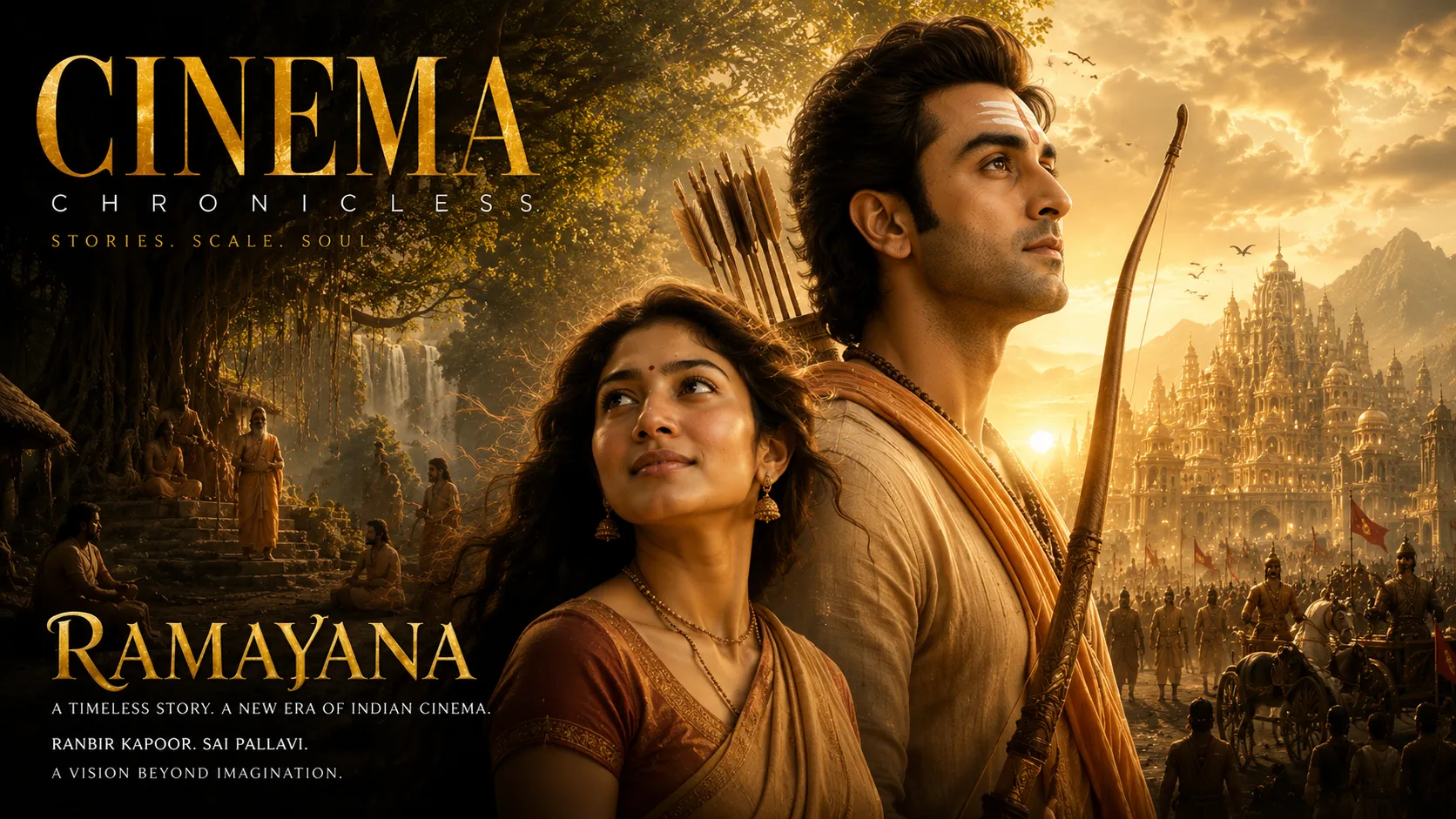
The casting reflects the scale of the ambition. Ranbir Kapoor plays Lord Ram. Yash, the Kannada superstar whose KGF franchise made him a pan-Indian phenomenon, plays Ravana. Sai Pallavi, one of the most respected actors in South Indian cinema, plays Goddess Sita. Sunny Deol, whose career has been revitalised by the blockbuster Gadar 2, plays Lord Hanuman. The cast is designed to draw audiences from every major linguistic and regional market in India—the Hindi heartland, the Kannada-speaking south, the Tamil and Telugu states, and the Punjabi diaspora. It is, in effect, a casting strategy built to maximise the addressable market for a film that must reach essentially every Indian who has ever bought a movie ticket.
The distribution strategy reflects the same logic of maximum reach. The producers are reportedly targeting a global footprint of over 42,000 screens—a number that would make Ramayana one of the widest releases in cinematic history. Dubs are planned in more than 45 languages. Warner Bros. is rumoured to be in talks to handle distribution in North America, while the China Film Group could oversee the Chinese market—a territory that has historically been difficult for Indian films to crack, but that delivered a significant share of Dangal's historic box office run. The ambition is not merely to make the biggest Indian film ever. It is to make a global event film, on the scale of a Marvel or Star Wars release, that happens to be Indian.
The digital rights strategy has already attracted attention for its audacity. Malhotra reportedly turned down a ₹700 crore offer from Netflix for the combined rights of both parts—a figure that would have set a record for any Indian film. He is holding out for ₹1,000 crore for the digital rights alone. The logic is that if Ramayana Part 1 performs as expected at the box office, the value of the digital rights for Part 2 will increase significantly. A phased strategy—selling the rights for Part 1 first, then negotiating for Part 2 based on the results—could yield a larger total return than a combined upfront deal. The risk, of course, is that if Part 1 underperforms, the value of the digital rights for Part 2 will decline. The strategy is a high-stakes poker game with a ₹4,000 crore pot, and Malhotra is betting that the film's performance will prove his valuation was conservative.
The Trade-Off at the Heart of the Bet
The most strategically significant dimension of the Ramayana project is not the budget or the distribution plan. It is the trade-off embedded in the film's very existence. Ramayana is attempting to do something that no Indian film has ever done: compete as a global event film while remaining deeply rooted in Indian cultural and religious tradition. The tension between those two objectives is the central creative and commercial challenge of the project.
On one hand, the film must satisfy the expectations of a global audience that has been conditioned by the visual spectacle of Hollywood blockbusters. The VFX must be world-class. The action sequences must be legible to audiences who have never encountered the Ramayana before. The storytelling must work across cultural and linguistic boundaries. On the other hand, the film must honour the religious and cultural sensibilities of Indian audiences for whom the Ramayana is not just a story, but a sacred text. The depiction of Lord Ram, Sita, Hanuman, and Ravana will be scrutinised with an intensity that no fictional character has ever faced. A single creative decision that is perceived as disrespectful could trigger a backlash that no marketing budget can contain.
The casting of Yash as Ravana is one of the most commercially astute decisions the producers have made—and one of the most creatively risky. Yash is a superstar in Karnataka and has a significant following across South India. His presence guarantees a strong opening in the Kannada, Telugu, and Tamil markets, which are essential to the film's financial viability. But Ravana is, in most interpretations of the Ramayana, the villain—the demon king whose abduction of Sita sets the epic's central conflict in motion. Casting a beloved superstar as the antagonist is a gamble that depends on the audience's willingness to accept Yash in a role that is both charismatic and morally complex. If the performance works, it could be one of the most memorable in Indian cinema history. If it does not, the commercial consequences could be severe.
The choice of Nitesh Tiwari as director reflects a similar calculus. Tiwari is best known for Dangal—the highest-grossing Indian film of all time—and for Chhichhore, a critically acclaimed comedy-drama. He is not a director of mythological epics. He is a director of human stories, and his ability to translate the grandeur of the Ramayana into a narrative that connects emotionally with audiences across cultures will determine whether the film succeeds as more than a visual spectacle. The risk is that Tiwari's strengths—character development, emotional authenticity, understated humour—may be overwhelmed by the sheer scale of the production. The opportunity is that he may bring to the Ramayana something that no previous adaptation has achieved: a sense of genuine human intimacy within the framework of a cosmic epic.
The Distributors' Dilemma
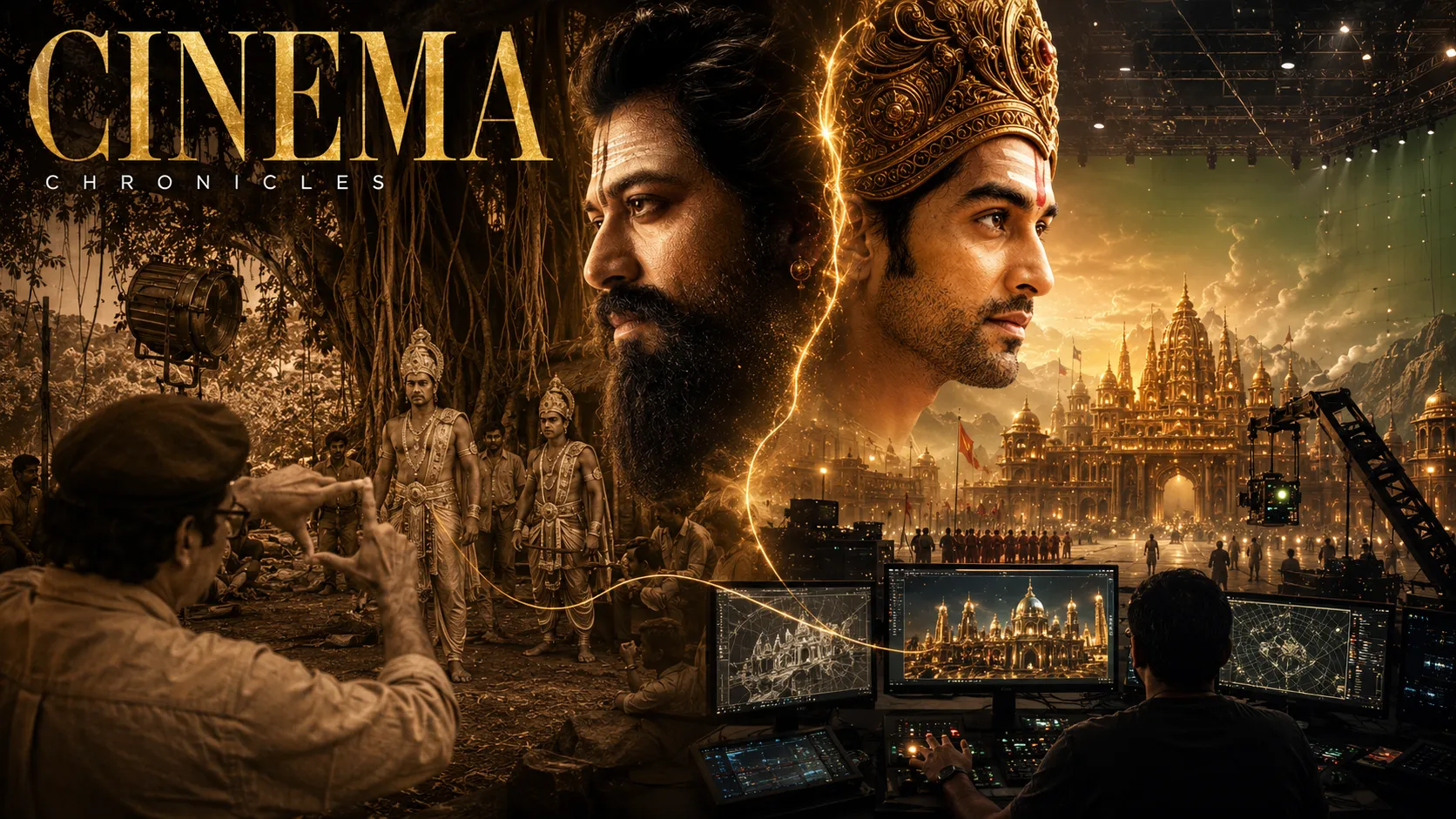
The distribution negotiations for Ramayana have become the most closely watched conversation in the Indian film industry, and for good reason. The ₹450 crore asking price for Hindi theatrical rights alone is unprecedented—nearly double the current record—and it forces distributors to confront a question that has no easy answer: what is the right price for a film that could either be the highest-grossing Indian release in history or a financial disaster that takes down everyone who bet on it?
The current record for a Hindi film distribution deal is approximately ₹250 crore, set by Shah Rukh Khan's King. Ramayana's asking price of ₹450 crore would represent an 80 percent premium over that benchmark—a premium that can only be justified if the film performs at the upper end of even the most optimistic projections. The trade estimates for Ramayana's domestic net collection range from ₹1,000 crore to ₹1,500 crore, with a potential worldwide gross exceeding ₹2,500 crore. If the film hits the upper end of that range, the ₹450 crore asking price will look like a bargain. If it falls short—if the audience is not as large as the producers believe, or if the creative execution does not match the financial ambition—the distributors who paid that price will be left holding losses that could reshape the economics of the entire industry.
The major players circling the deal—Dharma Productions, AA Films, and Pen Studios—are each weighing the same variables: the star cast, the director's track record, the cultural resonance of the source material, the global distribution potential, and the risk that a film this expensive and this culturally sensitive could be derailed by factors beyond anyone's control. Dharma Productions, run by Karan Johar, has the marketing muscle and the industry relationships to maximise a film's commercial potential. AA Films, run by Anil Thadani, is one of the largest independent distributors in the country. Pen Studios, run by Jayantilal Gada, has a track record of betting big on high-risk, high-reward projects. Each of them is capable of writing the cheque. None of them wants to be the one who wrote it for a film that failed to deliver.
The phased strategy that Malhotra is pursuing—selling the rights for Part 1 first, then negotiating for Part 2 based on the results—is designed to reduce the risk for distributors while maximising the return for the producers. If Part 1 performs well, the value of Part 2's rights will increase, and the producers will capture a larger share of the upside. If Part 1 underperforms, the distributors who paid for Part 1 will have lost money, but they will not be locked into a similarly priced deal for Part 2. The strategy is rational, but it depends on Part 1 delivering—and in the movie business, as every distributor knows, nothing is guaranteed.
The broader context is an Indian film industry that is in the midst of a structural transformation. The success of the Dhurandhar duology—which has grossed more than ₹3,000 crore across both films, making it the highest-grossing franchise in Indian history—has demonstrated that Indian audiences will turn out in record numbers for films that combine star power, spectacle, and cultural resonance. The South Indian film industries, particularly Telugu and Kannada cinema, have demonstrated that regional language films can achieve pan-Indian and even global success. The OTT revolution has created new revenue streams for films after their theatrical runs. And the growing appetite for Indian content in international markets—driven by the diaspora and by the increasing cultural visibility of Indian cinema at festivals and awards shows—has expanded the addressable market for the largest Indian productions.
Ramayana is the ultimate test of whether these structural shifts have created a market large enough to support a ₹4,000 crore bet. If the film succeeds—if it crosses ₹2,500 crore worldwide, if it demonstrates that Indian cinema can compete with Hollywood at the highest level of scale and ambition—it will open the door for a generation of similarly ambitious productions. If it fails, it will be remembered as the moment the industry's reach exceeded its grasp. The ₹450 crore distribution deal is the first milestone on that journey. The 42,000 screens are the destination. The Diwali 2026 release date is the countdown. The most expensive prayer in Indian cinema history is about to be answered—one way or the other.
What This Signals
The Ramayana project is not primarily about a film. It is about the structural transformation of the Indian film industry from a fragmented collection of regional markets into a globally competitive, vertically integrated entertainment economy. The ₹4,000 crore budget, the ₹450 crore distribution asking price, the 42,000-screen global footprint, the Warner Bros. and China Film Group negotiations, the ₹1,000 crore digital rights target—all of these are expressions of a single, audacious conviction: that Indian cinema can compete at the highest level of scale, ambition, and financial sophistication.
That conviction has been building for years. The success of the Baahubali franchise demonstrated that a South Indian film, rooted in regional storytelling traditions, could achieve pan-Indian and global success. The success of Dangal demonstrated that an Indian film, properly marketed and distributed, could earn more in China than in India. The success of the Dhurandhar duology demonstrated that a Hindi-language spy thriller could become the highest-grossing franchise in Indian history. Each of these milestones expanded the industry's sense of what was possible. Ramayana is the logical endpoint of that expansion—a film that treats the global market as its primary audience, not as an afterthought.
The risks are as large as the ambition. A ₹4,000 crore budget cannot be recouped from the Indian market alone. The film must perform in China, in North America, in Europe, and in every other major film market on Earth. It must satisfy audiences who have never heard of the Ramayana and audiences who have been hearing it since childhood—two groups with radically different expectations and radically different standards for what constitutes an acceptable adaptation. It must navigate the cultural sensitivities that surround any depiction of religious figures in a country where those figures are not just characters, but objects of devotion. And it must do all of this while delivering a level of visual spectacle and emotional engagement that justifies the most expensive ticket price in Indian cinema history.
Namit Malhotra is not a traditional film producer. He built his career in visual effects, working on Hollywood productions like Gravity and The Jungle Book. He understands, perhaps better than anyone in the Indian film industry, what is technically possible—and what it costs. His decision to bet ₹4,000 crore on the Ramayana is not a leap of faith. It is a calculated wager that the global market for Indian cinema has grown large enough to support a bet this size. The distribution negotiations are the first test of that wager. The Diwali 2026 release is the second. The 42,000 screens are the third. The most expensive film in Indian history is not just a movie. It is an argument—that Indian stories, told at scale, can compete with anyone's. The market will deliver its verdict in about five months.


