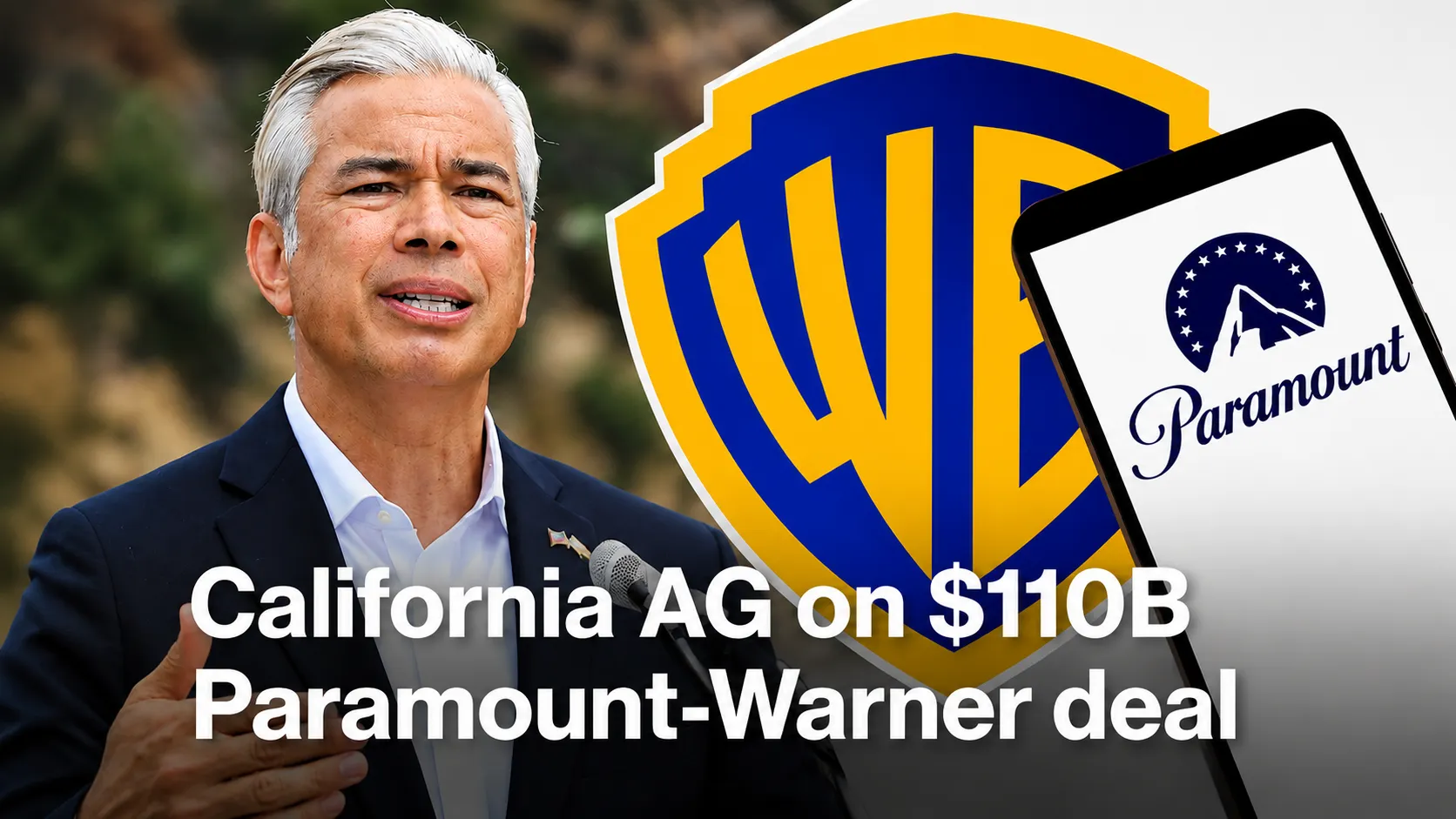
Just weeks after the US Department of Justice cleared the way for one of the largest media mergers in American history, a coalition of state attorneys general has launched the sharpest legal challenge yet to Paramount Skydance's proposed $110 billion acquisition of Warner Bros. Discovery. Twelve states — Arizona, California, Colorado, Connecticut, Massachusetts, Minnesota, Nevada, New Jersey, New Mexico, New York, Oregon, and Washington — filed suit in federal court in California's Northern District on Monday, July 13, seeking to block the deal on the grounds that it would violate the Clayton Antitrust Act of 1914, the century-old law designed to prevent mergers that undermine competition or create monopolies, a filing that instantly reshaped the near-term outlook for one of the entertainment industry's most closely watched pending transactions.
The lawsuit represents the most serious obstacle Paramount has faced yet in its effort to complete the acquisition, and it arrives at a genuinely awkward moment for the deal's momentum: the Justice Department had announced just last month, in June, that it had completed its own review and concluded the transaction was "not likely to result in harm to competition or American consumers" — a federal green light that Paramount had been counting on to help clear the deal's remaining hurdles, and one whose credibility this week's state lawsuit now directly and publicly challenges.
What the States Are Actually Alleging
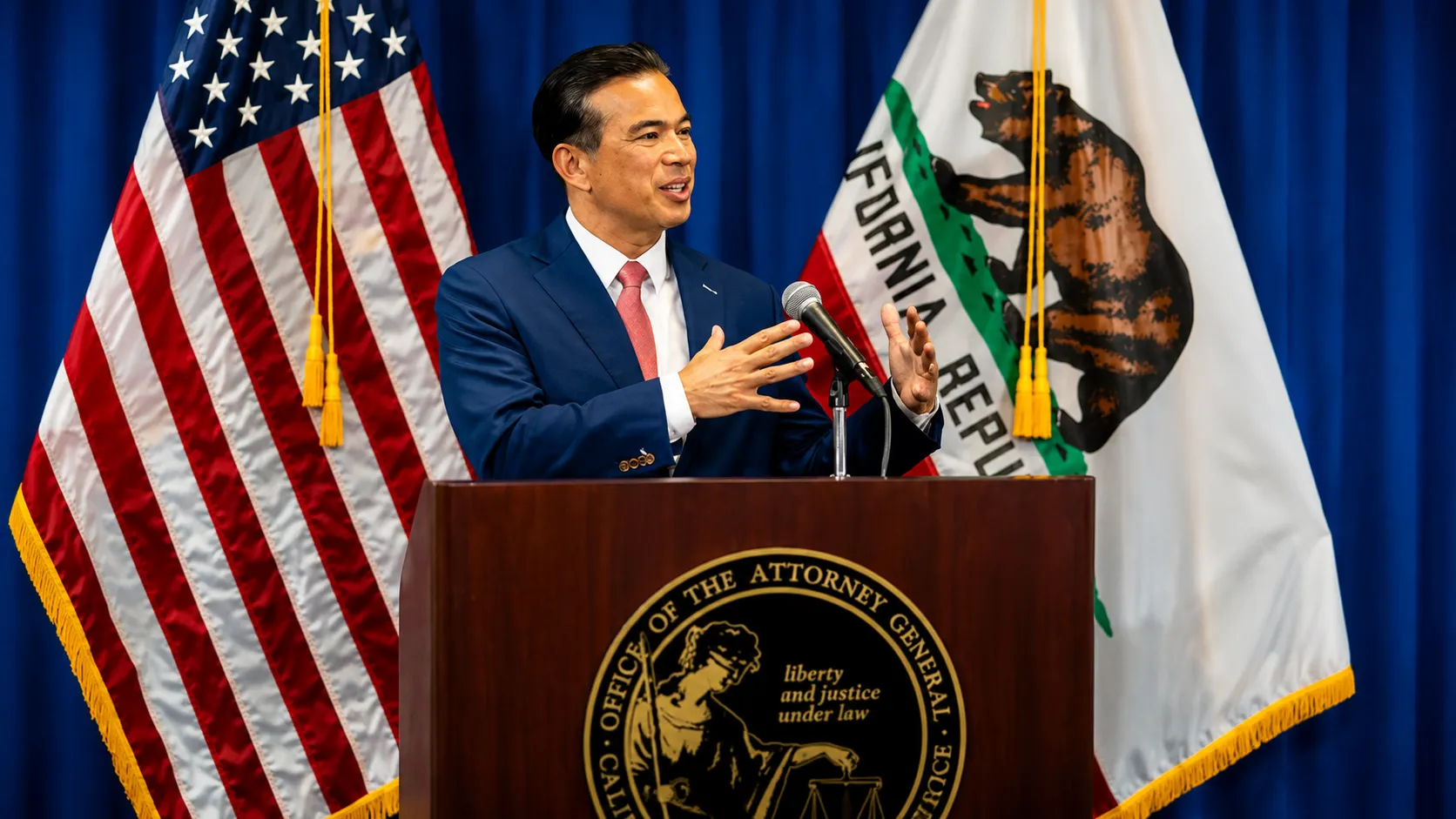
California Attorney General Rob Bonta, who is leading the coalition, laid out the states' core argument in stark terms during a press conference held in front of the Hollywood sign in Los Angeles, a symbolically charged venue choice that underscored just how directly the lawsuit frames itself as a defense of the American entertainment industry's competitive structure. According to the lawsuit, a combined Paramount-Warner Bros. Discovery would control nearly a third of all cable television programming in the United States and more than a third of blockbuster theatrical film distribution — concentration levels the states argue would inevitably lead to higher prices, reduced content quality, and fewer movies and television shows produced each year.
The states' filing gets considerably more specific about the scale of that concentration. According to the lawsuit, if the merger proceeds, only three distributors would control 75 per cent of wide-release theatrical films, while just four distributors — the combined Paramount-Warner Bros. entity alongside Disney, Universal, and Sony — would control 86 per cent of all wide releases. Among the highest-grossing theatrical films specifically, the combined company would control more than 30 per cent on its own, with the same four-distributor group controlling over 90 per cent. On the cable side, the states note that Warner Bros. currently ranks as the second-largest cable programmer in the country and Paramount the third-largest, meaning a combination would create an entity with a 27 per cent share of the entire cable programming market.
"The unlawful merger of these two entertainment behemoths would lead to higher prices, lower quality, and less content for film and television, harming movie theaters, basic cable distributors, and ultimately, audiences on every sofa and movie theater seat in the U.S.," Bonta said in a statement announcing the lawsuit. "This merger must be blocked."
Paramount's Forceful Pushback
Paramount responded to the lawsuit with unusually combative language, vowing to fight the challenge "vigorously." A company spokesperson characterized the states' legal theory as "a fundamentally flawed application of the antitrust laws" that is "wrong on both the facts and the law." Central to Paramount's defense is an argument that the traditional antitrust framework the states are applying fails to account for how dramatically the entertainment landscape has been reshaped by the rise of streaming giants including Netflix, Amazon, and Apple — platforms that Paramount argues have fundamentally altered competitive dynamics in ways that render concerns about traditional cable and theatrical distribution concentration largely obsolete.
Paramount also has pointed out that regulators in jurisdictions around the world have already approved the merger, including the US Department of Justice itself, framing the states' lawsuit as an outlier legal challenge running against the grain of a broader global regulatory consensus that the deal poses limited competitive harm. The company has argued more broadly that combining Paramount and Warner Bros. would create a stronger, better-capitalized, creative-first media company genuinely better positioned to compete against the streaming giants that Paramount says have already come to dominate the industry's competition for audiences, premium content, and creative talent, a framing it hopes will ultimately resonate with the federal judge overseeing the case.
A Politically Charged Backdrop
The DOJ's decision to clear the merger last month did not arrive without controversy of its own. The department's review had been clouded by allegations of political favoritism, given Paramount's close ties to President Trump and members of his administration — allegations sharp enough that Senator Elizabeth Warren publicly declared, upon the DOJ's approval of the deal in June, that the decision "reeks of corruption." That political backdrop adds an additional layer of complexity to the states' legal challenge, which effectively positions a coalition of predominantly Democratic-led state attorneys general against a federal antitrust clearance issued under an administration facing its own questions about the impartiality of that review.
The Financial Stakes of Delay
Beyond the substantive antitrust questions at the heart of the lawsuit, the states' legal challenge carries genuine financial consequences for Paramount regardless of how the case ultimately resolves. Paramount has previously stated it expects the transaction to close in the third quarter of 2026. Crucially, the merger agreement includes a so-called "ticking fee" provision: if the deal is not completed by September 30, Paramount has agreed to pay Warner Bros. Discovery shareholders a quarterly fee of 25 cents per share, amounting to approximately $650 million every quarter the closing is delayed. That financial mechanism means the states' lawsuit — even if it ultimately fails to permanently block the merger — could still impose a substantial and rapidly accumulating cost on Paramount simply by delaying the deal's completion through prolonged litigation.
The coalition of states has explicitly requested that Paramount and Warner Bros. Discovery voluntarily halt the merger process until the judicial process concludes, and has signaled it will seek a temporary restraining order and preliminary injunction if the companies do not comply — legal mechanisms specifically designed to freeze the transaction in place while the underlying antitrust case works its way through the courts, a process that could realistically extend well beyond the September 30 ticking-fee deadline.
Not the Only Legal Challenge
The state attorneys general lawsuit is not the only legal obstacle the merger now faces. The Writers Guild of America, the labor union representing thousands of television, news, movie, and online writers, filed a separate lawsuit shortly after the states' action, also alleging that the deal violates federal antitrust law. The WGA's suit argues the merger would lead to lower pay and reduced opportunities for writers across the combined companies' film and television operations — adding a labor-focused dimension to the broader antitrust challenge and underscoring just how many different constituencies within the entertainment industry view the proposed combination as a genuine threat to their economic interests.
Notably, this is not the first time this particular coalition of state attorneys general has moved to block a major media consolidation. An overlapping group of Democratic state attorneys general has separately sued to block Nexstar Media Group's proposed takeover of local television station owner Tegna, a case in which a federal judge in Sacramento has already put full integration of the two station groups on hold ahead of a trial scheduled roughly a year from now — a precedent that offers some indication of how seriously courts may be willing to entertain state-level antitrust challenges to media consolidation, even after federal regulators have granted their own approval.
How This Compares to Past Media Antitrust Battles
This lawsuit does not exist in a vacuum — it follows a broader, recent pattern of heightened antitrust scrutiny toward media and telecommunications consolidation across the United States. State-level attorneys general have increasingly positioned themselves as an independent check on federal antitrust enforcement, particularly in cases where a change in presidential administration has coincided with a more permissive federal review posture. The parallel case against Nexstar's proposed acquisition of Tegna, in which a federal judge has already paused full integration ahead of trial, offers the clearest recent precedent for how seriously courts may treat these state-led challenges — and gives both sides in the Paramount-Warner Bros. case a concrete data point for how the litigation might realistically unfold over the coming months.
The International Dimension of the Deal
Beyond the domestic American legal battle, this week's lawsuit also carries implications for how the combined Paramount-Warner Bros. entity would engage with content markets and regulatory bodies internationally. Warner Bros. Discovery's global footprint includes substantial production, licensing, and distribution operations across Europe, Asia, and Latin America, while Paramount's own international presence spans a similarly broad range of markets. A prolonged legal battle over the deal's domestic antitrust status inevitably introduces additional uncertainty into how quickly, and on what terms, the combined company can move forward with integrating these international operations — a consideration that global content partners and streaming platforms operating outside the United States will be watching closely as the litigation unfolds.
What a Blocked or Delayed Merger Would Mean for Content Creators
Beyond the direct financial and legal stakes for Paramount and Warner Bros. Discovery shareholders, the outcome of this litigation carries genuine consequences for the tens of thousands of actors, writers, directors, and production crew members whose livelihoods depend on the volume and diversity of film and television projects greenlit each year across the American entertainment industry. The Writers Guild of America's decision to file its own separate legal challenge underscores just how directly labor groups view this specific antitrust question as bearing on their members' economic prospects, given how directly the number of independent buyers for scripts, projects, and talent shapes both compensation levels and the sheer volume of opportunities available industry-wide.
Why This Matters for Global Media and Entertainment
For a publication tracking global business and entertainment trends, this legal battle carries significance well beyond its direct impact on Paramount and Warner Bros. Discovery shareholders. The outcome will help determine whether the trend toward ever-larger media consolidation — a pattern that has accelerated considerably as legacy entertainment companies race to build scale sufficient to compete against streaming giants — continues largely unimpeded, or whether state-level antitrust enforcement emerges as a genuine, durable check on that consolidation even in an era of more permissive federal antitrust review.
The case also carries direct relevance for the global entertainment content supply chain, including the growing volume of international content — spanning both licensed distribution deals and original co-productions — that companies like Warner Bros. Discovery and Paramount increasingly source from and distribute to markets including India. A combined Paramount-Warner Bros. entity, with its dramatically expanded content library and distribution reach, would represent an even more consequential counterparty for international content partners and streaming platforms operating in high-growth markets, making the ultimate resolution of this litigation a matter of genuine interest well beyond America's own borders.
What Comes Next
With the states seeking to freeze the merger through a temporary restraining order and preliminary injunction, the coming weeks will be critical in determining whether Paramount can maintain its targeted third-quarter closing timeline or whether the transaction becomes ensnared in prolonged litigation that could extend well past the September 30 ticking-fee deadline. For now, this week's lawsuit stands as the most serious legal threat the merger has faced since it was first announced, and a genuine test of how much power state-level antitrust enforcement retains to challenge deals that have already cleared federal review, at a moment when the boundaries between state and federal antitrust authority are themselves increasingly contested terrain across multiple industries beyond media alone.