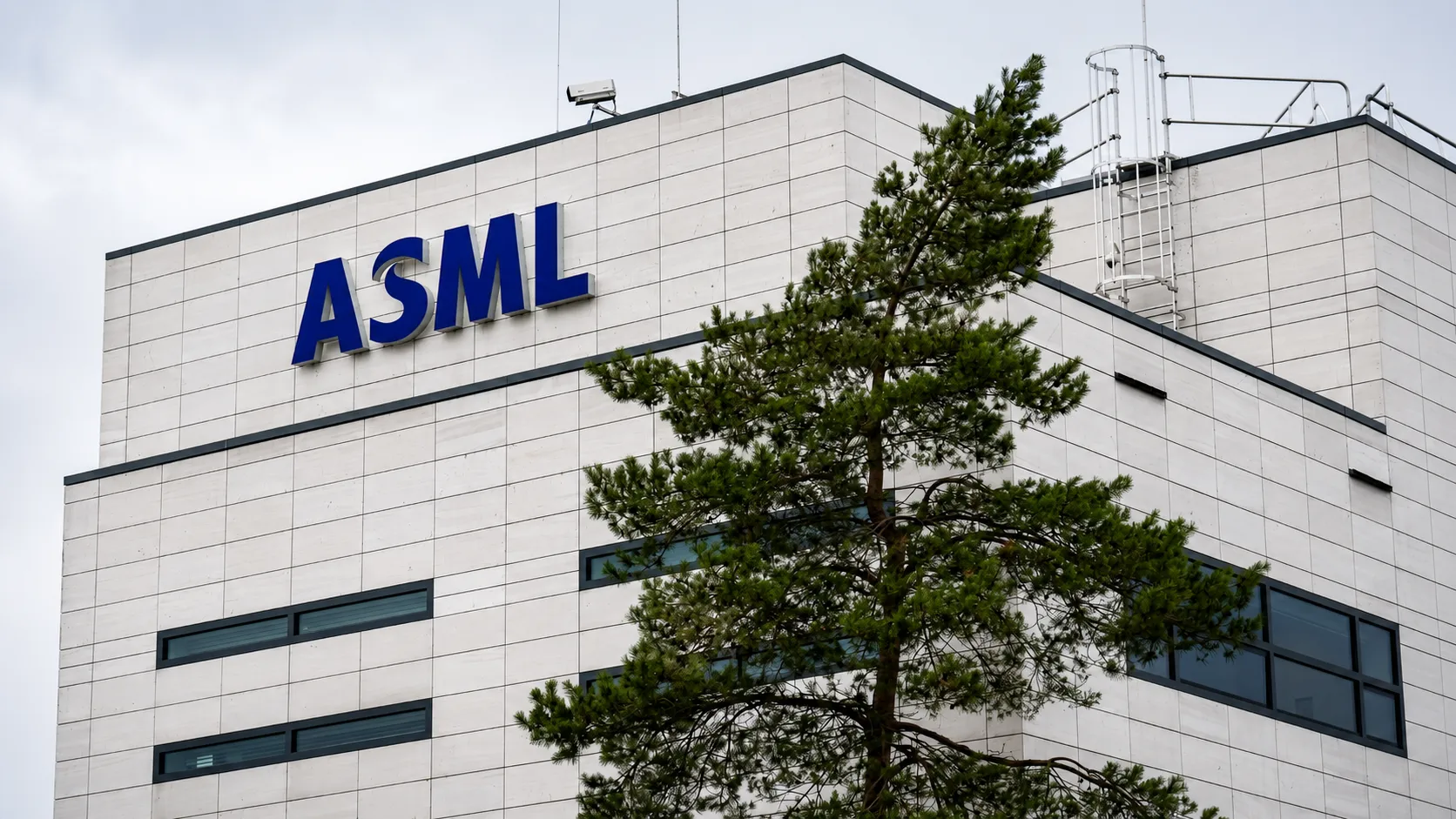
There is a small city in the Netherlands called Veldhoven that most people outside the semiconductor industry have never heard of, and yet the machines built there arguably do more to determine the pace of the global artificial intelligence boom than almost any other single piece of industrial equipment on the planet. ASML Holding, the Dutch company that holds an effective global monopoly on extreme ultraviolet lithography — the technology required to etch the most advanced computer chips in existence — delivered another emphatic reminder of that outsized influence this week, raising its full-year 2026 revenue guidance for the second time this year and reporting second-quarter results that comfortably beat Wall Street's expectations, in a release that once again reinforced just how tightly the fortunes of the entire AI hardware ecosystem remain tethered to a single company's order book.
ASML now expects full-year 2026 net sales of between €43 billion and €45 billion, up sharply from the €36 billion to €40 billion range it had projected just a quarter earlier, following an April guidance increase that had itself already lifted expectations. At the midpoint, that represents a roughly 16 per cent upward revision in a matter of months — an extraordinary pace of upgrade for a company of ASML's scale, and a signal that the artificial intelligence infrastructure investment cycle currently reshaping global technology spending shows no sign of decelerating.
The Numbers Behind the Upgrade
For the quarter ended June 30, ASML reported total net sales of €9.33 billion, comfortably ahead of the roughly €8.80 billion analysts had been modeling, alongside net income of €2.92 billion, also above the consensus estimate of approximately €2.62 billion. Earnings per share came in at $8.69, beating the $7.98 Wall Street had projected — the fourth consecutive quarter in which ASML has topped analyst expectations. Gross margin for the quarter reached 54 per cent, exceeding the company's own guidance range, and ASML lifted its full-year gross margin outlook to between 54 and 56 per cent, up from a prior range of 51 to 53 per cent.
Chief Executive Christophe Fouquet described order intake as "extremely strong" throughout the first half of the year, telling investors that ASML's customers — the world's leading chip manufacturers, including Taiwan Semiconductor Manufacturing Company, Samsung, SK Hynix, Micron, and Intel — continue to accelerate their capacity expansion plans in direct response to surging global demand for AI computing hardware. That customer commitment, Fouquet said, is translating into increased order visibility across ASML's entire product portfolio, giving the company confidence to commit to a significant capacity expansion of its own: a planned 30 per cent increase in 2026 low-NA extreme ultraviolet production capacity, alongside a further 30 per cent increase in deep ultraviolet immersion lithography capacity, the company's other major product category, a dual expansion that together represents one of the largest capacity commitments ASML has made in a single announcement in recent years.
Why ASML's Guidance Matters Far Beyond Its Own Balance Sheet
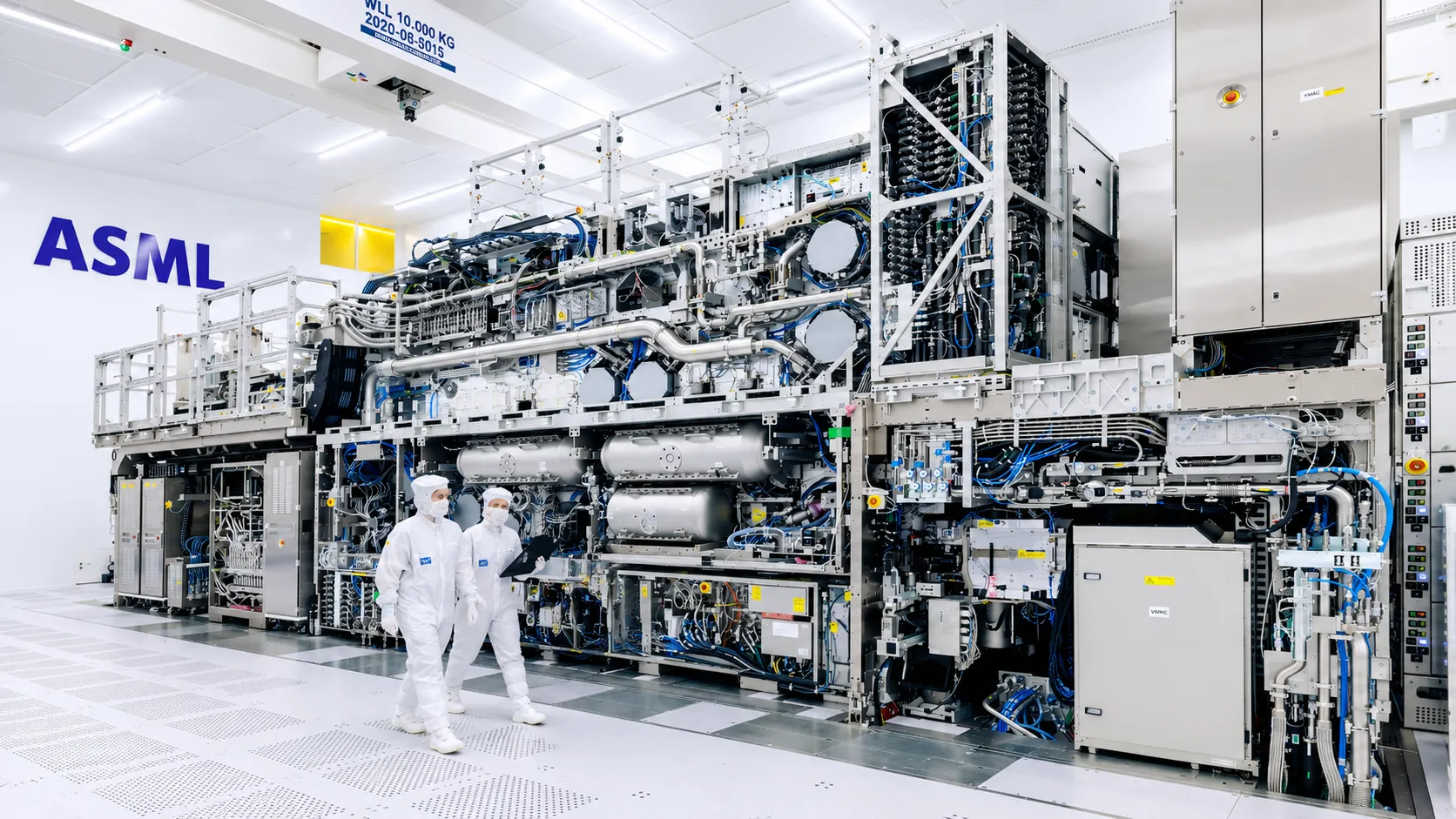
To understand why ASML's guidance revisions carry such outsized significance across global markets, it helps to understand just how singular the company's position within the global semiconductor supply chain actually is. ASML is the only company in the world capable of manufacturing extreme ultraviolet lithography machines — extraordinarily complex pieces of industrial equipment, each costing well over $200 million, that use ultra-precise light wavelengths to etch circuit patterns onto silicon wafers at scales measured in nanometers. Without ASML's EUV machines, none of the world's leading chipmakers could manufacture the most advanced processors currently powering everything from smartphones to the massive data center clusters training and running today's leading AI models.
That monopoly-like position makes ASML something close to a real-time barometer for the health of the entire global semiconductor industry's capital expenditure cycle. When ASML raises its guidance, it is effectively confirming — with hard order data rather than speculation — that its customers are continuing to commit enormous sums of capital toward expanding chip production capacity, a signal that ripples through the valuations of virtually every company touching the AI hardware supply chain, from chip foundries and memory manufacturers to the hyperscale cloud providers ultimately buying the finished processors.
The Market Reaction: A More Complicated Picture Than the Headline Suggests
Despite the unambiguously strong headline numbers, ASML's stock reaction on the day of the announcement offered a more nuanced picture. Shares initially jumped over 7 per cent at the market open, reflecting investors' enthusiastic first reaction to the guidance raise, before paring gains throughout the session and ultimately closing roughly flat to modestly lower. Analysts attributed that fade to a combination of factors: with ASML shares having already rallied more than 60 per cent year-to-date heading into the results, much of the good news may have already been priced in by investors, while some market participants also expressed caution about the sustainability of the current pace of AI infrastructure spending growth, given how dramatically expectations have already been revised upward across the sector this year.
One equity analyst, Michael Roeg of Degroof Petercam, captured the market's slightly bemused reaction to the sheer scale of ASML's beat, remarking that the results were a "blowout" across every metric the company reports, and wondering aloud where ASML had managed to find the additional capacity to support such an aggressive upward revision within such a short window.
The China Question
Any discussion of ASML's business inevitably involves a discussion of China, given the company's complicated position at the intersection of the AI boom and escalating US-led export restrictions on advanced semiconductor technology. ASML remains barred from selling its most advanced EUV lithography tools, along with its highest-capability deep ultraviolet machines, to customers in China, under export control rules championed by the United States and its allies aimed at limiting China's access to the technology needed to manufacture cutting-edge AI chips. ASML is still permitted to sell less-capable deep ultraviolet tools to Chinese customers, machines that remain capable of producing relatively advanced — if not leading-edge — semiconductors.
Chief Financial Officer Roger Dassen reiterated on the earnings call that China is expected to account for roughly 20 per cent of ASML's total sales this year, a figure that has actually declined as a share of the company's overall revenue base compared to prior years, even as it continues rising in absolute terms given ASML's overall growth. Dassen noted that demand from Chinese customers has remained strong specifically among domestic logic chipmakers producing semiconductors for China's own AI, computing, and smartphone markets — demand that continues to grow even within the constraints of the current export control regime. Notably, US lawmakers have separately proposed legislation that could further tighten restrictions on ASML's China sales, a risk factor the company and its investors continue monitoring closely as a potential source of future volatility.
The Capacity Expansion Commitment
Perhaps the most forward-looking element of ASML's announcement was its commitment to expand manufacturing capacity by roughly 30 per cent across both its EUV and DUV immersion product lines over the coming two years — a substantial capital commitment that signals just how confident ASML's own leadership has become in the durability of the current demand environment. Building EUV lithography machines is an extraordinarily complex, multi-year manufacturing process involving thousands of highly specialized components sourced from a global network of precision suppliers, meaning that a capacity expansion commitment of this scale represents a genuine, multi-year bet on continued AI infrastructure investment growth, rather than a short-term response to a single strong quarter.
That capacity expansion also carries meaningful implications for ASML's own supplier ecosystem, including precision optics maker Zeiss and a range of specialized component manufacturers across Europe, Japan, and the United States, all of whom stand to benefit from ASML's accelerating capital expenditure as the company works to meet what it describes as unprecedented customer order visibility extending well into 2027.
Third-Quarter Guidance Points to an Even Stronger Second Half
Beyond the raised full-year outlook, ASML's guidance for the third quarter specifically — projecting revenue of between €11 billion and €12 billion — implies that the second half of 2026 will significantly outpace the first half of the year, a trajectory entirely consistent with the sharply raised annual target. That acceleration pattern suggests ASML's order book has continued strengthening even in the weeks since the quarter closed, offering investors additional confidence that this week's guidance raise reflects durable underlying demand rather than simply a strong quarter that happened to beat conservative prior estimates.
The Supplier Ecosystem Riding ASML's Coattails
ASML's own capacity expansion sends ripples through an entire specialized global supply chain of component makers that most consumers have never heard of but that global chipmaking increasingly depends on. German optics specialist Zeiss, which manufactures the ultra-precise mirror and lens systems at the heart of every EUV machine, stands to benefit directly from ASML's expansion plans, as do a range of smaller precision engineering firms across Germany, Japan, and the United States that supply everything from vacuum chambers to specialized laser systems used in ASML's light source technology. That deep, highly specialized supplier network is itself part of why ASML's monopoly position has proven so durable — replicating the company's manufacturing capability would require not just enormous capital investment, but rebuilding an entire ecosystem of world-class precision suppliers that has taken decades to assemble.
Why This Matters for India's Semiconductor Ambitions
For readers tracking India's own emerging position within the global semiconductor supply chain, ASML's results carry meaningful strategic relevance well beyond their immediate market impact. As India continues pursuing an ambitious, multi-billion-dollar push to build domestic chip fabrication and assembly capacity under various government incentive schemes, ASML's technology — and specifically its willingness or ability to supply advanced lithography equipment to emerging fabrication hubs — will play a direct role in determining how quickly and how far up the technology curve India's own semiconductor manufacturing ambitions can realistically climb.
India's current chip fabrication push has focused primarily on more mature process nodes and assembly, testing, and packaging capacity rather than the leading-edge, EUV-dependent manufacturing that companies like TSMC and Samsung use to produce the most advanced AI processors — but ASML's continued capacity expansion, and the broader global scramble for lithography equipment access that its results this week illustrate, offer an important real-time data point for Indian policymakers and industry leaders assessing just how competitive and capital-intensive the global race for advanced semiconductor manufacturing capability has become.
A Bellwether Few Companies Can Match
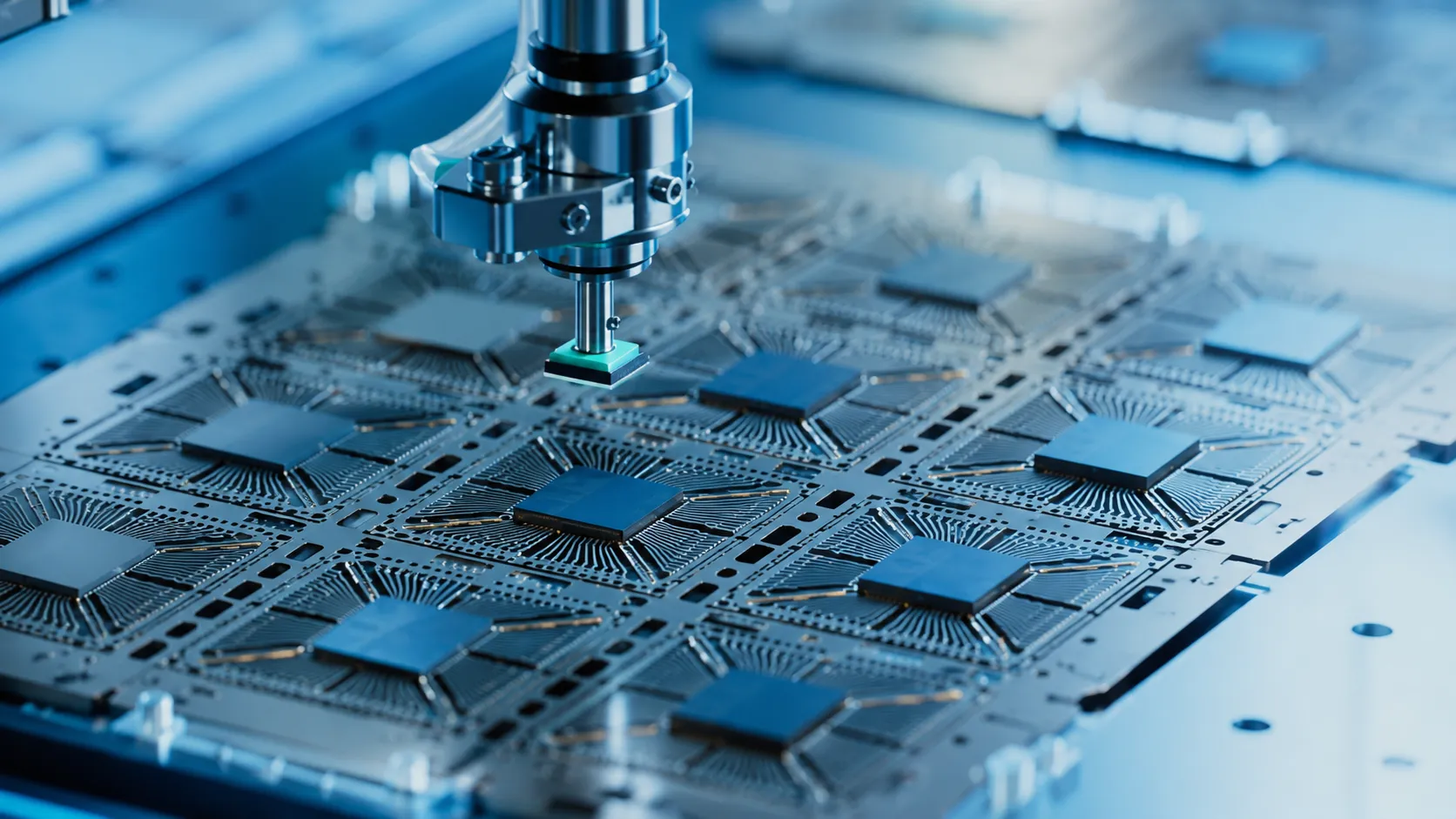
Beyond its direct relevance to any single country's semiconductor ambitions, ASML's results this week function as one of the clearest, most reliable bellwethers available anywhere in global markets for the health and durability of the broader AI infrastructure investment cycle. Because ASML's revenue is built almost entirely on committed, multi-year customer orders for extraordinarily expensive, custom-built manufacturing equipment, rather than more easily reversible forms of spending, its guidance revisions carry a credibility that few other companies touching the AI trade can match — a distinction that has made this week's second guidance upgrade of the year one of the most closely watched data points across the entire global technology and markets landscape.
What Comes Next
With ASML now guiding toward an unmistakably stronger second half of 2026, investors and industry analysts will be watching closely for confirmation, in subsequent quarters, that this pace of order growth and capacity expansion can be sustained without running into the kind of supply chain bottlenecks or demand normalization that have periodically interrupted prior technology investment cycles. For now, though, ASML's back-to-back guidance upgrades stand as one of the clearest, hardest-data confirmations available anywhere in global markets that the artificial intelligence infrastructure boom remains firmly intact — and that the company sitting at the very top of the chip manufacturing supply chain sees no signs of that demand slowing down anytime soon.