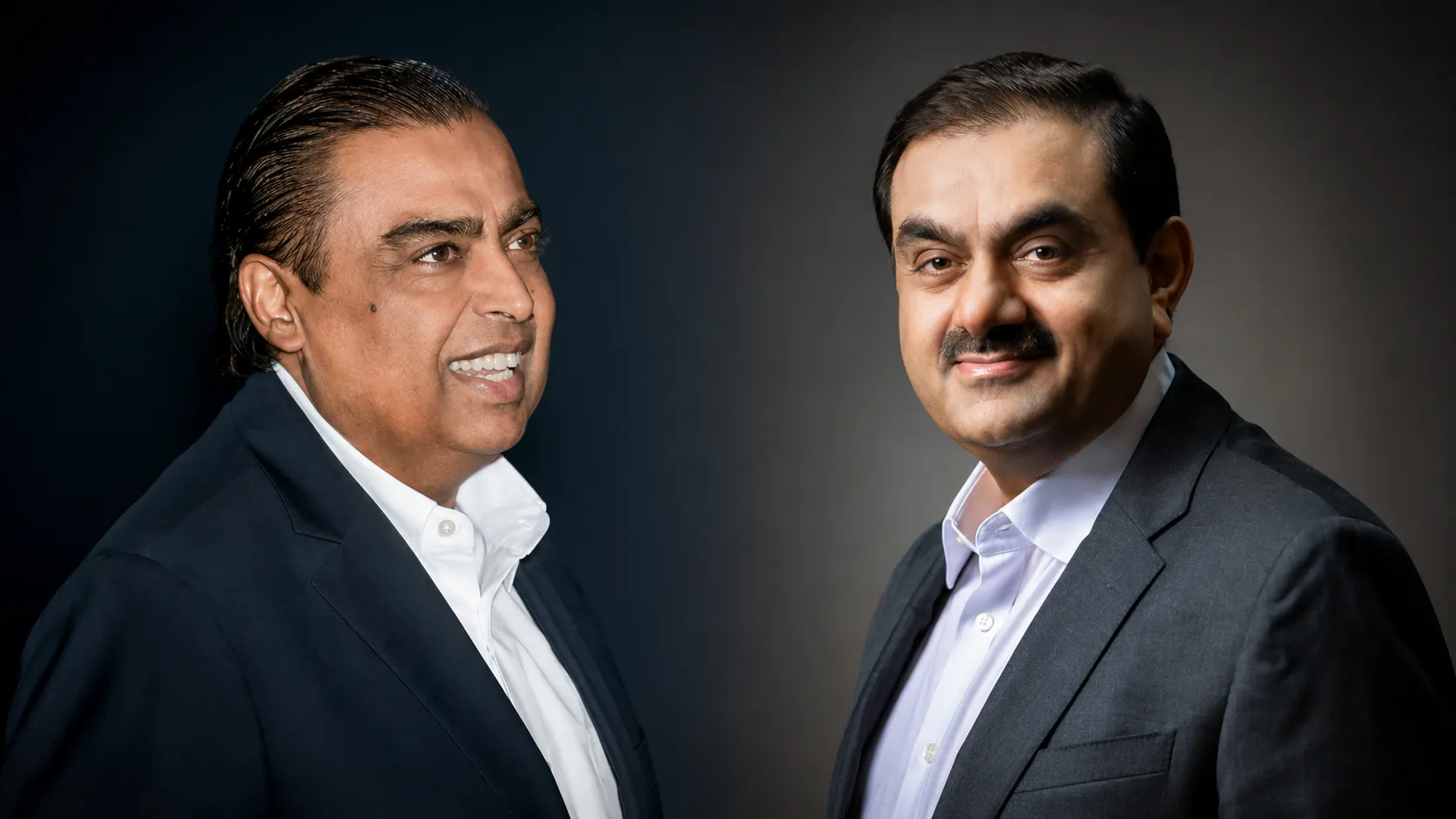
Every year, the release of the Hurun Global Rich List offers a uniquely revealing snapshot of where wealth is being created around the world, and this year's edition, published by the Hurun Research Institute, delivered a particularly striking picture of India's continued economic ascent. Mukesh Ambani, Chairman and Managing Director of Reliance Industries, has once again retained his position as both India's and Asia's wealthiest individual, with a net worth of approximately ₹9.8 lakh crore — a roughly 9 per cent increase over the past year that further cements his more than two-decade-long grip on the top spot in India's wealth rankings. Gautam Adani, chairman of the sprawling Adani Group conglomerate, held on to second place despite a notable 14 per cent decline in his personal net worth over the same period, which brought his fortune down to approximately ₹7.5 lakh crore.
The broader picture the Hurun list paints is arguably even more significant than the individual rankings at the very top. India now counts 308 billionaires, according to the report, an increase of 24 individuals from the previous year's list, a surge that has propelled the country into third position globally in terms of sheer billionaire count, trailing only the United States and China. India added 57 new billionaires over the course of the year — the highest number of new entrants outside of the world's two largest economies — even as 27 individuals dropped off the list entirely, underscoring both the dynamism and the genuine volatility that continues to characterize wealth creation across the Indian economy.
The Scale of India's Billionaire Wealth
Collectively, India's billionaire class now holds a combined net worth of approximately ₹112.6 lakh crore, according to Hurun's calculations, marking a 10 per cent year-on-year increase in aggregate wealth. Of the 308 billionaires on the list, 199 individuals saw their personal fortunes grow over the past year, while roughly 109 saw their wealth either decline or remain roughly flat — a distribution that reflects the genuinely uneven nature of wealth creation across India's diverse economic sectors during a year marked by significant volatility in global energy markets, currency movements, and sector-specific disruption from the accelerating artificial intelligence transition.
Notably, women now account for approximately 7 per cent of India's billionaire population, according to the Hurun data — a figure that, while still representing a clear minority, reflects continued gradual progress in the diversification of who holds significant wealth within the Indian economy, even as the very top of the wealth pyramid remains dominated by long-established, male-led industrial and business dynasties.
Ambani's Continued Dominance
At 68 years old, Mukesh Ambani continues to preside over an economic empire that has grown increasingly diversified over the past decade, extending well beyond Reliance Industries' traditional petrochemicals and energy roots into telecommunications, organized retail, digital services, and, increasingly, green and renewable energy infrastructure. That diversification strategy — and specifically the continued strength of Reliance's investments in digital services and consumer-facing retail businesses — has been central to the sustained wealth growth that has kept Ambani atop India's rich list for well over two decades running.
Ambani's continued position at the summit of Indian wealth rankings arrives at a particularly relevant moment, given that Reliance Industries itself is scheduled to report its first-quarter results for fiscal year 2026-27 on Friday, July 17 — a results announcement that will offer fresh, concrete financial data points against which the market can measure the underlying business momentum feeding into Ambani's continued wealth accumulation, spanning the company's oil-to-chemicals operations, its Jio digital services arm, and its rapidly scaling retail and new energy investments.
Adani's Wealth Decline in Context
Gautam Adani's second-place position on this year's list arrives alongside a genuinely notable year-on-year decline in his personal net worth, a roughly 14 per cent drop that Hurun's methodology attributes to a combination of factors affecting the market valuation of the Adani Group's various listed entities over the assessment period. At 63, Adani remains one of the most consequential and closely watched figures in India's infrastructure, energy, and logistics landscape, with the Adani Group's sprawling portfolio spanning ports, airports, power generation and transmission, renewable energy, cement, and media assets. Despite the decline in his personal net worth this year, Adani's continued second-place ranking underscores just how substantial the gap remains between India's top two industrialists and the rest of the country's wealth pyramid.
Roshni Nadar Malhotra: The Lone Woman in the Top Ten
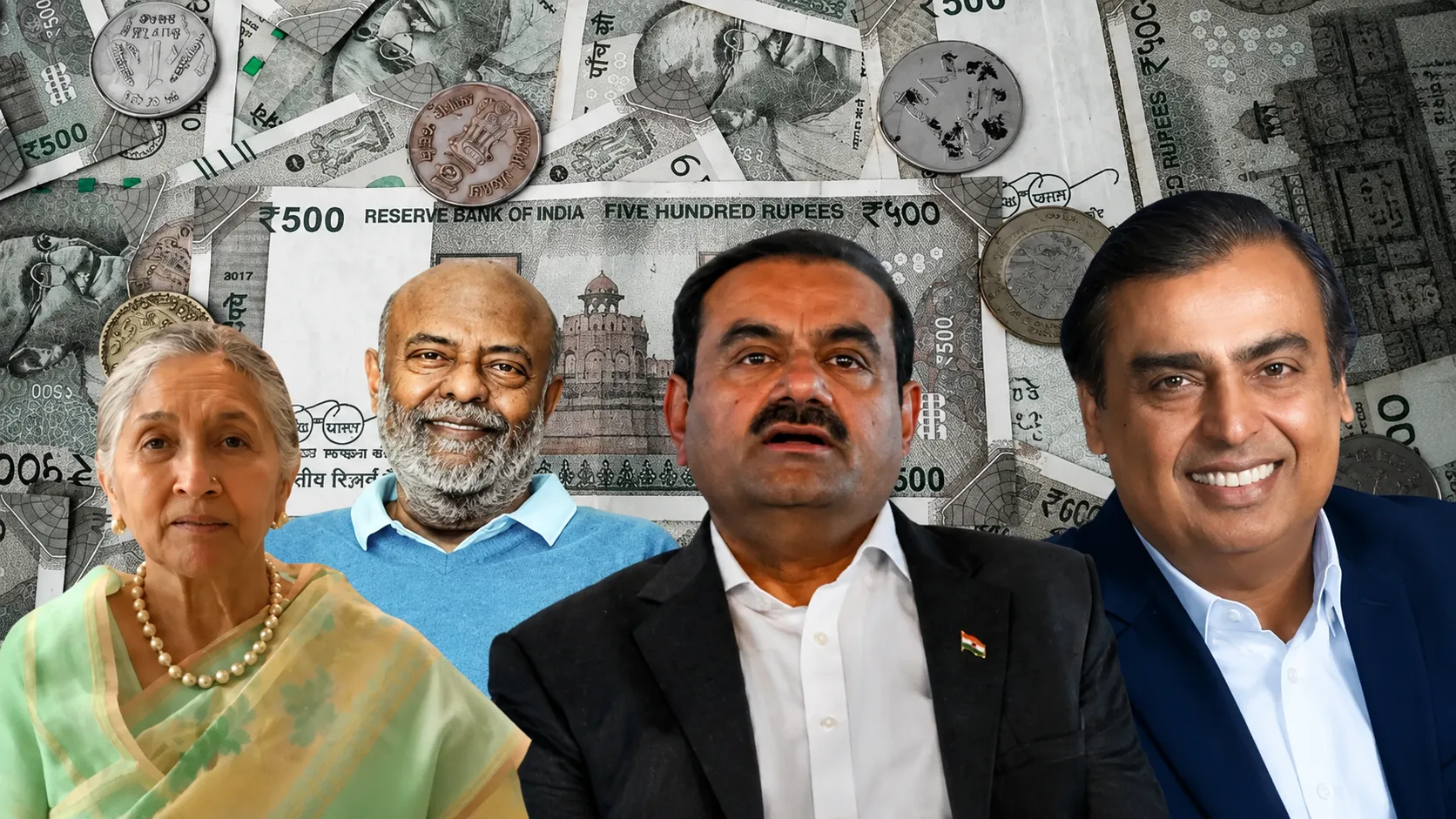
Third on this year's list is Roshni Nadar Malhotra, chairperson of HCL Technologies, one of India's leading global information technology services companies, with an estimated net worth of approximately ₹3.2 lakh crore — even as her wealth declined by roughly 10 per cent compared to the previous year's assessment. At 44, Nadar Malhotra stands out as the only woman among India's ten richest individuals, a distinction that highlights both her significant and growing role in guiding HCL Technologies' global growth strategy and the continued, broader underrepresentation of women at the very apex of India's wealth rankings, even as the overall billionaire class has grown more diverse in aggregate.
Rounding out the top five on this year's list were Cyrus Poonawalla, chairman of the Serum Institute of India, the vaccine manufacturing giant that rose to global prominence during the COVID-19 pandemic, and Ritesh Agarwal, founder and chief executive of hospitality unicorn OYO — a name whose presence in the top five offers a striking illustration of just how dramatically India's new-economy, internet-first businesses have reshaped the composition of the country's wealthiest individuals over the past decade, standing alongside far more traditional, decades-old industrial conglomerates.
Where New Wealth Is Being Created
Perhaps the most instructive dimension of this year's Hurun list lies not in the identities of India's wealthiest individuals themselves, but in the sectoral pattern behind where the country's newest billionaires are emerging from. According to Hurun Research Institute's analysis, the healthcare sector produced the single largest number of new billionaires this year, with 53 new entrants — a figure that reflects both the continued expansion of India's pharmaceutical and hospital sectors and the broader post-pandemic global emphasis on healthcare infrastructure and life sciences investment. Industrial products followed closely behind with 36 new billionaire entrants, while consumer goods rounded out the top three source categories with 31 new names added to the list.
That sectoral diversification matters considerably for how observers should read the broader health and dynamism of the Indian economy. Rather than wealth creation remaining concentrated purely within the traditional strongholds of energy, technology services, and pharmaceuticals that have historically dominated India's billionaire rankings, this year's data suggests a genuinely broadening base of wealth creation extending into automobiles, financial services, and a range of other sectors that had previously produced comparatively few billionaire-level fortunes.
The Global Context
India's third-place global ranking by billionaire count arrives within a broader global wealth landscape that continues to be dominated by the United States. Tesla and SpaceX chief executive Elon Musk retained his position as the world's single wealthiest individual, with a net worth that Hurun estimated at approximately $792 billion — a remarkable 89 per cent increase over the past year that made him the first person in history to cross the $700 billion threshold. Jeff Bezos and Alphabet's Larry Page rounded out the top three globally, with Page's wealth climbing 65 per cent to reach $271 billion, marking his first-ever appearance in the world's top three.
Globally, the Hurun list counted 4,020 billionaires worldwide, a 17 per cent increase — or 578 additional individuals — compared to the prior year's tally, underscoring just how dramatically global wealth creation has accelerated, driven substantially by the extraordinary run-up in valuations across AI-related technology companies over the past year. Hurun specifically identified 114 billionaires whose fortunes are tied directly to AI companies, of whom 46 achieved billionaire status for the very first time this year, making artificial intelligence the single largest source of new billionaire wealth creation globally — a trend epitomized by the three co-founders of AI recruitment startup Mercor, Brendan Foody, Adarsh Hiremath, and Surya Midha, all just 22 years old, who became the youngest self-made billionaires anywhere on this year's list, each with an estimated fortune of $2.4 billion.
The Reliance-Adani Wealth Gap Over Time
The gap between Ambani and Adani's fortunes this year — roughly ₹2.3 lakh crore — offers a useful lens into how differently the two conglomerates' underlying businesses have performed amid a genuinely volatile year for Indian markets. Reliance's diversified exposure across energy, telecom, and retail has provided a degree of insulation against sector-specific shocks that Adani Group's more infrastructure-and-energy-concentrated portfolio has not enjoyed to the same extent, particularly given how directly some of the Adani Group's core businesses remain tied to commodity price cycles and infrastructure project execution timelines that can prove considerably more volatile quarter-to-quarter than Reliance's increasingly consumer-facing revenue mix. That divergence has been a recurring theme in how market analysts have compared the two conglomerates' relative resilience through the various shocks that have punctuated 2026, from energy price volatility to broader global risk-off sentiment during periods of heightened geopolitical tension.
Why This Matters for India's Economic Narrative
For a publication dedicated to tracking the achievements of Indian enterprise on the global stage, this year's Hurun findings offer a data-rich lens through which to assess the broader trajectory of Indian wealth creation and economic development. The sheer scale of India's billionaire growth — 57 new entrants in a single year, trailing only the United States and China globally — reinforces the country's continued emergence as one of the world's most dynamic large economies, even as the substantial number of individuals who dropped off the list this year serves as a useful reminder that wealth accumulation in India's rapidly evolving economic landscape remains genuinely volatile and far from guaranteed, even for those who have previously achieved billionaire status.
The continued dominance of Ambani and Adani at the very top of the rankings, set alongside the genuinely broadening base of wealth creation across healthcare, industrials, and consumer goods further down the list, together paint a picture of an Indian economy that is simultaneously consolidating around a handful of extraordinarily large, diversified conglomerates while also generating an increasingly wide and sector-diverse base of new entrepreneurial wealth beneath them — a dual dynamic that will likely continue shaping how India's economic growth story is told and understood in the years ahead.
Ambani's continued dominance, set against Adani's more volatile trajectory this year, also offers a useful reminder to investors and observers alike that even at the very summit of India's wealth pyramid, fortunes tied to publicly listed, market-valued businesses remain genuinely subject to the same broader forces of geopolitical risk, commodity price volatility, and shifting investor sentiment that affect portfolios of every size across the Indian market.
The AI Wealth Wave Reaches India
While Hurun's global data highlighted artificial intelligence as the single largest driver of new billionaire wealth worldwide, with 114 AI-linked billionaires globally, India's own AI-driven wealth creation remains comparatively nascent, a gap that reflects the country's still-developing domestic AI infrastructure and model development ecosystem relative to the United States and China. That said, several of India's newer technology and consumer internet billionaires have begun building fortunes at least partially connected to AI-adjacent businesses, spanning enterprise software, fintech infrastructure, and increasingly, homegrown AI application layers — a trend that industry observers expect to accelerate meaningfully in subsequent editions of the Hurun list as India's own AI startup ecosystem continues maturing.
What Comes Next
With Reliance Industries' Q1 FY27 results due tomorrow and a wave of other major Indian corporate earnings landing throughout this week and next, the coming days will offer fresh, concrete data points against which to measure the underlying business performance driving the fortunes of India's wealthiest individuals — providing an early, real-time test of whether the wealth trajectories captured in this year's Hurun snapshot continue to hold, accelerate, or reverse as India's corporate sector reports its first full quarter of performance for the 2026-27 fiscal year.