
Global crude oil markets moved sharply higher this week after United States Central Command confirmed a fresh wave of American military strikes against Iranian targets, reigniting concerns among traders and energy analysts that the fragile, uneasy calm that had settled over the Persian Gulf region following an earlier ceasefire agreement may be unraveling in real time. West Texas Intermediate crude futures climbed roughly 1% to trade around $80.21 per barrel, while the international Brent crude benchmark advanced a similar magnitude, rising 1.1% to $85.68 per barrel — moves that, while not dramatic in isolation, represent the latest chapter in a broader, months-long pattern of geopolitically-driven volatility that has kept global energy markets on edge throughout much of 2026.
According to a statement released by US Central Command, the renewed strikes were explicitly designed to further degrade military capabilities that Iranian forces have reportedly used to threaten and attack commercial shipping traffic transiting the Strait of Hormuz — the narrow, strategically vital waterway through which a substantial share of the world's seaborne crude oil and liquefied natural gas exports must pass en route to global markets. The strategic logic behind the operation, as articulated by US military officials, centers on protecting the free flow of commercial maritime traffic through one of the most consequential chokepoints in the entire global energy supply chain.
The Trump Hormuz Fee Proposal: A Novel Geopolitical Gambit
Compounding the market uncertainty this week has been President Trump's proposal to impose a fee on commercial vessels transiting the Strait of Hormuz, with the administration reportedly floating a rate structure charging what has been described as "20% on all cargo shipped" through the waterway. Trump has framed this proposed fee within the broader context of positioning the United States as what he has termed the "guardian" of the Strait of Hormuz, tying the fee proposal explicitly to the ongoing US military commitment to protecting freedom of navigation through the waterway amid continued tensions with Iran.
This proposal represents a genuinely novel and, in many respects, unprecedented approach to managing geopolitical risk around a critical global shipping chokepoint. Historically, freedom of navigation through international waterways like the Strait of Hormuz has been treated as a baseline public good that major naval powers, particularly the United States, provide largely without directly monetizing the protection they offer to global commercial shipping. A formal fee structure, if actually implemented in some form, would mark a significant departure from that historical norm, and has understandably generated substantial debate among energy market analysts, shipping industry executives, and international trade policy experts about both its practical feasibility and its broader implications for global energy trade and international maritime law.
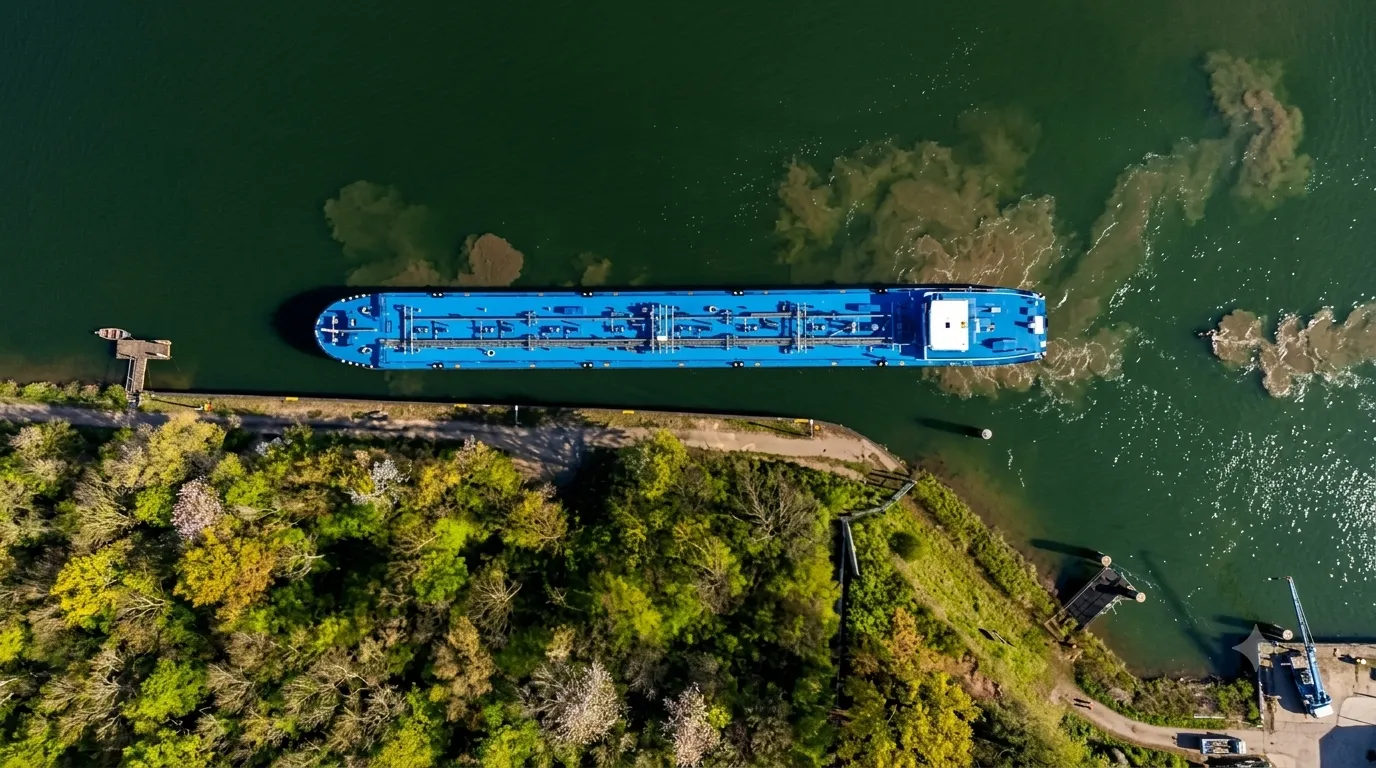
Why the Strait of Hormuz Matters So Much
For readers who may not track energy markets closely on a day-to-day basis, it is worth pausing to underscore just how consequential the Strait of Hormuz is to global energy security. The narrow waterway, situated between Iran and Oman, serves as the primary maritime export route for crude oil and natural gas produced by several of the world's largest energy-exporting nations, including Saudi Arabia, the United Arab Emirates, Kuwait, Iraq, and Iran itself. A meaningful share of the world's total seaborne oil trade transits through this single chokepoint, meaning that any sustained disruption — whether from military conflict, deliberate blockade, insurance market disruptions, or now potentially from novel fee structures affecting shipping economics — carries the potential to meaningfully impact global oil supply availability and pricing, with ripple effects extending across every major oil-importing economy worldwide, India very much included.
This is precisely why energy markets react so sensitively to any escalation in tensions around the Strait of Hormuz, even when the actual physical disruption to shipping traffic remains limited in scale. Markets are, in essence, pricing in the probability-weighted risk of a more severe future disruption, rather than simply reacting to whatever the current, actual level of shipping interference happens to be at any given moment.
The Broader Trajectory of US-Iran Tensions
This week's developments arrive against the backdrop of a broader, evolving narrative around US-Iran relations that has kept energy markets on a heightened state of alert for much of 2026. An earlier ceasefire agreement between the two nations had offered global markets a period of relative calm and reduced geopolitical risk premium in oil pricing, but that fragile peace has shown signs of strain in recent weeks, with President Trump himself reportedly declaring the ceasefire arrangement effectively "over" amid renewed friction. Analysts covering the region have increasingly voiced concern that the conflict risks evolving into what several have characterized as a protracted, low-intensity "forever war" dynamic, rather than resolving cleanly toward either a durable peace settlement or a more decisive military conclusion.
That characterization matters enormously for how energy markets and broader global business audiences should think about the risk landscape going forward. A scenario in which tensions between the United States and Iran persist indefinitely at a simmering, periodically escalating level — rather than either fully resolving or fully erupting into large-scale conflict — arguably represents one of the most challenging risk environments for energy market participants to price and hedge against, precisely because it offers no clear resolution timeline around which businesses, investors, and policymakers can plan with confidence.
Implications for India's Energy Security
For Indian readers and business audiences, developments in the Strait of Hormuz carry outsized direct relevance, given India's substantial and continuing dependence on imported crude oil to meet its domestic energy needs. India has historically sourced a significant proportion of its crude oil imports from Gulf region producers whose exports transit through the Strait of Hormuz, meaning that any sustained disruption to shipping through the waterway — or any new cost structure imposed on that shipping traffic, such as the fee proposal now under discussion — carries direct implications for India's energy import costs, its broader trade balance, and ultimately for domestic fuel pricing and inflation dynamics.
India's energy policy establishment has, over recent years, worked to diversify the country's crude oil sourcing away from excessive concentration in any single supply corridor, including through expanded imports from alternative sources such as the United States, Russia, and various African producers. But the scale of India's overall energy demand, combined with the continued centrality of Gulf region supply to global oil markets more broadly, means that developments around the Strait of Hormuz will likely continue to carry meaningful relevance for Indian energy security and macroeconomic planning for the foreseeable future, regardless of the specific diversification progress achieved to date.
Market Positioning and What Comes Next
Energy traders and analysts will be watching closely in the coming days and weeks for several key signals that will help clarify the trajectory of this latest escalation. First, whether the renewed US military strikes represent a contained, limited operation aimed at degrading specific Iranian capabilities, or the opening phase of a more sustained and expansive military campaign. Second, whether the Trump administration's proposed Hormuz shipping fee advances toward any form of concrete implementation, and if so, how the international shipping and energy trading community responds — both in terms of practical compliance and in terms of the broader diplomatic and legal challenges such a novel fee structure would likely provoke from affected nations and international maritime trade bodies.
Third, and perhaps most importantly for near-term market pricing, analysts will be watching whether Iran responds to the renewed strikes with any actions that more directly threaten commercial shipping traffic through the Strait itself, which would represent a more serious and immediate escalation than the current environment of military strikes against Iranian targets combined with rhetorical and policy maneuvering around shipping fees.
For now, global oil markets have responded to this week's developments with a meaningful but not yet extreme price reaction — a pattern consistent with a market that is taking the escalation seriously as a genuine risk factor, while not yet pricing in a full-scale supply disruption scenario. Whether that relatively measured market response proves to be an accurate read of the situation, or an underestimation of how quickly tensions in the region could escalate further, will become clearer in the days and weeks ahead, but for energy-importing economies like India, the message from this week's developments is unmistakable: geopolitical risk around the Strait of Hormuz remains very much a live, unresolved variable that businesses, investors, and policymakers cannot afford to treat as background noise.

The Shipping and Insurance Industry Response
Beyond the direct oil price impact, this week's escalation carries significant implications for the global maritime shipping and marine insurance industries, both of which have spent much of 2026 recalibrating risk models and premium structures in response to the ongoing volatility around the Strait of Hormuz. War risk insurance premiums for vessels transiting the strait have already been elevated for an extended period given the region's persistent tension, and any further escalation, or any move toward actually implementing a formal transit fee structure of the kind President Trump has proposed, would add yet another layer of cost and complexity for shipping operators already navigating an unusually challenging risk environment in the Gulf region.
Major global shipping companies, tanker operators, and the insurance syndicates that underwrite their voyages have historically responded to sustained elevated risk in the region by adjusting routing decisions, increasing convoy and escort arrangements where feasible, and passing elevated insurance and operational costs through to end customers via freight rate adjustments — costs that ultimately flow through to the landed price of crude oil and refined products in importing markets, including India. Should the current escalation persist or intensify, Indian refiners and fuel marketing companies may need to factor an increasingly persistent geopolitical risk premium into their own cost planning and pricing strategies for the remainder of the fiscal year.
Diplomatic Dimensions and the Path Forward
The diplomatic backdrop against which this latest escalation is unfolding remains genuinely fluid, with multiple regional and global powers holding direct stakes in preventing a more serious, sustained disruption to Gulf region shipping and energy exports. Gulf Cooperation Council member states, whose own economies remain heavily dependent on unimpeded oil and gas export flows through the Strait of Hormuz, have historically played an important, if often quiet, diplomatic role in encouraging de-escalation during previous periods of heightened US-Iran tension. Whether similar diplomatic channels prove effective in containing the current escalation, or whether the introduction of a novel and contentious element like the proposed Hormuz transit fee complicates those diplomatic dynamics further, will be an important storyline for energy market participants and global business audiences to track closely in the days and weeks immediately ahead.
The Bottom Line for Energy-Dependent Economies
For India, and for every major oil-importing economy watching this situation unfold, the lesson of this week's developments is a familiar but no less urgent one: energy security cannot be treated as a solved problem simply because a region has enjoyed a period of relative calm. The renewed strikes and the unprecedented Hormuz fee proposal are a reminder that the Strait of Hormuz remains, and will likely remain for the foreseeable future, one of the single most consequential pieces of geography in the entire global economy — a chokepoint where military, diplomatic, and commercial interests collide in ways that can move markets thousands of miles away within hours. Until a durable resolution emerges, expect crude prices, tanker insurance costs, and Indian fuel-import planning alike to keep moving in step with every fresh headline out of the Gulf, with today's strikes and fee proposal marking only the latest, and unlikely to be the last, such headline this year. Markets, refiners, and policymakers alike would do well to keep their contingency planning current rather than assuming this week's calm reaction is the final word.