
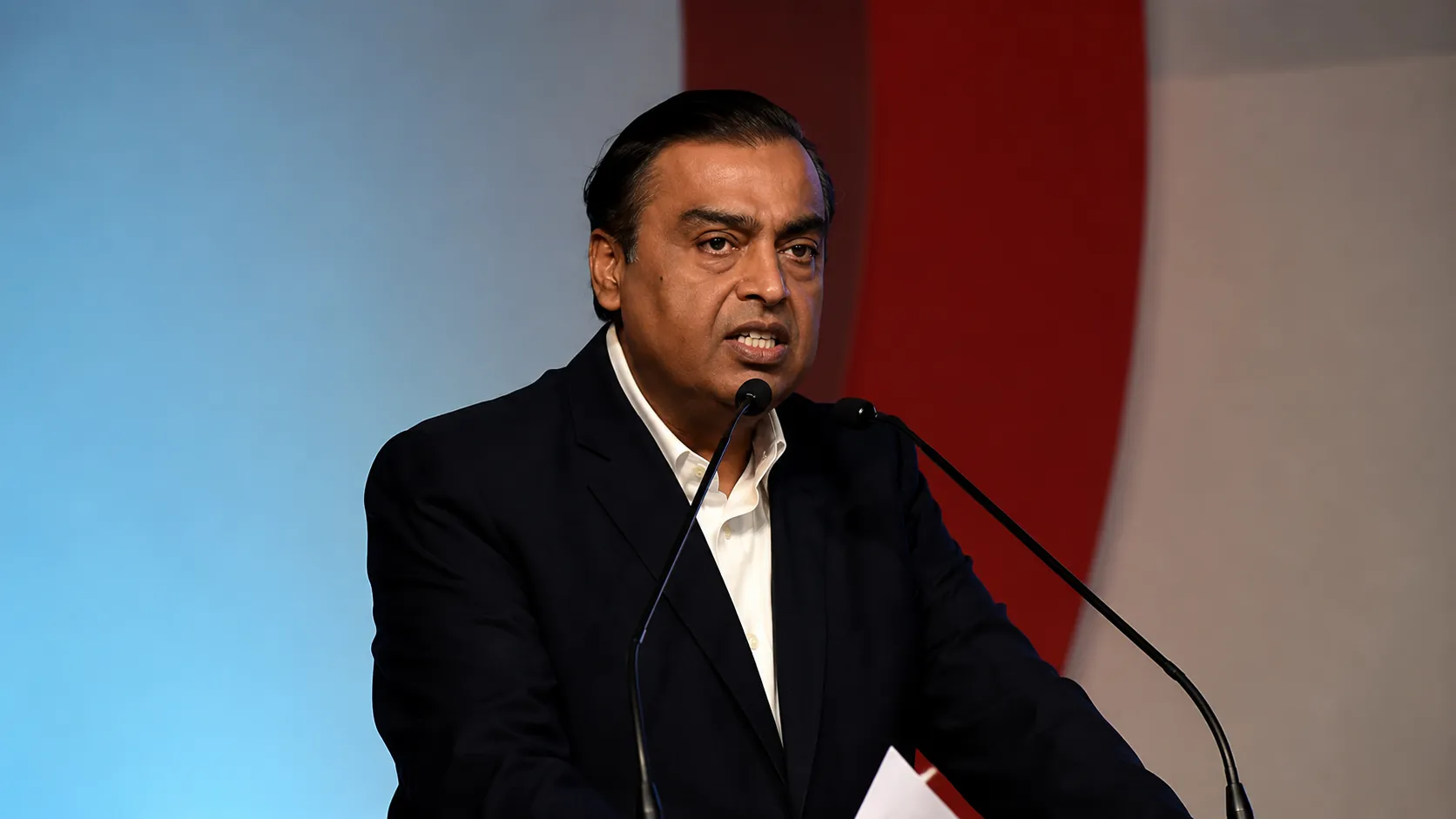
There is no earnings release on the Indian corporate calendar that carries quite the same gravitational pull as Reliance Industries Limited's. Tomorrow, July 17, 2026, the company's board of directors will meet to consider and approve unaudited standalone and consolidated financial results for the quarter ended June 30, 2026 — the first quarter of fiscal year 2026-27 — before Chairman and Managing Director Mukesh Ambani's management team hosts an analyst call to walk investors through the numbers. For a conglomerate that spans oil refining, petrochemicals, telecom, retail, media, and a rapidly scaling green-energy ambition, this is not merely another quarterly ritual. It is a referendum on whether Reliance can reverse a difficult stretch and reclaim the kind of unambiguous, across-the-board growth story that has defined its identity as India's most valuable listed company.
The timing matters enormously. Reliance's board meeting lands in the middle of one of the busiest weeks of India's Q1 FY27 earnings season, arriving on the same day that IT bellwethers Wipro and Tech Mahindra release their own numbers, and just a day before HDFC Bank, ICICI Bank, Axis Bank, and Kotak Mahindra Bank report on July 18. But few of those results will be scrutinized quite as intensely as Reliance's, given the company's outsized weight in the Nifty 50 index — a single-stock influence that means RIL's earnings performance routinely moves the broader Indian market, affecting index funds, derivatives positioning, and retail investor sentiment nationwide.
A Difficult Q4 Sets the Stage
To understand why tomorrow's results carry such weight, it helps to look back at what came before. In the quarter ended March 31, 2026 — Q4 of FY26 — Reliance posted a net profit of ₹16,971 crore, a decline of roughly 12.5 per cent year-on-year compared to ₹19,407 crore a year earlier. That profit contraction arrived even as revenue from core operations surged an impressive 13 per cent to ₹2.98 lakh crore, driven largely by elevated crude prices tied to escalating tensions in West Asia. The disconnect between strong revenue growth and weakening profitability was rooted almost entirely in the Oil-to-Chemicals (O2C) division, where the same crude price volatility that inflated the top line simultaneously compressed refining margins and squeezed profitability at the operating level.
That Q4 disappointment sent a clear signal to the market: Reliance's O2C business, still the single largest contributor to group revenue, remains acutely exposed to the kind of geopolitical shocks that have become a near-constant feature of the global energy landscape through 2025 and 2026. With fresh escalation in the Strait of Hormuz and renewed US military action against Iranian targets rattling energy markets again this month, investors heading into tomorrow's print will be watching O2C gross refining margins (GRMs) with particular intensity, trying to gauge whether the segment can stabilize or whether another quarter of margin pressure is in store.

What the Street Is Watching Beyond Oil
While O2C remains the largest single piece of the Reliance earnings puzzle, brokerages and analysts heading into tomorrow's results have been unusually vocal about wanting to see continued strength in three other areas: Jio's digital services business, the retail arm's turnaround trajectory, and early signals from the company's rapidly scaling new energy investments.
On the telecom front, Jio Platforms has been one of the most consistent bright spots in Reliance's portfolio over recent quarters. The digital arm has been posting robust double-digit year-on-year revenue growth, powered by steady average revenue per user (ARPU) increases — a metric that climbed from roughly ₹181.7 in the year-ago period to over ₹208 more recently — alongside continued subscriber additions that have pushed Jio's 5G user base past the 200-million mark. Jio has also been aggressively scaling its fixed wireless access business through JioAirFiber, which analysts say has become the world's largest fixed wireless access service by subscriber count, alongside tens of millions of connected home broadband premises. Investors will be watching tomorrow for confirmation that this ARPU and subscriber momentum has continued into the June quarter, particularly given the higher base effect created by Jio's tariff adjustments in the back half of 2025.
Reliance Retail, meanwhile, has been in the midst of a multi-year effort to sharpen its own-brand FMCG portfolio, with labels like Campa and Independence emerging as genuinely significant contributors to group revenue rather than niche experiments. The retail division's registered customer base has swelled into the hundreds of millions, and management has repeatedly emphasized its ambition to build a portfolio of owned consumer brands that reduces Reliance Retail's historical dependence on third-party labels. Analysts will be parsing tomorrow's retail segment numbers for confirmation that this FMCG push, along with faster delivery formats and continued store network expansion, is translating into durable margin improvement rather than simply top-line growth funded by aggressive promotional spending.
The New Energy Wildcard
Perhaps the most closely watched — and least predictable — element of tomorrow's results concerns Reliance's new energy business, the sprawling, capital-intensive bet on solar manufacturing, battery storage, green hydrogen, and related clean-technology infrastructure that Mukesh Ambani has repeatedly described as central to the company's next growth chapter. Reliance has been racing to operationalize what it describes as one of the largest utility-scale heterojunction solar module gigafactories anywhere in the world, alongside plans for large-scale battery manufacturing capacity, captive green power transmission infrastructure connecting its Kutch renewable assets to its Jamnagar refining complex, and ambitions in green hydrogen and compressed biogas.
Management has previously indicated that meaningful financial contributions from this new energy vertical remain several quarters away, with commissioning of various giga-factory components expected to be staggered over the next four to six quarters. That means tomorrow's results are unlikely to show new energy as a major profit contributor just yet — but any commentary from Mukesh Ambani or the finance team on commissioning timelines, capital expenditure pacing, or early revenue visibility from this vertical will be closely parsed as a preview of what is expected to become an increasingly important pillar of the Reliance growth story over the next two to three years.
Why This Matters Beyond One Company's Balance Sheet
For a publication tracking the achievements of Indian enterprise on the global stage, Reliance's quarterly results carry significance that extends well beyond a single company's shareholders. As India's largest listed company by market capitalization — with a market value that stood at over ₹17.72 lakh crore as of earlier this month — Reliance's performance functions as a bellwether for broader investor sentiment toward the Indian equity market as a whole. Given the company's substantial weighting in benchmark indices, a strong or weak print tomorrow has the potential to meaningfully influence the direction of the Nifty 50 and Sensex in the sessions that follow, with knock-on effects for foreign institutional investor flows, mutual fund performance, and the countless retail investors across India who hold Reliance shares directly or through index-linked products.
There is also a broader narrative dimension worth noting. Reliance's full-year FY26 results, reported earlier this year, showed the company crossing significant new milestones on both revenue and profitability, with earnings per share climbing to nearly ₹60 and net income rising by double digits year-on-year, alongside management's continued articulation of an ambition to double the size of the business roughly every four to five years. Whether the June quarter results reinforce that long-term trajectory, or instead extend the kind of near-term volatility that characterized the March quarter, will shape how investors read Reliance's ability to execute against its own stated growth ambitions heading into the back half of the fiscal year.
The Ambani Family Dimension
Tomorrow's results also arrive against the backdrop of a notable governance development within the Ambani family's stewardship of the conglomerate. Earlier this year, shareholders overwhelmingly approved — with more than 94 per cent support — the appointment of Anant Ambani, Mukesh Ambani's youngest son, as a whole-time executive director of the company, formalizing a role he has held in a non-executive capacity since 2025. That succession-related development, while not directly tied to tomorrow's quarterly numbers, forms part of the broader narrative arc investors and industry observers continue to track as Reliance navigates its next generation of leadership even as it pursues an increasingly ambitious diversification strategy spanning energy, telecom, retail, and media.
On the media and entertainment front, Reliance's Jio Studios has also delivered a standout commercial success in the form of the film Dhurandhar, which industry trackers have described as crossing the ₹1,000-crore franchise mark and capturing a substantial share of India's overall box office for the period, alongside becoming one of the highest-grossing Indian films in overseas markets. While media and entertainment remains a smaller contributor to group revenue relative to O2C, telecom, and retail, this kind of high-profile cultural success adds to the broader narrative of Reliance's ability to build and scale consumer-facing businesses well beyond its traditional energy roots.
What Analysts Will Be Listening For on the Call
Beyond the headline revenue and profit figures, seasoned Reliance-watchers say the real substance of tomorrow's release will emerge during the post-results analyst call, when Mukesh Ambani and the finance leadership team field questions on a range of forward-looking themes. Chief among these: commentary on O2C margin trajectory given the renewed volatility in Middle East energy markets; updates on Jio's ARPU trends and any signals about further tariff actions; retail segment same-store sales growth and FMCG brand performance; and, perhaps most importantly for long-term investors, fresh detail on new energy commissioning timelines and expected capital expenditure for the remainder of FY27.
Given that Reliance's board has already signalled it does not expect to consider any dividend action at tomorrow's meeting — a departure from the pattern followed after the FY26 annual results, when the company announced a ₹6 per share dividend — the market's attention will be squarely focused on operational and strategic commentary rather than any near-term capital return signal.
The Stock Price Context
Reliance shares have themselves been on a genuinely volatile ride over the past year, a pattern that adds further intrigue to tomorrow's release. The stock touched a 52-week high of ₹1,611.80 on January 5, 2026, before sliding to a 52-week low of ₹1,253.20 by June 11, 2026 — a decline of more than 20 per cent from peak to trough within a single calendar year, reflecting the combination of Q4 profit disappointment, broader global market volatility tied to geopolitical tensions, and periodic profit-taking by investors who had ridden the stock considerably higher through 2024 and 2025. Shares have since staged a partial recovery, but tomorrow's results will be an important test of whether that recovery can gain further traction or whether renewed O2C margin pressure drags the stock back toward its 2026 lows.
Some analysts covering the stock have pointed out an unusual dynamic in Reliance's recent performance: while earnings per share has grown at a healthy mid-to-high single-digit annual clip over the past three years, the stock price itself has lagged that underlying earnings growth by a wide margin, a divergence that value-focused investors have flagged as a potential opportunity if tomorrow's results and subsequent quarters can demonstrate renewed, broad-based momentum across the conglomerate's core segments.
How Reliance Compares to Its Global Conglomerate Peers
Reliance's diversified structure — spanning energy, telecom, retail, media, and new energy under a single corporate umbrella — invites natural comparison to other large global conglomerates attempting to balance legacy, capital-intensive businesses against faster-growing digital and consumer-facing ventures. Unlike many Western conglomerates that have faced sustained investor pressure to break apart into more focused, single-sector entities, Reliance has largely resisted that pressure, with Mukesh Ambani and the broader leadership team arguing that the cross-subsidization and capital allocation flexibility afforded by the conglomerate structure — allowing profits from mature, cash-generative businesses like O2C to fund the buildout of newer ventures like Jio, retail, and now new energy — has been central to the company's ability to scale multiple businesses simultaneously to global scale within a relatively compressed timeframe.
Tomorrow's results will offer a fresh test of that thesis. If O2C can stabilize even modestly while Jio, retail, and eventually new energy continue their growth trajectories, it would reinforce the argument that Reliance's conglomerate model remains a genuine structural advantage rather than a valuation drag — a debate that has quietly persisted among institutional investors even as the stock has remained a core holding across most India-focused equity portfolios, domestic and foreign alike.
Setting Up the Rest of Earnings Season
Reliance's numbers tomorrow will also set an important tone for the remainder of what is shaping up to be one of the most consequential stretches of India's Q1 FY27 earnings season, with more than 140 companies scheduled to report results in the days around this one, spanning IT services, banking, insurance, and industrial sectors. Given Reliance's outsized index weighting and its role as a genuine cross-sector conglomerate touching energy, telecom, retail, and new energy simultaneously, tomorrow's results will offer one of the clearest single data points available on the health of large-cap Indian corporate earnings heading into the second half of the calendar year.
For India's broader business community — and for the global diaspora audience that watches Reliance as a proxy for the country's economic ambition — tomorrow's board meeting is far more than a routine regulatory filing. It is the moment when one of the most closely watched companies in the world updates the market on whether its multi-front growth strategy, spanning traditional energy, telecom, retail, and an ambitious new energy pivot, remains firmly on track.