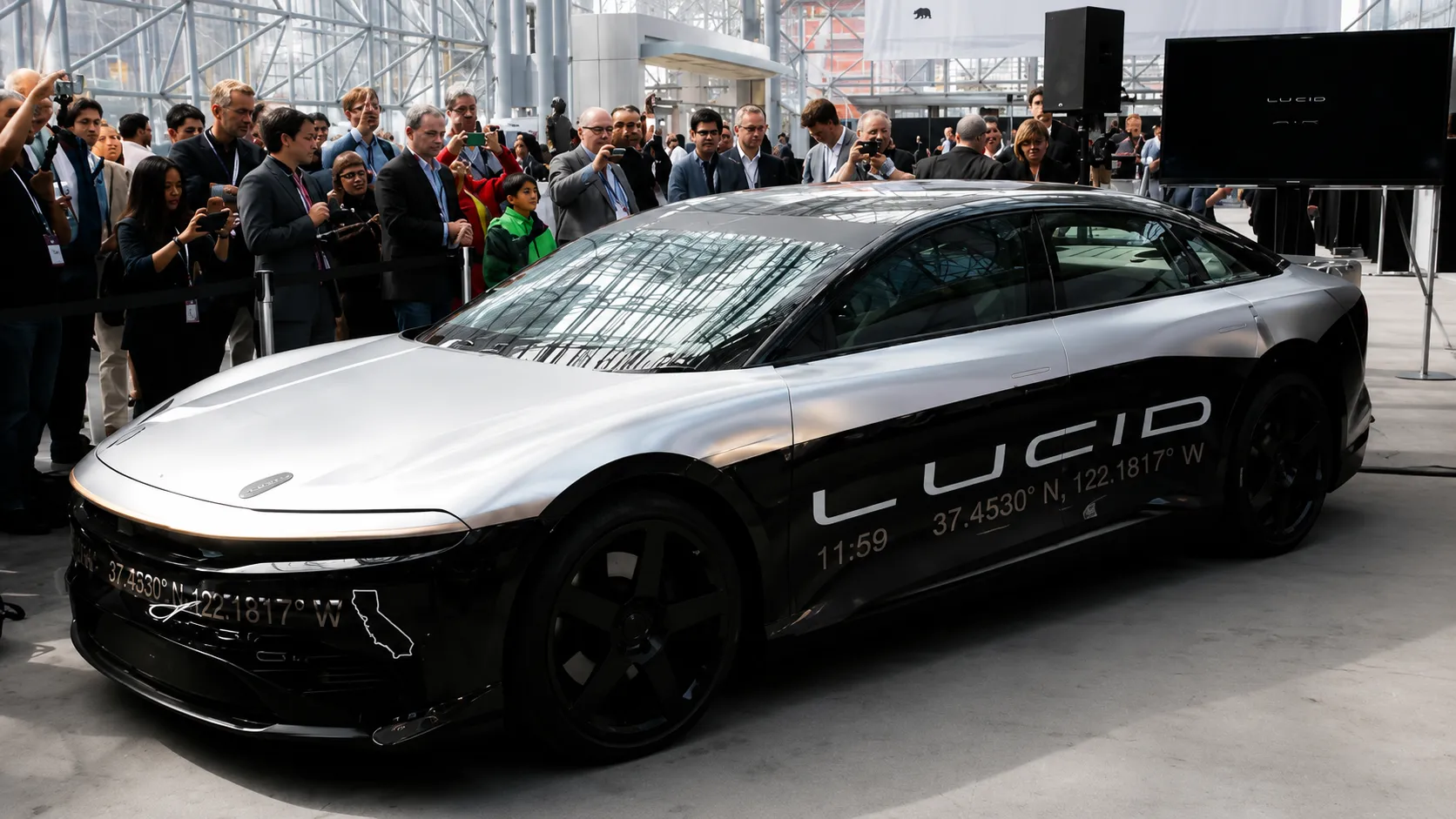
Lucid Group, the Saudi-backed electric vehicle manufacturer once positioned as one of Tesla's most credible rivals, endured the single worst trading day in its history this week, after an unverified report from a niche electric vehicle industry publication claimed the company's board was weighing options that could include a Chapter 11 bankruptcy filing or taking the company private, a claim that struck at the heart of investor confidence in a company already navigating a difficult, closely scrutinized period. Shares plunged as much as 57 per cent intraday on Tuesday, July 14, triggering multiple volatility-driven trading halts on the Nasdaq, before recovering substantially through the remainder of the week as Lucid's leadership moved swiftly and forcefully to deny the report.
By Wednesday afternoon, Lucid shares had climbed back roughly 18 per cent from Tuesday's close, and the stock added a further 29 per cent the following session as buyers returned and outside analyst commentary lent credibility to the company's denial. Even so, the episode has left a genuinely significant mark: a company that can lose more than half its market value in a single trading session based on an anonymously sourced blog post, and only partially recover in the days that follow, is a company operating close to the edge of investor confidence — a dynamic Lucid will need to actively manage heading into its full second-quarter results, scheduled for August 4, when the market will finally get a genuinely audited, comprehensive picture of the company's actual financial standing.
What the Report Actually Claimed
The report originated from a publication called EV, which is not widely regarded within financial media as a source with strong sourcing credibility, and which cited unnamed sources familiar with what it described as a confidential strategic review being conducted by restructuring consultancy AlixPartners on Lucid's behalf. According to the report, AlixPartners had been asked to present its findings to Lucid's board ahead of an upcoming meeting, and was said to be evaluating several strategic scenarios for the company, including a potential take-private transaction and, more dramatically, a possible Chapter 11 bankruptcy filing.
The report went further, claiming that AlixPartners had specifically recommended Lucid conduct another round of restructuring across its US and European operations, narrow its strategic focus onto its Gravity SUV model, and temporarily scale back its European market expansion plans — recommendations the publication attributed to unnamed sources rather than any confirmed company statement or regulatory filing, a distinction that ultimately proved central to how markets and analysts alike came to assess the credibility of the report in the days that followed.
Lucid's Swift and Specific Denial
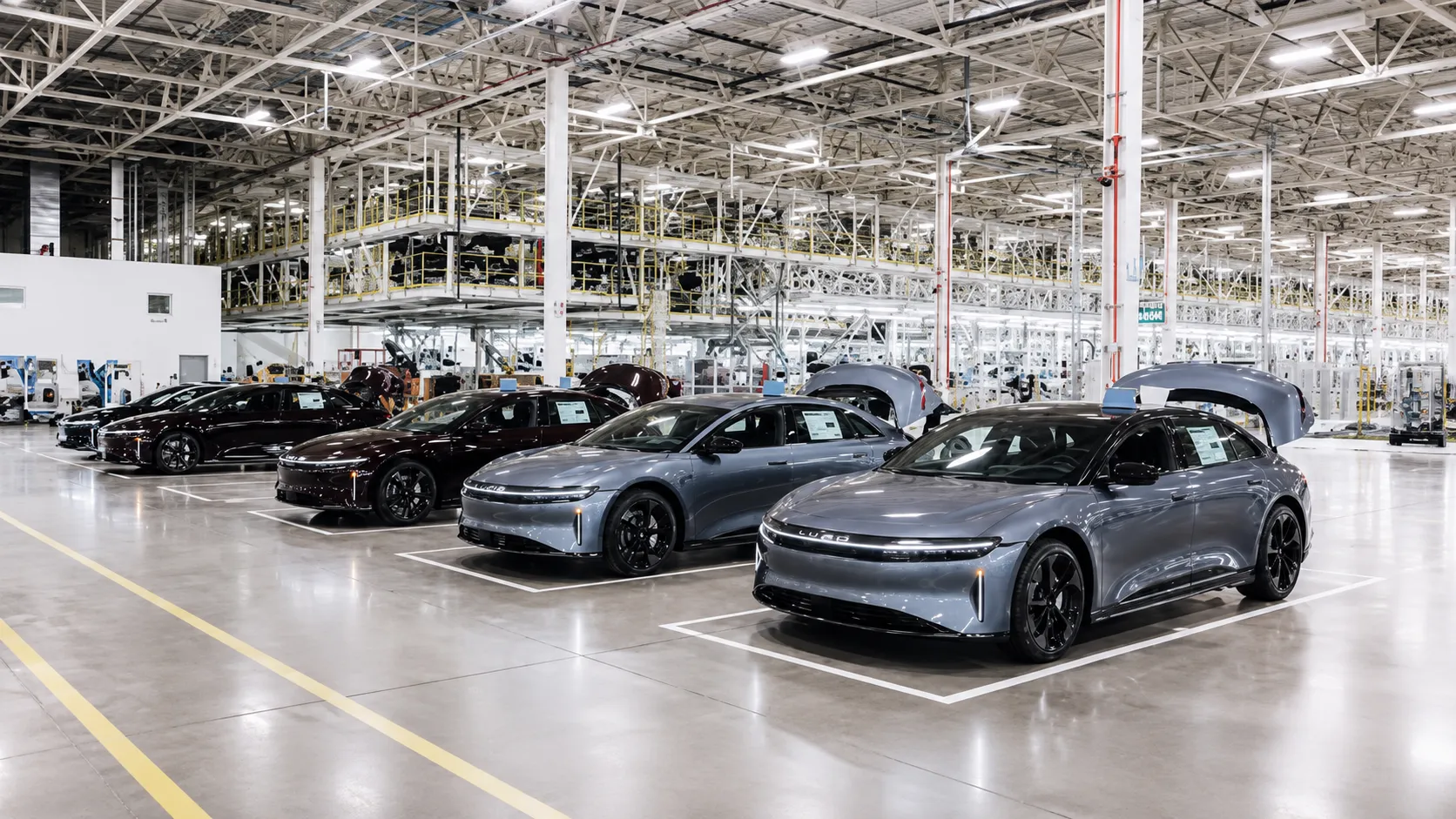
Lucid's response was notably fast, specific, and delivered on the record — a combination that markets and analysts alike ultimately treated as meaningfully more credible than the original, thinly sourced report itself. "The rumors are completely false," the company said in a statement, adding a detail directly aimed at undercutting the report's core claim: "The company has sufficient liquidity to carry its operations well into next year, as recently published in its last quarterly filings, and it has not formed any special Board committee to explore the scenarios reported today."
Nick Twork, Lucid's head of communications, pushed back even more directly and publicly, confirming that AlixPartners is indeed working with the company, but stressing that the consultancy's mandate is focused squarely on operational efficiency improvements rather than any form of insolvency or bankruptcy planning. "Our focus is on improving execution, strengthening operations, and positioning Lucid to realize the full potential of its technology, products, and innovation," Twork said, adding pointedly that AlixPartners "has not recommended bankruptcy to management or the Board." Lucid additionally confirmed the denial in a formal filing with the Securities and Exchange Commission via Form 8-K, a step that carries meaningful legal weight given the disclosure obligations attached to SEC filings.
The Actual Financial Picture, By the Numbers
Independent analysis of Lucid's publicly disclosed financial position suggests the bankruptcy claim was, at minimum, a significant overstatement of the company's near-term risk, even as it does not paint Lucid as a company without genuine financial stress. As of the end of the first quarter of 2026, Lucid held approximately $714 million in cash, cash equivalents, and investments, with total liquidity of roughly $3.2 billion — a figure that included about $2.5 billion in undrawn debt capacity available through a term loan facility provided by an affiliate of Saudi Arabia's Public Investment Fund, Lucid's majority shareholder.
In April, Lucid had raised an additional $1.05 billion in fresh capital, comprising $550 million in convertible preferred stock purchased by the PIF affiliate and $200 million in new equity investment from Uber, with which Lucid maintains a robotaxi partnership. The company simultaneously drew down $500 million from its PIF-backed term loan facility while retaining roughly $2 billion in remaining undrawn capacity under that same facility. Taken together on a pro-forma basis, analysts calculated Lucid's total available liquidity at approximately $4.7 billion — a figure that Cantor Fitzgerald analyst Andres Sheppard, who covers the stock with a Neutral rating and an $8 price target, publicly confirmed following Tuesday's crash, lending independent, third-party credibility to Lucid's own liquidity claims.
The Genuine Challenges Beneath the Denial
None of this is to suggest Lucid is a company without real financial difficulty. The company reported a net loss of approximately $1.03 billion in the first quarter of 2026 alone — nearly triple its loss in the same period a year earlier — and burned through roughly $3.8 billion in free cash flow across all of 2025, a period in which the company delivered just 15,800 vehicles. Wall Street analysts do not currently project Lucid will achieve positive free cash flow before 2030, with cumulative losses projected to reach approximately $6.7 billion through 2028.
Second-quarter delivery figures, reported earlier this month ahead of the bankruptcy report, added to investor unease: Lucid delivered just 3,953 vehicles during the quarter, only modestly ahead of the 3,309 vehicles delivered in the same period a year earlier — a sign that the launch of the company's Gravity SUV, intended as a major growth catalyst, has not yet meaningfully accelerated Lucid's overall sales momentum. In May, the company had already suspended its full-year 2026 production guidance of between 25,000 and 27,000 vehicles, as new chief executive Silvio Napoli undertook a broader review of the company's targets and inventory position.
A New CEO's Sweeping Overhaul
The context surrounding AlixPartners' actual, confirmed engagement with Lucid matters considerably for understanding why this week's report, however overstated, landed at a moment of genuine organizational upheaval within the company. Silvio Napoli took over as Lucid's chief executive on June 1, 2026, and has since overseen what analysts describe as the single deepest leadership overhaul in the company's history — naming a new chief financial officer, chief technology officer, and multiple additional C-level executives in a July 2 announcement that simultaneously halved the number of executives reporting directly to him, a structural simplification aimed at accelerating decision-making within the organization.
Hiring an outside restructuring and operational efficiency consultancy like AlixPartners is, in that context, an entirely conventional step for a new industrial chief executive overseeing a capital-intensive company burning significant cash — a mandate analysts have been careful to distinguish clearly from insolvency planning, even as the two concepts became conflated in this week's viral, unverified report.
The Broader EV Sector Ripple Effects
Lucid's stock crash this week did not remain contained to a single company. Rival electric vehicle maker Rivian's shares also slipped on the news, as investors more broadly reassessed risk across the smaller-cap electric vehicle startup landscape, a sector that has faced persistent headwinds throughout 2026 amid slower-than-expected consumer EV adoption and changing federal regulations under the Trump administration, including the elimination of the $7,500 federal tax incentive that had previously supported EV purchases nationwide.
How Wall Street Analysts Split on the Aftermath
The split analyst reaction following Lucid's denial offers a useful window into how differently professional investors have come to read distressed-but-not-insolvent growth stories in the current market environment. Some analysts have argued the crash and rapid partial recovery represents a genuine buying opportunity, pointing to the company's confirmed liquidity runway and its still-intact strategic backing from Saudi Arabia's Public Investment Fund as reasons the bankruptcy scenario was always implausible in the near term. Others have taken a more cautious view, arguing that even if this specific report proved false, the sheer violence of the market's reaction reveals just how little cushion Lucid's stock now has against any future negative news, however credible or thinly sourced it might turn out to be.
Investor Confidence in the Broader EV Startup Category
The episode also arrives at a moment when investor patience for capital-intensive, pre-profitability electric vehicle startups has grown demonstrably thinner across the board, following years of repeated production delays, missed delivery targets, and cash burn rates that have forced several once-prominent EV startups into distressed restructurings or outright collapse. Against that backdrop, a company like Lucid — still years away from projected profitability and dependent on continued support from its sovereign wealth fund backer — occupies a genuinely precarious position in the eyes of many investors, one where even an unverified, thinly sourced report can trigger the kind of extreme reaction witnessed this week.

The Role of Unverified Reporting in Modern Markets
This week's episode also offers a pointed case study in how quickly thinly sourced digital media reporting can move markets in an era of instantaneous information distribution and algorithmic trading. A single report from a publication with limited institutional sourcing credibility was enough to trigger multiple exchange-mandated volatility halts and erase more than half of a publicly traded company's market value within hours — a reaction that occurred well before any of the claims in the report could be independently verified, and that ultimately proved to be based on a fundamentally inaccurate characterization of Lucid's actual strategic position. That dynamic has become an increasingly familiar feature of modern markets, where the speed of information distribution frequently outpaces the speed of verification, particularly for smaller, more thinly traded, and more speculatively positioned stocks like Lucid.
Why This Matters Beyond One Company's Stock Price
For readers tracking the broader trajectory of the global electric vehicle industry, this week's episode offers a genuinely instructive case study in how quickly thinly sourced, unverified reporting can trigger dramatic market reactions in an already stressed sector — and how directly a company's swift, specific, and legally documented denial can help restore at least partial investor confidence within days. The fact that Lucid's stock recovered a meaningful portion of its losses so quickly suggests markets ultimately distinguished between the underlying, genuinely challenging financial reality Lucid faces and the specific, more dramatic bankruptcy claim that triggered Tuesday's crash — even as the episode leaves lingering questions about investor confidence that only Lucid's actual August 4 earnings results can definitively answer.
What Comes Next
With full second-quarter results due August 4, the coming weeks will offer the first genuine opportunity for Lucid's management to address the structural questions this week's episode raised but did not resolve: how much of the company's approximately $4.7 billion in pro-forma liquidity remains after second-quarter cash burn, what concrete progress the Gravity SUV ramp has made, and whether Saudi Arabia's Public Investment Fund — whose own strategic posture has reportedly shifted toward prioritizing "raising the efficiency of investments" — remains committed to continuing to fund Lucid's cash needs over the multi-year runway analysts say the company will likely require to reach sustainable profitability, a question that this week's episode has only made more urgent for investors to see answered clearly.