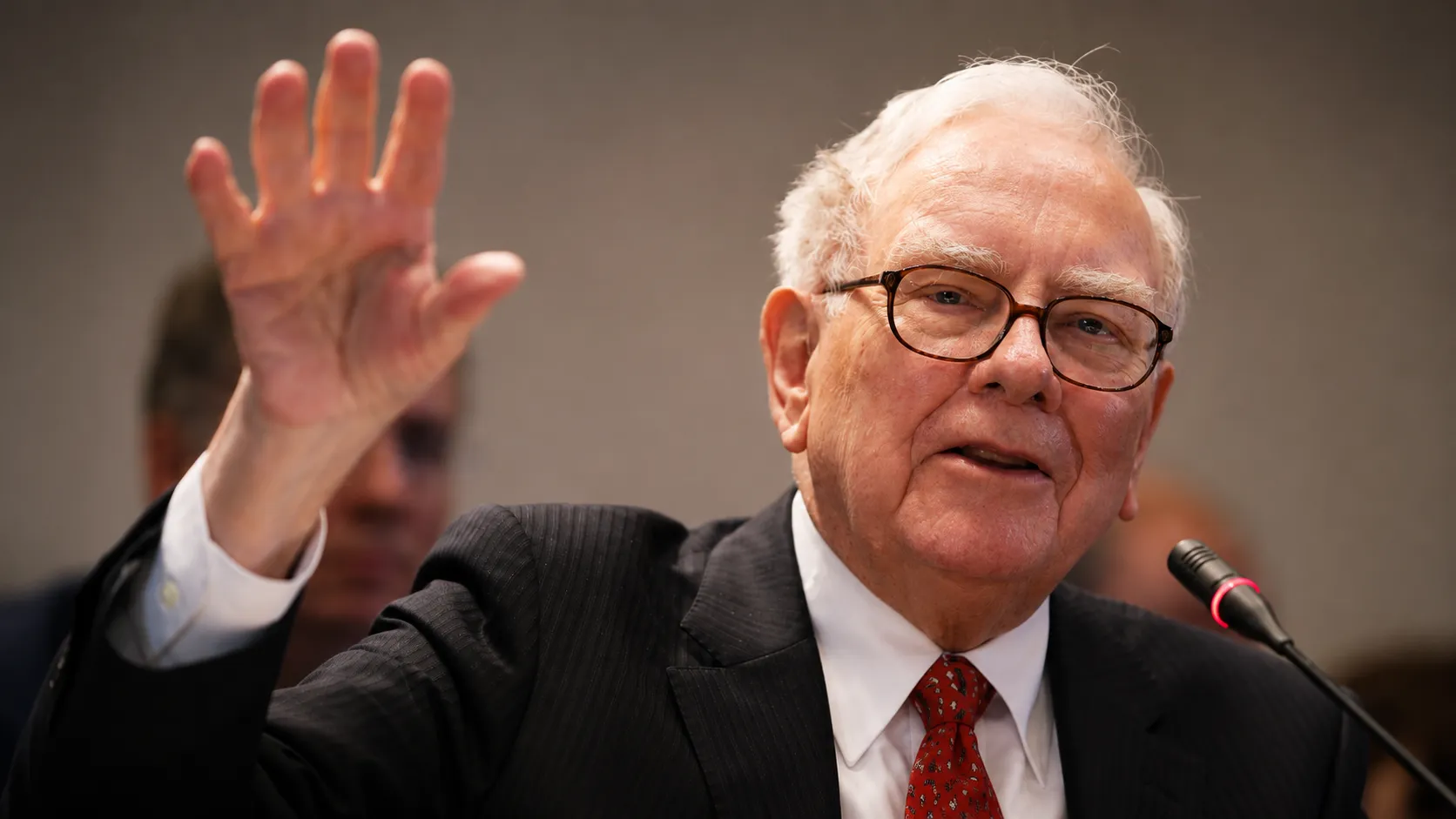
Warren Buffett has spent more than seven decades building a reputation as the world's most famous practitioner of patient, value-oriented investing, and this week, the 95-year-old Berkshire Hathaway chairman offered his latest, characteristically blunt assessment of just how far today's markets have drifted from that philosophy. In an interview with CNBC's Becky Quick, Buffett said plainly: "It's tough to find values when everybody is preferring gambling." He went further, offering a pointed explanation for why that dynamic persists industry-wide: "Since humans love to gamble so much, there's more money in actually cultivating gamblers than there are cultivating investors."
The comments extend a theme Buffett has returned to repeatedly over the past year. Earlier in 2026, he had described the broader stock market in even more vivid terms, likening it to "a church with a casino attached" — a characterization aimed specifically at the explosive growth in short-duration, speculative trading instruments, including the surge in same-day options trading that Buffett has singled out as emblematic of the market's shift toward gambling-like behavior rather than genuine long-term capital allocation.
The Broader Context: A Market at Records Amid Genuine Risk
Buffett's warning arrives at a moment when US equity markets have continued notching fresh record highs throughout 2026, even as the broader macro backdrop has remained genuinely fraught — from escalating geopolitical tensions around the Strait of Hormuz and renewed US military action against Iran, to a historic single-stock collapse in IBM shares earlier this week, to wild, multi-day swings in AI-related chip stocks including SK Hynix and Samsung Electronics that have seen tens of billions of dollars in market value created and destroyed within single trading sessions. Against that backdrop of persistent volatility layered atop record index levels, Buffett's characterization of a market where genuine value has become difficult to locate carries particular resonance.
Buffett elaborated on just how unevenly distributed genuine investment opportunities tend to be over time, describing a pattern where "there are times when opportunities are just thrown at you so fast you can't, you know, it's unbelievable" — typically during periods of acute market stress or dislocation — contrasted against long stretches where a disciplined investor might go years before identifying even a single compelling opportunity. His clear message to investors: patience, not activity, should be the default posture in an environment like the current one, where speculative enthusiasm has made it genuinely difficult to find assets trading at a meaningful discount to their underlying value.
The Rise of Prediction Markets: A New Frontier for "Gambling"
Buffett's comments landed at a particularly pointed moment given the parallel rise of prediction markets — platforms like Kalshi and Polymarket that allow users to trade on the outcomes of everything from economic data releases to sporting events — which have increasingly blurred the line between conventional financial markets and explicit betting platforms. Kalshi recently launched what it calls "perpetual futures," or perps, instruments that allow users to effectively bet on whether the price of an existing financial asset will rise or fall, a product structure that critics argue formalizes exactly the kind of speculative, gambling-adjacent behavior Buffett has been warning about, operating largely outside the scope of traditional state-level gaming regulation that governs conventional sports betting and casino gambling.
Kalshi's chief executive, Tarek Mansour, has pushed back on this framing, arguing publicly that many prediction market users turn to these platforms precisely because they feel conventional financial markets "are not working" for them — a defense that itself implicitly acknowledges the widening gap between how younger, more speculation-oriented market participants and veteran value investors like Buffett think about what markets are fundamentally for. The broader debate has taken on additional urgency amid growing concern about gambling addiction, particularly among younger Americans, with bipartisan legislative efforts now underway in Washington aimed at requiring age-verification technology, including facial recognition, before users can access prediction markets and sportsbooks alike.
Buffett's Diminished but Still-Watched Role
This week's comments carry a somewhat different weight than similar remarks might have a year and a half ago, given the significant leadership transition Berkshire Hathaway has undergone. Greg Abel formally took over as Berkshire's chief executive officer on January 1, 2026, after two decades of internal grooming within the conglomerate, marking the first time in six decades that Buffett was not the company's operational leader. Buffett, now serving as chairman, remains actively involved in the company — reportedly continuing to provide investment counsel to Abel — but the formal decision-making authority over Berkshire's massive capital allocation now rests with his successor.
That transition adds an interesting dimension to Buffett's market commentary this week: even as he laments the difficulty of finding genuine value in today's markets, Berkshire under Abel's leadership has been sitting atop a record cash and short-term Treasury position that reached $397.4 billion by the end of the first quarter of 2026 — comfortably the largest cash hoard in the company's history, and a figure that itself embodies exactly the kind of patient, opportunity-rationed discipline Buffett has spent decades preaching. Abel has publicly framed that enormous cash position as a source of strategic freedom rather than a sign of paralysis, telling shareholders at Berkshire's May annual meeting that the reserve ensures the company does "not intend to be beholden to anyone."
Signs of Selective Deployment
Despite the scale of Berkshire's cash pile and Buffett's continued public skepticism about broader market valuations, the company has shown clear signs of selective willingness to deploy capital when specific opportunities meet its exacting standards. In June 2026, Berkshire announced its first major acquisition under Abel's leadership: an $8.5 billion purchase of Taylor Morrison Home Corporation, the sixth-largest homebuilder in the United States, at $72.50 per share in cash — a deal that Buffett publicly credited to Abel's own initiative, notably stepping back from the transaction himself to let his successor lead the announcement.
Berkshire's public equity portfolio activity during the first quarter of 2026 similarly told a nuanced story: while the company remained a net seller of stocks for a fourteenth consecutive quarter, offloading roughly $24 billion worth of equities, Abel and co-manager Ted Weschler simultaneously purchased close to $16 billion in marketable securities during the same period — nearly matching the total amount Buffett himself had deployed into equities across the entirety of the prior year. That combination of continued net selling alongside a meaningful uptick in selective buying has led some market analysts to speculate that Abel may be finding pockets of genuine value even within a broader market Buffett himself has characterized as increasingly dominated by speculation — a nuance that adds useful context to how investors should interpret Buffett's blunt public remarks this week.
Why Buffett's Words Still Move Markets
Even in his reduced operational role, Buffett's public commentary continues to carry outsized influence across global financial markets and business media, a testament to the decades of consistently successful, discipline-driven capital allocation that built his reputation as, in his own famously self-deprecating framing, the "Oracle of Omaha." His willingness to publicly criticize prevailing market behavior — even during periods when that behavior has been generating substantial paper gains for participants — has historically preceded periods of significant market volatility, though Buffett himself has been consistently careful never to frame his comments as explicit market-timing predictions, instead couching them in terms of a broader philosophical critique of how market participants approach risk, value, and time horizon.

A Career Built on Waiting
Buffett's comments this week are consistent with a philosophy he has articulated in various forms across more than six decades atop Berkshire Hathaway, one built substantially around the discipline of patience during periods when he judges markets to be overvalued or overheated, followed by decisive, large-scale capital deployment during periods of genuine dislocation — most famously during the 2008 global financial crisis, when Berkshire's willingness and ability to deploy capital while much of the rest of the market was frozen with fear cemented Buffett's reputation as perhaps the defining example of contrarian, value-oriented investing in modern financial history. That track record gives his periodic public warnings about speculative excess considerably more weight than similar commentary from most other market participants, even as Buffett himself has consistently avoided framing his remarks as explicit predictions about near-term market direction.
The Generational Handoff Continues
Buffett's remarks this week also arrive as part of a broader, closely watched narrative about how faithfully Greg Abel and the rest of Berkshire's next-generation leadership will carry forward the investment philosophy Buffett spent decades building. Early indications suggest a leadership style that, while rooted in continuity, carries its own distinct character — Abel has been described by longtime Berkshire watchers as less tolerant of sustained underperformance among the conglomerate's various operating businesses than Buffett historically was, while still preserving the fundamental capital allocation discipline and aversion to speculative excess that Buffett's comments this week continue to reinforce publicly, even from his now largely advisory position within the company he built.
A Consistent, If Blunt, Communication Style
What makes Buffett's latest remarks particularly notable is the consistency of the underlying message across multiple public appearances this year, even as the specific phrasing and framing has evolved. From his "church with a casino attached" characterization earlier in 2026 to this week's more direct commentary on the difficulty of finding genuine value amid widespread speculative behavior, Buffett has repeatedly used vivid, accessible language to communicate concerns that many professional market strategists tend to express in far more technical, hedged terms. That communication style — plainspoken, memorable, and largely free of the qualifying caveats that typically accompany institutional market commentary — has long been part of what has made Buffett's public remarks so widely quoted and influential, even among market participants who do not necessarily share or act on his underlying investment philosophy.
The Long View
Whatever near-term market direction eventually follows Buffett's latest remarks, his core message this week is, in essence, the same one he has delivered in various forms across six decades of public commentary: markets cycle between periods of genuine opportunity and periods of speculative excess, and the investors who succeed over the long run are typically those disciplined enough to distinguish clearly between the two, rather than mistaking activity itself for progress. For a global audience of investors — in India, the United States, and everywhere in between — navigating a summer of 2026 defined by record index highs, historic single-stock crashes, whipsawing AI chip valuations, and rising geopolitical tension all occurring simultaneously, that decades-old message carries a renewed and genuinely timely relevance.
Why This Matters for Indian and Global Investors
For readers and investors in India and across the global business community, Buffett's latest remarks carry relevance well beyond their immediate US market context. India's own capital markets have witnessed a comparable, closely watched surge in retail speculative trading activity in recent years, particularly within derivatives and options markets, prompting the Securities and Exchange Board of India to introduce a series of regulatory measures aimed at curbing excessive retail speculation in high-risk derivative products — a domestic policy response that echoes precisely the kind of concerns Buffett has been voicing about the American market's drift toward gambling-like behavior.
Buffett's broader investment philosophy — patient capital allocation, a disciplined focus on genuine underlying business value rather than short-term price momentum, and a willingness to hold substantial cash reserves rather than deploy capital simply for the sake of activity — has long influenced generations of Indian investors and fund managers, many of whom have explicitly modeled their own approaches on Berkshire Hathaway's decades-long track record. As global markets continue navigating a period marked by both historic index highs and genuinely elevated geopolitical and macroeconomic uncertainty, Buffett's latest warning offers a timely reminder, for Indian and global investors alike, of the discipline required to distinguish between market activity and genuine long-term value creation.