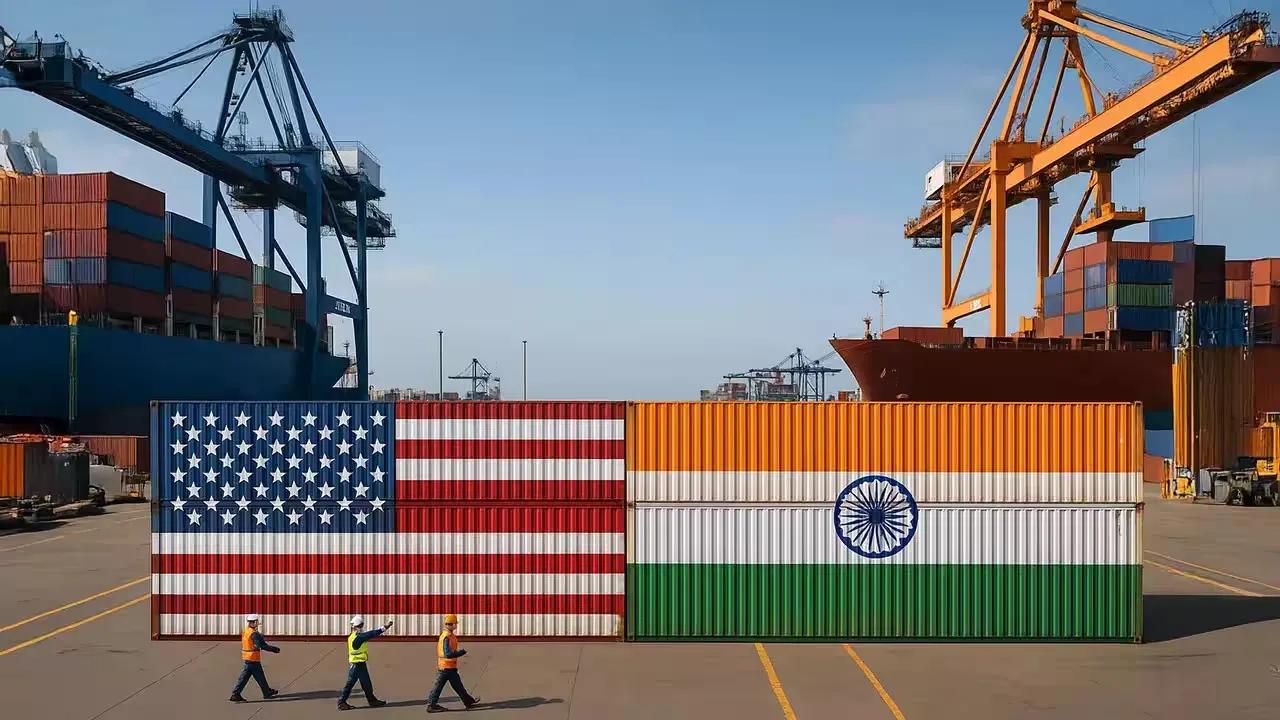
India and the United States are locked in an intensifying final stretch of trade negotiations as the clock runs down toward July 24, 2026 — the date on which the temporary 10 per cent tariff arrangement between the two countries, put in place earlier this year, is set to expire. With that deadline now just days away, Indian officials have been working to finalise a bilateral trade agreement that would lock in more favourable, durable tariff treatment for Indian exporters, even as they have repeatedly signalled that New Delhi is negotiating for substantively better terms rather than simply racing to beat the calendar with a hastily concluded arrangement.
The stakes attached to these negotiations are considerable, particularly for Indian export sectors that operate on comparatively thin margins and are acutely sensitive to tariff differentials relative to competing exporting nations. Textiles and apparel, gems and jewellery, pharmaceuticals, and engineering goods have all been repeatedly flagged by trade officials and industry bodies as sectors where even modest shifts in the effective tariff rate applied to Indian exports into the United States could meaningfully affect competitiveness relative to rival exporting nations such as Vietnam, Bangladesh and other Asian economies that have themselves been negotiating their own tariff arrangements with Washington in parallel. India's stated negotiating objective throughout this process has been to secure tariff terms that provide a clear comparative advantage over these regional competitors, rather than settling for parity — a considerably more ambitious goal than simply avoiding punitive tariff escalation.
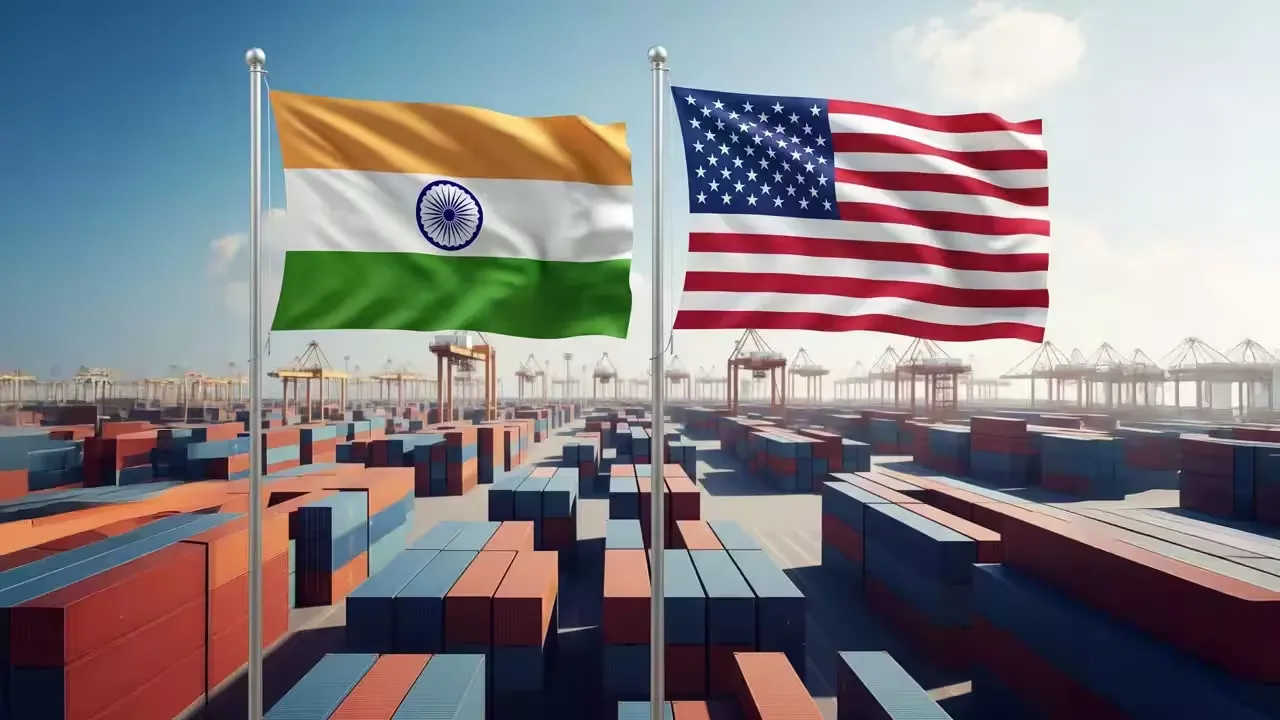
Commerce and Industry Minister Piyush Goyal has been the primary public voice articulating India's negotiating posture throughout this process, repeatedly emphasising that discussions remain focused on securing improved market access and lower tariffs to strengthen Indian export competitiveness. Goyal's public statements have consistently struck a note of measured confidence, indicating that the overall framework of a prospective agreement is largely in place, even as securing genuine tariff competitiveness relative to Asian peers remains a key unresolved issue in the ongoing discussions. India has also sought explicit assurances regarding the absence of additional tariffs being imposed once any agreement is finalised — a request that reflects lessons learned from the volatile, multi-phase tariff escalation and de-escalation cycle that has characterised US-India trade relations over the preceding twelve months.
That preceding cycle offers important context for understanding the stakes of the current negotiating endgame. Earlier this year, the effective US tariff on Indian goods had been reduced from a peak of roughly 50 per cent — which had included a punitive 25 per cent duty linked to India's continued purchases of Russian crude oil — down to 18 per cent, following a bilateral trade deal announced by US President Donald Trump in February 2026. That February agreement had itself followed months of tension, including a period in which Washington imposed the full 50 per cent tariff burden and briefly floated additional duties on specific categories such as Indian solar imports. The subsequent introduction of a separate, temporary 10 per cent tariff arrangement under Section 122 authority, following a US Supreme Court ruling that struck down the administration's earlier tariff mechanism, added yet another layer of complexity to an already intricate and frequently shifting trade relationship — and it is this temporary Section 122 arrangement whose scheduled expiry on July 24 has now created the current negotiating deadline.
Diplomatic engagement at the highest levels has continued alongside the more technical trade negotiations. Prime Minister Narendra Modi and President Trump reportedly directed their respective officials to fast-track a comprehensive deal during a pull-aside meeting at the G7 summit in France in June, with Modi's message marking the 250th anniversary of American independence on July 4 further reinforcing the generally warm tone between the two leaders even as their trade negotiators continue to work through the more granular, and considerably more contentious, details of tariff schedules and market access commitments. This combination of leader-level goodwill alongside unresolved technical sticking points has become a recurring pattern throughout the broader US-India trade relationship over the past year, with warm diplomatic rhetoric frequently outpacing the slower, more incremental progress achieved at the negotiating table itself.
For Indian exporters and the businesses that depend on them, the practical uncertainty created by this unresolved negotiation has real operational consequences. Companies in tariff-sensitive sectors have had to navigate months of shifting duty structures, making forward planning around pricing, inventory positioning, and even production location decisions considerably more complex than in a stable tariff environment. Industry bodies representing exporters have consistently called for greater clarity and, ideally, a durable multi-year agreement rather than the succession of temporary arrangements and phased de-escalations that have characterised the relationship since punitive tariffs were first imposed in August 2025 over India's Russian oil purchases.
The broader strategic backdrop to these negotiations extends beyond pure trade economics into questions of geopolitical alignment. The tariff dispute has, at various points over the past year, become entangled with broader questions about India's continued Russian oil imports, its participation in the BRICS grouping of emerging economies, and its posture of strategic non-alignment amid ongoing global conflicts — dimensions that have periodically complicated what might otherwise have been a more straightforward, purely commercial trade negotiation. Indian officials have consistently sought to keep these broader geopolitical considerations separate from the technical trade discussions, even as American negotiators have, at various points, explicitly linked tariff relief to India's energy sourcing decisions.
As the July 24 deadline arrives, market participants, exporters and policymakers alike will be watching closely for whichever outcome ultimately materialises: a finalised, comprehensive trade agreement that locks in durable, favourable tariff terms for Indian exporters; a further extension of the current temporary arrangement while negotiations continue; or, in the least favourable scenario for Indian exporters, a lapse of the temporary 10 per cent arrangement without a replacement agreement in place, which would see tariffs on Indian goods revert toward less favourable most-favoured-nation rates. Whatever the outcome, the resolution of this deadline is expected to have meaningful implications not just for the specific export sectors most directly affected, but for the broader trajectory of US-India economic relations heading into the second half of 2026 and beyond.