
Magazine10 MIN READ

Gautam Adani Files Sworn US Court Affidavit Denying Any Quid Pro Quo Behind DOJ's Dismissal Of Charges

Gautam Adani files a sworn US court affidavit denying any quid pro quo behind the DOJ's dismissal of criminal charges against him.

By Shaym Kumar · Author20 July 2026
Gautam Adani Files Sworn US Court Affidavit Denying Any Quid Pro Quo Behind DOJ's Dismissal Of Charges

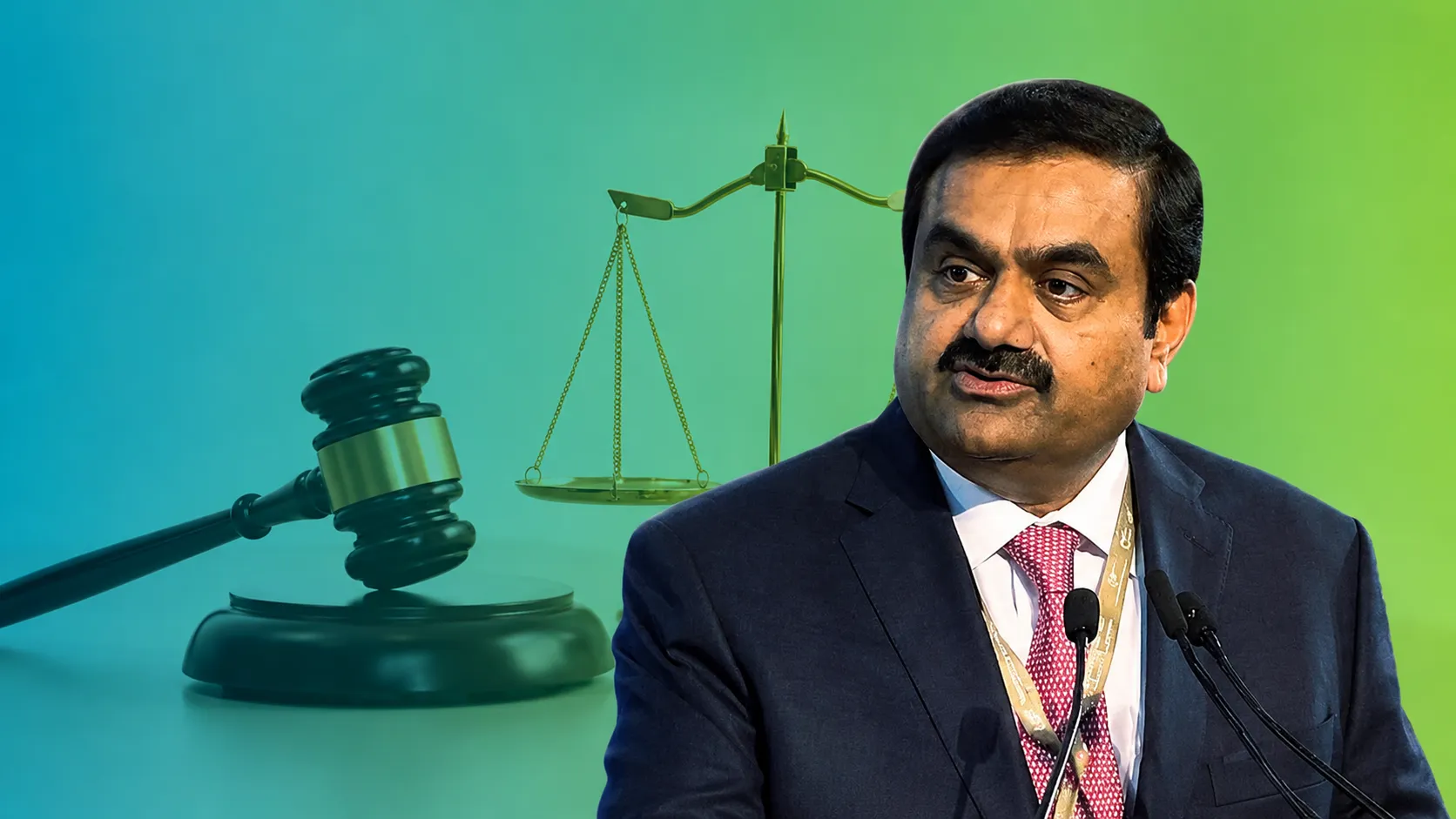
In a significant and closely watched legal development, Indian billionaire industrialist Gautam Adani has filed a sworn affidavit in a United States court explicitly denying that any quid pro quo arrangement lay behind the Department of Justice's decision to dismiss criminal charges that had been brought against him. The affidavit represents a rare instance of the Adani Group chairman directly and personally engaging with the American legal system through sworn testimony, rather than through the corporate statements and spokesperson responses that have typically characterised the conglomerate's public handling of the years-long legal saga in the United States.

The affidavit's central assertion is unambiguous: according to its contents, Adani states under oath that he had no knowledge of, and was not party to, any promise, offer, or agreement of any kind related to the termination of the case against him. That sworn denial is designed to draw a hard legal line under months of speculation and scrutiny that followed the DOJ's decision to drop the charges — a decision that inevitably invited questions, both in Indian and international financial media, about the circumstances and possible diplomatic or political considerations that may have influenced the American government's move.

To understand the significance of this affidavit, it is necessary to recall the broader arc of the legal case itself, which had cast a long shadow over the Adani Group and, by extension, over investor sentiment toward one of India's most prominent and systemically significant business conglomerates. The original charges, filed by US prosecutors, centred on allegations connected to the group's business dealings and had triggered sharp market reactions when first announced, wiping out billions of dollars in market capitalisation across Adani Group's listed entities and prompting intense scrutiny from credit rating agencies, institutional investors, and regulatory bodies both in India and abroad. The case became one of the most closely tracked corporate legal sagas involving an Indian business figure in recent memory, with implications that extended well beyond the Adani Group itself, touching on broader questions about foreign investor confidence in Indian corporate governance and regulatory oversight.
ChatGPT Image Jul 20, 2026, 01_57_31 PM.png

Against that backdrop, the DOJ's eventual decision to dismiss the charges was, unsurprisingly, met with a mixture of relief within the Adani camp and renewed scrutiny from critics and market observers who sought to understand precisely why and how the case had been resolved. It is that scrutiny — the question of whether any behind-the-scenes arrangement, diplomatic intervention, or negotiated understanding had facilitated the dismissal — that Adani's newly filed affidavit appears specifically designed to address and rebut. By placing his denial on the sworn court record, rather than leaving it to informal public statements, Adani and his legal team have opted for the strongest available form of formal repudiation: a legal document carrying the weight of perjury liability should its contents later be proven false.

Legal experts observing the case note that sworn affidavits of this nature serve a specific strategic function in ongoing or ancillary legal proceedings. They create a formal, documented record of a party's position that can be referenced in future proceedings, cited by defence counsel, or used to counter allegations raised in parallel litigation, congressional inquiries, or media investigations. The fact that Adani chose to file such an affidavit suggests that questions about the circumstances of the case's dismissal have continued to surface in contexts serious enough to warrant a direct, personal, sworn response rather than relying solely on corporate communications or legal counsel statements issued on his behalf.

The development lands at a particularly sensitive moment for the Adani Group, which has spent much of the past two years engaged in an active campaign to rebuild investor confidence following the initial market shock triggered by the original allegations. The conglomerate has pursued an aggressive fundraising and deleveraging strategy in parallel with its legal defence, tapping capital markets repeatedly to demonstrate continued institutional and retail investor appetite for its listed entities. Qualified institutional placement, or QIP, fundraising by Adani Enterprises alone reached approximately ₹4,660 crore in recent activity, with mutual funds among the significant institutional buyers participating in these placements — a signal that at least a segment of India's sophisticated institutional investor base has continued to back the group's fundamental business prospects even as the legal overhang persisted in the background.

For the Adani Group's broader corporate strategy, resolving lingering uncertainty around the US legal case carries considerable importance. The conglomerate operates across capital-intensive sectors including ports, energy, airports and infrastructure — businesses that depend heavily on sustained access to both domestic and international capital markets at favourable financing terms. Any residual uncertainty about the group's legal standing in the United States has the potential to affect credit ratings, borrowing costs, and the willingness of certain classes of international investors, particularly those bound by stringent environmental, social and governance mandates or reputational risk policies, to engage with Adani-linked securities. A clean, formally documented resolution to the underlying legal questions — including a sworn denial of any improper arrangement behind the case's dismissal — is therefore not merely a matter of personal legal defence for Gautam Adani, but a matter of continued strategic importance to the group's cost of capital and its ability to execute on ambitious expansion plans across its core infrastructure businesses.

Market reaction to the filing has, so far, been measured rather than dramatic, reflecting the fact that the underlying charges had already been dismissed prior to this affidavit, meaning the sworn statement functions more as a reinforcing legal and reputational move than as a market-moving event in its own right. Nonetheless, corporate governance analysts and financial journalists tracking the Adani Group's affairs note that the affidavit is likely to be referenced repeatedly in future commentary and analysis regarding the case, serving as a formal reference point whenever questions about the circumstances of the dismissal resurface in financial media, academic case studies, or future regulatory reviews. As one of India's most closely watched and consequential corporate legal sagas of the decade continues to work its way through various stages of resolution and scrutiny, Adani's sworn denial stands as perhaps the clearest, most legally consequential statement yet from the man at the centre of it all — a direct, personal, on-the-record rejection of any suggestion that the case's outcome was anything other than a legitimate legal determination reached on its own merits.
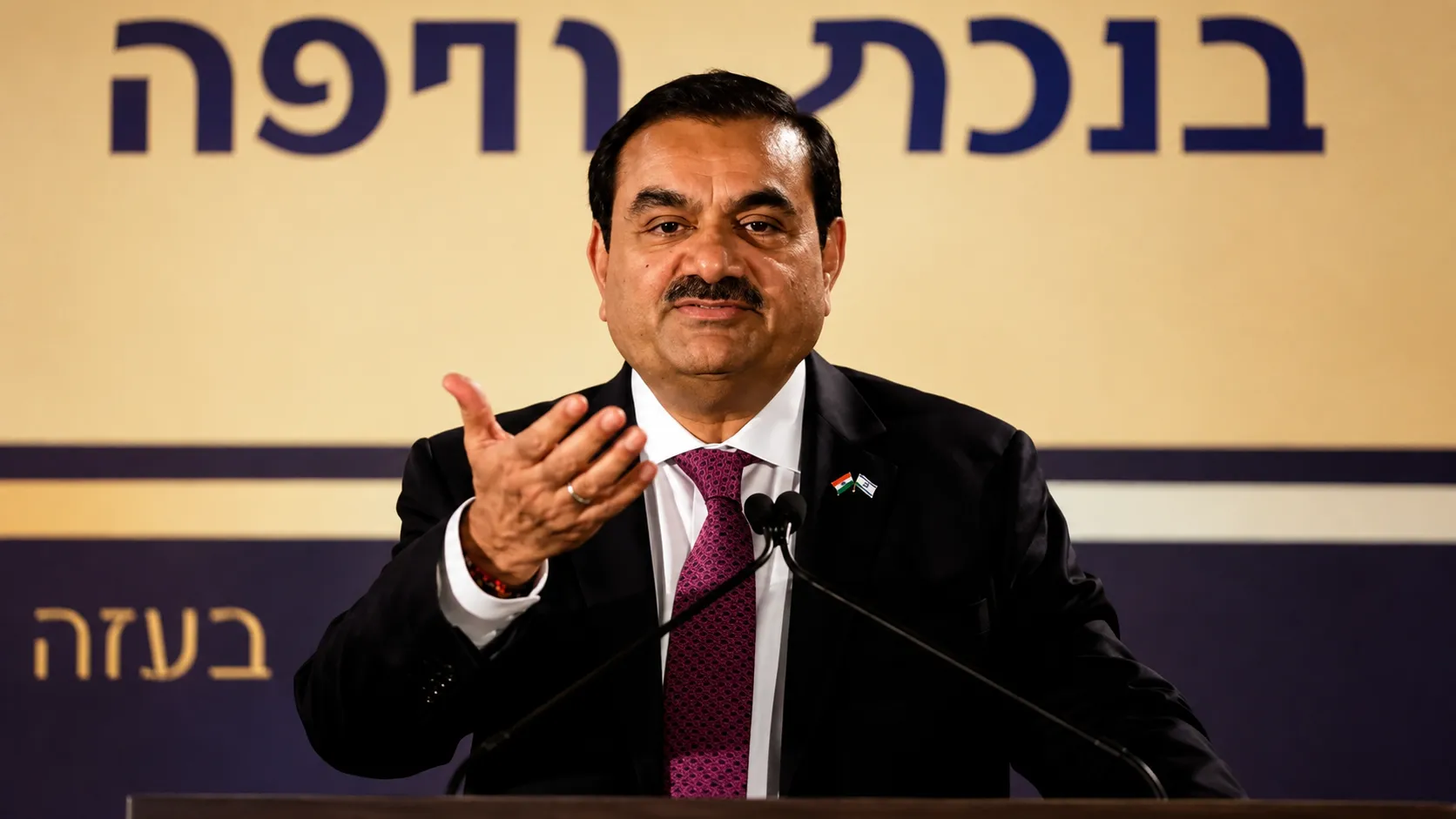

The affidavit's central claim seeks to draw a hard legal line under months of speculation: that Adani had no knowledge of, and was not party to, any promise, offer, or agreement of any kind tied to the case's termination.
The Impactful Global Indian Business Desk

To place this development in proper context, it is worth revisiting how significantly the original allegations reshaped perceptions of the Adani Group among global investors when they first surfaced. The group's listed entities, spanning ports and logistics, power generation and transmission, renewable energy, airports, cement and media, together constitute one of the largest and most systemically important private conglomerates in the Indian economy, with the group's infrastructure assets touching the daily lives of hundreds of millions of Indians through electricity supply, airport operations, and port-handled trade. Given that scale and systemic footprint, any legal cloud hanging over the group's founder and chairman has historically carried implications well beyond the Adani companies themselves, feeding into broader international narratives about corporate governance standards, regulatory oversight, and the ease of doing business within India's largest private conglomerates — narratives that Indian policymakers and market regulators have been keen to see resolved conclusively, one way or another.

Credit rating agencies, both domestic and international, had flagged the ongoing legal uncertainty as a qualitative risk factor in their assessments of Adani Group entities' debt instruments through the period the case remained active, even as they generally maintained that the group's underlying operational cash flows and asset quality remained sound. The dismissal of charges, followed now by this reinforcing sworn affidavit, is likely to feature prominently in rating agencies' ongoing credit reviews of Adani Group entities, potentially supporting more favourable financing terms as the group continues its aggressive capital expenditure programme across ports, energy transition assets, and now airport expansion projects. Group entities have continued to access capital markets throughout the period the legal case remained unresolved, a testament to at least a segment of institutional investors' willingness to look past the legal overhang toward the underlying strength of the group's core infrastructure businesses — but a fully and formally resolved legal position removes what had been a persistent, if gradually diminishing, source of investor caution.

For India's broader corporate and regulatory ecosystem, the Adani saga's eventual resolution — now reinforced by this sworn affidavit — carries lessons that extend well beyond a single conglomerate. It has prompted renewed conversations among Indian policymakers, market regulators including the Securities and Exchange Board of India, and international investors about the mechanisms through which allegations against major listed companies are investigated, disclosed, and ultimately resolved across different jurisdictions, given how consequential extraterritorial legal proceedings in markets like the United States can prove for companies whose primary operations and shareholder base sit in India. As the dust continues to settle around this particular case, Gautam Adani's decision to place his personal, sworn denial on the American court record will likely be remembered as a defining moment in a saga that tested, and ultimately did not break, investor confidence in one of India's most consequential business empires.

Political reaction within India to the affidavit and the broader dismissal of charges has, predictably, followed familiar fault lines. Supporters of the government have pointed to the case's resolution as vindication of their long-standing position that the original allegations were overstated or politically motivated, while opposition voices have continued to press for greater transparency around the full sequence of events that led to the charges being dropped, arguing that the public interest is best served by complete disclosure rather than a sworn denial alone. This political dimension, layered atop the underlying legal and commercial questions, ensures that the Adani case will likely remain a recurring reference point in India's broader political and business discourse for some time to come, even as the formal legal proceedings themselves move toward closure. For ordinary investors holding Adani Group securities, however, the more immediately relevant takeaway is likely to be the group's demonstrated ability to continue accessing capital markets, executing on its infrastructure expansion plans, and maintaining institutional investor interest throughout a period of sustained legal uncertainty — a resilience that will now be tested afresh as the group looks to convert this newly reinforced legal clarity into more favourable financing terms and renewed international investor confidence heading into the second half of the 2026-27 financial year.

ChatGPT Image Jul 20, 2026, 02_04_50 PM.png

Looking ahead, legal observers expect the affidavit to be examined closely by any parties involved in ancillary proceedings, congressional or regulatory inquiries that may still be active in the United States, and by the financial media that has tracked the case since its inception. For the Adani Group's communications and legal teams, the strategic calculation behind filing such a document appears clear: rather than allow ambiguity or unanswered questions to linger indefinitely in the public record, place a sworn, legally binding statement on file that can be pointed to decisively whenever the matter resurfaces. Whether that strategy succeeds in fully closing the chapter on this particular controversy, or whether fresh questions continue to surface in the months ahead, will ultimately depend on developments largely outside the group's direct control. For now, though, Gautam Adani's affidavit stands as the most direct, formal and legally consequential word yet from the man himself on a case that has shaped global perceptions of Indian corporate governance for years — and its contents are likely to be cited, debated and dissected for a long time to come by investors, journalists and legal scholars alike as this consequential chapter in Indian corporate history reaches its resolution. As always in matters of this scale and visibility, the final word will likely not rest with any single affidavit, however sweeping its denials, but with the steady accumulation of disclosures, market outcomes and regulatory findings that continue to unfold in the months and years ahead — a slow, deliberate process that, for a conglomerate of Adani Group's size and reach, will remain under the microscope of investors, regulators and the public for the foreseeable future.

TagsGautamAdaniAdaniGroupDOJUSCourtAdaniNewsCorporateIndiaAdaniLegalCaseIndiaBusinessNewsAdaniEnterprisesBusinessNewsIndia

Reader reviews

Sign in to rate and review this article.
Loading reviews…

More from TIGI

The ₹7 Lakh vs. ₹45 Lakh Question: How the Telangana Theatre War Became a Battle for the Soul of Indian Cinema
Magazine

The ₹7 Lakh vs. ₹45 Lakh Question: How the Telangana Theatre War Became a Battle for the Soul of Indian Cinema

On the morning of May 28, a press note issued by the Telangana State Film Chamber of Commerce landed in the inboxes of journalists across the country, and the single-sentence announcement it contained—"The old rental system in theatres will be completely abolished from July 3"—was the culmination of a war that had been building for nearly four decades. The war was not fought between stars and studios, or between producers and directors, or between any of the glamorous combatants who dominate the business pages of the entertainment press. It was fought between the people who own the screens and the people who make the films, and it was fought over a question so fundamental that the industry had never thought to ask it: when a film earns a rupee at the box office, who deserves to keep it?

The Thalaivar's Trillion: How Rajinikanth Built a ₹1,200 Crore Empire on Style, Devotion, and One Signature Flick
Magazine

The Thalaivar's Trillion: How Rajinikanth Built a ₹1,200 Crore Empire on Style, Devotion, and One Signature Flick

He is the only Indian actor whose fans bathe his cutouts with milk. The only one whose film releases are treated as festivals, with state holidays declared and tickets selling for ₹5,000 on the black market. The only one who, at 75, commands a per-film fee of ₹200 crore – the highest in Indian history. And the only one who has never needed a pan-Indian strategy, because he has always been universal. Rajinikanth – or simply "Thalaivar" (The Leader) to his millions of devotees – has an estimated net worth of ₹1,200 crore (approximately $145 million) , making him the wealthiest actor in South India and second only to Shah Rukh Khan nationally. His brand valuation, according to Kroll 2025, is $180 million . He owns a production house (V Creations, run by his son-in-law), a sprawling real estate portfolio, a fleet of vintage cars, and the unwavering loyalty of a generation. But the numbers are almost besi

The Prince of Tollywood: How Mahesh Babu Built an ₹850 Crore Kingdom on Silence, Selectivity, and SS Rajamouli
Magazine

The Prince of Tollywood: How Mahesh Babu Built an ₹850 Crore Kingdom on Silence, Selectivity, and SS Rajamouli

In an industry that glorifies speed — four films a year, constant social media chatter, relentless brand visibility — Mahesh Babu has chosen the opposite path. He makes one film every two years. He posts on Instagram once a week (if that). He endorses fewer than a dozen brands at a time. And yet, when Sarkaru Vaari Paata crossed ₹100 crore in four days in 2022, or when the mere announcement of his collaboration with SS Rajamouli broke the internet, the world was reminded of a simple truth: scarcity creates value.