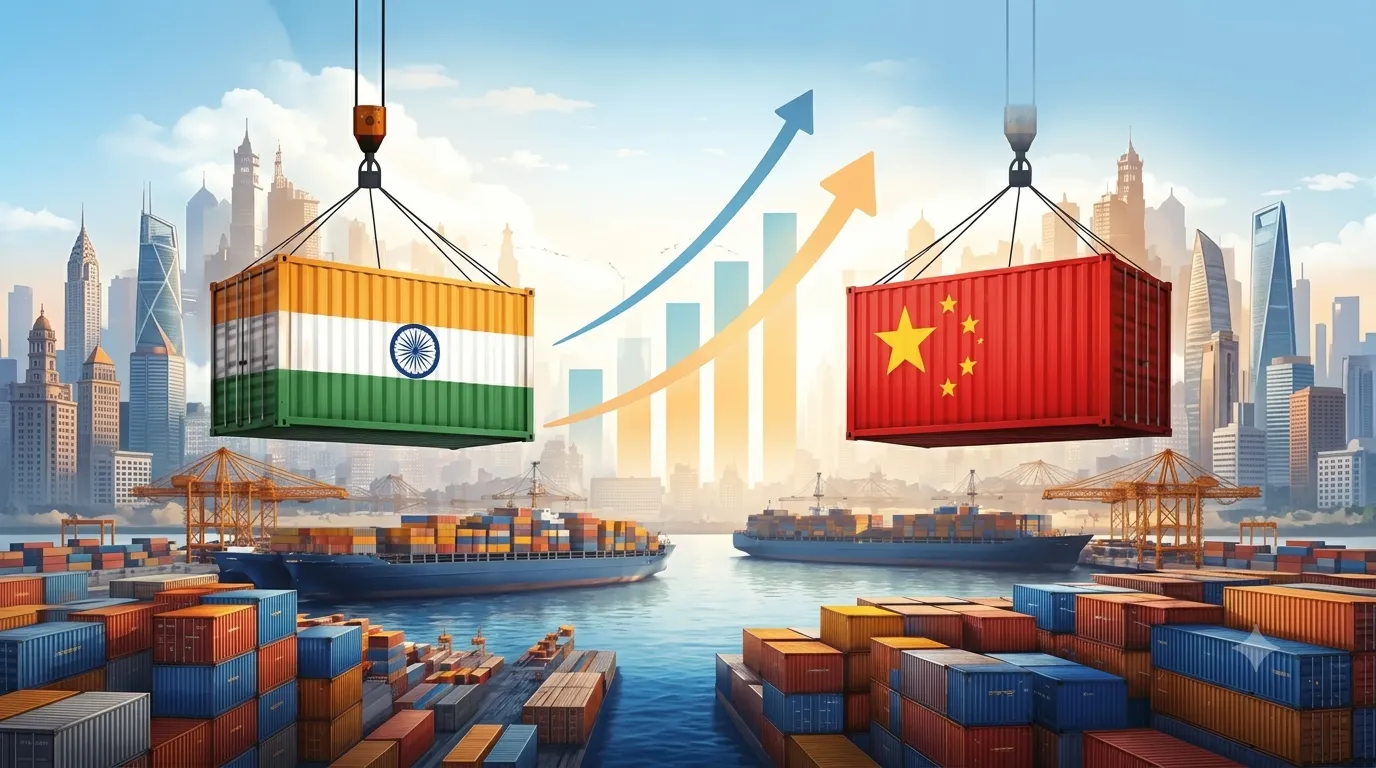
Economic data releases rarely capture genuine surprise from seasoned market watchers, but this week's Chinese second-quarter GDP figures managed to do exactly that, not because the headline growth number itself was shocking, but because of the striking divergence it revealed between two halves of the same economy pulling in opposite directions. China's gross domestic product expanded at its slowest pace since 2022 during the second quarter, missing market expectations and reigniting a now-familiar debate among global economists about whether the world's second-largest economy has entered a more structurally challenged growth phase, or whether this is simply another cyclical soft patch in a famously uneven post-pandemic recovery.
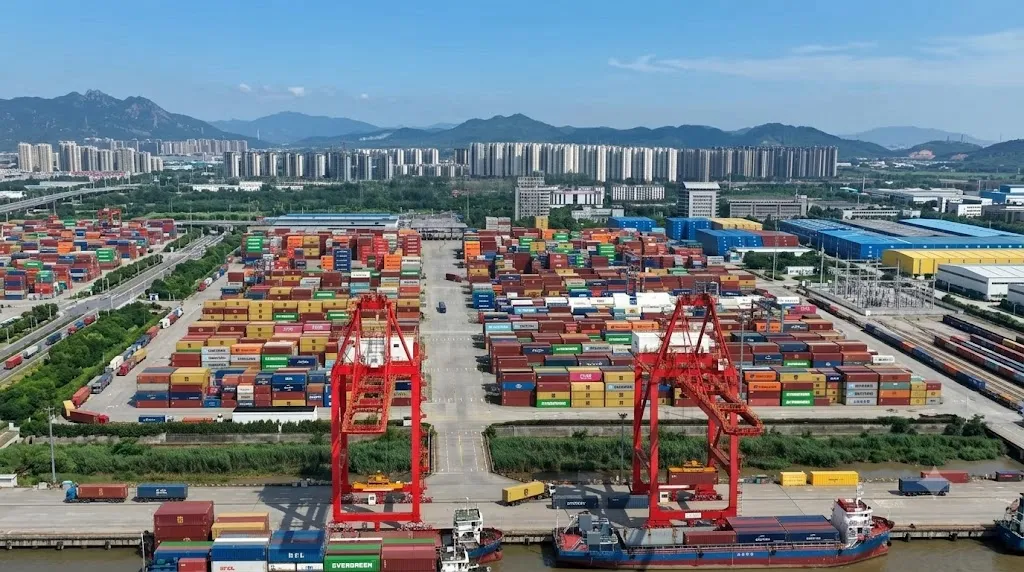
And yet, in the very same data window, China's trade figures told an almost entirely different story. June exports surged 27% year-on-year in US dollar terms — the strongest pace of export growth since October 2021 — sharply accelerating from the already-solid 19.4% gain recorded in May and comfortably beating economist forecasts that had been modeling growth closer to 18.2%. Imports, meanwhile, grew an even more striking 36% in June, the largest jump since June 2021, itself an acceleration from May's 27.4% growth and well ahead of the roughly 24% economists had penciled in. The resulting trade surplus for the month stood at a substantial $125.6 billion.
Two Economies Inside One Number
To understand why these figures matter so much — and why they matter specifically to Indian and global business audiences — it helps to unpack what is actually driving this divergence. China's domestic economy has been grappling for an extended period with what economists increasingly describe as a deepening supply-demand imbalance: a combination of a prolonged property sector downturn that has weighed heavily on household wealth and consumer confidence, softening private investment as businesses remain cautious amid policy uncertainty, and volatile energy prices that have complicated industrial planning and cost management for Chinese manufacturers.
At the same time, China's industrial production and export machine has found a powerful new tailwind in the form of the global artificial intelligence investment boom. Chinese manufacturers, which sit at the center of global supply chains for everything from semiconductors and electronics components to the physical infrastructure required to build out AI data centers worldwide, have benefited enormously from surging global demand tied to the AI capital expenditure super-cycle currently reshaping the technology industry. This dynamic helps explain the seemingly paradoxical combination of headline GDP growth that is disappointing on a domestic consumption basis, alongside export and industrial production figures that are genuinely robust — because the export-oriented, manufacturing-heavy portions of the Chinese economy are being powered by external, AI-driven global demand even as the domestically-oriented, consumption-driven portions of the economy continue to struggle.
Market Reaction: Cautious Optimism Amid Structural Concerns
Financial markets across Asia offered a nuanced, rather than uniformly negative, reaction to this data. Mainland Chinese stocks traded higher in choppy sessions following the GDP miss, with the CSI 300 index closing modestly higher, while Hong Kong's Hang Seng index gained close to 1%, tracking broader gains across Asian equity markets more generally. That relatively sanguine market reaction, despite a headline GDP miss, reflects an increasingly common pattern in how investors have learned to parse Chinese economic data over the past several years: rather than reacting mechanically to the headline growth number, market participants are looking through to the underlying composition of growth, and in this instance, the strength of the export and trade surplus figures appears to have offered enough reassurance to offset disappointment over the slower headline GDP print.
Healthcare and real estate stocks were notably among the strongest-performing sectors within Chinese equity markets following the data release, a pattern that likely reflects investor positioning around expectations for further targeted policy stimulus measures aimed specifically at shoring up the property sector and boosting domestic consumption — measures that Chinese policymakers have signaled willingness to deploy, even if the scale and timing of such interventions remain subjects of ongoing debate among economists and market strategists.
Why This Matters for India
For readers focused on India's position within the global economic order, China's growth trajectory carries several layers of relevance that go well beyond simple curiosity about a rival Asian economic giant. First, and most directly, China's export strength — particularly in electronics, semiconductors, and AI-adjacent manufacturing — has direct implications for India's own ambitions to position itself as an alternative manufacturing and supply chain hub amid ongoing global efforts to diversify away from overreliance on any single country. A China that is successfully capturing the lion's share of AI-driven export demand presents both a competitive challenge and, potentially, a template for India's own electronics manufacturing and semiconductor ambitions, which have been a centerpiece of the Indian government's industrial policy agenda in recent years.
Second, China's domestic consumption weakness carries implications for global commodity markets, energy prices, and broader emerging market investor sentiment that inevitably touch India as well. A structurally slower-growing Chinese domestic economy, if that trend persists, could weigh on global demand for commodities in ways that affect everything from Indian companies' input costs to broader capital flow dynamics across emerging markets, as global investors recalibrate their overall emerging market allocation strategies in response to shifting relative growth prospects between China, India, and other major developing economies.
Third, and perhaps most consequentially for India-focused investors and policymakers, China's ongoing economic challenges have fed into a broader multi-year narrative around global capital increasingly seeking diversification beyond China — a dynamic that has, at various points over the past several years, been credited with contributing to increased foreign institutional investor interest in Indian equity and debt markets as an alternative emerging market growth story with a more favorable long-term demographic and structural growth profile.
The Global Trade Picture
China's blistering import growth figure — that 36% year-on-year jump in June, the fastest pace since 2021 — also deserves attention in its own right, separate from the export story. Rising imports can reflect several distinct underlying dynamics: genuine domestic demand recovery, restocking of industrial inputs and raw materials in anticipation of continued strong export production, or a combination of both. Economists parsing this week's data have generally leaned toward interpreting the import surge as more closely tied to industrial input restocking connected to the export boom, rather than a genuine signal of a broader domestic consumption recovery, given the continued softness evident in other domestic economic indicators.
The resulting $125.6 billion monthly trade surplus is itself a figure with significant geopolitical as well as economic weight. Large and persistent Chinese trade surpluses have been a recurring source of trade tension with major Western economies, including the United States, and this week's data is likely to feature prominently in ongoing discussions and negotiations around trade policy, tariffs, and broader economic relations between China and its major trading partners throughout the remainder of 2026.
Central Bank and Policy Implications
The divergent nature of this week's data also complicates the policy calculus facing Chinese authorities. A central bank and finance ministry seeking to support flagging domestic consumption and stabilize the beleaguered property sector might normally lean toward more aggressive monetary and fiscal stimulus measures. But the strength of the export and trade data provides Chinese policymakers with a degree of near-term cover — headline GDP and trade figures that, taken together, do not yet present an unambiguous crisis requiring emergency-scale intervention, even as the underlying structural challenges around property sector health and consumer confidence remain very much unresolved.
This dynamic has been a recurring theme throughout China's post-pandemic economic trajectory: a pattern of policymakers deploying targeted, incremental support measures rather than the kind of large-scale, broad-based stimulus that characterized China's response to previous economic slowdowns, reflecting a deliberate strategic shift toward prioritizing longer-term structural economic rebalancing over short-term growth maximization, even at the cost of accepting a slower headline growth trajectory in the near term.
What Comes Next
Looking ahead, the key questions hanging over China's economic trajectory for the remainder of 2026 center on the durability of the current export boom, and whether it can continue to offset domestic weakness indefinitely. The global AI investment super-cycle that has powered much of the recent export strength shows little sign of slowing in the near term, given the scale of capital expenditure commitments major global technology companies have made toward AI infrastructure buildout. But that dynamic also introduces a degree of concentration risk into China's growth story — an economy increasingly reliant on a single, narrow (albeit currently very powerful) global demand driver is inherently more exposed to any eventual moderation in AI-related capital spending than a more broadly diversified growth model would be.
For global and Indian business audiences alike, China's Q2 2026 data offers a valuable reminder that headline GDP figures, while useful shorthand, often obscure more than they reveal about the underlying health and trajectory of a major economy. The real story in China right now is not simply "growth is slowing" or "growth is strong" — it is a more nuanced tale of an economy bifurcating along the lines of export-oriented manufacturing strength and domestic consumption weakness, a bifurcation with consequences that will continue to ripple across global trade, commodity markets, and investment flows, India very much included, for the remainder of this year and likely well beyond.
Reading Across to Indian Manufacturing Ambitions
For India's own policymakers and industrial strategists, this week's Chinese data offers a genuinely instructive case study in both opportunity and caution. On one hand, China's continued dominance of AI-related manufacturing exports underscores just how far India's own electronics and semiconductor manufacturing ecosystem still needs to travel before it can meaningfully compete for the same category of high-value, technologically sophisticated export demand. Production-linked incentive schemes and semiconductor fabrication investments championed by Indian policymakers in recent years represent early, necessary steps in that direction, but China's export figures this week are a sobering reminder of the sheer scale and manufacturing sophistication India's industrial base will need to develop to meaningfully capture a larger share of AI-driven global manufacturing demand.
On the other hand, China's domestic consumption weakness and property sector struggles offer a cautionary tale about the risks of over-reliance on any single growth engine, whether that engine is export manufacturing, real estate, or any other narrow sectoral driver. India's own long-term growth strategy, which has emphasized a more balanced combination of domestic consumption growth, services sector expansion, and gradually increasing manufacturing competitiveness, may ultimately prove more structurally resilient than China's more manufacturing-and-export-concentrated model, even if it has not (yet) produced the kind of headline export growth figures China posted this week.
Currency and Commodity Market Ripple Effects
China's trade data this week also carries meaningful implications for currency and commodity markets that touch India both directly and indirectly. A stronger-than-expected Chinese trade surplus tends to support the renminbi and can influence broader Asian currency dynamics, including the Indian rupee's trading behavior against major global currencies. Similarly, China's import growth figures — even if driven primarily by industrial input restocking rather than broader consumption strength — carry direct relevance for global commodity prices, given China's outsized role as the world's largest importer of industrial raw materials ranging from iron ore and copper to crude oil and liquefied natural gas. Indian companies operating in commodity-intensive sectors, from steel and cement to energy and chemicals, will be watching China's ongoing demand trajectory closely as an important input into their own cost planning and pricing strategies for the remainder of 2026.
The Long View
Ultimately, this week's data will likely be remembered less as a single decisive data point and more as another entry in the ongoing, multi-year story of China's economic rebalancing — a rebalancing that Chinese policymakers themselves have repeatedly described as a deliberate, necessary, if uncomfortable transition away from an investment-and-export-led growth model toward one more genuinely anchored in domestic consumption. Whether that transition ultimately succeeds, and on what timeline, remains one of the most consequential open questions in the global economy, with implications that will continue to shape trade flows, investment decisions, and strategic planning in boardrooms across India and the rest of the world for years to come.