Magazine9 MIN READ

Beyond the Usual Suspects: Why India Is Quietly Betting Big on Poland

India and Poland have reaffirmed their Strategic Partnership, expanding cooperation across trade, investment, defence, and technology. Here's why the Central European nation is becoming a bigger piece of India's Europe strategy.

By Aravind Kumar · Author15 July 2026Trending
Beyond the Usual Suspects: Why India Is Quietly Betting Big on Poland

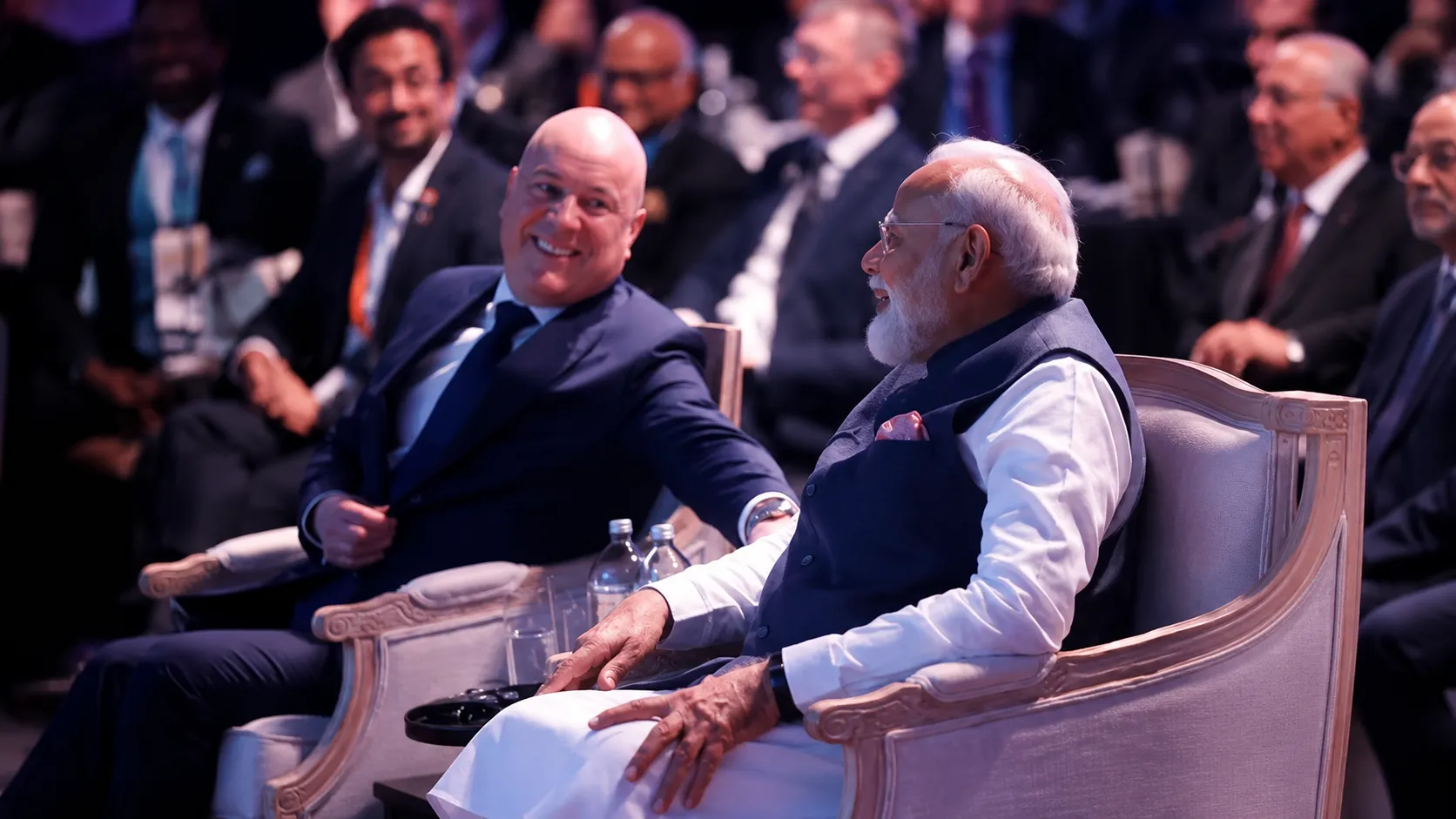
When most conversations about India's European trade and diplomatic strategy take place, the countries that dominate the discussion are predictable: Germany, France, the United Kingdom, and increasingly, the European Union as a bloc. Poland rarely makes the headline list — and yet, this month, India and Poland held high-level talks that reaffirmed and expanded their Strategic Partnership across trade, investment, defence, technology, and emerging sectors, in a development that deserves more attention than it has so far received, both for what it signals about India's evolving approach to Central and Eastern Europe, and for what it reveals about Poland's own ambitions to position itself as a bridge between Western Europe and the fast-growing economies of South Asia.

A partnership with deeper roots than most realize

India and Poland's diplomatic relationship is, in fact, considerably older than most people assume — the two countries established formal diplomatic relations decades ago, and Poland was among the countries with which India built meaningful ties during the Cold War era, when Warsaw sat within the Soviet sphere of influence and India pursued its own distinctive non-aligned foreign policy. That historical relationship has evolved considerably since Poland's accession to the European Union in 2004, which fundamentally reshaped Warsaw's economic orientation toward Western Europe and, by extension, changed the framework within which India-Poland ties are conducted — largely, though not exclusively, through the lens of India's broader engagement with the EU as a trading bloc.

What makes the current round of high-level talks notable is the breadth of sectors under discussion: trade, investment, defence, technology, and what officials describe as "emerging sectors" — language that in contemporary diplomatic parlance typically encompasses areas like semiconductors, artificial intelligence, clean energy technology, and critical minerals processing, all areas where both countries have identified strategic interest in recent years.
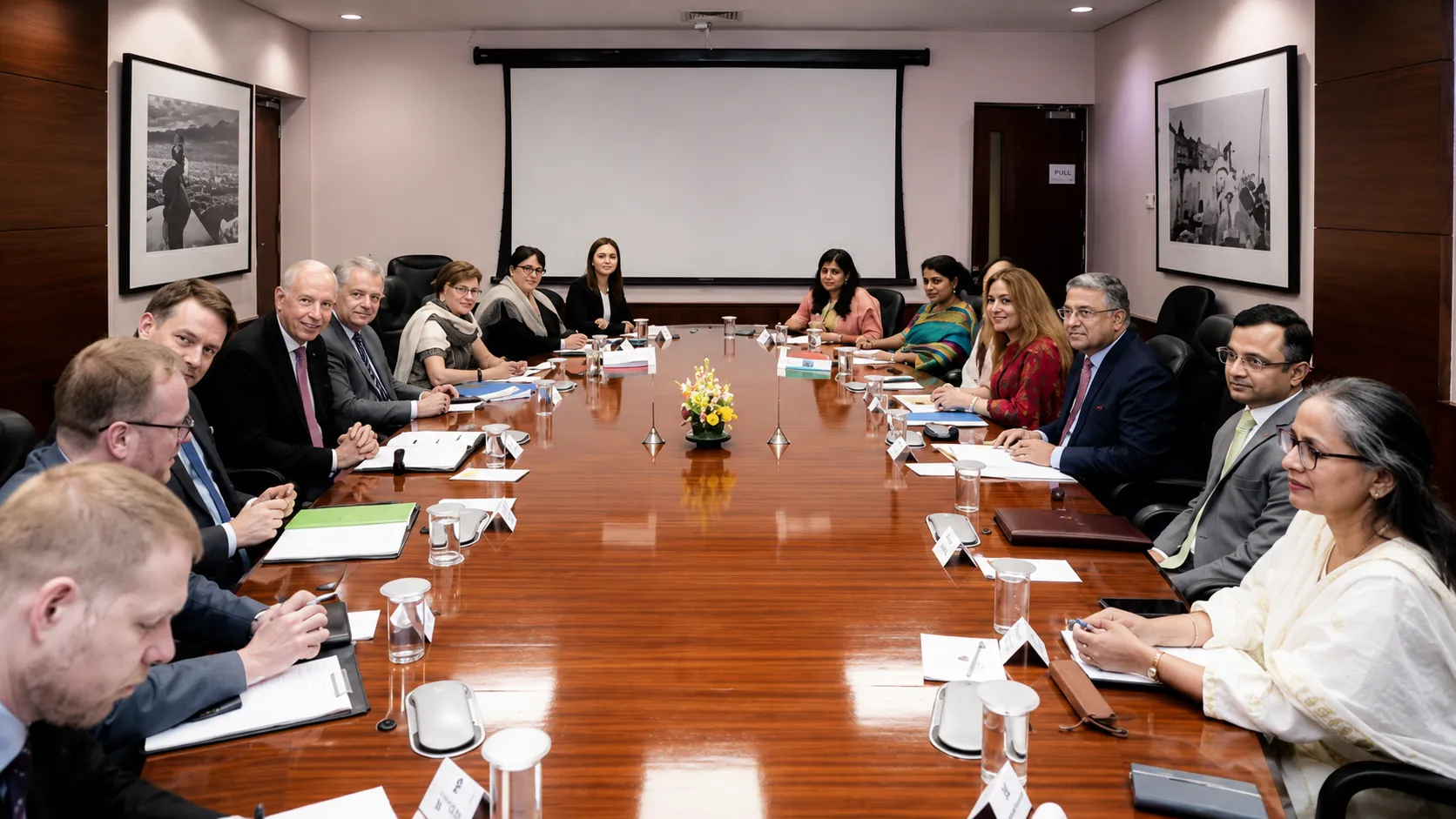
image.png

Why Poland, and why now

Several converging factors help explain why Poland has moved up India's list of priority partnerships in Europe. First, Poland has emerged as one of the fastest-growing and most resilient economies within the European Union over the past decade, having weathered various regional economic shocks — including the broader European energy crisis triggered by the Russia-Ukraine war — better than many of its Western European peers. This economic resilience, combined with Poland's sizable domestic market of roughly 38 million people and its role as a manufacturing and logistics hub connecting Western Europe to the rest of the continent, makes it an increasingly attractive destination for Indian companies looking to establish a European manufacturing or distribution foothold without the higher cost base associated with Germany or France.

Second, and perhaps more significantly in 2026's geopolitical climate, Poland's location and its role within NATO's eastern flank has made it a country of considerable strategic importance in discussions around European security architecture, defence industrial cooperation, and supply chain resilience — all topics that have taken on heightened urgency given the ongoing instability stemming from the Russia-Ukraine conflict and, more recently, the escalating tensions in the Middle East that have rattled global energy and shipping markets throughout 2026. For India, which has been steadily expanding its defence manufacturing and export ambitions under its broader "Atmanirbhar Bharat" (self-reliant India) policy framework, a partner like Poland — which has its own substantial defence industrial base and has been undertaking significant military modernization in response to regional security concerns — represents a potentially valuable partner for co-development, technology transfer, and even export opportunities for Indian-made defence platforms and components.

Trade: an underdeveloped relationship with room to grow

Bilateral trade between India and Poland, while growing, remains relatively modest compared to India's trade relationships with Western European heavyweights — a gap that officials on both sides appear keen to close. Poland's trade profile with India has traditionally centered on sectors like machinery, chemicals, and agricultural products flowing from Poland to India, with India exporting textiles, pharmaceuticals, and engineering goods in the other direction. The relatively underdeveloped nature of this trade relationship, compared to the scale of both economies, is precisely what makes the current push for expanded cooperation notable — there is considerably more headroom for growth in India-Poland trade than in more mature bilateral relationships that may already be closer to their natural ceiling given existing tariff and regulatory structures.

This dynamic also needs to be understood in the context of India's broader trade negotiations with the European Union as a whole. India and the EU have been engaged in long-running negotiations toward a comprehensive free trade agreement, talks that have proceeded in fits and starts over more than a decade due to disagreements over issues ranging from automotive tariffs to data protection standards to labour and environmental provisions. Bilateral strengthening of ties with individual EU member states like Poland can, in this context, serve a dual purpose: building tangible economic and diplomatic momentum even as the larger EU-wide negotiation continues, while also cultivating allies within the 27-member bloc who may prove influential when it comes to finally concluding — or shaping the terms of — that broader EU-India trade agreement.

Defence cooperation: a strategic hedge in an uncertain world

The defence dimension of the India-Poland talks deserves particular attention given the broader context of 2026's geopolitical environment. India has, for decades, maintained a diversified defence procurement strategy, historically anchored by Russian-origin equipment but increasingly supplemented by partnerships with the United States, France, Israel, and other suppliers as New Delhi has sought to reduce overreliance on any single source — a strategic imperative that has only intensified given the uncertainties introduced by Russia's prolonged involvement in the Ukraine conflict, which has affected the reliability and timeliness of Russian defence exports to traditional partners including India.
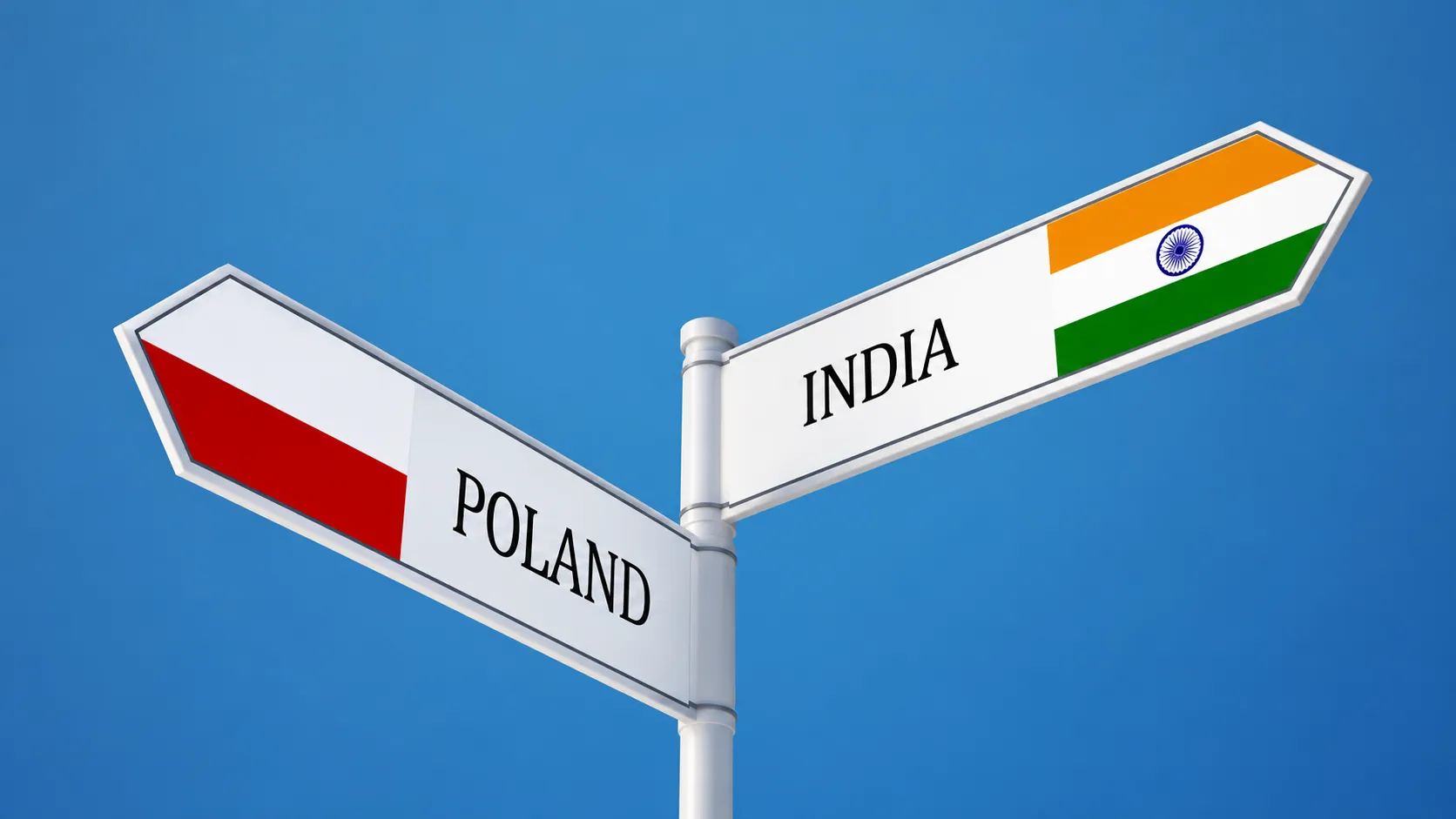

There is considerably more headroom for growth in India-Poland trade than in more mature bilateral relationships that may already be closer to their natural ceiling.
Editorial Desk

Poland, in this context, represents a potentially useful diversification option. As a NATO member that has been rapidly modernizing and expanding its own defence industrial base — driven by its frontline position relative to the Russia-Ukraine conflict — Poland has developed manufacturing capabilities and technology in areas like artillery systems, armoured vehicles, and munitions that could offer India additional avenues for co-production or technology partnership, complementing New Delhi's existing relationships with larger Western defence suppliers. For India's own defence manufacturing sector, which has been aggressively pursuing indigenization and has set ambitious targets for both import substitution and defence exports, partnerships with countries like Poland that have their own robust indigenous defence industrial ecosystems can provide valuable technology and manufacturing know-how exchange opportunities.

Technology and emerging sectors

The reference to cooperation in "technology and emerging sectors" in the joint discussions points to an increasingly important dimension of modern bilateral diplomacy that goes well beyond traditional trade-in-goods relationships. Poland has developed a notable technology and startup ecosystem of its own, particularly in areas like cybersecurity, gaming and software development, and increasingly, semiconductor-adjacent industries as the European Union has pushed to build out its own chip manufacturing capacity through initiatives like the European Chips Act. For India — home to one of the world's largest technology talent pools and an increasingly ambitious semiconductor and electronics manufacturing policy of its own — collaboration with European partners like Poland on technology and innovation offers a pathway to diversify beyond India's traditional technology partnerships with the United States and reduce dependence on any single geopolitical bloc for critical technology inputs.

This technology dimension also intersects with India's broader interest in critical minerals and supply chain resilience — an area where European countries, Poland included, have been increasingly active in seeking alternatives to Chinese-dominated supply chains for materials essential to electronics, electric vehicles, and renewable energy technologies. As global supply chains continue to be reshaped by geopolitical considerations rather than purely economic efficiency calculations — a trend that has only accelerated throughout 2026 amid ongoing US-China trade tensions and the broader fragmentation of global trade architecture — partnerships that diversify sourcing and manufacturing across multiple, geopolitically aligned countries have taken on greater strategic value for both India and its European partners.

People-to-people ties as a foundation

Beyond the headline categories of trade, investment, defence, and technology, the joint statement's reference to "strengthening economic engagement and people-to-people ties" points to a dimension of bilateral relationships that often receives less attention but plays a meaningfully underappreciated role in sustaining long-term strategic partnerships. Educational exchanges, tourism, and diaspora connections all contribute to building the kind of durable, multi-generational relationship between countries that can weather short-term political or economic fluctuations. Poland has, in recent years, seen growing interest from Indian students considering European education options as an alternative to more traditional destinations like the United States and United Kingdom, particularly given more accessible visa and immigration pathways within the EU framework, while Polish tourism to India and Indian tourism to Poland have both shown gradual growth as connectivity and awareness between the two countries has improved.

image.png

Placing this within India's broader Europe strategy

It's worth situating this development within the broader arc of India's foreign and economic policy toward Europe in 2026. This has been a year in which India's trade diplomacy has been notably active — the country implemented its Comprehensive Economic and Trade Agreement with the United Kingdom this same week, has continued to resist pressure for a hastily concluded trade deal with the United States, and has been engaged in ongoing, if slow-moving, negotiations with the broader European Union. Strengthening bilateral ties with individual, strategically positioned EU members like Poland fits into a pattern of India pursuing a multi-track European engagement strategy — securing concrete bilateral wins where possible (as with the UK), while continuing to work toward broader multilateral trade architecture with the EU as a whole, and using individual relationships like the one with Poland to build both economic ties and diplomatic goodwill that can support India's broader objectives across the European continent.

What comes next

For the relationship to translate from diplomatic statements into tangible economic and strategic outcomes, several things will likely need to follow in the coming months: concrete trade facilitation measures, potential investment announcements from companies on either side, and — if the defence cooperation dimension is to move beyond aspirational language — specific joint development or procurement agreements that demonstrate the kind of practical cooperation that distinguishes a genuine strategic partnership from a purely symbolic diplomatic gesture. Given the broader geopolitical currents reshaping Europe's relationship with Asia, and India's own determination to diversify its international partnerships across trade, defence, and technology, the India-Poland relationship appears well positioned to be one of the more interesting, if currently under-the-radar, bilateral stories to watch over the remainder of 2026 and beyond.

TagsIndiaPolandStrategicPartnershipIndiaEuropeDefenceCooperationTradeDiplomacyForeignPolicyIndiaEastEuropeTradeIndiaExportsGeopoliticsIndiaBilateralRelations

Reader reviews

Sign in to rate and review this article.
Loading reviews…

More from TIGI

The ₹7 Lakh vs. ₹45 Lakh Question: How the Telangana Theatre War Became a Battle for the Soul of Indian Cinema
Magazine

The ₹7 Lakh vs. ₹45 Lakh Question: How the Telangana Theatre War Became a Battle for the Soul of Indian Cinema

On the morning of May 28, a press note issued by the Telangana State Film Chamber of Commerce landed in the inboxes of journalists across the country, and the single-sentence announcement it contained—"The old rental system in theatres will be completely abolished from July 3"—was the culmination of a war that had been building for nearly four decades. The war was not fought between stars and studios, or between producers and directors, or between any of the glamorous combatants who dominate the business pages of the entertainment press. It was fought between the people who own the screens and the people who make the films, and it was fought over a question so fundamental that the industry had never thought to ask it: when a film earns a rupee at the box office, who deserves to keep it?

The Thalaivar's Trillion: How Rajinikanth Built a ₹1,200 Crore Empire on Style, Devotion, and One Signature Flick
Magazine

The Thalaivar's Trillion: How Rajinikanth Built a ₹1,200 Crore Empire on Style, Devotion, and One Signature Flick

He is the only Indian actor whose fans bathe his cutouts with milk. The only one whose film releases are treated as festivals, with state holidays declared and tickets selling for ₹5,000 on the black market. The only one who, at 75, commands a per-film fee of ₹200 crore – the highest in Indian history. And the only one who has never needed a pan-Indian strategy, because he has always been universal. Rajinikanth – or simply "Thalaivar" (The Leader) to his millions of devotees – has an estimated net worth of ₹1,200 crore (approximately $145 million) , making him the wealthiest actor in South India and second only to Shah Rukh Khan nationally. His brand valuation, according to Kroll 2025, is $180 million . He owns a production house (V Creations, run by his son-in-law), a sprawling real estate portfolio, a fleet of vintage cars, and the unwavering loyalty of a generation. But the numbers are almost besi

The Prince of Tollywood: How Mahesh Babu Built an ₹850 Crore Kingdom on Silence, Selectivity, and SS Rajamouli
Magazine

The Prince of Tollywood: How Mahesh Babu Built an ₹850 Crore Kingdom on Silence, Selectivity, and SS Rajamouli

In an industry that glorifies speed — four films a year, constant social media chatter, relentless brand visibility — Mahesh Babu has chosen the opposite path. He makes one film every two years. He posts on Instagram once a week (if that). He endorses fewer than a dozen brands at a time. And yet, when Sarkaru Vaari Paata crossed ₹100 crore in four days in 2022, or when the mere announcement of his collaboration with SS Rajamouli broke the internet, the world was reminded of a simple truth: scarcity creates value.