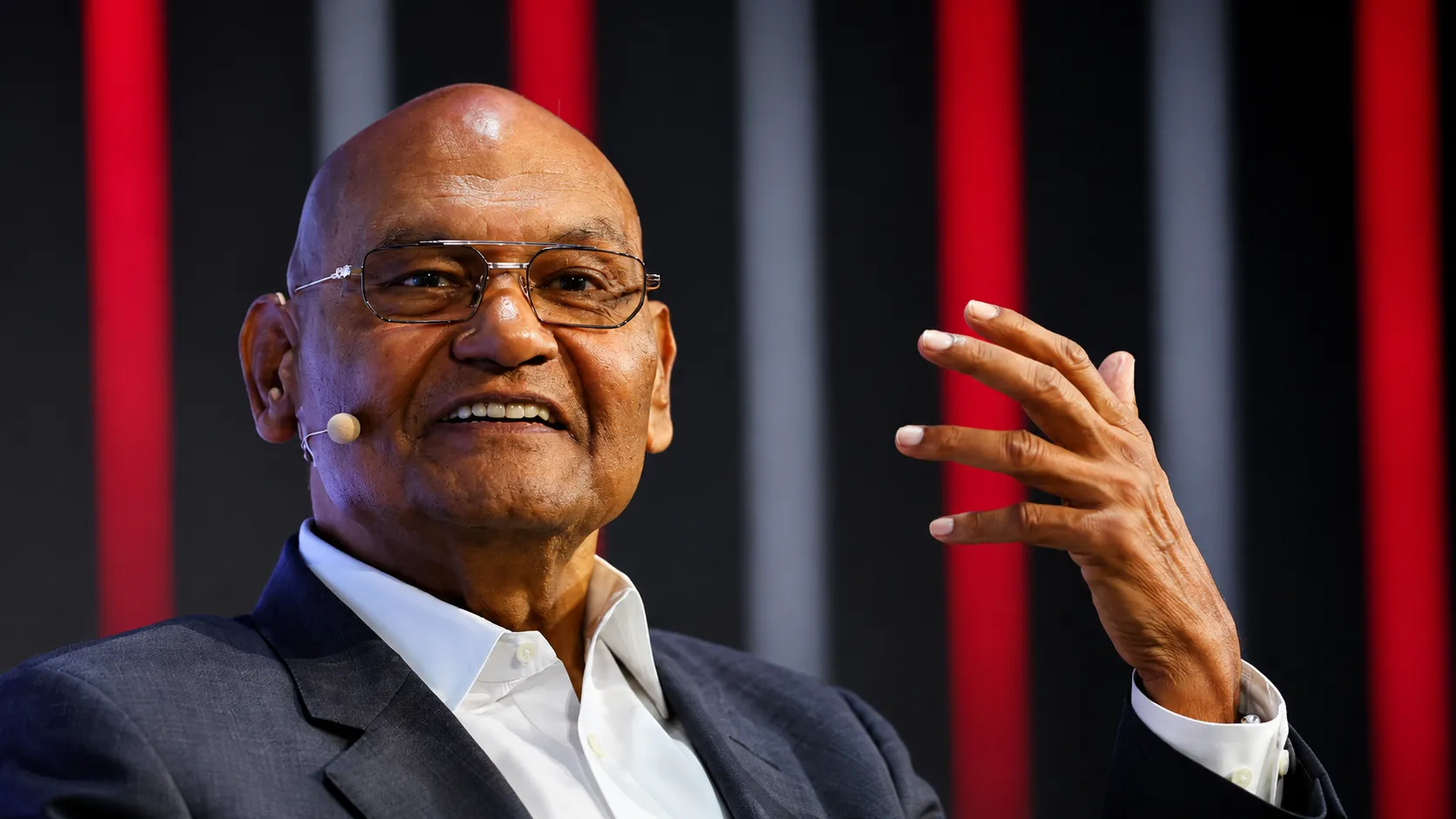
Anil Agarwal, the billionaire founder of Vedanta Resources, is preparing to embark on what industry observers are describing as his most ambitious India-focused investment yet: a commitment to deploy approximately $20 billion over the next three to five years, funded largely through internal cash generation rather than fresh external borrowing, in a bet that hinges squarely on execution discipline, favourable commodity price cycles, and India's continued long-term demand growth for natural resources ranging from aluminium and zinc to oil, gas and power. The scale of the commitment places it among the largest privately funded industrial investment programmes announced by any Indian conglomerate in recent years, and arrives at a pivotal moment for the Vedanta group, which has just completed a landmark corporate restructuring that fundamentally reshaped how its sprawling portfolio of businesses is organised and capitalised.
The restructuring in question — Vedanta's demerger into five independent, separately listed companies — represents one of the most significant corporate reorganisations undertaken by an Indian industrial conglomerate in recent memory. Rather than continuing to operate its diverse businesses spanning aluminium, oil and gas, power, steel and ferrous materials, and base metals as divisions within a single, sprawling corporate entity, Vedanta has split these operations into distinct, independently listed companies, each with its own dedicated board, capital structure, and — crucially — direct access to public capital markets rather than having to compete internally for capital allocation decisions made at the group's holding company level. The stated rationale behind this restructuring, as articulated by Agarwal and Vedanta's leadership, centres on unlocking shareholder value that management believed was being obscured by the conglomerate discount that diversified holding companies frequently trade at relative to the sum of their individual business segments' standalone valuations.

With that restructuring now substantially complete, Agarwal's attention has turned decisively toward growth, and the scale of his stated ambition is difficult to overstate. A $20 billion investment programme, deployed across the newly independent entities' various businesses over a three-to-five-year horizon, would represent a transformative capital expenditure cycle for an Indian industrial group of Vedanta's scale — one large enough to meaningfully expand production capacity across multiple critical mineral and energy verticals simultaneously, rather than concentrating investment in any single business line. Given that the investment is intended to be funded largely through internal cash generation rather than fresh external debt, the plan also reflects a degree of financial conservatism notable for a group that has, at various points in its history, drawn scrutiny from credit rating agencies and analysts over its consolidated leverage levels — suggesting that this latest, considerably more ambitious growth phase is being approached with a more disciplined capital structure than some of the group's earlier expansion cycles.
Industry analysts framing the strategic logic behind this investment programme point to India's structurally growing demand for the very commodities and resources that sit at the core of Vedanta's business portfolio. Aluminium demand continues to expand on the back of India's automotive, construction, and renewable energy sectors, all of which increasingly rely on aluminium's favourable strength-to-weight characteristics for applications ranging from vehicle lightweighting to solar panel framing. Zinc, a critical input for galvanised steel used extensively in India's ongoing infrastructure and construction boom, has likewise seen sustained demand growth tracking the broader capital expenditure cycle underway across the Indian economy. Meanwhile, India's oil and gas sector, though facing longer-term structural headwinds from the global energy transition, continues to offer meaningful near-to-medium-term investment opportunities given the country's persistent reliance on both domestic and imported hydrocarbons to meet its still-rapidly-growing energy needs.
The power and energy transition dimension of Vedanta's investment plans is likely to attract particular attention, given the broader context of India's own ambitious renewable energy and industrial electrification targets. As one of India's larger power generation and distribution players through its various group entities, Vedanta occupies a position that allows it to participate in India's energy transition from multiple angles simultaneously — supplying the aluminium and other base metals essential to renewable energy infrastructure construction, while also potentially expanding its own power generation portfolio to include a greater share of renewable and lower-carbon energy sources, a strategic pivot that a growing number of global institutional investors have made a prerequisite for continued capital allocation toward traditionally carbon-intensive mining and metals businesses.
Execution risk, however, looms large over any investment programme of this magnitude, and analysts covering the Vedanta group have been careful to frame the $20 billion commitment as a bet whose ultimate success will hinge on several variables largely outside the company's direct control. Commodity price cycles, which have historically proven volatile and difficult to predict even for experienced natural resources operators, will play an outsized role in determining whether the cash flows generated by Vedanta's existing operations prove sufficient to fund this scale of investment internally, as planned, without requiring the group to return to debt markets in a manner that could reintroduce the leverage concerns that have periodically weighed on investor sentiment toward Vedanta in the past. Execution discipline across a portfolio now split into five independently managed entities also introduces coordination complexity that did not exist under the group's previous, more centralised corporate structure — even as that same decentralisation is precisely what proponents of the demerger argue will ultimately deliver sharper, more accountable capital allocation decisions at the individual business level.
For India's broader industrial and natural resources sector, a successful execution of Vedanta's $20 billion investment programme would carry implications well beyond the group's own shareholders. Large-scale capacity expansion across aluminium, zinc, oil and gas, and power generation would meaningfully strengthen India's domestic supply capacity for several critical industrial inputs at a moment when the country's manufacturing and infrastructure ambitions — spanning everything from the government's newly approved semiconductor and electronics manufacturing push to record automobile production and an expanding renewable energy build-out — are placing steadily increasing demand pressure on precisely these categories of raw materials. A meaningful expansion of domestic supply, rather than continued reliance on imports for critical minerals and metals, would align closely with the broader Atmanirbhar Bharat, or self-reliant India, policy agenda that has shaped much of the government's industrial policy thinking across sectors in recent years.