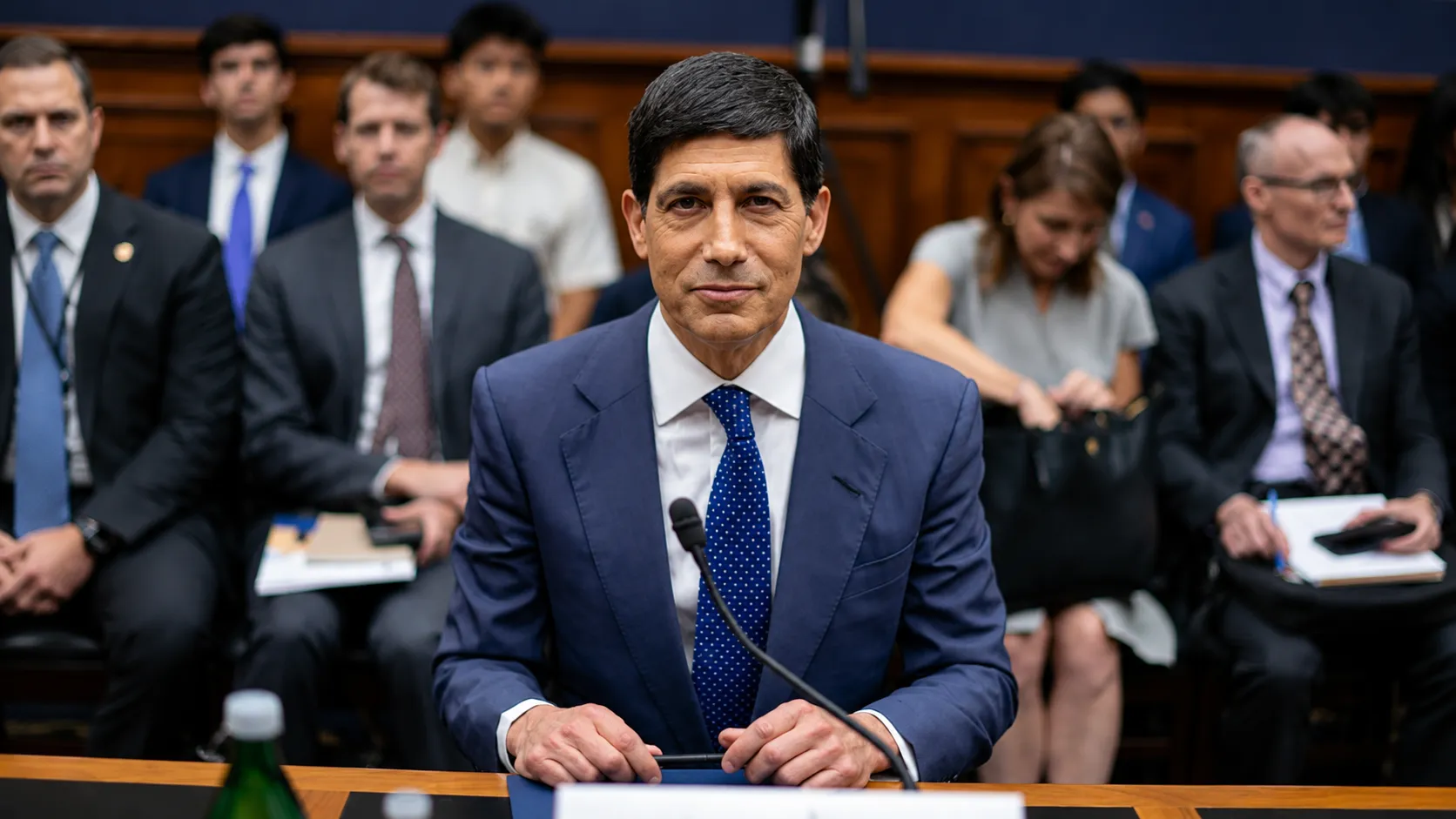
Kevin Warsh's first congressional testimony as chairman of the Federal Reserve was never going to be a routine affair, and it did not disappoint. Over two consecutive days this week — appearing before the House Financial Services Committee on Tuesday, July 14, and the Senate Banking Committee on Wednesday, July 15 — Warsh delivered his semiannual Monetary Policy Report to Congress, using the platform to lay out both his assessment of the current US economic picture and an unusually candid account of the sweeping institutional changes he intends to bring to America's central bank. For global markets, including in India, where every signal from the Fed reverberates through currency, bond, and equity markets, Warsh's testimony offered the clearest read yet on how the post-Jerome Powell era at the Fed is likely to unfold.
Warsh's core message across both appearances was unambiguous: after what he described as five years of excessive inflation, the Fed under his leadership intends to bring price stability back, whatever the near-term cost to growth or market sentiment. "The inflation surge of the last five years will be a thing of the past," Warsh told lawmakers, framing the fight against inflation in unusually pointed terms by describing it as "a tax on the American people and businesses" that the Fed "plans on getting rid of."
A "Regime Change" at the Fed
Perhaps the most consequential theme running through Warsh's testimony was his explicit call for what he termed a "regime change" in how the Federal Reserve approaches monetary policy. Central to this shift is Warsh's rejection of the flexible average inflation targeting framework the Fed adopted in 2020 under his predecessor — a framework that permitted the central bank to tolerate above-target inflation for a period following stretches of below-target price growth. Warsh described that 2020 framework as "a mistake," signaling a return to a more conventional, less permissive approach to inflation management.
To operationalize this broader institutional overhaul, Warsh has established five separate task forces, each charged with conducting a first-principles review of a specific dimension of Fed operations: how the central bank communicates its policy decisions to the public and markets; how it manages its $6.7 trillion balance sheet; how it collects and uses economic data; how it approaches productivity and labor market dynamics; and how it frames its inflation targeting goals more broadly. Notably, Warsh has drawn the membership of these task forces from well beyond the traditional community of academic economists and former central bankers, tapping prominent business leaders including venture capitalist and Andreessen Horowitz co-founder Marc Andreessen, former Walmart chief executive Doug McMillon, and Microsoft executive vice president and Xbox chief executive Asha Sharma. Warsh has committed to sharing the task forces' findings and recommendations with Federal Open Market Committee policymakers on a rolling basis through the remainder of the year, before eventually presenting conclusions to the public.
The Data Behind the Testimony
Warsh's appearance came at a moment of genuinely encouraging, if incomplete, inflation data. Fresh Consumer Price Index figures released this week showed annual inflation easing to 3.5 per cent in June, down from 4.2 per cent in May, with the CPI falling 0.4 per cent on a month-on-month basis — a decline driven substantially by a sharp roughly 9.7 per cent drop in gasoline prices, itself a consequence of the temporary ceasefire that had settled over the Strait of Hormuz in the preceding weeks. Producer prices told a similarly encouraging story, falling 0.3 per cent for the month. Yet Warsh was careful not to overstate the significance of a single month's improvement. "There might be some that look at this morning's data and say, 'oh, mission accomplished, everything is swell' — that is not my view," he told lawmakers, stressing that underlying inflation, even stripped of volatile energy prices, remains too high for comfort after more than five years above target.
The timing of that gasoline price relief has also proven fragile. Just days after the encouraging June inflation print, renewed escalation between the United States and Iran around the Strait of Hormuz has begun pushing energy prices back upward, underscoring how quickly the disinflationary tailwind from lower gasoline costs could reverse in the months ahead — a dynamic that adds genuine uncertainty to the inflation trajectory Warsh and his colleagues will need to navigate heading into the Fed's next policy meeting.
The AI Question
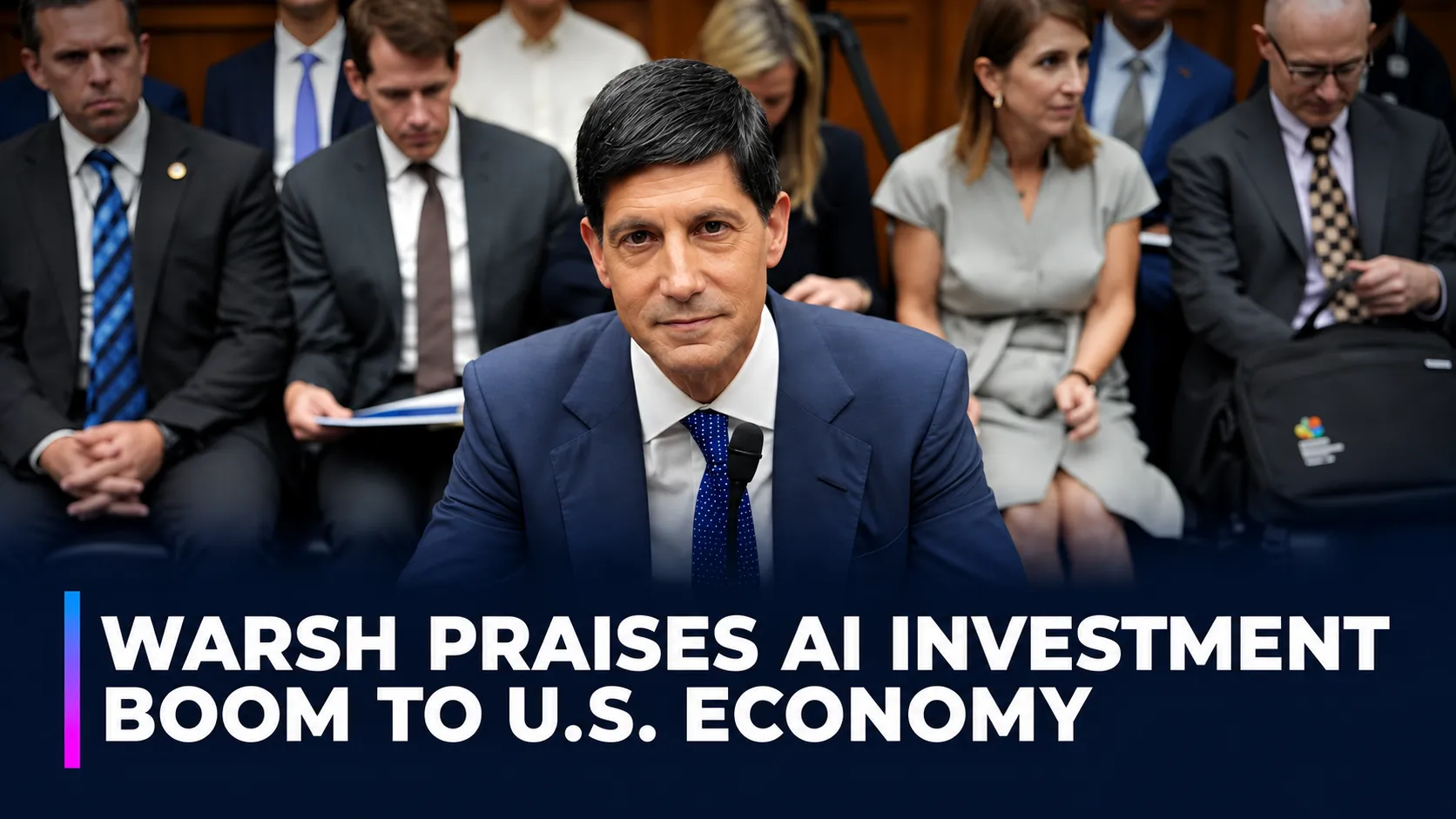
One of the more unexpected threads running through Warsh's testimony concerned the economic implications of the artificial intelligence infrastructure boom currently reshaping US capital expenditure patterns. Warsh described the ongoing AI buildout as among the most consequential economic developments of his lifetime, noting that overall equipment investment had grown roughly 8 per cent for the year ending in the first quarter, with high-tech spending specifically posting close to 25 per cent growth on a four-quarter basis. "It seems inevitable," Warsh told lawmakers, "that what is now called 'AI investment' will soon be called just 'investment.'"
Warsh struck a broadly optimistic tone on AI's long-term economic potential, describing it as a genuine long-term job creator, while candidly acknowledging significant near-term uncertainty about labor market disruption. Pressed on whether workers should expect job losses tied to the technology's adoption, Warsh declined to offer reassurance, saying only that he could not offer any guarantee of comfort on that front — an unusually direct acknowledgment of AI's disruptive potential from a sitting Fed chairman. The AI task force Warsh has assembled to study these dynamics has drawn some criticism from Senate Democrats, including pointed questioning about whether its composition — skewed toward AI-bullish business leaders — includes sufficient representation of labor and worker perspectives.
Independence Under Scrutiny
Given the highly charged political backdrop surrounding the Fed chairmanship transition — President Trump waged a sustained public pressure campaign against the central bank last year, explicitly stating his expectation that his eventual appointee would push for lower interest rates — questions about Warsh's independence featured prominently throughout both days of testimony. When Democratic Representative Nydia Velázquez of New York directly asked Warsh whether he works for President Trump, Warsh responded firmly that the Fed is "an independent central bank," adding that the institution is "honored to be independent." He offered a similar response when pressed by Senate Democrats on whether he had discussed interest rate policy directly with the White House, declining to answer directly but insisting he is "not taking orders" from the administration.
Democratic Senator Elizabeth Warren, the top Democrat on the Senate Banking Committee, used the occasion to press Warsh on a related transparency concern, formally objecting to his decision not to submit personal economic forecasts at last month's policy meeting — the customary quarterly projections that give markets and the public insight into individual policymakers' expectations for growth, unemployment, and inflation. Warren argued that withholding these projections deprives the public of critical insight into the Fed chairman's own economic judgment, particularly given what she described as an unprecedented administration campaign to shape the central bank's decisions from the outside.
Where Rate Policy Stands
On the substance of monetary policy itself, Warsh offered relatively few direct signals about the Fed's near-term rate path, a deliberate posture that market analysts have noted stands in contrast to some of his predecessor's more forward-guidance-heavy communication style. The Fed held its benchmark federal funds rate steady at a target range of 3.5 to 3.75 per cent at its June meeting — Warsh's first as chairman — and while a majority of Federal Open Market Committee officials signaled at that meeting they saw a case for at least one rate increase before year-end, a striking shift from the complete absence of such hawkish projections back in March, Warsh himself notably chose not to submit a personal rate projection alongside his colleagues.
Market participants have interpreted the broader shift in FOMC sentiment — with nine of eighteen policymakers now supporting the case for rate hikes in 2026, compared to none in March — as a meaningful hawkish repricing, one reflected in the 10-year US Treasury yield's climb to around 4.48 per cent in recent sessions. That repricing has, in turn, contributed to headwinds for growth-sensitive equity sectors, including the semiconductor and broader technology stocks that have already been grappling with separate volatility tied to questions about the sustainability of AI infrastructure spending.
Why This Matters for India
For Indian readers and business audiences, developments at the Federal Reserve carry significant, direct relevance that extends well beyond American shores. Fed policy decisions influence global capital flows, and a more hawkish-leaning Federal Reserve under Warsh — one explicitly committed to prioritizing inflation control even at some cost to near-term growth — has meaningful implications for foreign institutional investor flows into emerging markets including India, for the relative attractiveness of dollar-denominated versus rupee-denominated assets, and for the Reserve Bank of India's own policy calculus as it weighs its response to global rate dynamics.
A sustained period of elevated US interest rates, driven by the Fed's determination to fully stamp out the inflation pressures Warsh described this week, could also affect the cost and availability of dollar financing for Indian corporates with international borrowing needs, while a stronger dollar environment — a frequent byproduct of hawkish Fed positioning — carries implications for India's import costs, particularly for energy, given the country's substantial reliance on crude oil imports priced in dollars. Warsh's commentary on the AI investment boom's economic implications also carries a degree of relevance for India's own technology and services sector, given how directly Indian IT companies' fortunes are tied to the broader trajectory of global — and particularly American — corporate technology spending.
How Markets Reacted in Real Time
Financial markets moved in real time as Warsh's testimony unfolded across both days. During his first day of testimony before the House committee, major US equity indices traded mostly higher, with the S&P 500 gaining roughly half a percentage point and the technology-heavy Nasdaq Composite advancing more than 1 per cent, even as the Dow Jones Industrial Average lagged, weighed down by an unrelated but dramatic same-day collapse in IBM shares following the technology giant's own earnings warning. Treasury yields, meanwhile, continued their gradual climb, with the 10-year note trading around 4.48 per cent, reflecting the market's ongoing digestion of the more hawkish rate-hike sentiment that emerged from the Fed's June meeting under Warsh's new leadership.
Oil markets added a further layer of complexity to the macro backdrop against which Warsh testified. Brent crude traded up more than 1 per cent to around $84 to $86 per barrel during the testimony window, reflecting renewed geopolitical risk premium tied to escalating tensions around the Strait of Hormuz — a reminder that the same energy price volatility Warsh cited as a key driver of June's encouraging inflation data could just as easily reverse and complicate the inflation picture in the months ahead, adding genuine uncertainty to the path the Fed will need to navigate at its next policy meeting.
Comparisons to the Powell Era
Much of the Washington commentary surrounding Warsh's appearance inevitably centered on comparisons to his predecessor, Jerome Powell, whose tenure was defined by a communication style that leaned heavily on detailed forward guidance and a broadly consensus-driven approach to framing FOMC decisions. Warsh's early approach has, by contrast, been notably more guarded on specific rate-path signaling, even as he has been considerably more expansive — and more publicly critical of his predecessor's institutional choices — on questions of Fed communications strategy, balance sheet policy, and the very framework used to define price stability. Some Fed watchers have characterized this as a deliberate strategy: by declining to commit to specific rate projections while simultaneously launching a sweeping institutional review, Warsh has given himself considerably more room to maneuver as incoming data evolves, at the cost of some near-term market clarity about the Fed's precise reaction function.
A Credibility Test Just Beginning
Analysts covering the Fed have been quick to note that Warsh emerged from his first congressional testimony largely without major missteps, navigating pointed questioning from both parties with practiced discipline. But the substantive challenge he now faces is considerably harder than surviving two days of hearings: with lawmakers from both sides of the aisle in rare agreement that prices remain too high, Warsh's credibility as Fed chairman will ultimately be determined not by how convincingly he can articulate his "regime change" vision, but by whether inflation actually and sustainably declines under his leadership in the months ahead — a test that, as of this week, has only just begun.