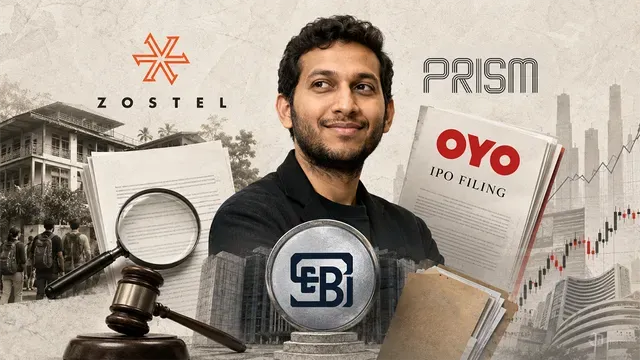
One of Indian startup history's longest-running and most closely watched legal disputes has resurfaced at a particularly delicate moment for OYO, with backpacker hostel chain Zostel formally approaching the Securities and Exchange Board of India to challenge the adequacy of disclosures made in the updated draft red herring prospectus filed by Oravel Stays, OYO's parent company, ahead of its long-anticipated initial public offering. In a detailed, 56-page representation submitted to the market regulator on July 3, followed by a reminder on July 7, Zostel alleged that Oravel's IPO filing presents an incomplete, selectively curated, and potentially misleading account of the decade-old dispute between the two companies — an allegation that, if upheld by SEBI, could force Oravel to revise its disclosures before proceeding further with its public listing.
The dispute at the heart of this latest regulatory intervention traces back more than a decade, to a non-binding term sheet signed in 2015 under which OYO proposed to acquire Zostel's hotel business, assets, technology, intellectual property, key employees and supply network, with Zostel's shareholders — including marquee investors Tiger Global and Orios Venture Partners — set to receive up to a 7 per cent equity stake in OYO in return. That planned acquisition, confirmed at the time by SoftBank, ultimately collapsed in September 2016, with OYO claiming it could not identify sufficient value in Zostel's business to proceed, while Zostel alleged that OYO had instead absorbed confidential data and used it to build out its own competing platform without completing the promised share swap. The collapse of the deal triggered years of litigation and, eventually, formal arbitration proceedings in 2018.
In 2021, an arbitral tribunal headed by a former Chief Justice of India ruled that the transaction documents between OYO and Zostel were indeed binding, but stopped short of ordering specific performance — meaning the tribunal did not compel OYO to actually issue the disputed 7 per cent equity stake to Zostel's shareholders. Zostel subsequently challenged this outcome before the Delhi High Court, which in May 2025 set aside the earlier arbitral award altogether, a ruling Zostel has continued to contest through a fresh petition before the Delhi High Court's Division Bench. That underlying legal battle remains very much alive: the Division Bench most recently disposed of one of Zostel's applications on July 10, 2026, after the company chose not to press it in light of an earlier 2022 order, while directing that the main appeal in the matter be listed for hearing on August 12, 2026 — meaning the dispute's ultimate resolution remains squarely unresolved even as OYO's IPO process continues to advance.
It is against this backdrop of ongoing, unresolved litigation that Zostel has now taken its complaint directly to the capital markets regulator, rather than confining its objections to the courts alone. In its representation to SEBI, Zostel explicitly clarified that it was not asking the regulator to adjudicate the underlying commercial dispute — a matter it acknowledged remains properly before the courts — but rather to examine whether Oravel's updated draft red herring prospectus complies with disclosure norms under the SEBI (Issue of Capital and Disclosure Requirements) Regulations, 2018. Zostel's core contention is that while Oravel has technically disclosed the existence of the litigation, as required, the manner in which it has done so fails to give prospective investors a complete and balanced picture of the dispute's status, its potential financial implications, and the possibility — however contested — that Zostel could ultimately succeed in claiming a stake in the company. The filing draws a sharp allegation, stating that Oravel's disclosures present the dispute in a manner that is materially incomplete, selectively curated and capable of conveying a misleading impression to investors, and further alleges that certain statements in the filing reproduce Oravel's own litigation position in unduly categorical terms rather than presenting a neutral account of a matter still contested before the courts.
The stakes attached to this disclosure dispute are far from trivial. Oravel Stays filed its updated draft red herring prospectus for a proposed IPO comprising a fresh issue of shares worth up to ₹6,650 crore, and in that filing, the company itself flagged the Zostel dispute as a potential business risk, noting that if Zostel were to succeed in obtaining a non-appealable court order in its favour, it could claim a 7 per cent stake in OYO — a outcome that, given OYO's scale, would represent a materially significant dilution and financial consequence for existing and prospective shareholders alike. OYO, for its part, has publicly disputed Zostel's characterisation of the underlying dispute, maintaining in its own filings that it is Zostel, in collusion with certain former OYO employees, that misused confidential information and intellectual property belonging to the company — a mirror-image allegation that underscores just how contested and adversarial this decade-long relationship between the two hospitality-sector rivals has become.
Corporate governance and capital markets analysts tracking the case note that disputes of this nature — where a company facing an active legal challenge from a third party is simultaneously pursuing a public listing — inevitably invite heightened regulatory scrutiny, precisely because the information asymmetry between the litigating parties and prospective public shareholders can be substantial. SEBI's disclosure framework is specifically designed to ensure that companies going public present material litigation risks with sufficient completeness and balance that ordinary investors, who typically lack the resources or legal expertise to independently investigate the underlying merits of a dispute, can nonetheless make an informed assessment of the risk such litigation poses to their prospective investment. Whether SEBI ultimately agrees with Zostel's characterisation of Oravel's disclosures as materially incomplete, or instead finds the existing disclosures adequate, will likely have implications well beyond this single case, potentially shaping how other Indian companies with unresolved litigation disclose similar risks in future IPO filings.
For OYO specifically, this latest regulatory intervention adds yet another layer of complexity to an IPO journey that has already been unusually protracted by the standards of India's fast-moving startup ecosystem. The company first filed draft IPO papers back in October 2021, only for SEBI to return them in January 2023 with a request for revisions; a revised draft filed in April 2023 was itself 40 to 60 per cent smaller than the original $1.2 billion fundraising target, reflecting the considerably more cautious market conditions and investor sentiment toward loss-making new-age technology companies that prevailed at the time. The company's valuation, too, has been repeatedly revised, with majority shareholder SoftBank marking down its stake's implied valuation from $3.4 billion to $2.7 billion at one point during this extended process. OYO has since returned to profitability on a quarterly basis and has continued pressing forward with its public listing ambitions, but the resurfacing of the Zostel dispute at precisely this juncture — with a fresh SEBI complaint and an appeal hearing now scheduled for August 12 — underscores just how difficult it has proven for the company to fully close out its legacy legal liabilities even as it approaches what would be one of the most closely watched Indian startup IPOs of the year.
Zostel, for its part, has continued to position itself as pursuing a legitimate investor-protection objective rather than attempting to derail OYO's IPO outright, with the company's spokesperson explicitly framing the SEBI filing as a request for a disclosure review rather than a bid to block the listing altogether. Whether that framing holds up as the dispute plays out — both before SEBI and, separately, before the Delhi High Court's Division Bench in August — will determine whether this decade-old rivalry between two of India's early hospitality-sector startups finally reaches some form of resolution, or continues to cast a shadow over OYO's public market ambitions for months, or even years, to come. For now, prospective investors in Oravel Stays' IPO are left to weigh a business risk that, by the company's own admission in its prospectus, carries the potential for a meaningful equity dilution — a risk whose full scope and likelihood remains, quite literally, still before the courts.
The broader significance of this dispute extends into the wider narrative around Indian startup governance and IPO readiness more generally. Over the past several years, as a growing cohort of Indian technology and consumer startups have pursued public listings, market regulators, institutional investors and corporate governance advocates have paid increasingly close attention to how these companies handle legacy legal and commercial disputes accumulated during their earlier, less closely scrutinised private growth phases. Startups that grew rapidly through aggressive expansion, acquisitions, and occasionally contentious competitive tactics during India's startup funding boom of the mid-to-late 2010s have, in a number of high-profile cases, found those same growth-era decisions resurfacing as material disclosure and governance challenges once they approach the considerably more exacting scrutiny standards that accompany a public listing. The OYO-Zostel dispute, given its decade-long history and its roots in the classic startup-era pattern of an aggressive, well-funded platform allegedly absorbing a smaller rival's assets and personnel following a collapsed acquisition negotiation, has become something of a touchstone case study for this broader pattern.
For Zostel, a company that has continued operating as one of India's pioneering backpacker hostel brands even as its far larger erstwhile suitor grew into a hospitality unicorn spanning dozens of countries, the SEBI complaint represents the latest chapter in a sustained, decade-long effort to secure what it maintains is its rightful stake in OYO's success. Whether that effort ultimately succeeds — through the pending Delhi High Court appeal, through SEBI intervention on the disclosure question, or through some negotiated settlement between the two parties that has thus far proven elusive — will be watched closely not only by the companies' respective stakeholders but by a broader Indian startup ecosystem still working out how legacy disputes from its earlier, faster-moving growth era should be resolved as more of its marquee companies approach public markets.
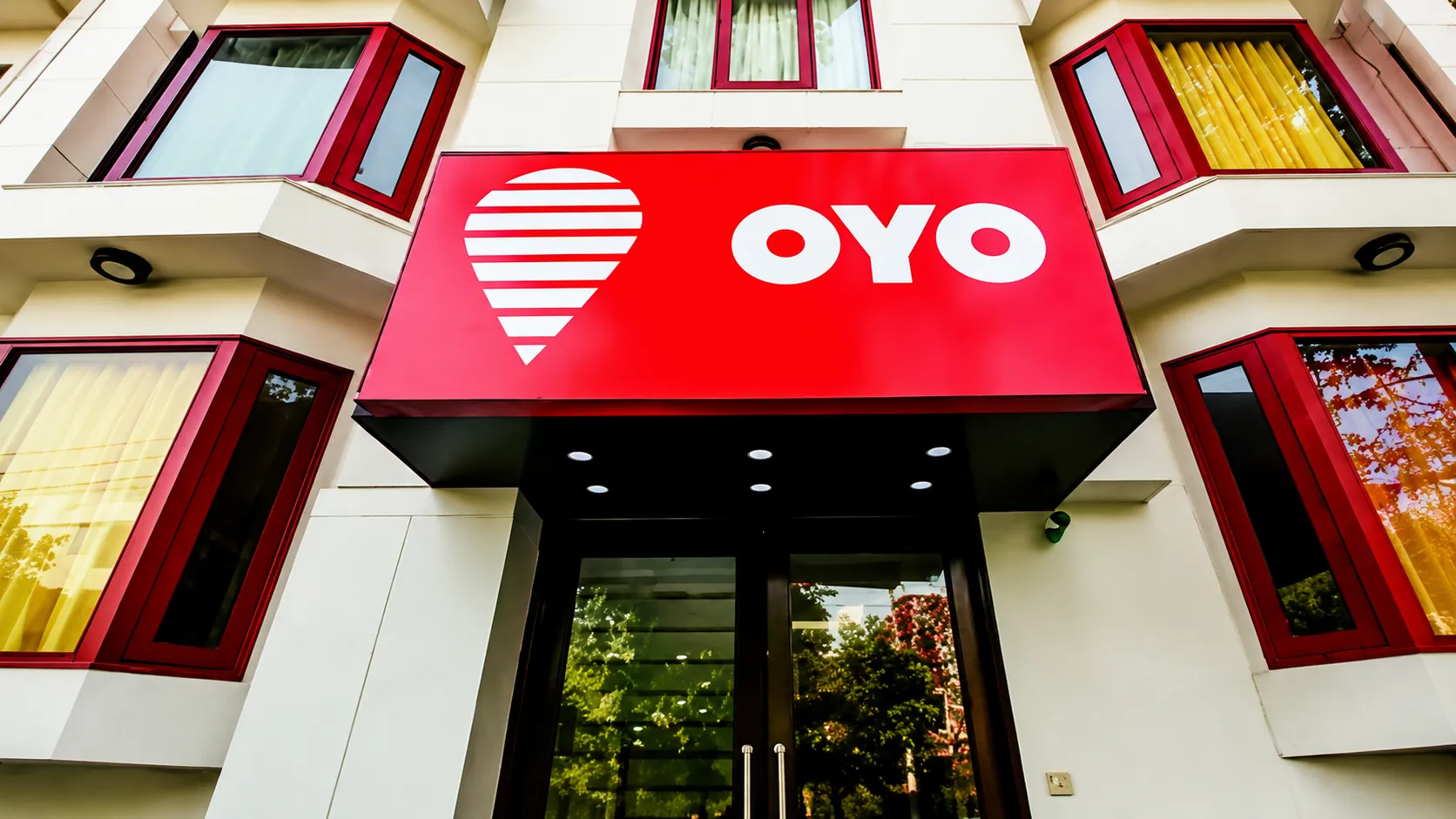
Merchant bankers and legal advisors working on India's current wave of technology and consumer IPOs say the OYO-Zostel episode is likely to prompt other companies with unresolved legacy disputes to review their own draft prospectus disclosures more conservatively, erring toward more expansive and less categorically worded descriptions of contested litigation rather than risk a similar regulatory challenge once their own offer documents come under public and regulatory scrutiny. SEBI itself has periodically signalled its intent to hold companies to increasingly rigorous disclosure standards as the pace of Indian IPOs has accelerated, particularly for new-age technology companies whose business histories often include the kind of rapid, occasionally legally contentious growth-stage decisions that more traditional, older-economy companies going public rarely need to address in their own listing documents. For OYO, navigating this particular disclosure challenge successfully — whether by revising its prospectus language, providing supplementary disclosures, or successfully persuading SEBI that its existing filing already meets the requisite standard — will be an important test of the company's broader readiness for the sustained scrutiny that comes with operating as a publicly listed entity.
For prospective retail investors weighing whether to apply for shares in OYO's eventual public offering, the practical takeaway from this unfolding dispute is a familiar one from other recent Indian IPOs involving unresolved legacy litigation: material contingent liabilities disclosed in an offer document, however seemingly remote or contested, deserve careful independent consideration rather than being dismissed as routine legal boilerplate. A 7 per cent equity claim against a company of OYO's scale represents a genuinely material contingent liability by any reasonable standard, and the fact that its ultimate resolution now hinges on both an August 12 Delhi High Court appeal hearing and a still-pending SEBI review of the company's own disclosure adequacy means that this particular risk factor is likely to remain a live, closely watched storyline for OYO's prospective public market investors well past the company's eventual listing date, however that listing timeline ultimately unfolds — a reminder of how thoroughly a single unresolved dispute from a startup's earliest years can continue to shape its story more than a decade on, right up to the eve of its long-delayed stock market debut.