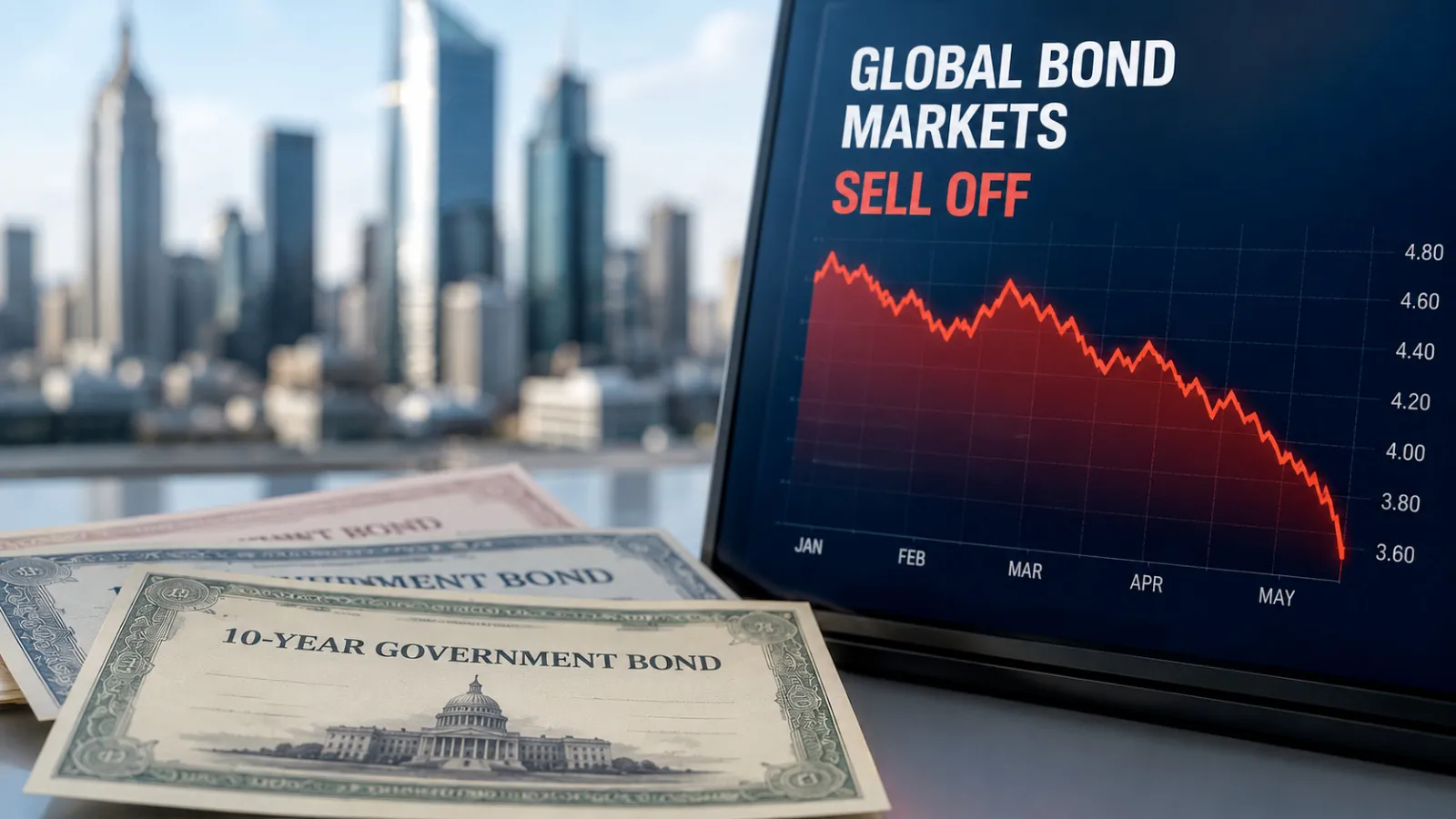
In New York, U.S. Treasury yields climbed after fresh economic data indicated that inflationary pressures remain stronger than expected. Investors scaled back hopes of immediate interest rate cuts by the U.S. Federal Reserve, leading to heavy selling in long-duration government bonds. Federal Reserve Chair Jerome Powell recently reiterated that the central bank remains committed to controlling inflation, even if interest rates stay elevated for an extended period.
European bond markets also came under pressure in London and Frankfurt, where investors closely monitored rising energy prices and geopolitical developments in the Middle East. Analysts said fears surrounding global oil supply disruptions have intensified inflation concerns across advanced economies.
In Tokyo, Japanese government bond yields rose to near multi-decade highs, reflecting growing uncertainty in Asian markets. Japanese Finance Minister Shunichi Suzuki stated that global financial volatility and bond market movements would remain under close observation amid ongoing economic uncertainty.
Market participants pointed to continuing geopolitical tensions involving Iran and broader instability in the Middle East as major contributors to investor nervousness. Rising crude oil prices have increased concerns that higher transportation and energy costs could further fuel global inflation.
“The market is increasingly accepting the idea that interest rates may stay higher for longer,” said Sarah Hewin, Head of Research at Standard Chartered Bank. “Persistent inflation and geopolitical instability are forcing investors to rethink their expectations for monetary easing.”
Bond prices move inversely to yields, meaning the broad selloff pushed borrowing costs higher for governments worldwide. Analysts noted that increased government spending and rising fiscal deficits in several countries have also added pressure to sovereign debt markets.
In London, economists warned that uncertainty surrounding economic growth and public borrowing could continue to weigh on investor confidence. Meanwhile, fund managers in New York described the current market environment as one of the most volatile periods for global fixed-income markets in recent years.

Despite the sharp decline in bond prices, some investment firms believe higher yields may eventually attract long-term investors seeking better returns from fixed-income assets. However, financial experts cautioned that market volatility is likely to persist as inflation and geopolitical risks remain unresolved.
The latest selloff highlights growing concerns over the resilience of the global economy, with investors closely watching central bank policies, inflation data, and international developments for further direction in the weeks ahead.