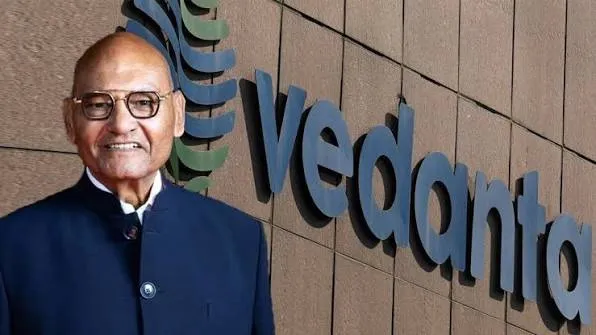
Few business stories in India this year carry quite the sweep and ambition of the one now unfolding at Vedanta Resources, where chairman Anil Agarwal is preparing to stake what may be the single largest bet of his four-decade career in Indian industry: an investment of roughly $20 billion in the country over the next three to five years, financed largely through the group's own internal cash generation rather than fresh external borrowing. It is a wager that, in equal measure, hinges on flawless execution, the direction of global commodity cycles, and a conviction — one Agarwal has voiced repeatedly and publicly — that India's appetite for natural resources over the coming decade will only deepen as the economy continues its rapid industrial and infrastructure expansion.
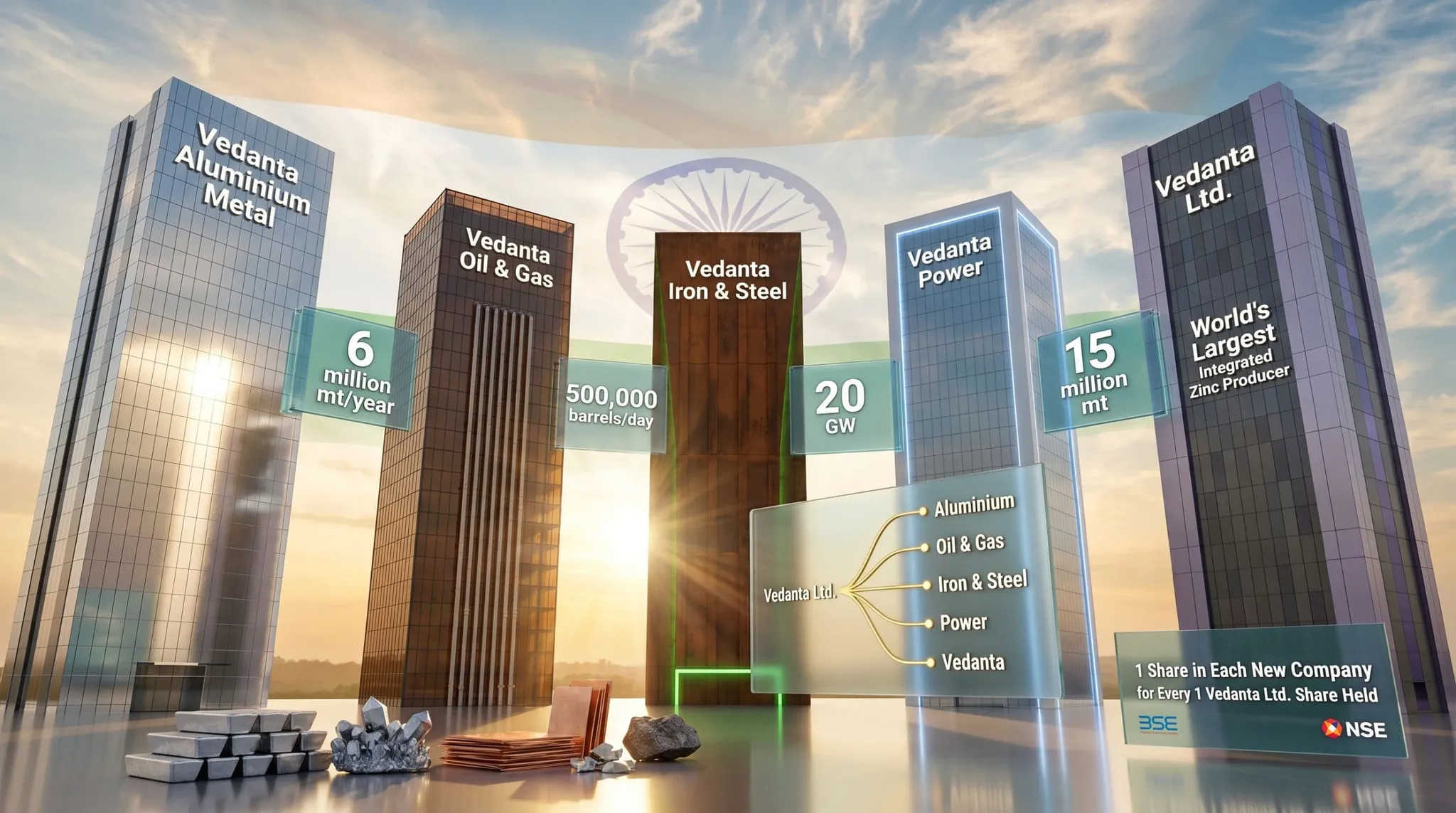
The context in which this investment ambition is being unveiled matters enormously. Vedanta has just completed one of the most significant corporate restructurings in recent Indian industrial history, reshaping itself from a single, sprawling diversified conglomerate into five independent, separately listed companies, each focused on a distinct vertical within the broader natural resources and industrial value chain. The logic behind such demergers is well established in corporate finance theory, even if it is notoriously difficult to execute cleanly in practice: conglomerates trading as a single entity often suffer from what analysts call a "conglomerate discount," where the market values the sum of a diversified company's parts at less than those parts would be worth if allowed to trade independently, each attracting investors and valuation multiples specific to its own sector, growth profile, and risk characteristics, unclouded by the performance or perception of unrelated businesses bundled into the same corporate shell.
For Vedanta, the bet is that splitting the group into focused, sector-specific listed entities — freed from having to answer for the performance of unrelated businesses elsewhere in the old conglomerate structure — will unlock precisely this kind of value for shareholders, while simultaneously giving each individual business the financial flexibility, strategic focus, and direct capital markets access it needs to pursue its own growth agenda more aggressively than it could as one division among many inside a sprawling parent. It is against this newly demerged backdrop that the group's next phase of growth, anchored by the proposed $20 billion investment programme, is now being framed — not as a single conglomerate deploying capital across a scattered portfolio, but as a coordinated push across a family of now-independent, sector-focused champions, each pursuing its own capital expenditure plans within a shared strategic vision for India's resource-intensive growth story.
The scale of the number itself deserves some unpacking. Twenty billion dollars, funded substantially through internal cash generation rather than external debt, represents an enormous vote of confidence in the underlying cash-generating capacity of Vedanta's various business lines — spanning zinc, aluminium, oil and gas, power, iron ore, steel, and other core natural resource verticals — at a moment when global commodity markets have been anything but placid. Financing an investment programme of this magnitude primarily from internal accruals, rather than leaning heavily on fresh borrowing, also speaks to a deliberate strategic choice: Vedanta, whose parent entity has faced its own well-documented periods of balance sheet stress and refinancing pressure in past years, appears to be signalling a preference for a more conservative, self-funded approach to this next expansion phase, one less exposed to the vagaries of credit markets and interest rate cycles than a heavily debt-financed capital expenditure programme would be.
 |
That said, "hinges on execution, commodity cycles and India's long-term demand for natural resources" is not merely a rhetorical flourish describing the investment thesis — it is, quite literally, an honest acknowledgment of the principal risks embedded in a plan of this scale. Execution risk in large-scale industrial capital expenditure is rarely trivial anywhere in the world, and India adds its own particular complexities: land acquisition processes that can stretch on for years, environmental and forest clearance procedures that require careful navigation across multiple layers of central and state regulatory authority, and the logistical challenge of coordinating large workforces and complex supply chains across projects that may span several states and multiple business verticals simultaneously. Commodity cycle risk is equally real and, by its nature, largely outside any single company's control: zinc, aluminium, and oil prices are all subject to global supply and demand dynamics, geopolitical disruptions, and macroeconomic cycles that can swing capital-intensive projects from highly profitable to marginal, or worse, within the span of a single commodity price cycle — a lesson the natural resources sector globally has learned and relearned many times over past decades.
The India demand thesis underpinning the investment, however, is where Vedanta's leadership appears most confident, and arguably with good reason. India's infrastructure build-out — encompassing everything from renewable energy capacity additions and grid modernisation to highways, railways, ports, and urban housing — continues to run at a pace that requires enormous, sustained volumes of base metals, energy, and industrial inputs, categories squarely within Vedanta's core areas of operation. The government's own stated ambitions around expanding domestic manufacturing capacity, reducing import dependence in strategic sectors, and accelerating the energy transition all point toward a multi-year, potentially multi-decade runway of elevated domestic demand for exactly the kinds of resources Vedanta produces, from zinc used in galvanising steel for construction and infrastructure, to aluminium increasingly favoured in lightweight vehicle manufacturing and electrical applications, to the oil and gas that, notwithstanding the broader energy transition narrative, remains foundational to India's current energy mix and is likely to remain so for years to come even as renewable capacity scales up in parallel.
Industry observers examining the investment programme have pointed to several specific areas likely to absorb significant portions of the announced capital. Expansion of existing zinc and aluminium smelting and refining capacity, given India's structural dependence on imports for a meaningful share of its aluminium consumption despite being a major producer, represents one obvious avenue, particularly as downstream demand from the automotive, construction, and packaging sectors continues to grow. Oil and gas exploration and production investment, aimed at squeezing incremental output from existing fields and developing new ones, represents another likely area of focus, particularly given India's persistent and strategically significant dependence on crude oil imports — a dependence that has been thrown into sharp relief this year by the extreme volatility in global oil prices driven by escalating tensions in West Asia, underscoring the strategic as well as commercial value of any incremental increase in domestic production capacity.