
FundingLatest Deals11 MIN READ

From Lab to Launchpad: Deep-Tech Startup Yaanendriya Raises ₹15 Crore to Build India's Next Generation of Indigenous Navigation Sensors

A fresh funding round from Piper Serica signals growing investor appetite for India's homegrown defence and aerospace technology ecosystem, as the country pushes harder toward self-reliance in strategic sectors

By Nisha Omkumar · Author29 July 2026Funding
From Lab to Launchpad: Deep-Tech Startup Yaanendriya Raises ₹15 Crore to Build India's Next Generation of Indigenous Navigation Sensors

In a funding announcement that, on the surface, might look modest against the backdrop of India's headline-grabbing unicorn rounds and billion-dollar valuations, deep-tech startup Yaanendriya has raised ₹15 crore from investment firm Piper Serica — a relatively small sum in absolute terms, but one that carries outsized strategic significance given the company's focus area: indigenous navigation technology and sensors designed specifically for India's defence and aerospace sectors. The funding, disclosed this week, will be directed toward accelerating research and development, expanding the company's navigation technology portfolio, and scaling up production of what the company describes as indigenous sensors built to serve some of the most demanding and security-sensitive end markets in the Indian economy.

To understand why a ₹15 crore round attracts this level of attention, it helps to understand the category Yaanendriya operates in. Navigation systems — the technology that allows an aircraft, missile, ship, submarine, or autonomous vehicle to know precisely where it is, which direction it is heading, and how fast it is moving, often without relying on external signals like GPS that can be jammed, spoofed, or simply denied in a conflict scenario — sit at the very heart of modern defence and aerospace capability. For decades, India's defence establishment has relied heavily on imported navigation systems and components, sourced from a small handful of countries and suppliers who, in many cases, retain significant leverage over India's defence supply chains as a result. Building credible indigenous alternatives to these imported systems has been a longstanding and, at times, frustratingly slow-moving priority for India's defence planners, procurement bureaucracy, and, increasingly, its homegrown deep-tech startup ecosystem.

Yaanendriya's positioning within this landscape reflects a broader and increasingly visible shift in how India is approaching its defence self-reliance ambitions. For much of the post-independence era, indigenous defence technology development in India was the near-exclusive domain of large public sector entities like the Defence Research and Development Organisation, Hindustan Aeronautics Limited, and Bharat Electronics, alongside a small number of private conglomerates that entered defence manufacturing more recently as policy reforms opened the sector to greater private participation. What has changed markedly over the past several years is the emergence of a genuine venture-backed deep-tech startup ecosystem willing to tackle hard, capital-intensive, long-gestation problems in areas like navigation, sensors, propulsion, and autonomous systems — areas that, until relatively recently, would have been considered far too specialised, far too capital-intensive, and far too dependent on government contracts to attract meaningful venture capital interest in India.

Piper Serica's decision to back Yaanendriya fits into this evolving pattern of investor behaviour. Venture capital and early-stage investment firms that have traditionally focused on more conventional, faster-scaling sectors like consumer internet, fintech, and software-as-a-service businesses have, in recent years, begun allocating increasing attention and capital toward what is broadly termed India's deep-tech ecosystem — companies working on hard scientific and engineering problems with long development timelines but potentially enormous strategic and commercial payoffs once the underlying technology matures. Defence and aerospace technology, alongside adjacent areas like space technology, advanced materials, and semiconductor design, have emerged as particularly active sub-sectors within this broader deep-tech investment thesis, driven by a combination of genuine technological opportunity and a highly favourable policy environment.
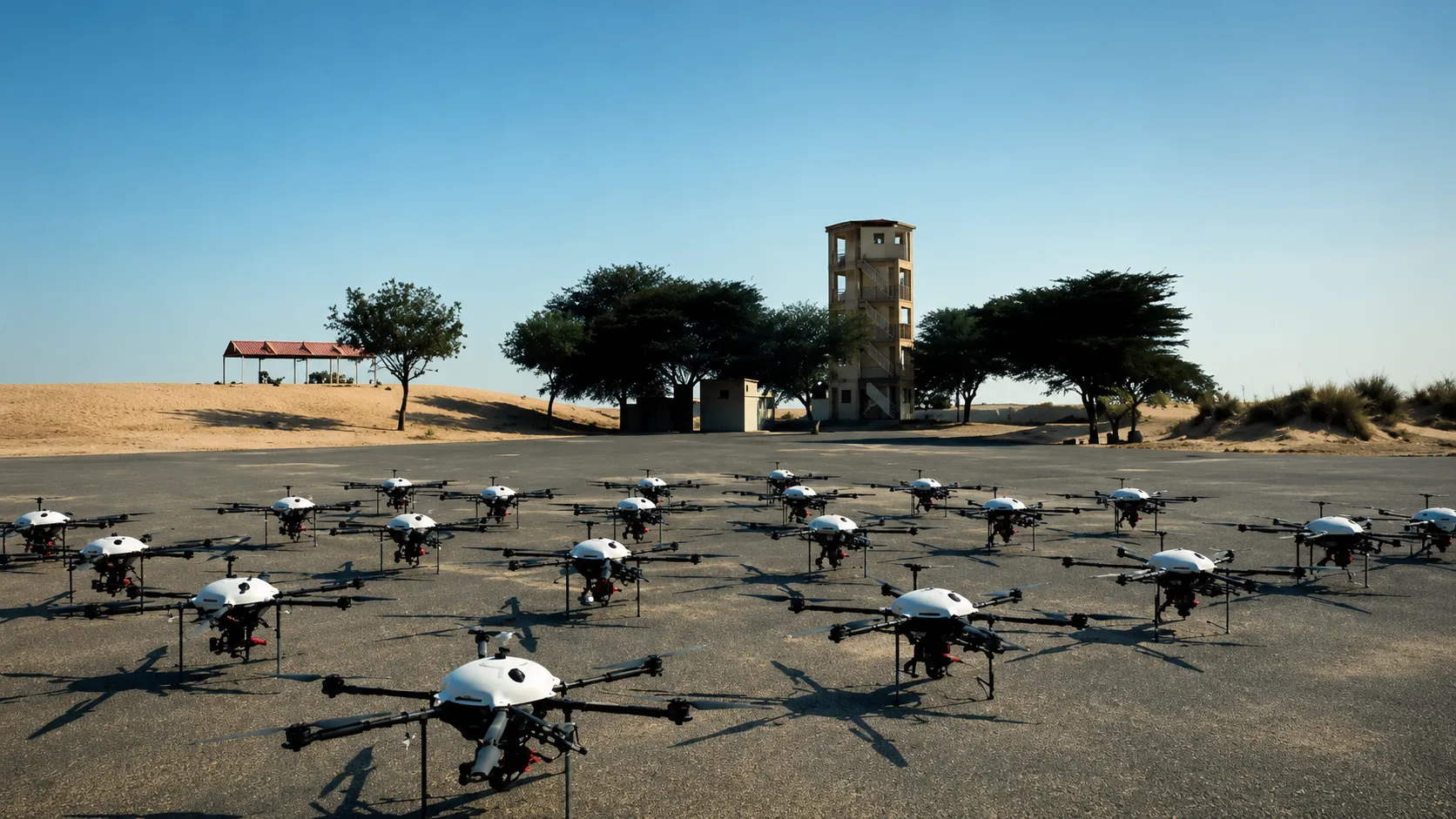
image.png

That policy environment deserves specific attention, since it forms much of the backdrop against which a company like Yaanendriya is able to operate and, crucially, find paying customers for its technology. The Indian government's Atmanirbhar Bharat, or self-reliant India, initiative has placed defence manufacturing and indigenous technology development squarely at the centre of its industrial policy priorities, backed by a range of concrete measures including positive indigenisation lists that specify categories of defence equipment that must be sourced domestically, dedicated budgetary allocations for indigenous research and development, and procurement preferences that favour Indian-developed technology over imported alternatives, all else being roughly equal. For a startup working on navigation sensors specifically designed for defence and aerospace applications, this policy architecture creates a genuinely favourable demand environment — one where the Indian government itself, through its various defence procurement agencies and armed forces branches, represents a large, motivated, and strategically committed customer base, rather than a company having to build demand for its technology from scratch in a purely commercial, price-competitive market.

The specifics of what Yaanendriya is building — indigenous sensors and navigation technology — sit at a particularly interesting technological frontier. Modern navigation systems increasingly rely on sophisticated combinations of inertial measurement units, which track motion and orientation without external reference signals, alongside various forms of satellite-based positioning, optical and laser-based sensing technologies, and increasingly, artificial intelligence and machine learning techniques that can fuse data from multiple sensor types to produce more accurate, resilient, and jam-resistant positioning and navigation solutions. Building credible, field-ready systems in this space requires deep expertise spanning electronics engineering, precision manufacturing, software and algorithm development, and rigorous testing and qualification processes that meet the exacting standards demanded by defence and aerospace end users, for whom system failure is not merely a commercial inconvenience but can carry life-or-death consequences in operational deployment.

The funding round also arrives at a moment when India's broader ambitions in space and aerospace technology are receiving significant national attention and investment, from the government's continued push on indigenous space launch capabilities to growing private sector participation in satellite manufacturing, launch services, and space-adjacent technology development. Navigation technology sits at a useful intersection of these trends, since the sensors and systems a company like Yaanendriya develops for defence applications often have direct or adjacent applicability to civilian aerospace, satellite systems, and even emerging commercial applications like autonomous drones and unmanned aerial systems, a category that has itself seen explosive growth in India in recent years, spanning applications from agricultural surveying to logistics delivery to, increasingly, defence and security use cases.

For India's broader deep-tech startup ecosystem, funding rounds like Yaanendriya's ₹15 crore raise serve a signalling function that extends well beyond the immediate capital being deployed. Each successful funding round in a hard, technically demanding, defence-adjacent category helps validate the broader investment thesis for other investors who may be considering similar bets, while also demonstrating to prospective founders — engineers and scientists who might otherwise default to building in more conventional, faster-scaling technology categories — that there is genuine venture capital appetite and a viable path to building meaningful, well-capitalised businesses in areas like navigation, sensors, and defence technology more broadly. This kind of ecosystem-building effect, where early successes beget further investor interest and founder activity, has played out repeatedly across other Indian technology sub-sectors over the past decade, from fintech to software-as-a-service, and industry observers increasingly believe a similar dynamic is now taking hold within India's deep-tech and defence technology space.
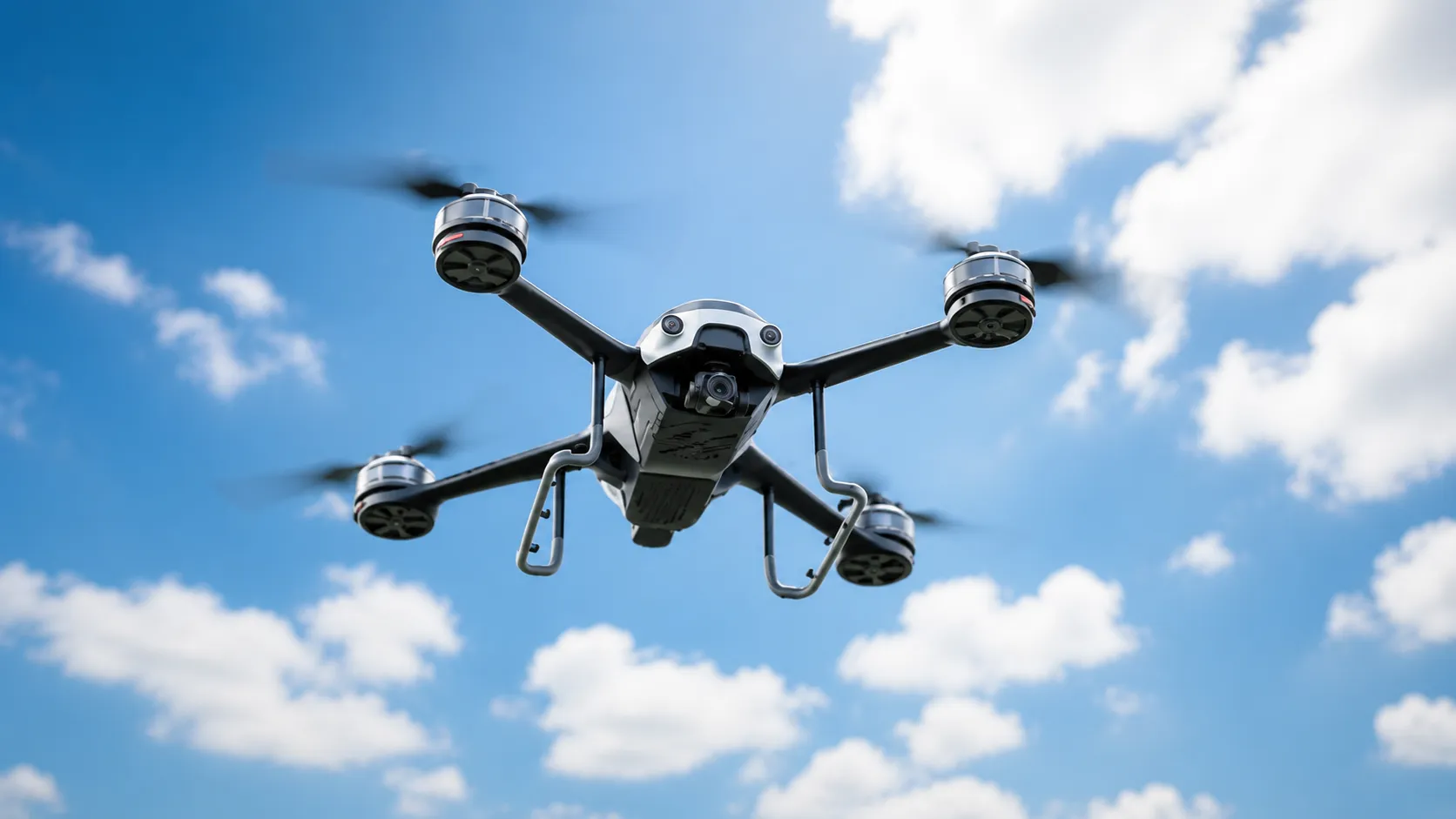

Every fighter jet, missile system, and autonomous platform needs to know exactly where it is at every moment — and for decades, India imported that certainty. This is the kind of quiet funding round that chips away at that dependency.
Business Desk, The Impactful Global Indian

It is worth noting, too, the relatively modest scale of this particular funding round in the context of global deep-tech and defence technology investment. ₹15 crore, translating to roughly $1.8 million at current exchange rates, is a meaningful but still early-stage sum by the standards of defence technology investment globally, where well-funded startups in comparable categories in markets like the United States and Israel have, in some cases, raised funding rounds an order of magnitude or more larger than Yaanendriya's current raise. This likely reflects both the earlier stage of maturity of India's deep-tech venture ecosystem relative to more established markets, as well as the inherently capital-efficient, iterative approach that many Indian deep-tech startups have needed to adopt, given historically more limited access to the kind of large, patient capital pools available to comparable companies in more mature venture ecosystems.

That said, the trajectory matters as much as the absolute figures involved. India's deep-tech and defence technology startup ecosystem, while still nascent relative to software and consumer internet sectors, has shown consistent signs of maturation over recent years, with a growing number of specialised venture funds, government-backed innovation programmes such as the Innovations for Defence Excellence initiative, and corporate venture arms of larger defence and aerospace players all contributing to a steadily deepening pool of capital and institutional support available to startups working in this space. Yaanendriya's successful raise from Piper Serica adds one more data point to this broader trend line, and the company's stated plans to use the funding specifically for research and development expansion and production scaling suggest a company moving from early-stage technology validation toward the more capital-intensive phase of building manufacturable, deployable products for actual defence and aerospace customers.

The broader strategic context here cannot be overstated. India's defence import dependency has long been a point of both strategic vulnerability and public policy frustration, with the country historically ranking among the world's largest arms importers despite possessing a large and growing domestic defence industrial base. Successive governments have pushed indigenisation as a core strategic priority, driven by concerns ranging from the vulnerability of import-dependent supply chains during periods of geopolitical tension, to the desire to build genuine sovereign capability in critical technologies rather than remaining perpetually dependent on foreign suppliers who may, at any point, restrict access to critical components or systems for their own strategic or commercial reasons. Navigation technology, given its foundational role across virtually every category of modern defence platform from fighter aircraft to naval vessels to precision-guided munitions, represents exactly the kind of critical, cross-cutting technology domain where indigenous capability carries outsized strategic value relative to its market size.

As Yaanendriya moves forward with its expanded research and development efforts and works toward scaling production of its navigation sensor technology, the company will likely face the same set of challenges that confront most deep-tech startups operating in defence-adjacent categories: long and often unpredictable government procurement cycles, rigorous and time-consuming technology qualification and certification requirements, and the ever-present challenge of raising subsequent, larger funding rounds to sustain research and development efforts through to commercial-scale deployment. Yet the company's successful ₹15 crore raise from Piper Serica, however modest in absolute terms, represents a meaningful vote of investor confidence in both the specific technology roadmap the company is pursuing and the broader strategic thesis that India's defence and aerospace self-reliance ambitions will continue to create genuine, sustainable commercial opportunities for well-positioned indigenous technology companies over the coming years.

For a broader Indian audience increasingly attuned to stories of homegrown technological achievement, from space missions to semiconductor ambitions, Yaanendriya's funding round offers a smaller-scale but no less meaningful example of the same underlying narrative: Indian engineers and entrepreneurs building genuinely difficult, strategically important technology, backed by investors willing to commit capital to long-gestation, high-stakes categories that were, until relatively recently, considered well outside the mainstream of India's venture capital appetite. Whether Yaanendriya ultimately succeeds in building navigation systems that meaningfully reduce India's import dependency in this critical technology category remains to be seen, but the funding round itself stands as a small but telling marker of how far India's deep-tech and defence startup ecosystem has travelled — and how much further ambition still exists to travel.

image.png

The involvement of a firm like Piper Serica in this round is itself worth examining more closely, since the profile of investors backing deep-tech and defence startups in India has evolved considerably over recent years. Where early defence-adjacent technology bets were once the near-exclusive preserve of a small number of specialised, mission-driven funds explicitly focused on strategic sectors, an increasingly diverse pool of investors, including generalist venture funds, family offices, and boutique investment firms, have begun allocating capital to the space, drawn by a combination of improving exit pathways, growing government procurement commitments, and a broader recognition that defence and dual-use technology represents one of the more insulated, policy-supported corners of India's startup ecosystem, less exposed to the kind of valuation resets that have periodically hit more consumer-facing technology categories.

Talent dynamics within India's deep-tech ecosystem also warrant attention when considering the significance of rounds like this one. Building credible navigation and sensor technology requires a workforce with specialised expertise in areas like precision electronics, embedded systems, signal processing, and increasingly, machine learning applied to sensor fusion problems — skill sets that have historically been concentrated within India's public sector research establishments, defence public sector undertakings, and a small number of premier engineering institutions. As venture-backed startups like Yaanendriya scale their operations, they increasingly compete for this same specialised talent pool, a dynamic that some industry observers view as a healthy, competitive pressure that could ultimately benefit the broader ecosystem by pushing both public and private sector employers to offer more competitive compensation and more compelling mission-driven work to retain scarce technical talent within India's defence and aerospace technology sector rather than losing it to opportunities abroad.

The broader innovation ecosystem supporting companies like Yaanendriya also includes a growing network of incubators, accelerators, and government-backed programmes specifically oriented toward defence and dual-use technology development. Initiatives launched by India's Ministry of Defence, alongside state-level innovation programmes and partnerships between startups and established defence public sector undertakings, have created an increasingly structured pathway for early-stage deep-tech companies to access not just capital but also testing facilities, technical mentorship, and crucially, introductions to the kind of institutional customers within India's armed forces and defence procurement establishment who represent the ultimate commercial validation for technology of this kind. How effectively Yaanendriya is able to navigate this broader support ecosystem, alongside deploying its newly raised capital, will likely shape how quickly the company can move from its current research and development-focused phase toward genuine commercial-scale deployment of its navigation technology.

TagsYaanendriyaDeepTechIndiaStartupFundingAtmanirbharBharatDefenceTechIndiaIndianStartupsPiperSericaMakeInIndiaDefenceNavigationTechnologyAerospaceIndia

Reader reviews

Sign in to rate and review this article.
Loading reviews…