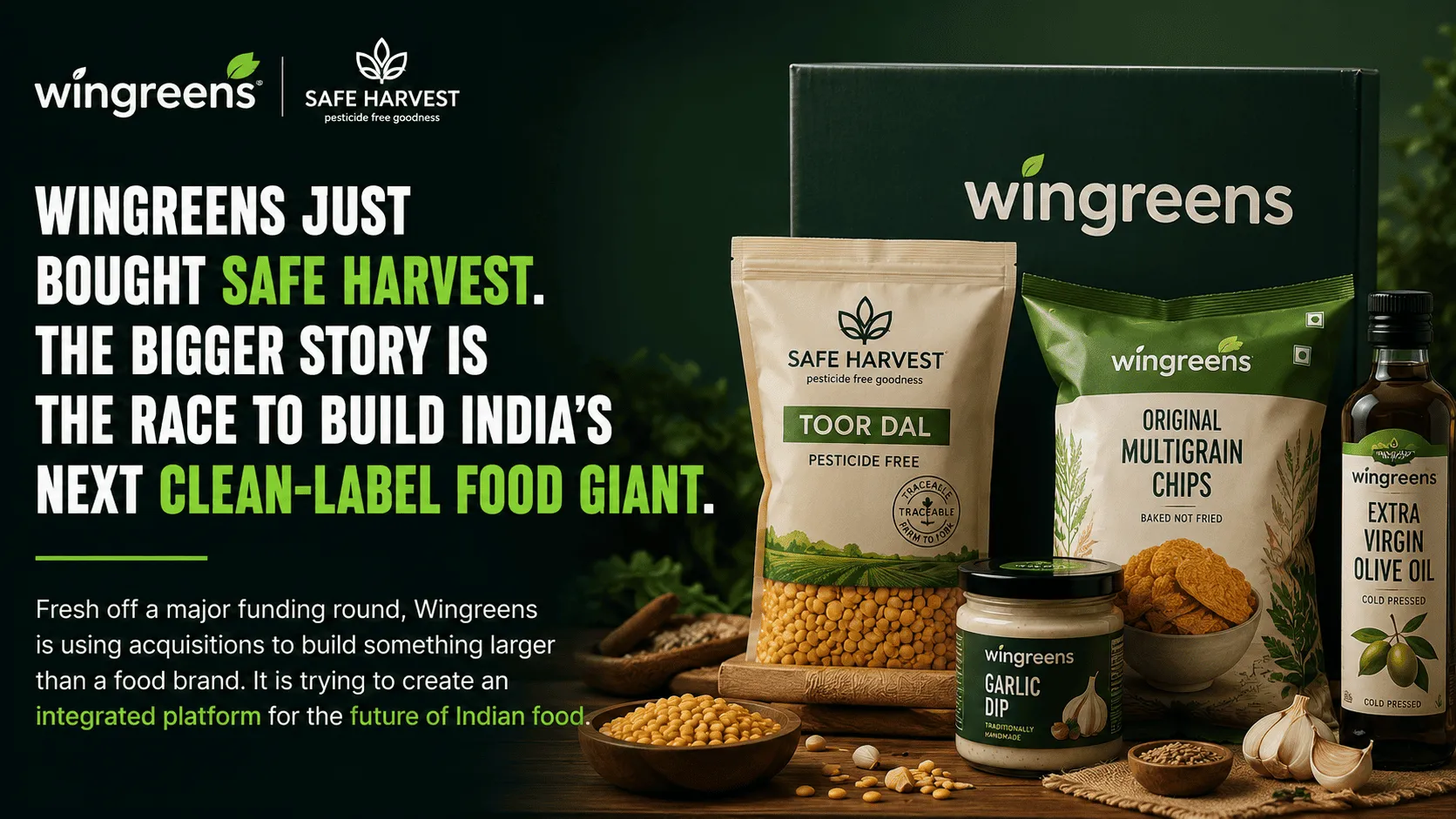
Fresh Off A Major Funding Round, Wingreens Is Using Acquisitions To Build Something Larger Than A Food Brand. It Is Trying To Create An Integrated Platform For The Future Of Indian Food.
For years, India's food industry was dominated by a relatively simple formula.
Large FMCG companies built scale through distribution, manufacturing and brand recognition. Consumers often purchased products based on familiarity rather than ingredient transparency, sourcing practices or nutritional considerations. While premium food categories existed, they remained relatively niche and largely concentrated in urban markets. The industry's biggest players succeeded by reaching millions of households rather than by telling detailed stories about where ingredients came from or how products were made.
Consumer preferences are changing rapidly.
A new generation of shoppers is paying closer attention to what they eat, where products originate and how food is produced. Terms such as clean-label, natural, preservative-free and traceable have moved from niche health-food conversations into mainstream retail discussions. Consumers increasingly expect brands to provide transparency alongside convenience. This shift has created opportunities for a new wave of food startups attempting to challenge traditional FMCG models through authenticity, sourcing and product quality.
Wingreens has been one of the most visible companies pursuing that opportunity.
Now, following the closing of its Series D funding round, the company has acquired Safe Harvest, a brand known for working closely with smallholder farmers and promoting responsibly sourced staples. The transaction may appear like a routine acquisition, but it signals something larger. Wingreens is no longer simply building individual food brands. It is assembling an ecosystem designed to participate across multiple segments of India's rapidly evolving food economy.
The Acquisition Is About More Than Products
At first glance, Safe Harvest appears to be a natural addition to Wingreens' portfolio.
The company has built a reputation around responsibly sourced staples including pulses, grains and everyday pantry products. Its identity has been closely tied to traceability, farmer relationships and transparency within agricultural supply chains. These attributes align closely with broader consumer trends favoring food brands capable of demonstrating authenticity rather than relying solely on marketing claims.
However, the acquisition is not primarily about adding another brand to a portfolio.
What Wingreens gains is access to a supply-chain philosophy that complements its larger ambitions. Modern food businesses increasingly compete on trust as much as taste. Consumers want reassurance regarding sourcing, ingredients and production standards. Brands capable of controlling larger portions of their supply chains often possess stronger credibility when making those promises.
This is particularly important in categories where quality and authenticity influence purchasing decisions.
The acquisition therefore strengthens not only Wingreens' product lineup but also its ability to position itself as a trusted participant within the clean-label movement.
Food Startups Are Becoming Platform Businesses
One of the most interesting developments within consumer brands is the shift from single-product companies toward platform models.
Historically, many food startups focused on building one successful brand before gradually expanding into adjacent categories. Increasingly, founders and investors are pursuing a different strategy. Rather than growing organically across every segment, companies acquire complementary brands that bring new capabilities, customer relationships and market positions.
Wingreens appears to be following this playbook.
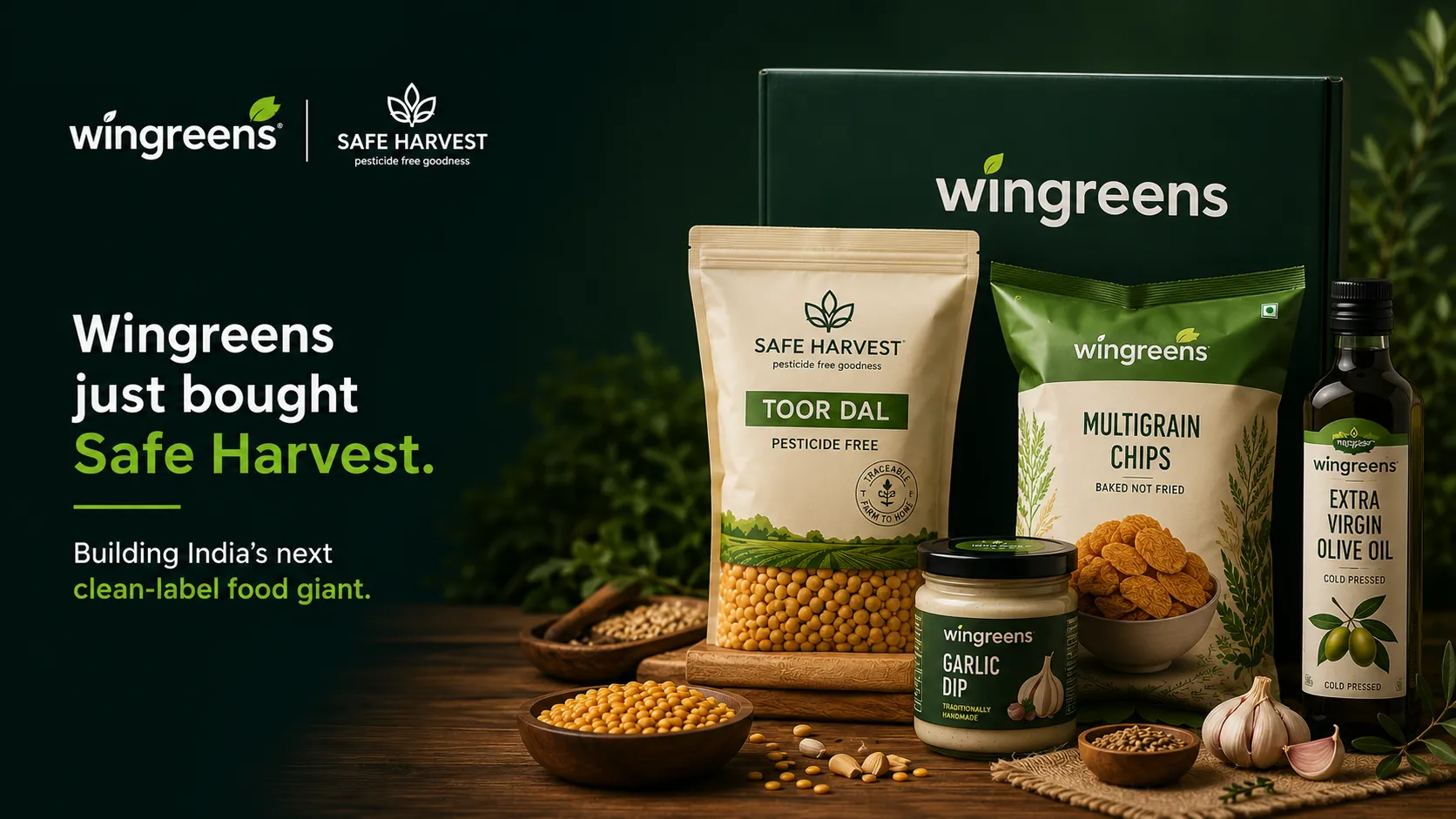
Over time, the company has expanded beyond its original product categories through a combination of brand building and acquisitions. Each addition broadens the company's reach while creating opportunities for shared distribution, manufacturing and marketing efficiencies. Instead of operating as a standalone food brand, Wingreens is gradually evolving into a multi-brand platform capable of serving different consumer needs under a unified strategic vision.
This approach reflects how consumer markets are changing.
Scale increasingly comes not from dominating a single category but from creating ecosystems that allow customers to engage with multiple products and brands throughout their daily lives.
Investors Are Backing The Clean-Label Opportunity
The timing of the acquisition is also significant.
Wingreens recently completed its Series D funding round, providing the company with additional resources to pursue expansion initiatives. Investors are demonstrating growing interest in businesses operating at the intersection of health, transparency and consumer trust. While technology and artificial intelligence dominate many funding headlines, consumer brands addressing changing food habits continue attracting substantial attention.
Part of the appeal lies in the size of the opportunity.
India's food market is enormous, yet many categories remain fragmented and relatively underpenetrated when it comes to premium, traceable products. As incomes rise and consumer awareness increases, demand for differentiated food products is expected to grow. Investors see the possibility of building large businesses around these shifts, particularly when companies combine strong brands with efficient supply chains.
The acquisition reinforces that narrative.
Rather than using fresh capital solely for marketing or distribution, Wingreens is investing in strategic assets that could strengthen its competitive position over the long term.
The Farmer Connection Is Becoming A Business Advantage
One aspect of Safe Harvest that stands out is its relationship with farmers.
For years, discussions around farmer welfare and sustainable sourcing were often framed primarily as social-impact initiatives. Increasingly, companies are discovering that these relationships can also create meaningful business advantages. Direct engagement with producers can improve traceability, strengthen quality control and enhance supply-chain resilience at a time when consumers care more about sourcing than ever before.
This trend is reshaping how food brands think about growth.
Consumers are increasingly interested in understanding where products come from and how they are produced. Brands capable of providing credible answers often enjoy stronger trust and differentiation. What once functioned primarily as a corporate responsibility initiative is becoming a source of competitive advantage within premium food categories.
Safe Harvest brings that capability into the broader Wingreens ecosystem.
The acquisition therefore strengthens not only operational capabilities but also the narrative that increasingly influences consumer purchasing decisions.
The FMCG Industry Is Facing New Competition
The broader significance of the deal extends beyond the companies involved.
India's established FMCG giants continue to dominate the market, but they are facing growing competition from digitally native brands built around specialized consumer needs. These challengers are often more agile, more focused and more willing to experiment with emerging trends. Categories such as clean-label foods, functional nutrition and premium pantry staples have become attractive battlegrounds because they align with changing consumer preferences.
Wingreens represents part of this larger movement.
Rather than attempting to compete directly across every FMCG category, the company is building expertise within segments where transparency, sourcing and quality matter most. Acquisitions like Safe Harvest accelerate that strategy by adding capabilities that would otherwise take years to develop internally.
The result is a new generation of consumer companies that look very different from traditional FMCG businesses.
They are built around ecosystems, communities and values as much as products.
The Bigger Story Is About Building A Food Ecosystem
Viewed narrowly, the acquisition is a corporate transaction.
Viewed more broadly, it is part of a larger effort to redefine what a food company can become. Modern consumers increasingly expect food brands to offer more than convenience. They want transparency, trust, sustainability and quality. Meeting those expectations requires capabilities that extend far beyond manufacturing and distribution.
Wingreens appears to understand that reality.
By combining funding, acquisitions and portfolio expansion, the company is attempting to build an integrated platform capable of serving multiple parts of the food value chain. The objective is not merely to sell products. It is to participate in the broader shift toward more conscious and transparent food consumption.
Whether that vision ultimately succeeds remains to be seen.
But the acquisition of Safe Harvest suggests that Wingreens believes the future of food will belong not to the companies with the most products, but to the companies with the strongest ecosystems.