The Synthetic Biology Startup Stayed Quiet For Years. Now Its Public Debut Is Revealing How India’s Biotech Ecosystem Is Expanding Beyond Traditional Healthcare Narratives
India’s startup ecosystem has historically concentrated heavily around sectors like fintech, e-commerce, SaaS and consumer internet businesses because these industries scaled quickly, attracted visible user growth and generated relatively faster investor returns. Deep-science startups, particularly in advanced biotechnology, often remained outside mainstream startup conversations because research-heavy businesses typically required longer development cycles, specialized infrastructure and far greater scientific risk. As a result, India’s venture ecosystem traditionally approached frontier biotech more cautiously than software-driven sectors.
That pattern now appears to be evolving.
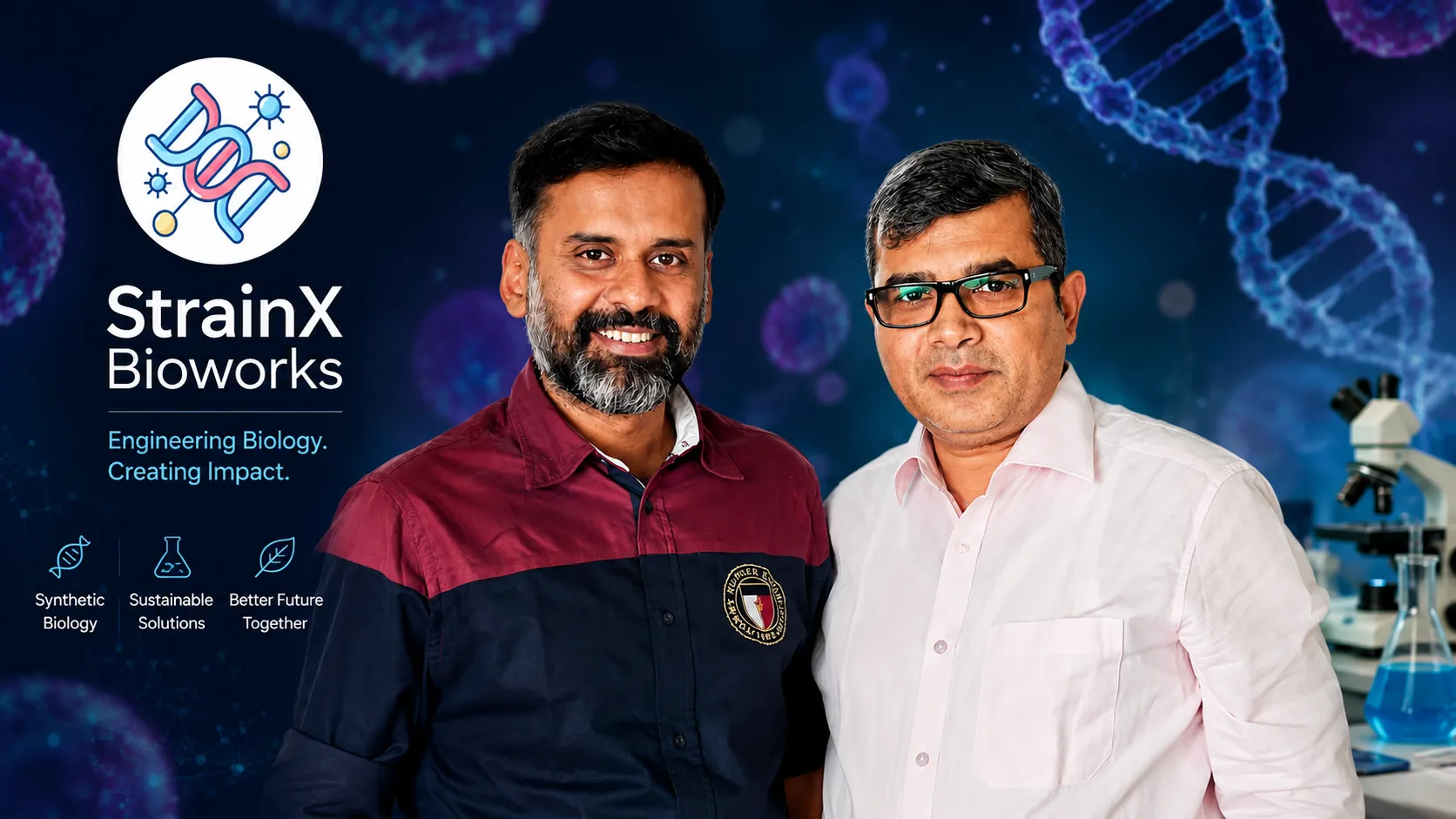
StrainX Bioworks has officially emerged from stealth after raising $13 million in Series A funding, signaling growing investor interest in synthetic biology and advanced biotech innovation within India’s startup landscape. The funding round was led by Prime Venture Partners and Leo Capital, drawing attention not only because of the capital involved but because it reflects increasing confidence in highly specialized scientific ventures that operate beyond conventional startup categories.
The development matters because synthetic biology itself is becoming one of the world’s most strategically important scientific fields.
Synthetic biology combines biology, engineering, computation and genetic science to design or modify biological systems for industrial, healthcare, agricultural and environmental applications. Globally, the sector has attracted enormous attention because researchers and companies are increasingly exploring how engineered biological processes can improve manufacturing, therapeutics, materials, food systems and sustainability solutions. While countries like the United States and China have invested aggressively in advanced biotech ecosystems for years, India’s participation in this space has historically remained relatively limited compared to its software dominance.
That gap is beginning to narrow.
Startups like StrainX Bioworks are part of a broader shift where Indian founders and investors are gradually moving toward science-led innovation sectors requiring deeper technical infrastructure and longer-term vision. Unlike many internet startups that scale primarily through digital distribution, biotech companies often depend on laboratory research, regulatory pathways and highly specialized scientific talent. Funding therefore becomes a strong signal of ecosystem maturity because investors are effectively betting not only on a company but on India’s ability to build globally relevant scientific capabilities over time.
The stealth-to-public transition also reflects how modern biotech startups increasingly operate.
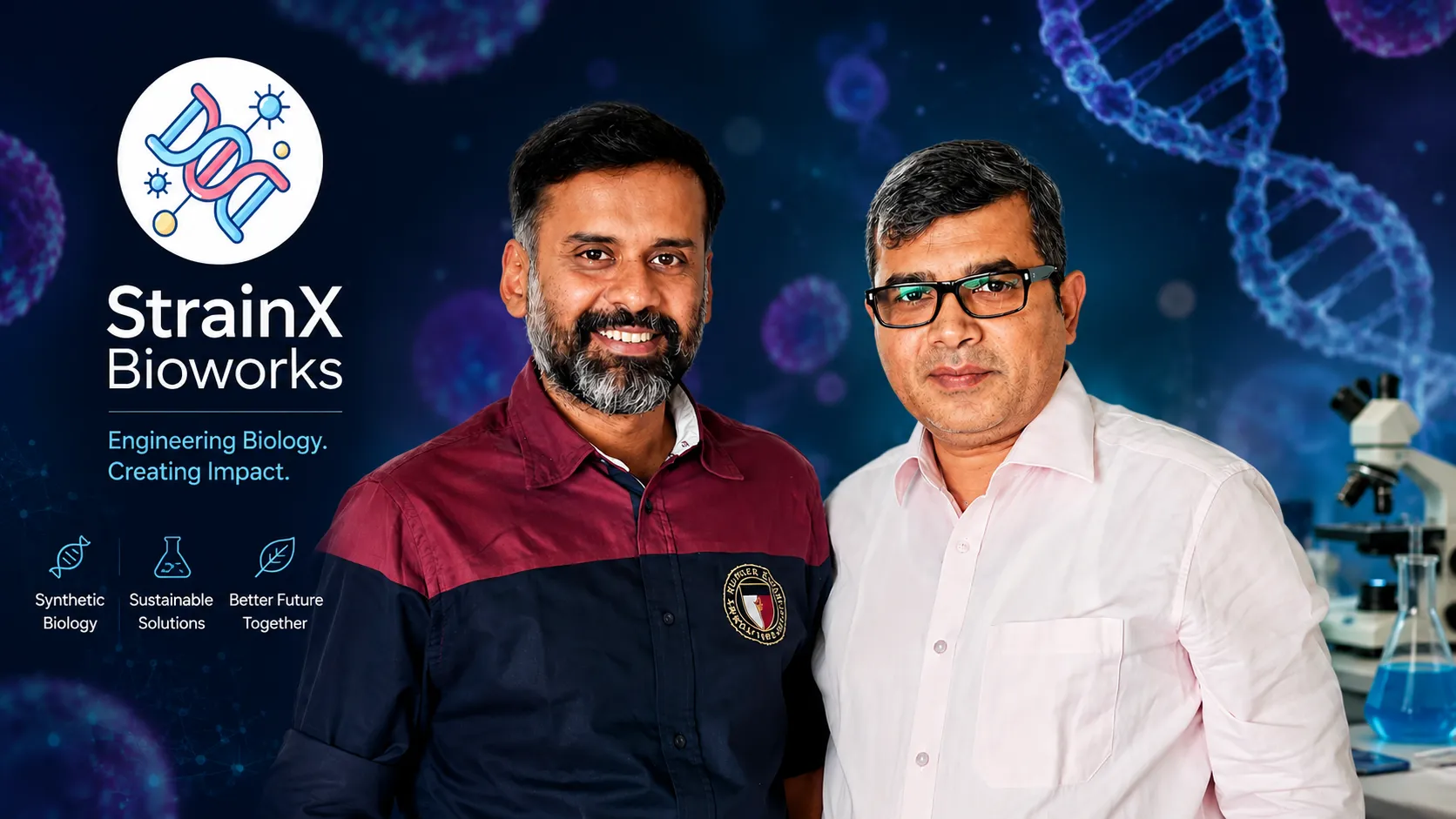
Many frontier science companies remain relatively invisible during early stages because research, experimentation and product development frequently happen privately before commercial visibility emerges. Unlike consumer startups that rely on early public attention, deep-biotech ventures often spend years refining technology platforms, validating scientific approaches and building intellectual property before formally entering broader industry conversations. StrainX Bioworks’ public emergence after securing significant institutional backing therefore immediately positioned it as a company worth watching inside India’s growing biotech ecosystem.
The funding round additionally highlights changing venture capital behavior in India.
Investors are increasingly looking beyond crowded digital categories because sectors like artificial intelligence, climate tech, semiconductor infrastructure and biotech now represent long-term strategic opportunities with potentially global relevance. Synthetic biology especially attracts interest because it sits at the intersection of healthcare innovation, industrial efficiency and sustainability — three areas expected to shape future economies significantly. Venture firms therefore appear increasingly willing to support technically ambitious startups even when commercialization timelines may be longer than traditional software models.
India’s scientific talent advantage also plays an important role in this narrative.
The country already produces enormous numbers of engineers, researchers and life-sciences graduates because its higher-education ecosystem has expanded aggressively across technical disciplines over the last two decades. However, much of that talent historically flowed toward IT services, pharmaceuticals or overseas research opportunities. The rise of startups operating in synthetic biology and frontier biotech may gradually create new pathways for scientific entrepreneurship inside India itself, potentially reshaping how technical talent engages with innovation ecosystems domestically.
At the same time, the challenges remain significant.
Deep biotech businesses require substantial capital, long research timelines and sophisticated infrastructure because scientific commercialization is inherently more complex than building consumer apps or digital platforms. Regulatory environments, product validation and global competition also create pressure because synthetic biology is rapidly becoming an internationally competitive field dominated by heavily funded ecosystems abroad. Indian biotech startups will therefore likely need sustained investor patience and policy support to scale meaningfully.
Yet funding rounds like this still carry symbolic importance.
They indicate that Indian venture ecosystems are beginning to broaden their imagination around what kinds of companies deserve large-scale backing. For years, startup success stories in India largely revolved around commerce, payments and internet consumption because those sectors aligned naturally with rapid digitization trends. The emergence of companies like StrainX Bioworks suggests that investors increasingly see long-term value in scientific capability itself.
That may ultimately become one of the most important shifts inside India’s startup economy.
Because the next phase of Indian innovation may not be defined only by apps, platforms or digital convenience anymore.
It may increasingly be shaped by laboratories, deep research and the ability to build technologies powerful enough to influence global science itself.