The Former Spyware CEO Walked Away. Then He Built Something Governments Trust More.
When Shalev Hulio resigned as CEO of NSO Group in August 2022, he left behind the most controversial technology company in the world — the Israeli intelligence firm behind Pegasus, the spyware that had been used to target journalists, human rights activists, heads of state, and political opponents across dozens of countries. NSO had been placed on the US government's entity list. Its name had become synonymous with the darkest questions about what surveillance technology, deployed at government scale, could do to democratic societies.
The easy assumption was that Hulio's next chapter would be quieter. A clean break. Something in enterprise software, perhaps. Something whose use case was unambiguous.
He co-founded Dream instead.
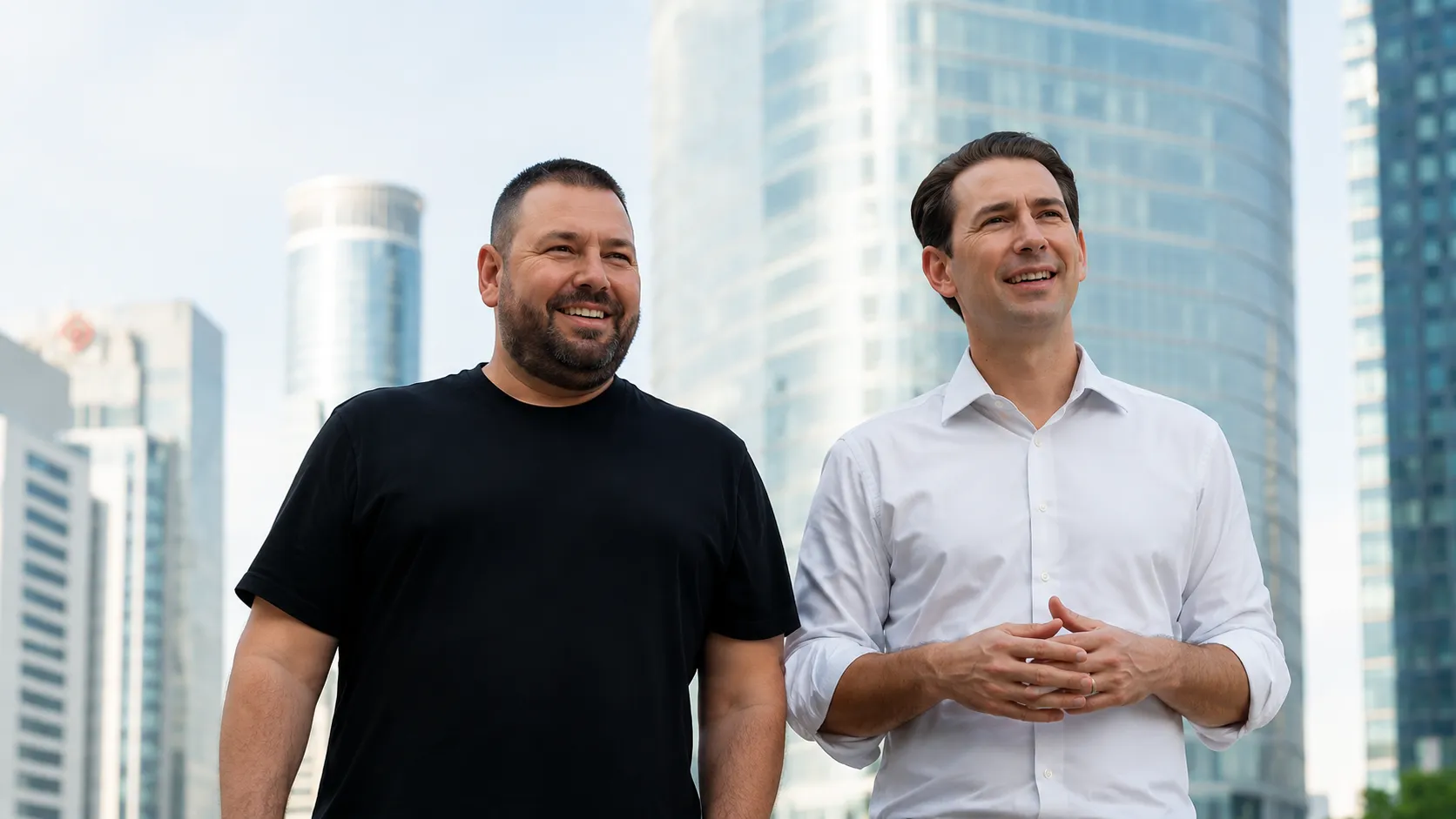
Dream, founded in 2023 by Hulio alongside former Austrian Chancellor Sebastian Kurz and cyber expert Gil Dolev, is an AI and cyber defense company that builds sovereign AI platforms for governments and critical infrastructure operators. Not offensive. Defensive. Not surveillance. Protection. Not Pegasus. Something that governments can own outright, run on their own infrastructure, and use to protect themselves from exactly the kind of state-backed cyber threats that Hulio spent years building capabilities around.
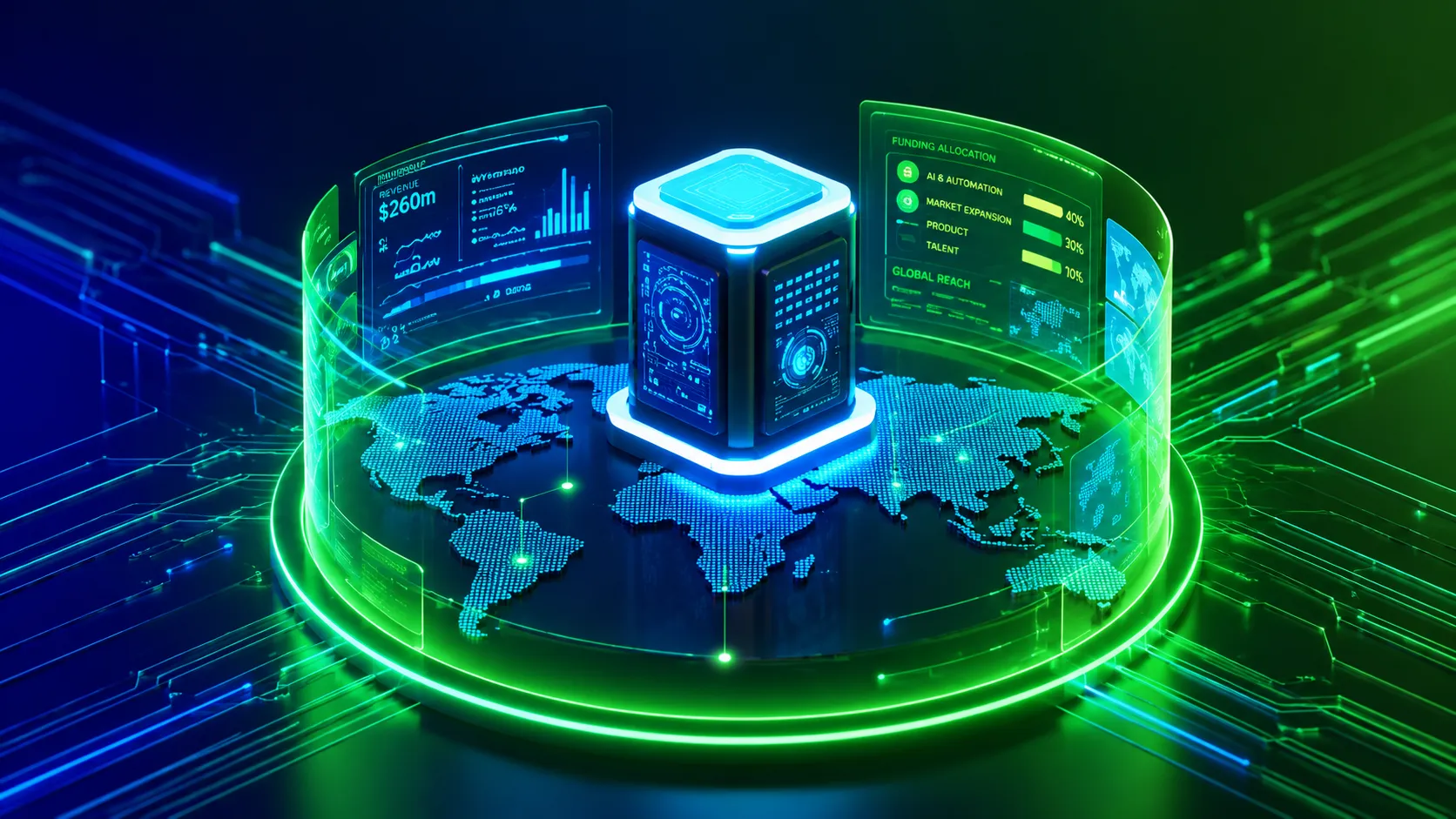
On June 18, 2026, Dream announced it had raised $260 million in a funding round co-led by Bicycle Capital and Group 11, with participation from Antler, Bain Capital Ventures, and Tru Arrow Partners. The round brings Dream's total funding to $412 million and values the company at $3 billion — nearly triple its $1.1 billion valuation from just 16 months earlier, when a $100 million Series B was led by Bain Capital. The company has secured nearly $300 million in total contract value from governments since beginning commercial operations in late 2024.
Three years old. $3 billion. $300 million in government contracts. And a founding story that makes it one of the most complicated — and most revealing — companies in the 2026 national security technology landscape.
What Dream Actually Does — and Why "Sovereign AI" Is Not Marketing Language
To understand what Dream sells, you have to understand the specific anxiety that is driving government technology spending in 2026.
Nation-state cyberattacks on critical infrastructure have accelerated materially over the last several years. Power grids, water systems, financial networks, telecommunications infrastructure, government databases, and military command systems have all been targeted by state-affiliated actors using increasingly sophisticated AI-augmented attack tools. The entry cost of a serious cyberattack has dropped dramatically as AI provides adversaries with automated vulnerability discovery, code generation, and attack execution capabilities that previously required significant human expertise.
At the same time, governments have come to recognise that their dependence on foreign technology — whether US cloud providers, Chinese hardware manufacturers, or Israeli spyware vendors — creates security vulnerabilities that are inseparable from geopolitical risk. The question is not just "who can attack us?" but "who controls the systems we are defending with?"
This is the market that Dream is building for.
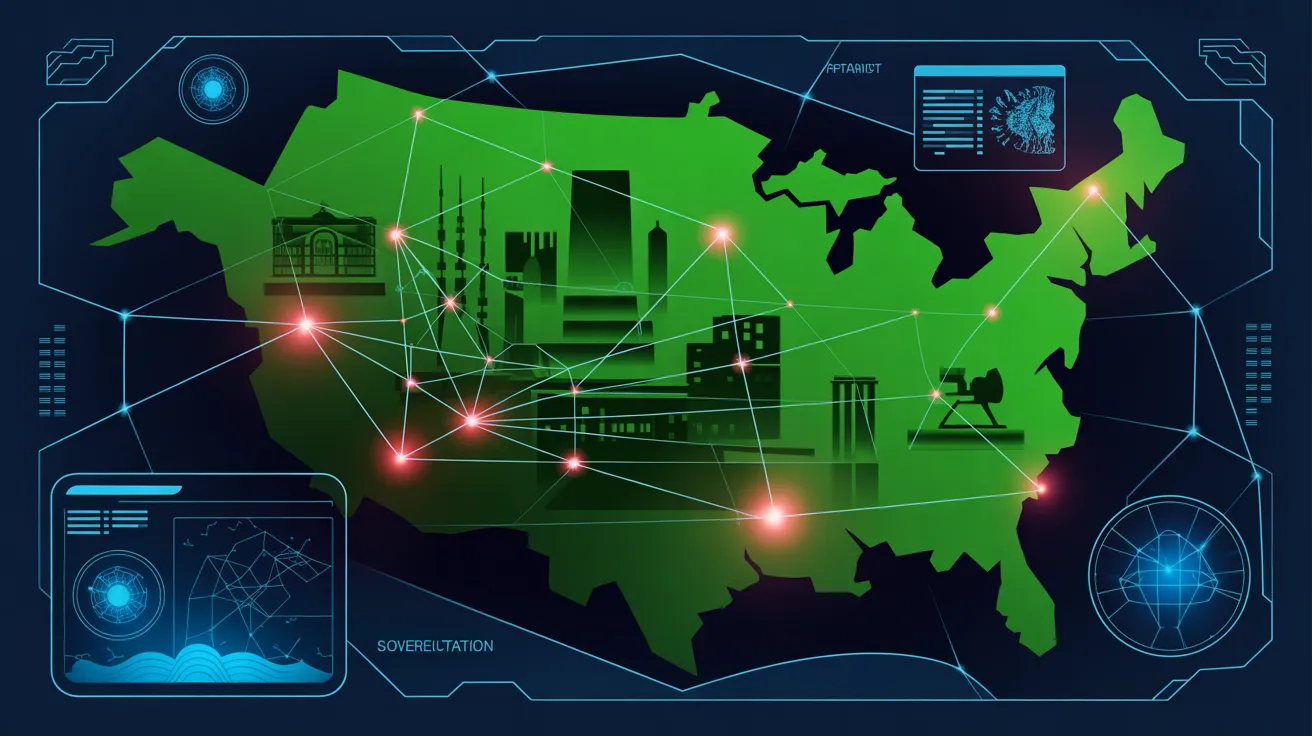
Dream's platform is described by the company as a sovereign AI and national cyber defense system — meaning it is designed to be deployed on a government's own infrastructure, controlled entirely by that government, using AI capabilities that are not shared with or accessible by the vendor or any third party. The company operates its own sovereign AI data centre near Modi'in in Israel, launched in February 2026 as Israel's first facility of its kind, designed to handle mission-critical AI workloads for government operations.
The core product capability is predictive threat detection and real-time cybersecurity across both operational technology (the physical systems that run infrastructure — power grids, water treatment, transport networks) and information technology (the digital systems that run government operations, communications, and data). The AI layer is designed to identify threats before they materialise as attacks, rather than responding after the fact.
Sebastian Kurz, who serves as co-founder and whose political connections across European and Middle Eastern governments have been central to the company's commercial reach, described the demand in terms that cut through the technical language:
The Revenue Story — What $300 Million in Contracts Actually Means
The most important number in Dream's announcement is not the $3 billion valuation or the $260 million round. It is the $300 million in total contract value secured since commercial operations began in late 2024.
That figure — nearly $300 million in government contracts in under two years, from a company that was founded in 2023 and began selling commercially only in late 2024 — is the commercial validation that explains why the valuation has tripled in 16 months. Dream has not been building toward revenue while burning through investor capital. It has been generating revenue at a rate that suggests the demand for what it offers is substantial, immediate, and not dependent on the company convincing customers they have a problem. Governments already know they have the problem.
Startup Fortune's reporting notes that Dream has secured contracts with six governments and generates over $130 million in annual revenue. The company employs approximately 350 people across offices in Tel Aviv, Abu Dhabi, and Vienna. The Abu Dhabi office is significant: it represents Dream's access to Gulf state governments, whose defence and infrastructure spending is among the most aggressive in the world and whose interest in technological sovereignty has intensified as geopolitical allegiances in the region have shifted.
The Vienna presence is Sebastian Kurz's structural contribution to the company. As Austria's former Chancellor, Kurz has direct relationships with European government officials that would take years to build through conventional business development. His political network is, in the most direct sense, part of Dream's commercial infrastructure — the human equivalent of a sales pipeline that reaches into government procurement offices across the continent.
The NSO Shadow — and How Dream Has Navigated It
The co-founder context cannot be ignored, and the company has not tried to ignore it.
NSO Group's Pegasus spyware was found by Citizen Lab, Amnesty International, and other researchers to have been used against journalists, lawyers, political opponents, and human rights activists in dozens of countries, including Saudi Arabia, Azerbaijan, India, Hungary, Mexico, and Morocco, among others. NSO was placed on the US Commerce Department's Entity List in November 2021, effectively prohibiting US companies from selling to it. Hulio resigned in August 2022 as the company entered a restructuring process.
The question that accompanies any conversation about Dream is whether the transition from NSO to Dream represents a genuine pivot — offensive surveillance to defensive protection, governments as threat actors to governments as clients to be protected — or whether it is a rebranding of the same capabilities and the same relationships under a more palatable commercial framing.
The honest answer is that this question is genuinely open, and the investment community has reached a conclusion that prioritises the commercial trajectory over the reputational history.
What Dream is building is structurally different from what NSO built. Pegasus was an offensive tool — designed to penetrate devices and extract information from targets. Dream's platform is defensive — designed to detect and prevent attacks on the infrastructure of governments that pay for it. The use cases, the technical architecture, and the customer relationship are all different.
But the relationships, the political access, the understanding of how governments think about cyber threats and what they are willing to pay for — those are continuous from NSO to Dream, and they are part of why Dream has secured $300 million in government contracts before its second birthday. Hulio did not leave behind the knowledge of how government security decisions are made. He took it with him and applied it to a different product.
The risk dimension, as Crypto Briefing noted in its coverage, is real: "NSO Group's own history is a case study in how quickly government tech companies can become geopolitical liabilities." Dream's exposure to that risk is structural — it is built into who founded it — and no amount of defensive product architecture entirely resolves the question of whether a company's government relationships, and its understanding of offensive capabilities, are fully separable from its defensive business.
The Broader Investment Thesis — Why Capital Is Moving Into This Category
Dream's round did not arrive as an isolated event. It arrived as part of a wave of capital into national security technology that reflects a structural shift in how governments and investors think about the relationship between digital infrastructure and geopolitical competition.
Anduril raised $5 billion at a $61 billion valuation in May 2026. Shield AI closed a $1.5 billion Series G at $12.7 billion. Gecko Robotics hit unicorn status with Navy contracts and industrial inspection at scale. The category now has a name — national security tech, or "defense tech" — that has shed most of the stigma it carried in Silicon Valley five years ago and replaced it with an investment thesis that has produced some of the most impressive private market returns of the decade.
Dream sits within this category but with a specific profile: it is not building weapons systems or autonomous military platforms. It is building the cyber infrastructure layer that everything else depends on — the layer that, if compromised, makes all other defense capabilities vulnerable. This positioning makes it attractive to governments that may be constrained in how much they can openly invest in offensive capabilities but face no such constraint in investing in defensive infrastructure.
Shalev Hulio has articulated the macro thesis in terms that frame the moment clearly:
The word "essential" is doing significant work there. Not valuable. Not advisable. Essential. The argument is that a government that does not control its own AI infrastructure — that runs its critical systems on technology it does not own, whose data flows through systems it cannot fully audit — is a government that has already ceded a dimension of sovereignty that no other policy lever can fully recover.
That argument is landing with governments across Europe, the Middle East, and Southeast Asia in ways that translate directly into contract value. And it is landing with investors like Bain Capital Ventures, Bicycle Capital, and Group 11 in ways that have tripled Dream's valuation in 16 months.
What Dream's Rise Actually Signals
Dream's $3 billion valuation and $300 million in government contracts are not just a company story. They are a signal about where the world is heading.
The geopolitical logic of sovereign AI is the same logic that drove the creation of national airlines, national telecommunications networks, and national energy grids in the twentieth century. When a capability becomes essential to the functioning of a modern state, governments that can afford to typically choose to own it rather than rent it from a foreign provider. The technology may be identical. The control is not.
AI is now essential to the functioning of modern states — not as a future aspiration but as a present reality. Governments are running AI systems for border security, infrastructure monitoring, public service delivery, financial system oversight, and military logistics. The question of who owns those systems — whose data flows through them, whose infrastructure they run on, who can access or disable them — is a geopolitical question as much as a technology question.
Dream's specific claim is that it can provide the AI and cyber defense capability while allowing the government to retain full control of the infrastructure. Whether that claim can be sustained at scale, and whether the company's founding history represents a risk that eventually materialises, are questions that the next several years will answer.
What the $260 million round, the $3 billion valuation, and the $300 million in contracts confirm is that governments are willing to pay significant sums for the answer — and that investors believe those sums will keep growing.
The future wars Shalev Hulio has spent his career preparing for will not be fought only with weapons. Dream is building the infrastructure for the part that will be fought with code. And it has raised $412 million from the people who believe it will win.