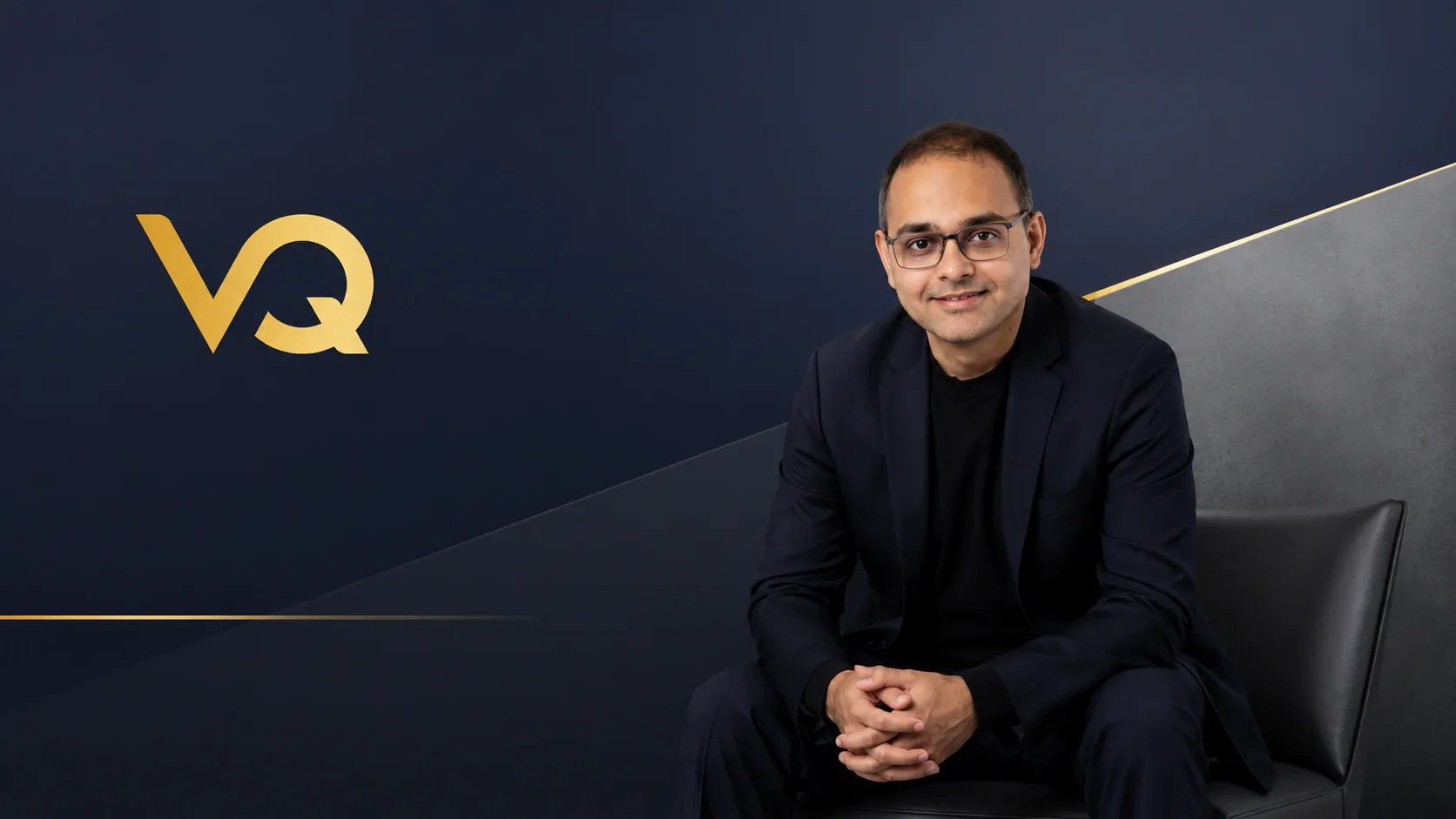
Veriqus Group, a Mumbai-based wealth and asset management platform, has raised ₹387 crore in a fresh funding round led by global venture capital firm Norwest Venture Partners, the company confirmed this week — a significant capital infusion that the platform says will go toward expanding its integrated wealth and asset management offerings across India's rapidly growing base of affluent and mass-affluent investors. The round adds Veriqus to a growing list of Indian wealthtech companies that have attracted substantial institutional venture capital over recent years, as investors increasingly bet on the structural, long-duration growth opportunity presented by India's expanding pool of investable household wealth.
To understand why wealthtech has become such an actively contested category within India's broader fintech investment landscape, it helps to look at the underlying demographic and economic trends driving demand for exactly the kind of platform Veriqus operates. India's number of high-net-worth and mass-affluent households has been expanding steadily over the past decade, driven by sustained economic growth, rising urban incomes, and a structural shift in household savings patterns away from traditional physical assets like gold and real estate toward a more diversified mix increasingly including equities, mutual funds, and other financial instruments. That shift has created substantial demand for sophisticated, personalised wealth-management services — a category that, in India, has historically been served primarily through traditional private banking relationship-manager models often accessible only to the very top tier of wealthy clients, leaving a substantial, underserved segment of mass-affluent investors without access to comparably sophisticated advisory and portfolio-management services.
Veriqus's positioning within this landscape centres on bridging exactly that gap, offering integrated wealth and asset management capabilities that combine technology-driven portfolio construction and monitoring tools with more traditional relationship-based advisory services, a hybrid model that has become increasingly common among India's newer generation of wealthtech platforms as they seek to differentiate from both the high-touch, high-cost traditional private banking model and the more purely self-directed, algorithm-only robo-advisory platforms that gained early traction but have, in many cases, struggled to fully address the more complex, holistic financial planning needs of India's growing affluent investor base.
Norwest Venture Partners' decision to lead this round reflects the firm's broader, longstanding interest in India's fintech and financial services sector, an area where the global venture capital firm has built a substantial portfolio over the years spanning multiple categories within India's rapidly digitising financial services landscape. Lead investors in rounds of this scale typically bring not just capital but also meaningful strategic value — access to global best practices from comparable wealthtech businesses the firm has backed in other markets, board-level governance expertise, and often support in building out the kind of institutional-grade operational and compliance infrastructure that becomes increasingly important as wealth-management platforms scale their assets under management and correspondingly their regulatory obligations.
The wealth and asset management technology space in India has, in fact, seen a meaningful wave of capital deployment over recent quarters, with a range of platforms addressing different segments of the market — from pure digital investment platforms targeting first-time retail investors, to more sophisticated wealth-management platforms like Veriqus targeting the affluent and mass-affluent segment, to specialised platforms focused on alternative investments, estate planning, and family-office-style services for India's growing ultra-high-net-worth population. That breadth of activity across different sub-segments of the wealth-management technology category reflects investors' broader conviction that India's wealth-management market represents a genuinely large and still substantially underpenetrated opportunity relative to more mature markets like the United States or the United Kingdom, where wealth-management technology adoption has progressed considerably further.
Regulatory developments have also played a meaningful role in shaping the operating environment for wealthtech platforms like Veriqus. The Securities and Exchange Board of India has, over recent years, introduced and refined regulatory frameworks governing investment advisers and portfolio managers, creating clearer compliance pathways for technology-driven wealth-management platforms while also raising the bar for the kind of governance, disclosure, and client-suitability infrastructure such platforms must maintain. Navigating that regulatory landscape effectively has increasingly become a genuine competitive differentiator within the sector, rewarding platforms that can combine technological sophistication with robust, scalable compliance infrastructure — an area where well-capitalised platforms backed by experienced institutional investors often hold a meaningful advantage over smaller, less well-resourced competitors.
This funding round also arrives amid what has been a broadly active period for India's fintech and startup funding landscape through the middle of 2026, with a cluster of other notable transactions announced in the same general period — including a strategic minority-stake investment by a listed spend-management fintech into a cross-border payments specialist, and the launch of a dedicated venture fund aimed at backing early-stage deeptech and energy-transition startups. That broader pattern of sustained private capital deployment across India's fintech and startup ecosystem stands in some contrast to the more turbulent conditions prevailing in the secondary public equity markets this week, reinforcing the extent to which private, venture-stage capital allocation decisions often operate on considerably longer investment horizons than the shorter-term sentiment swings currently dominating public-market trading.
For Veriqus specifically, the fresh capital is expected to support several parallel priorities typical of a growth-stage wealthtech platform at this juncture — expanding its relationship-manager and advisory workforce to serve a growing client base, investing further in the underlying technology platform that powers portfolio construction, monitoring, and reporting for clients, and potentially expanding the breadth of asset classes and investment products available through the platform, a natural evolution path for wealth-management platforms as they mature from serving primarily equity and mutual fund allocation needs toward a more comprehensive, holistic wealth-management proposition spanning alternative investments, insurance, estate planning, and other adjacent financial planning categories.