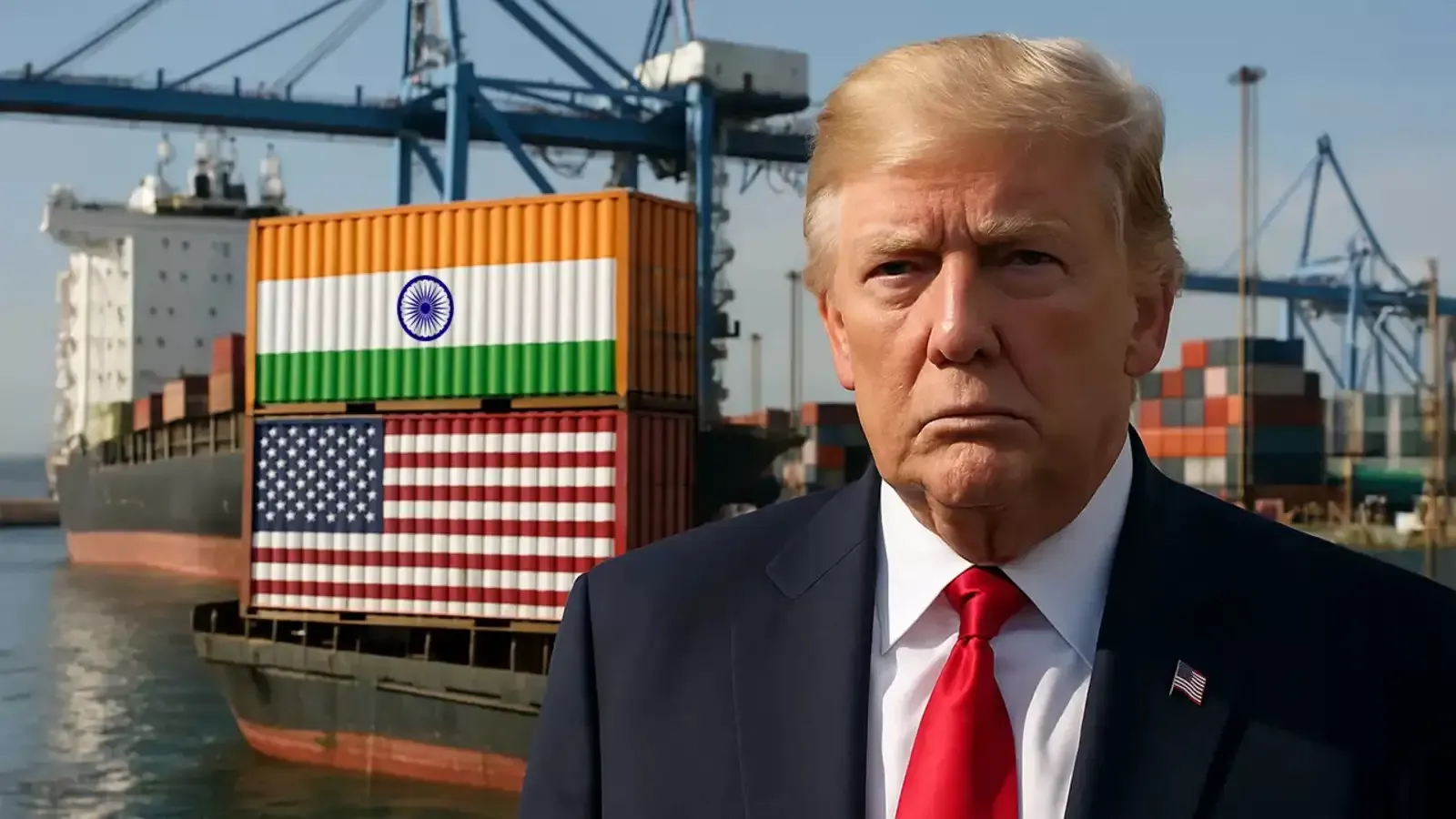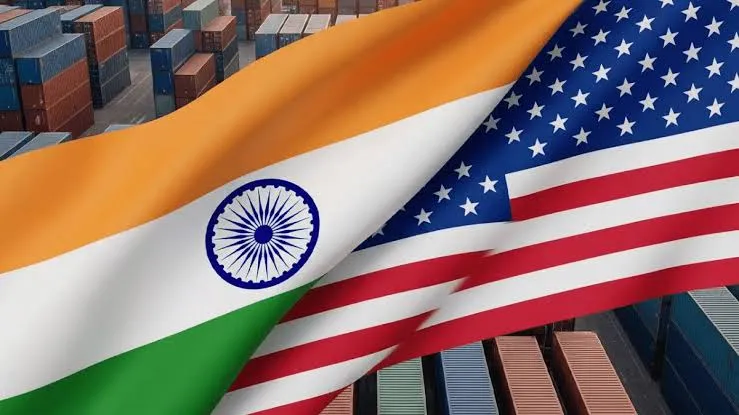
Just as Indian exporters and trade negotiators had begun to find a measure of stability following months of on-again, off-again tariff signalling from Washington, a fresh wave of uncertainty has emerged. Reports circulating this week indicate that the Trump administration is considering a new tariff structure of between 10 and 12.5 per cent on Indian goods, a duty regime that would replace a temporary 10 per cent global tariff currently set to expire later this week. The development, first flagged in trade and business media coverage, extends what has become a defining, and often unpredictable, feature of the US-India trade relationship through much of 2025 and 2026: a pattern of temporary measures, extended deadlines, partial deals, and periodic escalation that has left Indian exporters navigating one of the most uncertain external trade environments in recent memory. To appreciate why this latest development matters, it helps to trace the arc of the broader US-India trade relationship over the preceding year. Since returning to office, the Trump administration has pursued an aggressive, tariff-forward approach to trade policy globally, framing tariffs as both a revenue tool and a negotiating lever to extract concessions from trading partners on market access, currency practices, and non-tariff barriers. India, as one of the United States' largest trading partners and a country running a persistent trade surplus with the US in goods, has found itself squarely in the crosshairs of this approach on multiple occasions over the past several quarters. Negotiations toward a comprehensive bilateral trade agreement have proceeded in fits and starts, with periods of optimistic signalling from both sides periodically undercut by fresh tariff threats, deadline extensions, and public statements from American officials that have kept Indian trade negotiators, exporters, and financial markets on a near-constant state of alert. The specific mechanism now under discussion — a 10 to 12.5 per cent tariff intended to succeed the expiring temporary 10 per cent global levy — appears to represent a modest but real escalation rather than a simple rollover of the status quo. For Indian exporters across labour-intensive sectors such as textiles, apparel, gems and jewellery, leather goods, and select engineering and auto-component categories, even a percentage-point or two of additional tariff burden can meaningfully affect competitiveness in the crucial US market, particularly when competing against exporters from countries like Vietnam, Bangladesh, and Mexico that have, at various points, secured more favourable tariff treatment either through direct trade agreements or through more successful navigation of Washington's shifting tariff calculus. Industry bodies representing India's export sector have historically been vocal in flagging the disproportionate impact that even modest tariff increases can have on small and medium-sized exporting units, which often operate on thin margins and lack the pricing power or diversified customer base of larger, more established exporters. A shift from a flat 10 per cent temporary levy to a tiered structure reaching as high as 12.5 per cent would, if implemented as reported, add further cost pressure precisely on the kinds of employment-intensive manufacturing sectors that Indian policymakers have long identified as critical to the country's broader goal of expanding manufacturing's share of GDP and creating jobs for its large and growing working-age population.
At the same time, it is worth noting the broader context within which this specific tariff proposal is emerging. Separately, and somewhat contradictorily, other recent reports have pointed to a potential softening of US tariff pressure on India and China under a revised Russia-sanctions-linked bill working its way through Washington, with talk of duties tied to Russian oil purchases potentially being reduced from a threatened 500 per cent penalty rate down to a more modest 100 per cent, or scrapped altogether in certain configurations. This apparent inconsistency — simultaneous signals of both escalation and de-escalation across different tariff tracks — is emblematic of just how fragmented and fast-moving the current US trade policy environment has become, with multiple parallel negotiating tracks, legislative processes, and executive actions all potentially bearing on India's ultimate tariff exposure at any given moment. For Indian exporters and the government's trade negotiating team alike, this has made forward planning genuinely difficult, with contingency scenarios needing to be built for outcomes ranging from meaningful tariff relief to further escalation, sometimes within the same news cycle. Financial markets have, unsurprisingly, been sensitive to this drumbeat of tariff-related headlines. Export-oriented Indian sectors — IT services, textiles, pharmaceuticals, and select engineering goods manufacturers — have seen their stock prices move in response to shifting tariff signals on more than one occasion this year, with investors attempting to price in probability-weighted scenarios for how the final tariff structure might land. The pharmaceutical sector in particular has been flagged by market commentators this week as facing renewed uncertainty over potential US tariff measures specifically targeting pharmaceutical exports, a sensitive category given India's outsized role as a global supplier of generic medicines and the US market's heavy reliance on Indian-manufactured drugs to keep healthcare costs manageable for American consumers. Any meaningful tariff imposition on pharmaceutical exports would represent a notable escalation given the sector's historical treatment as something closer to a strategic exception in prior rounds of tariff negotiation, both because of its importance to US consumers and because of the complex, currently negotiated nature of pharmaceutical trade rules. For Indian policymakers, the challenge is one of both substance and timing. The Ministry of Commerce and Industry, along with India's trade negotiating team, has spent much of the past year attempting to advance a comprehensive bilateral trade agreement with the United States that would ideally lock in more predictable, favourable tariff treatment across a broad range of goods categories, reducing India's exposure to exactly this kind of piecemeal, deadline-driven tariff uncertainty. Progress on that broader agreement has reportedly continued in parallel with the current tariff developments, but the persistent gap between the pace of formal trade-agreement negotiations and the far faster pace of unilateral US tariff announcements has meant that Indian exporters have repeatedly found themselves reacting to tariff news well before any comprehensive, durable resolution has been reached. There is also a domestic political dimension to consider. India's own trade policy has, in parallel, been navigating a complex set of priorities — protecting domestic industry and employment in sensitive sectors, pursuing an ambitious agenda of new free trade agreements with other partners (the recently implemented India-UK FTA being a prominent recent example), and simultaneously trying to preserve enough negotiating flexibility to secure favourable terms from Washington without being seen domestically as capitulating to external pressure on politically sensitive issues like agricultural market access or dairy imports, both long-standing sticking points in India-US trade talks. Balancing these considerations while responding to fast-moving tariff headlines from Washington has proven to be one of the more delicate diplomatic and economic tightropes Indian trade officials have had to walk over the past several quarters.
For exporters on the ground, the practical response to this kind of prolonged uncertainty has increasingly involved diversification — both of export markets, with many Indian manufacturers accelerating efforts to build stronger trade relationships with the European Union, United Kingdom, Gulf states, and Southeast Asian markets to reduce dependence on the US market, and of supply chains, with some larger exporters exploring manufacturing footprint adjustments to mitigate potential tariff exposure. Smaller exporters, lacking the capital and scale to pursue such diversification strategies quickly, remain more directly exposed to whatever the final tariff structure turns out to be, underscoring the uneven impact that this kind of policy uncertainty tends to have across India's export ecosystem. As the current temporary tariff nears its stated expiry and the reported 10-12.5 per cent replacement structure moves through whatever remains of the US administrative and legislative process required to formalise it, all eyes will remain on both Washington and New Delhi for clarity. Indian markets, exporters, and policymakers have, by now, grown accustomed to a certain rhythm of tariff-related headlines punctuating the news cycle every few weeks, but that familiarity has done little to reduce the genuine economic stakes involved each time a new deadline approaches. Whether this latest development ultimately resolves into a modest, manageable adjustment or becomes the opening move in a fresh round of escalation will likely become clearer only in the days immediately ahead, as the current temporary tariff's expiry date arrives and Washington's next formal move becomes public. Sector-specific impact assessments compiled by trade research desks in recent weeks have consistently flagged textiles and apparel as among the most exposed categories to any incremental tariff increase, given the intensely price-competitive nature of that global trade, where even small cost differentials can shift large order volumes toward rival low-cost manufacturing hubs such as Bangladesh and Vietnam. India's textile exporters, concentrated heavily in states like Tamil Nadu, Gujarat, and Punjab, employ millions of workers, many of them women in semi-urban and rural manufacturing clusters, making the sector's tariff sensitivity a matter of real socioeconomic consequence rather than a purely abstract trade-policy debate. Industry associations representing these exporters have, in previous rounds of tariff uncertainty this year, called on the Indian government to consider targeted support measures — ranging from export incentive schemes to interest subvention on working capital loans — to help cushion smaller manufacturing units against exactly this kind of externally imposed cost shock, and similar calls are likely to resurface if the reported 10-12.5 per cent structure is formally confirmed. The gems and jewellery sector, another major India-US trade category and one of the largest sources of foreign exchange earnings for India's export economy, has historically shown a somewhat different sensitivity pattern to tariff changes, given that its customer base often skews toward higher-income segments less price-sensitive at the margin than mass-market apparel buyers. Even so, exporters in this category, concentrated heavily around Surat and Mumbai, have expressed concern in trade forums about the cumulative effect of prolonged tariff uncertainty on long-term buyer relationships and contract commitments, noting that American retail buyers increasingly prefer to lock in sourcing decisions well in advance of key selling seasons such as the year-end holiday period, and that persistent tariff unpredictability makes it harder for Indian suppliers to compete for those advance commitments against rivals operating under more stable trade terms.
Currency markets, too, have shown sensitivity to the ebb and flow of tariff-related news, with the rupee's recent weakness against the dollar being attributed by several currency strategists to a combination of factors that includes this ongoing tariff uncertainty alongside the separately unfolding crude-oil price pressures linked to West Asia tensions. A weaker rupee does provide some offsetting competitive benefit to exporters, partially cushioning the impact of higher tariffs by making Indian goods cheaper in dollar terms even before any tariff is applied, but currency strategists caution that this is, at best, a partial and imperfect hedge, particularly for exporters whose input costs include a meaningful share of imported raw materials or components priced in foreign currency, where a weaker rupee simultaneously raises costs on the input side even as it helps on the output pricing side. Corporate boardrooms across India's export-facing sectors have, in response to this prolonged uncertainty, increasingly begun treating tariff-scenario planning as a standing agenda item rather than an occasional exercise triggered only when fresh headlines emerge. Chief financial officers at several listed exporting companies have referenced, in recent quarterly earnings calls, the additional resources now being devoted to modelling multiple tariff outcomes and building flexible sourcing and pricing strategies capable of absorbing a range of possible duty structures without requiring a fundamental redesign of supply chains each time Washington's position shifts. That kind of institutionalised uncertainty management, while a rational corporate response, also represents a quiet but real drag on efficiency and long-term capital planning across India's export economy, a cost that rarely makes headlines in the way a specific tariff announcement does, but which economists argue compounds over time into a meaningful, if difficult to precisely quantify, dampener on investment and expansion decisions among India's exporting companies. Trade economists have also pointed out that this uncertainty premium disproportionately favours larger, more diversified competitors internationally who can absorb tariff volatility across broader global operations, potentially accelerating a longer-term competitive disadvantage for India's exporters relative to rivals in markets with more settled trade relationships with Washington.