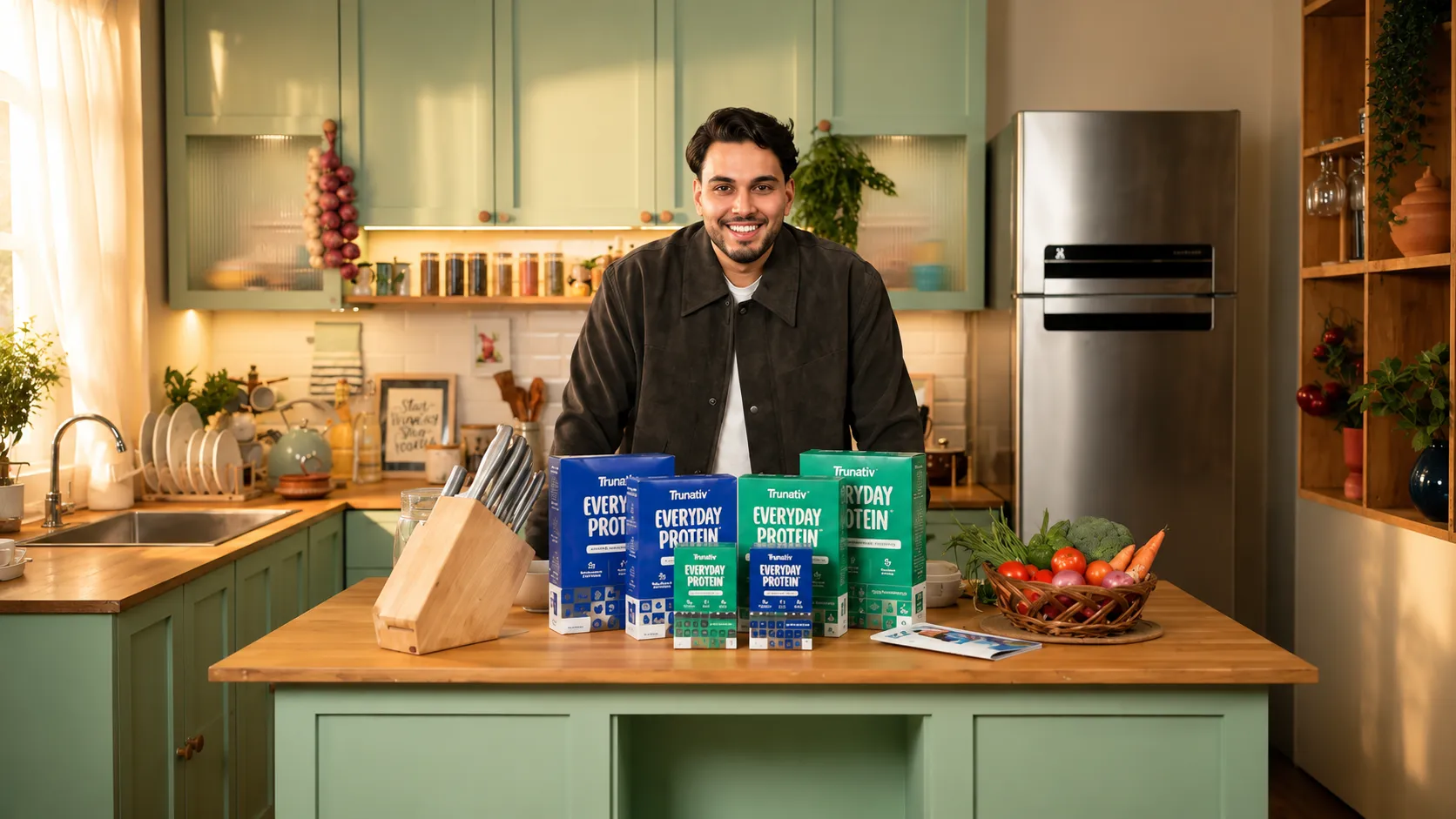
India Has a Nutrition Problem. A Mother and Son Decided to Build the Solution.
Before the $30 million and the OrbiMed board seats, there is a simpler story.
Pranav Malhotra, who co-founded TruNativ with his mother Mamta Malhotra in 2019, has described the founding insight in terms that are difficult to argue with. For decades, Indian consumers have been handed nutritional products that carry health claims without the scientific foundation to match them — protein powders cut with filler, sugar substitutes with undisclosed processing, supplements marketed for outcomes they cannot demonstrate. The nutrition market that should have been serving India's 1.4 billion people had been, for the most part, selling them a well-packaged version of compromise.
TruNativ was built around the opposite proposition: that nutrition products should be what they say they are, available at prices that reach households beyond the premium health-conscious tier, and built on science rather than on aspirational label copy.
On June 17, 2026, OrbiMed — one of the world's largest dedicated healthcare investment firms, with approximately $20 billion in assets under management across public equities, private equity, venture capital, and royalty strategies — backed that proposition with $30 million in a Series B round.
What TruNativ Actually Sells — and Why the Categories Matter
TruNativ operates across five nutrition categories, and each one addresses a specific, documented gap in the Indian consumer health landscape.
Sugar substitution is the flagship. The Everyday Sweet product line targets India's sugar consumption problem — a country where type 2 diabetes affects more than 100 million people and sugar overconsumption sits at the root of a broader metabolic health crisis. TruNativ has established category leadership in sweeteners and sugar alternatives on quick commerce platforms, leading the dietary fibre and sweeteners categories on Amazon India.
The protein portfolio — Everyday Protein and Pro Blend Whey — addresses a deficiency that India's own National Institute of Nutrition has documented for decades: the majority of Indian adults do not meet recommended daily protein intake. The issue is structural, rooted in a predominantly carbohydrate-heavy dietary culture and the relative expense of protein-rich foods. Accessible, affordable protein supplementation is not a lifestyle category in India. It is a public health category.
The gut health product (Everyday Fiber) addresses a similarly documented gap. India's dietary fibre intake falls substantially below WHO recommendations across most of the population. Water-soluble fibre supplementation, delivered in a format that integrates into existing dietary habits rather than requiring behavioural change, is the form factor TruNativ has built for this gap.
Advanced Collagen addresses the beauty wellness segment — the category that has seen some of the fastest consumer adoption in Indian supplement purchasing — while the performance nutrition range targets the growing cohort of active Indian consumers whose fitness habits have outpaced the quality of products available to support them.
Taken together, these five categories are not a random product portfolio assembled for market coverage. They are a coherent thesis about where India's nutrition deficits are most acute and where a science-backed, clean-label brand can generate the kind of customer loyalty that sustains a multi-channel distribution business over years rather than quarters.

Why OrbiMed Matters — and What Its Presence Signals
OrbiMed is not a consumer brand investor. That is the most important thing to understand about this round.
The firm manages approximately $20 billion in assets globally, investing primarily in biotechnology, pharmaceuticals, medical devices, and healthcare services. It backs the companies that develop and commercialise transformative healthcare solutions — drug discovery platforms, diagnostics businesses, surgical device companies. It is a peer of firms like Perceptive Advisors, RA Capital, and RTW Investments in the dedicated healthcare investment universe.
OrbiMed's decision to invest in TruNativ is therefore a deliberate expansion of its portfolio thesis — a bet that preventive nutrition belongs in the healthcare investment universe rather than in the consumer brand universe. That distinction is not semantic. It determines the multiple at which the business is valued, the due diligence framework applied to its claims, and the category of investor that will follow OrbiMed's lead into subsequent rounds.
Dr Sunny Sharma, Senior Managing Director of OrbiMed Asia, has been explicit about the logic:
The phrase "consumer health business" is doing significant work in that sentence. Not "consumer brand." Not "D2C nutrition company." Consumer health — the category that sits at the intersection of evidence-based medicine and consumer accessibility, and that has produced some of the most durable value creation in global healthcare investing.
Dr Sharma and Sumona Chakraborty of OrbiMed will both join TruNativ's board as part of the investment. Board seats from OrbiMed carry specific value: the firm's network of clinical advisors, regulatory expertise, and portfolio company relationships in the healthcare and pharma ecosystem is a resource that a nutrition company trying to build scientifically credible products can use at every stage of product development, claims substantiation, and regulatory navigation.
The Emami Connection — and What the Investor Base Tells You
TruNativ is backed by Emami — the Kolkata-based FMCG conglomerate whose brands include BoroPlus, Fair and Handsome, Navratna, and Zandu. Emami's presence on the cap table is a strategic relationship, not just a financial one. Emami has spent decades building consumer trust in the health and wellness category across India's general trade channels — the pharmacies, the kiranas, the regional distribution networks that reach consumers in Tier 2 and Tier 3 cities where modern trade has limited penetration.
For TruNativ, which is expanding from D2C and quick commerce into modern trade, pharmacy, and retail channels nationally, that relationship is a distribution asset and a market credibility signal.
The Series B round included an offer for sale component through which early investors — 100Unicorns, Rainmatter, and Venture Catalysts — partially or fully exited. These are seed and early-stage investors whose fund cycles require liquidity at Series B or C, and their exit is a normal and healthy part of a company's capital stack evolution. The clean transition from seed investors to a growth-stage anchor like OrbiMed is precisely what a well-structured Series B looks like.
PwC served as the exclusive financial adviser on the transaction — an institutional process marker that reflects the deal's scale and complexity.
The Market TruNativ Is Betting On
India's nutrition market is large and growing faster than most investor models have historically assumed.
According to IMARC Group data, India's protein supplements market alone reached $912.9 million in 2025 and is expected to grow to $1.58 billion by 2034, at a compound annual growth rate of 6.27 per cent between 2026 and 2034. The broader nutrition and wellness supplement category, which includes the sugar substitution, gut health, and beauty wellness segments that TruNativ operates in, is growing faster than the standalone protein segment.
The demand drivers are structural and self-reinforcing. Rising per capita income is expanding the cohort of consumers who can afford supplementation beyond basic dietary staples. Health awareness, accelerated by COVID-19 and by a generation of fitness and wellness content on social media, has moved preventive nutrition from a premium niche to a mainstream concern. And the FSSAI's intensifying regulatory scrutiny of health claims — which some analysts frame as a headwind for the category — is, for a company like TruNativ that has positioned science and clean labelling as its core value proposition, a competitive advantage. When the regulator demands evidence, the companies that built on evidence benefit.
The B2B2C ingredients business is an additional strategic dimension that most pure-play D2C nutrition companies do not have. TruNativ currently supplies nutritional ingredients and formulation solutions to several leading Indian consumer brands. This gives the company a revenue stream that is structurally different from consumer D2C — more predictable, more margin-stable, less dependent on marketing spend — while simultaneously deepening the company's R&D relationships with the ingredient and formulation ecosystem that underpins its consumer product quality.
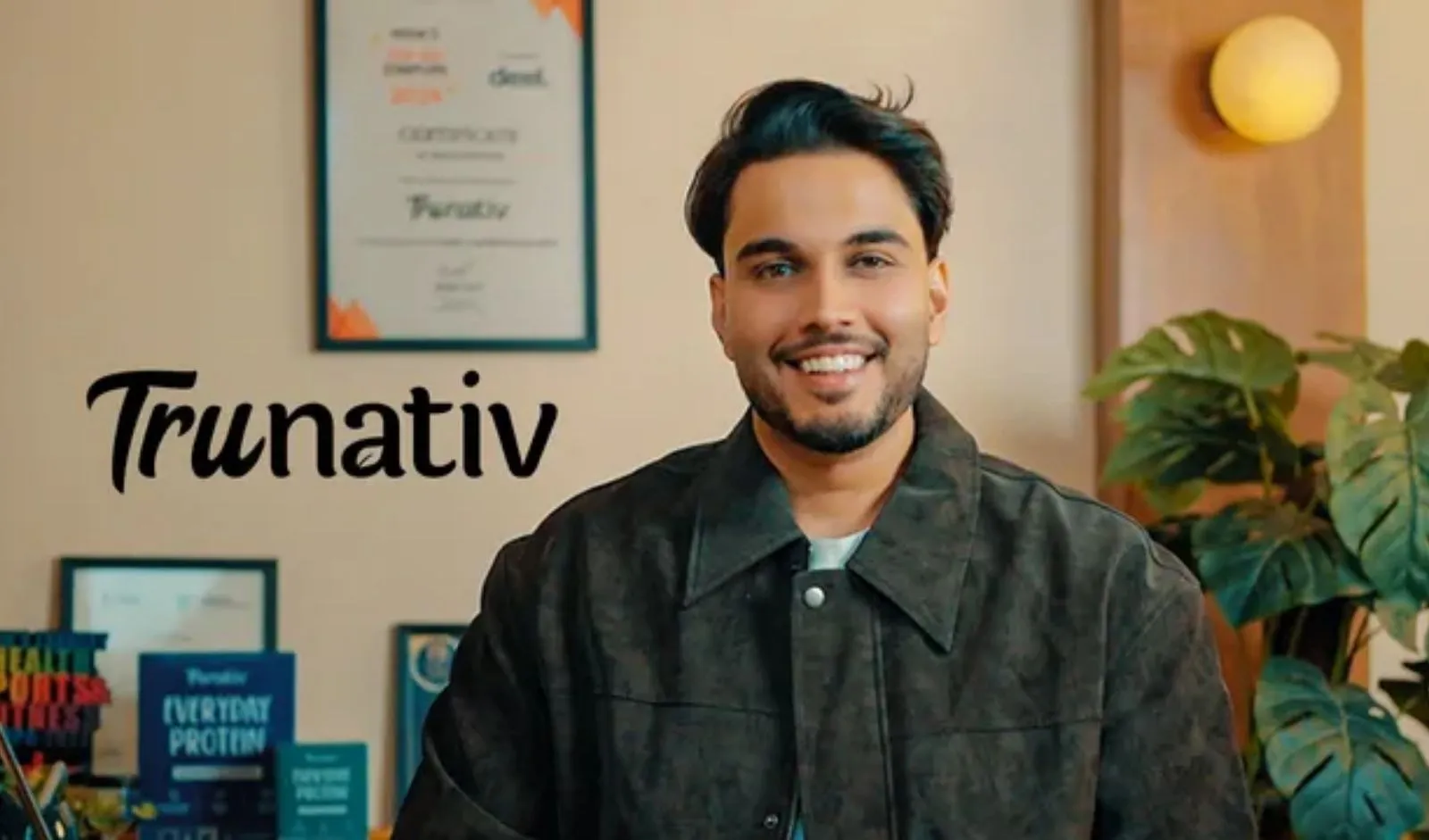
The Capital Is the Consequence
TruNativ's founding story — a mother and son who observed a specific failure in India's nutrition market and built a company to address it, category by category, without taking shortcuts on the science — follows the pattern that the best funded consumer health companies share.
They did not start by building a marketing machine. They started by understanding what Indian consumers were actually deficient in, building products that addressed those specific deficiencies with demonstrable science, and distributing them through the channels where Indian consumers actually buy. The quick commerce leadership in sweeteners and dietary fibre, the Amazon category dominance, the B2B2C ingredient supply relationships — these are the proof points that a $30 million healthcare investor backed by $20 billion in AUM will have required before committing capital.
The market is real. The science is the moat. The distribution is the scale opportunity. And OrbiMed — which has spent decades funding companies that change what medicine can do — has decided that what TruNativ is building changes what nutrition in India can be.
That is what the $30 million is buying. Not just a bigger marketing budget. A mandate to make preventive nutrition a healthcare category rather than a wellness trend — for every household, not just the health-conscious few.