Mumbai: India's pharmaceutical sector, long regarded as one of the more defensive, geopolitically insulated corners of the Indian equity market, found itself squarely in the crosshairs this week after US President Donald Trump unveiled a sweeping, phased tariff plan targeting imported generic medicines — the very category of drug that accounts for the overwhelming majority of what Indian pharmaceutical companies actually sell into the American market. Nifty Pharma slid roughly 1.3 per cent in Wednesday's session on the news, part of a broader pattern of renewed pressure on pharma stocks that market commentators expect to persist until the sector's actual exposure under the new policy becomes clearer.
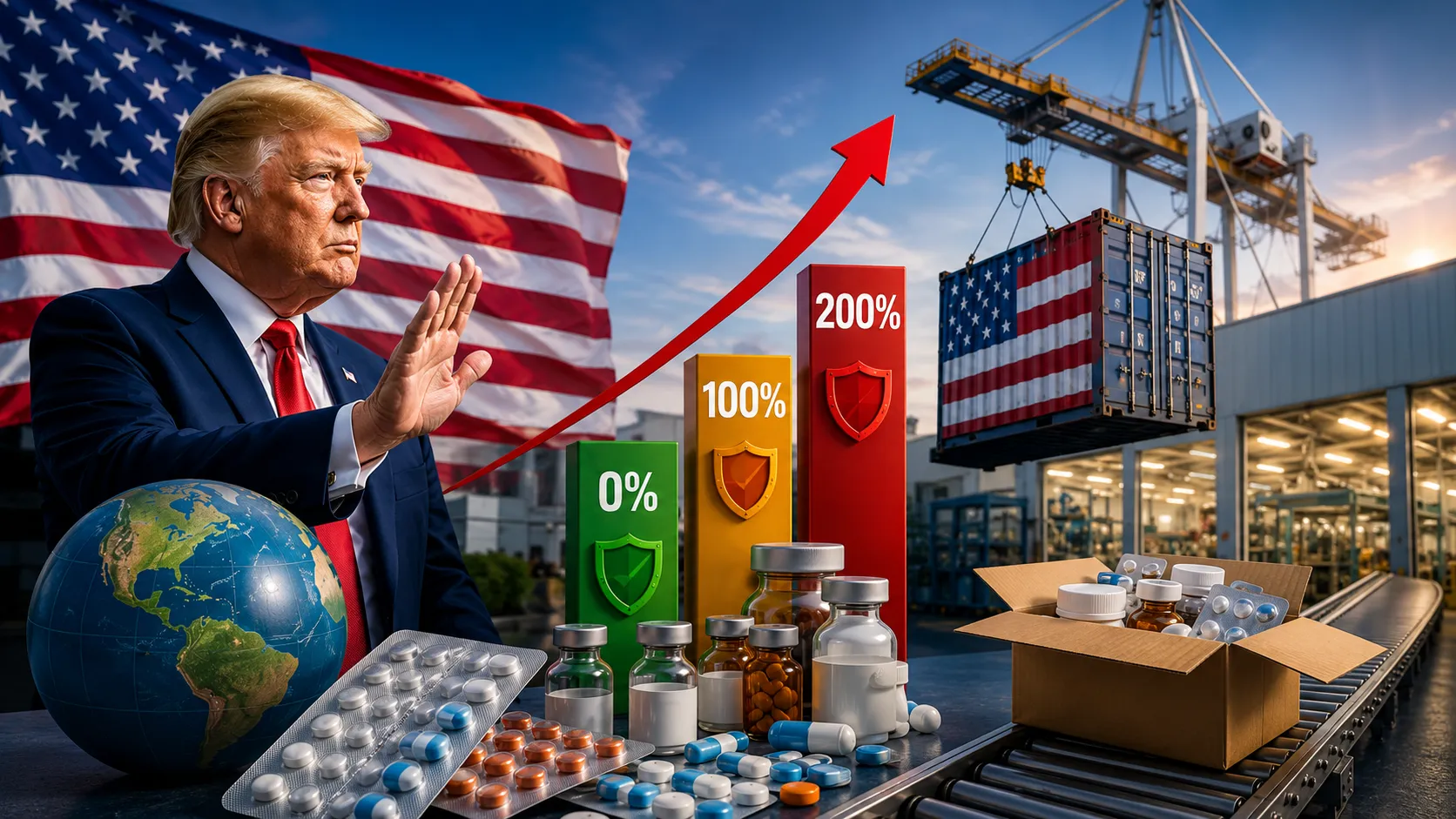
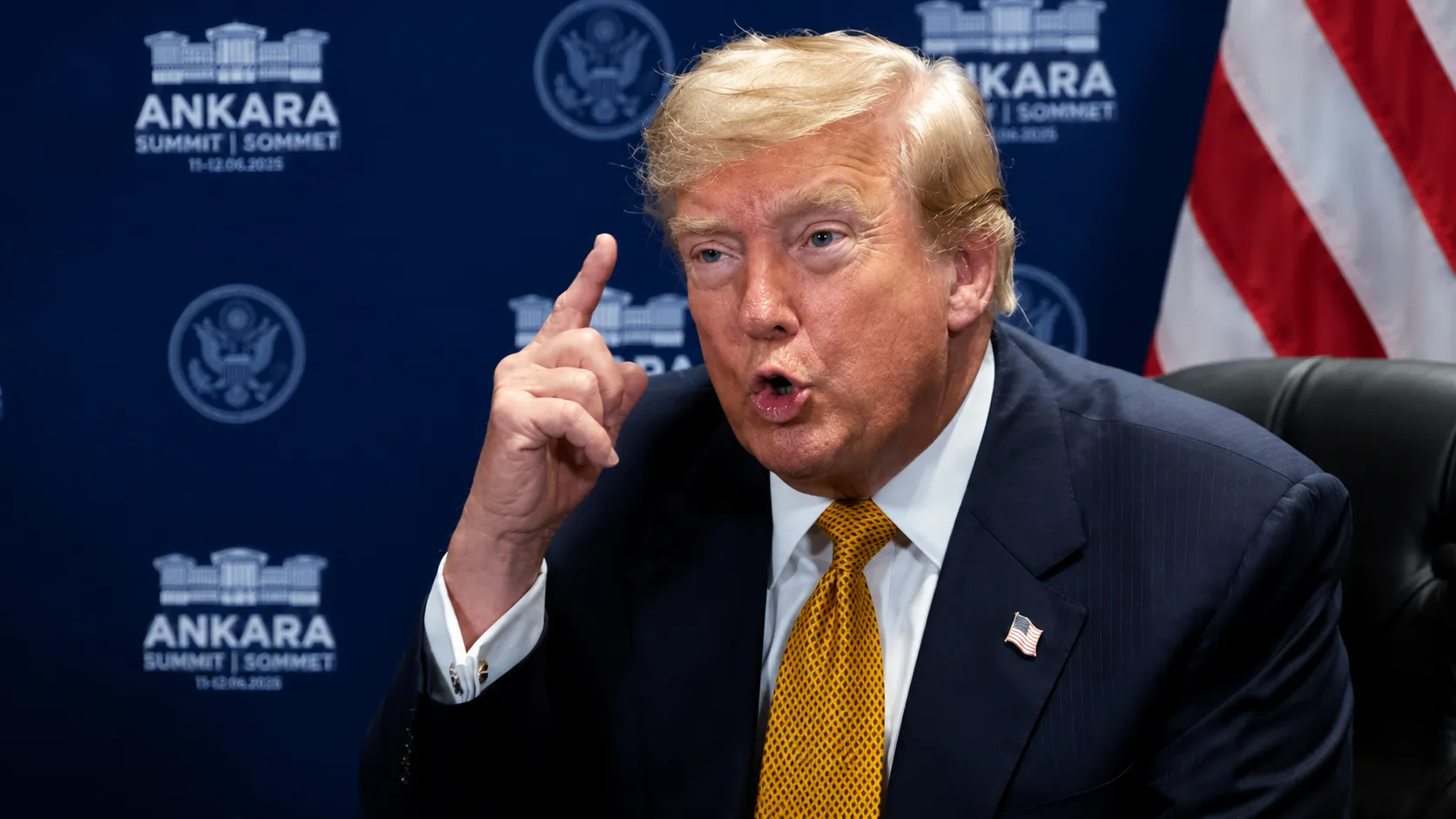
The structure of the proposed tariff regime, announced Wednesday, July 22, is notably phased rather than immediate — a design choice the Trump administration has framed explicitly as intended to give pharmaceutical companies a real window to relocate manufacturing to the United States before punitive duties take effect. Under the plan, generic medicines will continue entering the US duty-free for two years beginning August 1, 2026, before facing a 100 per cent tariff for one year starting in 2028, and finally rising to a 200 per cent tariff from August 2029 onward. In Trump's own stated framing, quoted in coverage of the announcement, the structure is 'done in order to RESHORE Generic Pharmaceutical Production into America, with a penalty to those companies that decide not to build Plant and Equipment within the stated period of time given to them.'
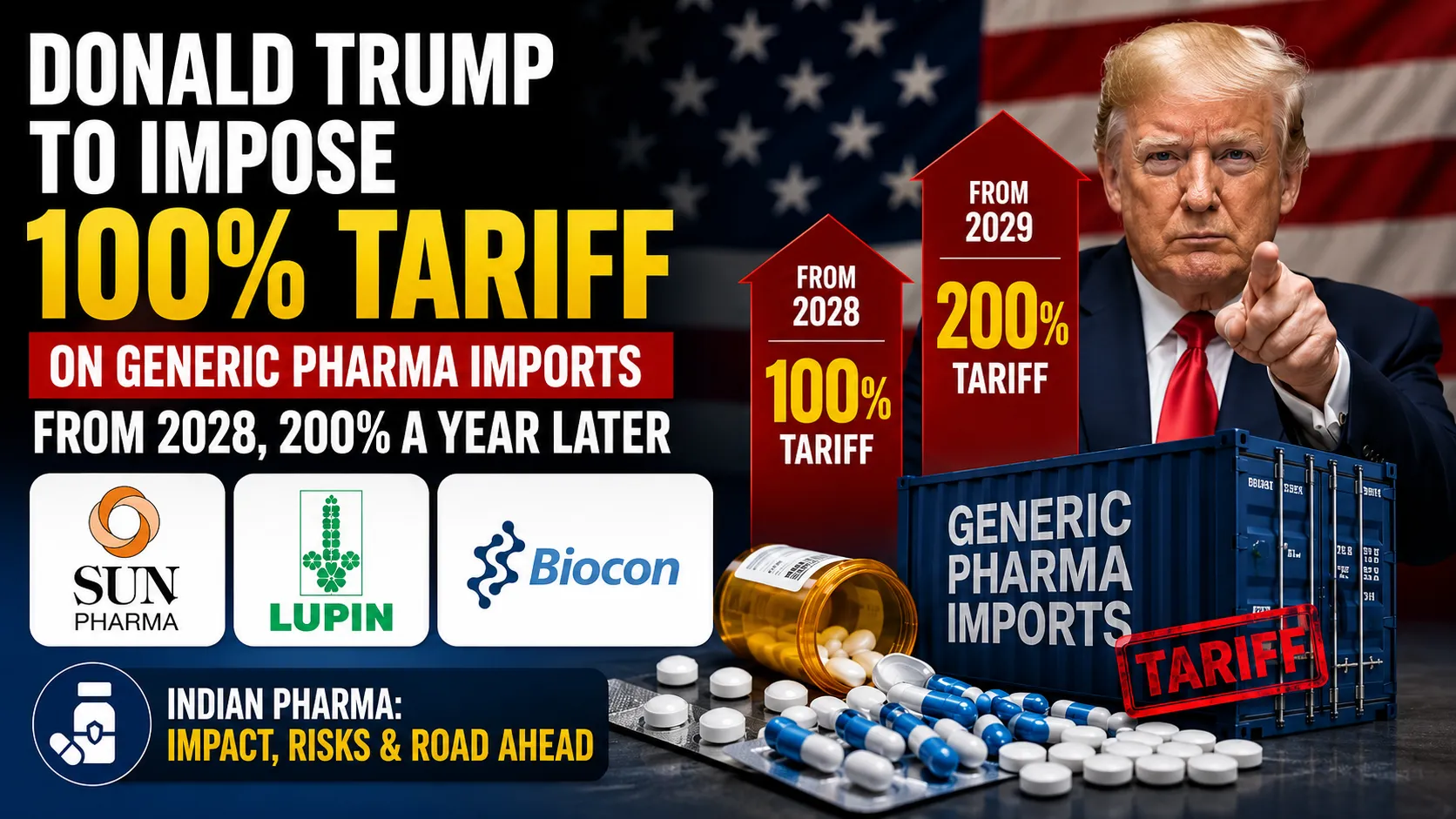
For India, the world's largest supplier of generic medicines and a country whose pharmaceutical companies account for roughly 40 per cent of all generic medicines imported into the United States, the announcement lands as a genuinely consequential piece of trade policy, even if its immediate practical impact remains a matter of active debate among analysts. India's pharmaceutical exports to the US reached approximately $9.8 billion in FY2025 according to figures cited by the Global Trade Research Initiative, with the broader pharma export figure to the US sometimes cited closer to $10.5 billion — figures that underline just how central the American market has become to the commercial viability of India's pharmaceutical export industry as a whole.
The announcement did not arrive entirely without warning. It follows an earlier executive order, signed by Trump in April, imposing tariffs of up to 100 per cent on imported branded and patented pharmaceutical products specifically, with that earlier order allowing drugmakers to avoid the tariffs if they agreed to government-backed drug pricing arrangements or committed to manufacturing within the US. That April action had itself followed a national security investigation into pharmaceutical imports launched under Section 232 of the Trade Expansion Act back in April 2025, indicating that Wednesday's generic drug announcement represents the latest, and arguably most consequential for India specifically, step in a broader, multi-stage tariff campaign targeting the global pharmaceutical trade that the administration has been building toward for well over a year.
Economic think tank the Global Trade Research Initiative offered one of the more measured, analytically grounded assessments of the likely real-world impact in the immediate aftermath of Wednesday's announcement. GTRI noted that many Indian generic medicines sell for seven to ten times less than branded alternatives, meaning that even after a full 100 per cent tariff is eventually applied, many Indian generic products could remain cheaper than branded equivalent medicines — implying that a substantial share of the additional tariff cost would likely be absorbed by, or passed on to, US healthcare providers, insurers and ultimately patients, rather than immediately eliminating the underlying commercial viability of Indian generic exports to the US market.
GTRI's analysis further suggested that the greatest pressure from the new tariff structure is likely to fall specifically on higher-value generic formulations and branded generics — precisely the categories where domestic US manufacturing could plausibly become commercially viable given the tariff-adjusted cost structure — rather than on the broad base of low-cost, high-volume generic medicines that form the bulk of what Indian pharmaceutical companies actually export to the United States, and where the economics of relocating production to a considerably higher-cost US manufacturing environment remain, by most industry assessments, difficult to justify even with a 100 or 200 per cent tariff overhang.
The two-year duty-free transition window built into the new policy also matters considerably for how markets are choosing to interpret the near-term versus medium-term implications of the announcement. Industry analysts have generally converged on the view that the immediate impact on Indian pharmaceutical exports is likely to be limited precisely because of this extended transition period — Indian companies have, in effect, been given until August 2028 before any tariff at all applies, and a further year beyond that before the tariff reaches its full 200 per cent level, providing a meaningfully longer runway to adapt commercial strategies, explore selective US manufacturing investments, or pursue diplomatic and trade-negotiation channels to seek exemptions or modifications before the harshest tariff tier actually takes effect.
That said, the announcement's political context adds a layer of genuine uncertainty that pure trade economics alone cannot fully capture. The tariff policy's unveiling comes with explicit reference, in some reporting, to the approaching 2026 US midterm elections, with Trump having repeatedly argued that the United States pays significantly more for medicines than many comparable foreign markets — a politically resonant argument on drug pricing and affordability that suggests the pharmaceutical tariff issue is likely to remain a live, actively evolving policy area through the run-up to the midterms, rather than a single, static announcement that markets can now treat as fully priced in and settled.
Corporate responses from the global pharmaceutical industry have, so far, been notably measured rather than confrontational. Swiss generic drugmaker Sandoz, responding directly to Trump's announcement, indicated it would continue discussions with US policymakers and stated its support for efforts to improve medicine affordability and access, while stopping short of committing to specific US manufacturing investments in response to the new tariff structure — a diplomatically calibrated response that reflects the broader industry posture of engaging constructively with the administration's stated policy goals while working to shape the specific implementation details that will ultimately determine the tariff's real commercial impact.
Indian industry voices, drawing on the pattern established during the earlier branded-drug tariff announcement in 2025, have consistently pushed back on the underlying premise that tariffs on generic medicines specifically make sound policy sense, even for the stated US goal of domestic reshoring. Industry representatives have previously argued, in the context of the earlier branded-drug tariffs, that Indian generics contribute meaningfully to US healthcare cost savings — with estimates suggesting that roughly 90 per cent of generic products by volume account for only around 13 per cent of total US healthcare drug spending — framing tariffs on the generic category specifically as counterproductive to the stated goal of reducing overall US healthcare costs, since higher generic drug prices would flow directly into higher costs for the American healthcare system as a whole.
Beyond generic medicines specifically, the pharmaceutical tariff announcement also needs to be understood within the context of a considerably broader wave of tariff actions the Trump administration has signalled or implemented targeting numerous US trading partners simultaneously. Reports indicate the administration is weighing fresh tariffs affecting nearly 60 trading partners once a temporary global 10 per cent baseline tariff framework expires on July 24, 2026, with India, alongside China and Japan, also facing separate proposed tariffs tied to forced-labour related trade frameworks — meaning the pharmaceutical-specific tariff announced this week represents just one component of a considerably larger and more complex set of evolving US trade policy actions that Indian exporters across multiple sectors, not pharmaceuticals alone, will need to navigate over the coming months.
Stock market reaction through Wednesday's session reflected this genuine uncertainty rather than outright panic. While the broader Nifty Pharma index declined around 1.3 per cent on the day, the sell-off was measured rather than severe, consistent with a market that appears to be pricing in meaningful medium-term uncertainty around the eventual scope and implementation of the tariff policy, without yet concluding that the announcement represents an immediate, existential threat to the sector's core commercial model — a more calibrated market reaction than was seen, for instance, when the initial 100 per cent branded pharma tariff was first announced in 2025, and pharma stocks fell more sharply by comparison.
For Indian pharmaceutical companies with substantial exposure to the US generics market — a roster that includes major players such as Dr Reddy's Laboratories, Sun Pharmaceutical Industries, Cipla, Lupin and several other large-cap and mid-cap names — the coming months are likely to bring intensified strategic planning around exactly how much of their US-facing manufacturing footprint, if any, might eventually need to shift domestically to preserve long-term access to what remains the single largest and most lucrative pharmaceutical export market in the world, even as the industry continues to argue, through both public commentary and direct engagement with US policymakers, that tariffs on low-cost generic medicines specifically run counter to the Trump administration's own stated goal of reducing healthcare costs for American patients.
India's broader pharmaceutical export footprint beyond the US market offers some additional context for how the sector might absorb any eventual tariff impact. According to GTRI figures, India's other major pharma export destinations in 2025 included the European Union at $4.05 billion, the United Kingdom at $783.6 million, South Africa at $675.9 million, Nigeria at $636.6 million, Brazil at $596.7 million, Canada at $544 million, Australia at $475.2 million, Russia at $467.3 million, the Philippines at $408.5 million, and Kenya at $405.2 million — a genuinely diversified export base that, while still leaving the US as by far the single largest and most consequential market, does offer Indian pharmaceutical companies some degree of geographic diversification to lean on should US market access become meaningfully more constrained over the coming years.
Industry body representatives have also pointed to the two-year transition window as an opportunity for the Indian government and pharmaceutical industry associations to pursue diplomatic engagement aimed at securing carve-outs or modifications to the tariff structure specifically for generic medicines, drawing on the argument that the US healthcare system itself stands to bear much of the eventual cost burden should the tariffs proceed as currently structured — a negotiating position that industry groups have signalled they intend to pursue actively with US trade officials over the coming months, ahead of the tariff structure's initial implementation date of August 2028.
Capital markets analysts covering the pharmaceutical sector have generally advised a differentiated, company-specific approach to assessing tariff exposure rather than treating the sector as a single homogeneous trade, noting that companies with a higher mix of complex generics, biosimilars and specialty formulations — categories where US domestic manufacturing economics could plausibly become viable under the new tariff structure — face meaningfully different risk profiles than companies whose US revenue is concentrated in high-volume, low-margin generic products where the cost of relocating production would be difficult to justify commercially regardless of the tariff level eventually applied.
The episode also underscores a broader theme that has recurred throughout 2026 in India's trading relationship with the United States: an increasingly transactional approach to tariff policy that treats individual product categories, rather than entire bilateral trading relationships, as the primary unit of negotiation. For Indian exporters across pharmaceuticals, textiles, engineering goods and other categories, this pattern implies a need for considerably more granular, sector-specific monitoring of evolving US trade policy than the broader, more predictable tariff frameworks that characterised trade relations in earlier years.
For now, Indian pharma stocks appear likely to trade with an added layer of policy-driven volatility overlaid on their otherwise typically defensive characteristics, at least until greater clarity emerges — whether through direct negotiation, formal implementation guidance, or simply the passage of time as the two-year transition window narrows — on exactly how the new generic drug tariff structure will ultimately be applied in practice.
Portfolio managers running dedicated pharma or healthcare-focused funds have indicated they are treating this week's announcement as a catalyst for deeper due diligence on individual holdings' US manufacturing footprints and geographic revenue mix, rather than as grounds for a blanket reduction in sector exposure, reflecting the broadly held view that the tariff's ultimate impact will be determined company by company rather than uniformly across the sector.