
What Initially Looked Like Another Deeptech Venture Is Quietly Becoming A Bigger Story About India’s Hardware Ambitions And Global Confidence
For years, India’s startup ecosystem developed around a relatively familiar playbook. Consumer apps, fintech platforms and software businesses frequently dominated venture conversations because technology growth often appeared closely tied to digital products and scalable internet models. Investors naturally gravitated toward categories where expansion moved quickly because software ecosystems frequently allowed companies to grow without heavy infrastructure requirements. As a result, hardware and deeptech businesses occasionally remained outside mainstream startup attention because building physical technologies often required longer timelines and significantly more patience.
Something different now appears to be unfolding beneath that older startup narrative. Across India’s entrepreneurial landscape, a new generation of founders is beginning to enter categories involving advanced engineering, industrial systems and high-value technology infrastructure. What initially looked like isolated deeptech experiments is gradually starting to resemble a larger shift because startups increasingly appear building products connected to mobility, telecom, electronics and strategic technologies. The conversation itself is slowly moving beyond applications and platforms because technology ecosystems are beginning to look more diverse.
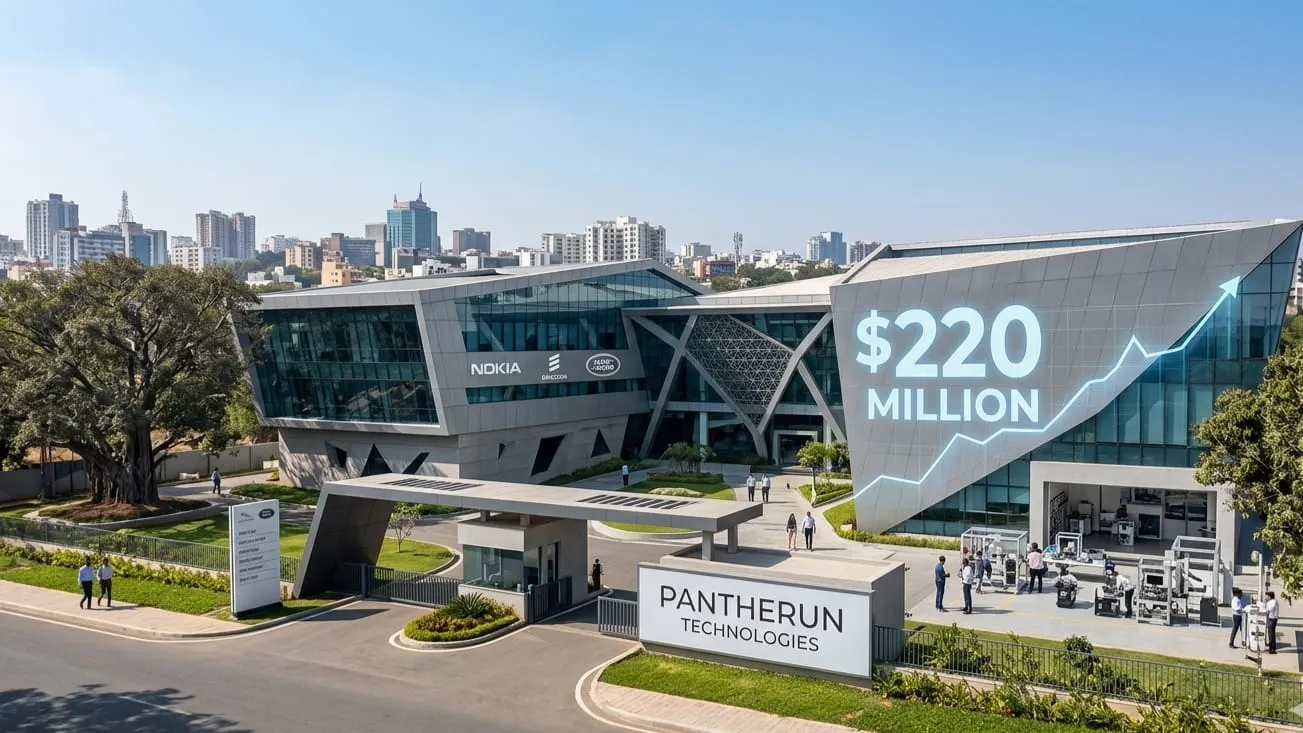
That broader movement recently gained stronger visibility through Bengaluru-based Pantherun Technologies, a deeptech company that has now revealed a reported $220 million order pipeline while also working with companies including Nokia, Ericsson and Jaguar Land Rover. At first glance, the number itself naturally attracts attention because large pipelines frequently create headlines. Viewed more closely, however, another question begins surfacing beneath the announcement: what happens when Indian startups increasingly stop building only for local ecosystems and begin becoming part of global industrial supply chains?
Viewed independently, a growing order pipeline may initially resemble another business milestone involving future commercial opportunities. Viewed through a broader funding lens, however, another reality quietly begins appearing underneath. Deeptech businesses frequently operate through entirely different timelines because products often require years of engineering, validation and testing before larger commercial momentum emerges. Unlike software businesses where scale occasionally arrives rapidly, hardware ecosystems frequently depend on long cycles and institutional trust.
That distinction matters because trust itself frequently becomes one of the strongest currencies inside industrial technology environments. Companies operating across sectors involving telecommunications, mobility and engineering rarely make decisions quickly because systems often require reliability over long periods. Partnerships with organizations such as Nokia, Ericsson and Jaguar Land Rover therefore signal something extending beyond logos and client names. Relationships inside these categories frequently suggest technological credibility because global enterprises rarely integrate products without extensive evaluation and operational confidence.
Another important dimension beneath this story involves changing investor behavior surrounding deeptech itself. For years, many venture environments frequently favored consumer-facing products because business models often appeared easier to understand and scale. Hardware and engineering businesses occasionally remained difficult categories because they demanded larger investments, technical expertise and significantly more time before generating outcomes. Yet funding conversations around deeptech are gradually changing because investors increasingly appear recognizing long-term strategic opportunities beyond software ecosystems alone.
This transition matters because technology itself is also changing globally. Artificial intelligence, connected devices, advanced mobility systems and industrial infrastructure increasingly rely upon specialized engineering because software and hardware environments are becoming deeply interconnected. Businesses capable of operating within those ecosystems increasingly appear occupying highly valuable positions because future technology environments rarely depend on software operating independently.
There is also a broader India story quietly operating beneath this development. For years, conversations surrounding Indian technology frequently emphasized service ecosystems and software capability because those sectors created enormous economic impact and global recognition. Yet many newer founders increasingly appear entering spaces involving manufacturing, electronics and strategic infrastructure because entrepreneurial ambition itself increasingly extends beyond earlier startup categories.
That shift frequently carries larger significance because countries rarely create complete technology ecosystems through one category alone. Platforms matter, applications matter and consumer businesses matter. Yet industrial capability, engineering ecosystems and deep technology environments frequently become equally important because broader innovation systems often depend on multiple layers operating together.
Perhaps that explains why this broader conversation increasingly feels larger than one company revealing a $220 million pipeline. Because beneath discussions involving orders and partnerships ultimately exists another reality involving perception itself. India spent years proving it could build world-class software ecosystems. Businesses like Pantherun increasingly appear asking whether the country’s next technology chapter may involve building world-class engineering ecosystems too.
The larger funding story therefore may not simply involve Pantherun revealing a significant order pipeline. It may involve recognizing that some of India’s most interesting startup opportunities increasingly appear emerging from sectors people once considered difficult, slow and outside mainstream venture attention.