Indian equity benchmarks have spent much of this week trading within a genuinely narrow range, a pattern that reflects a defining structural dynamic that has shaped Dalal Street's behavior through much of 2026: persistent selling pressure from foreign institutional investors, consistently offset by robust, unwavering buying from domestic institutional investors. On Wednesday, July 15, the Nifty 50 settled at 24,078.50, up a modest 0.11 per cent for the session, while the Sensex closed at 77,185.43, gaining 0.17 per cent, and the Bank Nifty index outperformed with a 0.51 per cent rise to 57,757.85. India's volatility gauge, the India VIX, remained comfortably low at 13.27, signaling a market environment largely devoid of acute near-term fear, even as the broader tug-of-war between foreign selling and domestic buying continues to define the underlying tone of trading.
The Flow Data Behind the Standoff
The institutional flow figures for the most recent trading sessions illustrate the pattern with striking clarity. On July 14, foreign institutional investors were net sellers of Indian equities to the tune of ₹739.69 crore in the cash segment, while domestic institutional investors stepped in as net buyers of ₹2,927.71 crore over the same session — domestic buying that outpaced foreign selling by close to four times. A similar pattern held on July 15, with FIIs recording net outflows of roughly ₹740 crore even as DIIs absorbed that selling and then some, posting net inflows of ₹2,928 crore.
That single-session dynamic has been playing out with remarkable consistency across the entirety of July. Community-tracked monthly roll-up figures for the first weeks of the month showed cumulative FII net outflows of roughly ₹1,141 crore against DII net inflows of approximately ₹3,159 crore for the opening days of July alone, with FII gross sales of ₹12,763.81 crore against gross purchases of ₹11,623.31 crore, compared to DII gross purchases of ₹17,136.57 crore against gross sales of ₹13,977.33 crore over the same window — figures that illustrate just how much more aggressively domestic institutions have been deploying fresh capital into Indian equities compared to their foreign counterparts throughout the month.
The Bigger Picture: A Year of Extraordinary DII Support
Zooming out from the day-to-day flow figures reveals an even more striking pattern that has defined Indian equity markets throughout 2026. Domestic institutional investors have net purchased approximately ₹4.16 lakh crore worth of Indian equities between January and early June alone this year, even as foreign institutional investors net sold roughly ₹2.7 lakh crore over the same period — a scale of sustained domestic buying that market analysts have increasingly come to view as the single most important structural support underpinning Indian equity valuations through a year marked by genuinely severe external shocks, including a sharp market correction tied to fears about AI-driven disruption to India's technology services sector in February, and an even more dramatic roughly 11 per cent single-month Nifty decline in March, triggered by the escalating Iran-US conflict and its knock-on effects on global energy prices, bond yields, and currency markets.
March 2026 stands out as the single largest month of DII buying on record, with domestic institutions net purchasing approximately ₹1.36 lakh crore of equities during that month alone — buying that came precisely as FIIs were engaged in one of the most aggressive selling campaigns in recent Indian market history, offloading nearly ₹1.2 lakh crore in a single month amid the geopolitical turmoil. That pattern of DII buying stepping in decisively whenever FII selling intensifies has repeated itself with notable consistency through the subsequent months of the year, with April seeing ₹51,064 crore in net DII buying and May recording ₹82,669 crore, even as foreign investors continued exiting Indian markets across both months.

Where FII Sentiment Stands Today
It's worth noting that the FII selling narrative, while broadly persistent across 2026, has shown genuine signs of inflection in recent weeks. According to data cited from India's Central Depository Services, foreign portfolio investors actually turned net buyers of Indian equities in July after four consecutive months of net selling, with cumulative July equity inflows crossing ₹15,157 crore according to CDSL-linked figures — a reversal that market participants have attributed to improving domestic macroeconomic indicators, a more stable rupee, and easing global risk concerns following a period of geopolitical de-escalation earlier in the month. Separate National Securities Depository data showed FPIs turning net buyers since the latter half of June specifically, investing approximately ₹14,109 crore in the second half of that month after having pulled out nearly ₹63,450 crore in the first half.
Even accounting for this recent, tentative reversal, the scale of foreign selling earlier in 2026 remains substantial in absolute terms, with cumulative year-to-date FPI outflows from Indian equities estimated at anywhere between ₹212,872 crore and ₹260,000 crore depending on the specific dataset referenced — a reminder that even a genuinely encouraging month of foreign buying represents only a partial offset against the scale of the selling that preceded it, and that the durability of this apparent shift in foreign sentiment remains a genuinely open question that will depend heavily on how global risk conditions, energy prices, and geopolitical tensions evolve over the coming weeks and months.
What's Keeping FIIs Cautious
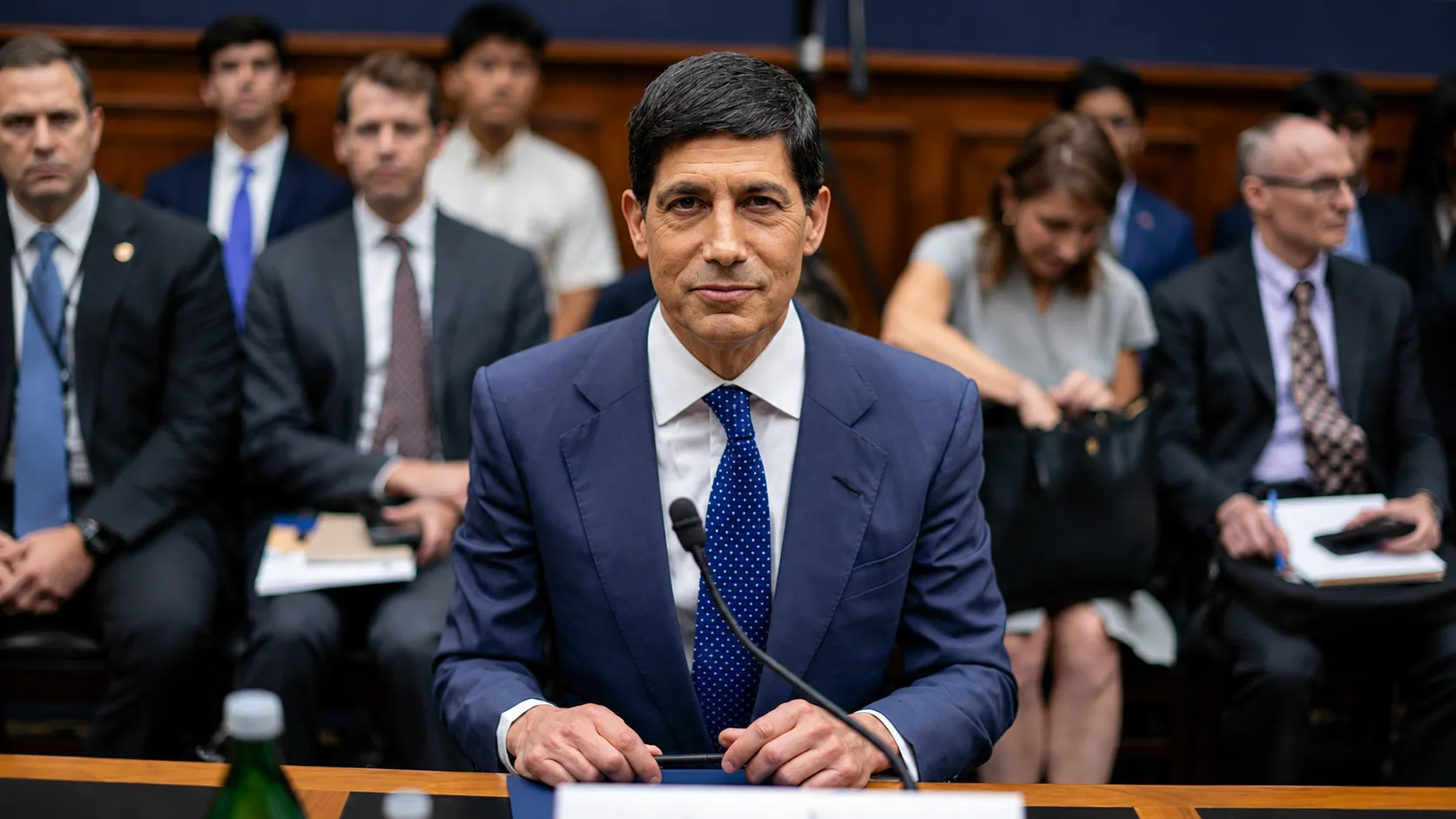
The persistent, if now moderating, foreign selling pressure that has characterized much of 2026 reflects a combination of factors that have made Indian equities a relatively less attractive destination for globally mobile capital compared to prior years. Elevated crude oil prices tied to the ongoing Strait of Hormuz tensions have weighed on India's import bill and broader macroeconomic stability given the country's substantial dependence on imported energy, while a more hawkish global interest rate environment — including the recent, unexpected policy shift at the Bank of Korea and the increasingly hawkish tilt at the US Federal Reserve under new Chairman Kevin Warsh — has generally made emerging market equities, including India's, comparatively less attractive relative to lower-risk, dollar-denominated fixed income alternatives offering increasingly competitive yields.
Additionally, market commentary throughout the first half of 2026 has repeatedly pointed to specific sector-level anxieties, including concerns about the disruptive potential of rapidly advancing artificial intelligence capabilities on India's large and economically significant IT services export sector, as a contributing factor behind periodic bouts of intensified foreign selling, particularly during February's technology-sector-focused market correction.
Why Domestic Buying Has Remained So Resilient
The remarkable consistency of DII buying throughout 2026, even amid genuinely severe periods of market stress, reflects several structurally durable forces within India's domestic capital markets. Chief among these has been the continued strength of systematic investment plan, or SIP, inflows into Indian mutual funds, which have remained robust even during periods of significant market volatility, reflecting the deepening habit of disciplined, regular retail investment that has become an increasingly entrenched feature of India's household financial behavior over the past decade. Monthly SIP inflows stood at approximately ₹31,115 crore in April 2026, up 18 per cent year-on-year even after slipping somewhat from March's record level of ₹32,087 crore — a scale of consistent retail capital deployment that provides India's mutual fund industry with a reliable, ongoing source of fresh capital to deploy into equities regardless of near-term market sentiment.
Beyond mutual funds, India's insurance companies and pension funds have similarly continued their steady allocation toward domestic equities, drawn by valuation arguments that many domestic institutional managers have found increasingly compelling precisely during the periods when foreign investors have been most aggressively selling, effectively allowing domestic institutions to accumulate quality Indian equities at valuations that foreign sellers were, in effect, helping to create through their own selling pressure. Life insurance companies in particular, with their characteristically long investment horizons and steady premium inflows, have emerged as an increasingly significant and stabilizing source of domestic equity demand, providing a further layer of buying support that complements the more retail-driven SIP flows channeled through mutual funds.
The Technical Picture Heading Forward
From a purely technical trading perspective, market analysts tracking near-term index levels have identified a relatively narrow, well-defined trading range for both benchmark indices, with the Nifty 50 expected to trade broadly between 24,010 and 24,183, and the Sensex between 76,980 and 77,273 in the immediate near term, absent a significant new catalyst. That range-bound technical setup, combined with the currently low India VIX reading of 13.27, suggests an options market broadly positioned for continued sideways-to-mildly-directional trading rather than any sharp, imminent breakout in either direction — though technical analysts have consistently flagged that any material escalation in Middle East geopolitical tensions, given their direct impact on crude oil prices, remains the single most significant wildcard capable of disrupting this currently calm technical setup.
Sector-Level Positioning Within the Standoff
Beneath the headline index-level flow figures, market analysts have also been tracking sector-specific patterns in how FIIs and DIIs are positioning within the broader standoff. Foreign investors have shown particular caution toward India's IT services sector amid ongoing concerns about AI-driven disruption to the traditional outsourcing business model, even as domestic institutions have continued accumulating positions in banking, financial services, and select industrial names that they view as more directly levered to India's domestic consumption and infrastructure growth story rather than global technology spending cycles. That sector-level divergence in positioning has, at various points this year, contributed to notable relative outperformance in domestically-focused sectors compared to more globally exposed ones, a pattern that market participants will be watching closely as the current earnings season delivers fresh, sector-specific data points on underlying business fundamentals.
The Currency and Global Rate Dimension
The FII-DII standoff cannot be fully understood in isolation from broader global currency and interest rate dynamics. A relatively stable Indian rupee, which has helped support the recent tentative reversal in foreign selling, remains itself sensitive to the same global crude oil price volatility and shifting interest rate expectations that have driven institutional flow patterns more broadly this year. Any renewed weakening in the rupee — whether triggered by a fresh spike in oil prices tied to Middle East tensions or by a more broadly strengthening US dollar amid the Federal Reserve's increasingly hawkish policy stance under Chairman Kevin Warsh — would likely complicate the recent improvement in foreign investor sentiment toward Indian equities, given how directly currency depreciation erodes the dollar-denominated returns that foreign portfolio investors ultimately care about.
How Retail Investors Are Reading the Standoff
For India's rapidly growing base of retail equity investors — many of whom have entered the market only within the past several years amid the broader post-pandemic surge in retail participation — the ongoing FII-DII standoff has become an increasingly closely followed daily data point in its own right, with financial news platforms and social media trading communities routinely dissecting each session's flow figures for clues about near-term market direction. That heightened retail attention to institutional flow data reflects a broader maturation in how Indian retail investors approach the market, moving beyond simple price-chasing toward a more sophisticated appreciation of the underlying structural forces — foreign capital allocation decisions, domestic mutual fund flows, and their complex interplay — that ultimately drive index-level price movements over both short and longer time horizons.
Why This Matters for India's Broader Market Narrative
For India's broader investor community — and for the global Indian diaspora audience that tracks Dalal Street as a barometer of the country's economic health — the ongoing FII-DII standoff offers an instructive lesson in the growing structural maturity and self-sufficiency of India's domestic capital markets. A decade ago, sustained and aggressive foreign selling of the scale witnessed at various points throughout 2026 would likely have triggered far more severe and prolonged market declines than what Indian indices have actually experienced. The fact that domestic institutional buying, anchored substantially by a deepening retail SIP culture, has proven consistently capable of absorbing even historically large waves of foreign selling represents a genuinely significant evolution in the resilience and depth of India's equity markets — one that will continue to be tested as this week's ongoing tug-of-war between foreign and domestic capital plays out in the sessions ahead.