FundingAnalysis9 MIN READ

The Strait Of Hormuz Explainer: Why A 21-Mile-Wide Waterway Keeps Deciding The Fate Of India's Economy

Beyond this week's headlines lies a deeper, structural story about just how concentrated India's energy security remains around a single, geopolitically fragile shipping lane — and what the country has, and hasn't, done to reduce that exposure

By Nisha Omkumar · Author24 July 2026New
The Strait Of Hormuz Explainer: Why A 21-Mile-Wide Waterway Keeps Deciding The Fate Of India's Economy

Amid this week's headlines about crude prices, a sliding rupee, and jittery Indian equity markets, it is worth stepping back from the day-to-day market reaction to examine the deeper, structural story underlying nearly all of it: India's continued, deep dependence on a single, geopolitically fragile shipping corridor — the Strait of Hormuz — through which a substantial share of the world's crude oil and liquefied natural gas must pass en route to major Asian importing economies. Understanding this structural vulnerability, rather than just tracking its latest symptom in the form of this week's price movements, offers a more complete picture of why India's economy and markets remain so persistently sensitive to developments in a region thousands of kilometres from its own shores.

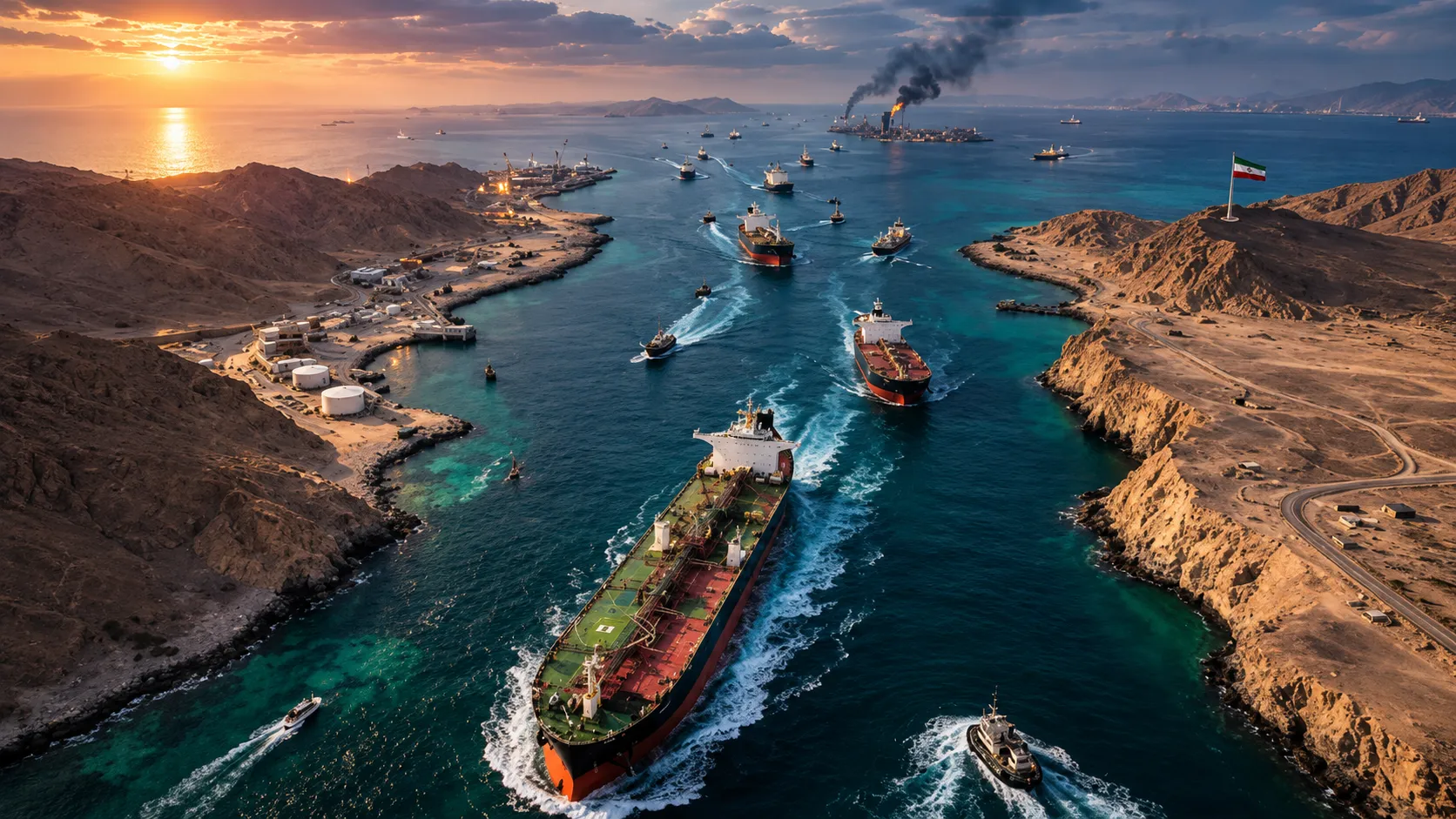
The Strait of Hormuz itself is a narrow waterway, at its tightest point barely 21 miles wide, separating Iran from Oman and connecting the oil-rich Persian Gulf to the open waters of the Arabian Sea and, beyond that, the broader Indian Ocean shipping routes that ultimately deliver crude oil and natural gas cargoes to ports across India, China, Japan, South Korea, and other major importing economies. Despite its modest physical dimensions, the strait carries a genuinely outsized share of global energy trade — a substantial proportion of the world's seaborne crude oil exports and a comparably significant share of global liquefied natural gas trade transit through this single corridor, making it, by most conventional measures, the single most important oil chokepoint anywhere in the world.

The concentration of Asian economies' exposure to this specific chokepoint is genuinely striking when examined closely. China, India, Japan, and South Korea together account for the overwhelming majority of all crude oil and condensate that moves through the Strait of Hormuz to Asian destinations, according to energy-market analysis, meaning any sustained disruption to shipping through the strait would disproportionately impact precisely these four economies relative to Western oil-importing nations, many of which have historically maintained more diversified crude sourcing away from Gulf suppliers specifically, alongside considerably larger strategic petroleum reserve buffers relative to their daily consumption needs.

For India specifically, this structural exposure translates into a well-documented and repeatedly demonstrated vulnerability: whenever tensions in the broader West Asia region escalate meaningfully, whether through direct military confrontation involving regional powers, attacks on shipping vessels transiting the strait, or even just heightened rhetorical threats to close the waterway, crude oil prices tend to spike almost immediately on the mere possibility of supply disruption, well before any actual physical constraint to oil flows has necessarily materialised. That immediate, anticipatory price reaction reflects how deeply embedded Strait of Hormuz risk has become within global energy market pricing models, with traders essentially maintaining a persistent, if variable, geopolitical risk premium embedded in crude prices specifically tied to the ongoing possibility of disruption at this single chokepoint.

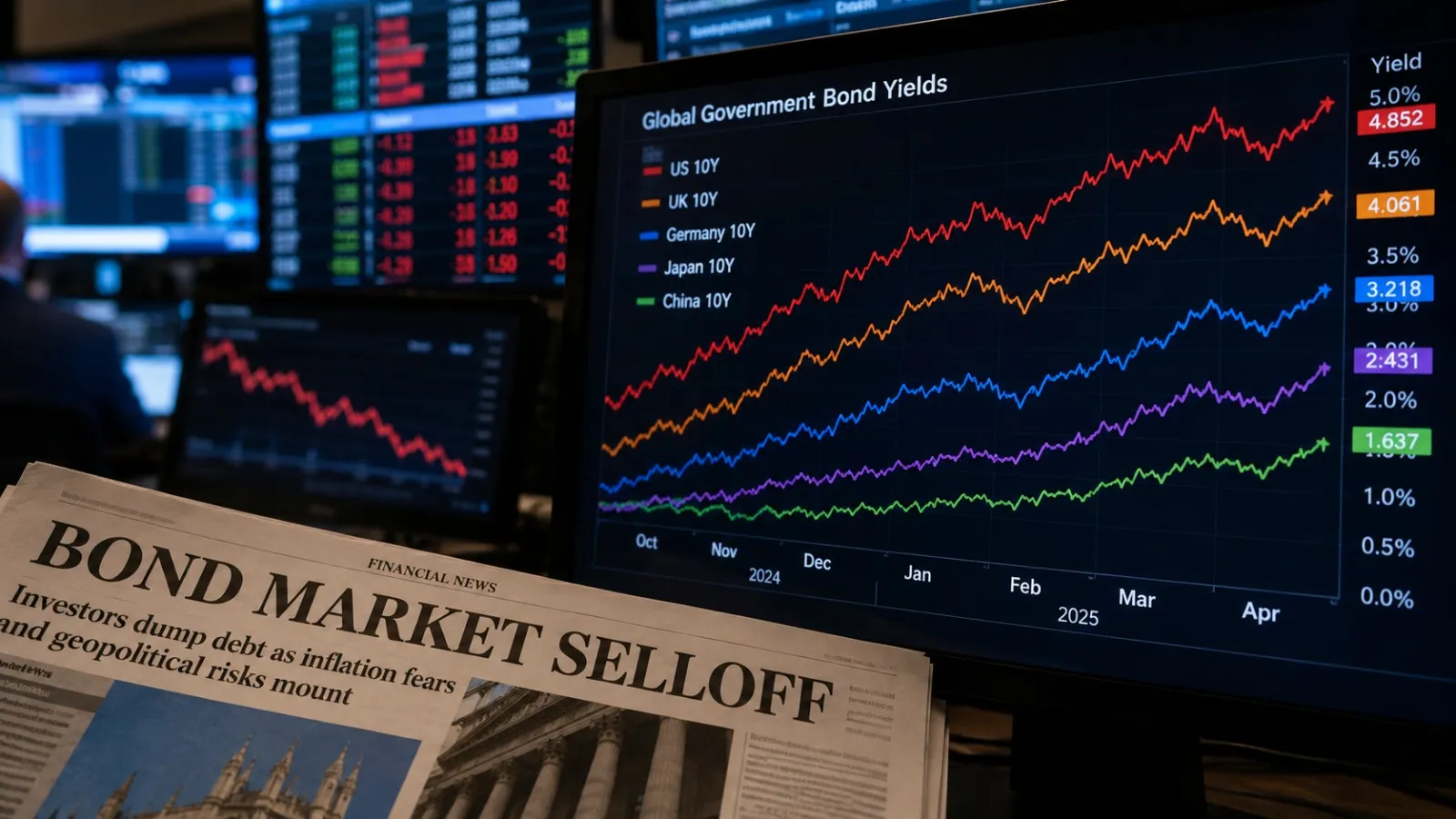
India's current bout of currency and market pressure, playing out this week with the rupee sliding toward record-low territory and equity markets extending a four-session losing streak, traces its origins substantially back to exactly this dynamic — renewed US-Iran tensions and reports of attacks on shipping in the broader region have pushed Brent crude to a six-week high, which has in turn pressured the rupee given India's heavy reliance on imported crude, which has in turn weighed on equity market sentiment given the broader inflationary and currency-stability concerns elevated crude prices raise for the Reserve Bank of India's policy calculus. Tracing that full causal chain back to its ultimate origin point in a narrow shipping lane between Iran and Oman offers a useful reminder of just how directly geopolitical developments in one part of the world can cascade through to household-level economic realities in another, entirely separate part of the world.
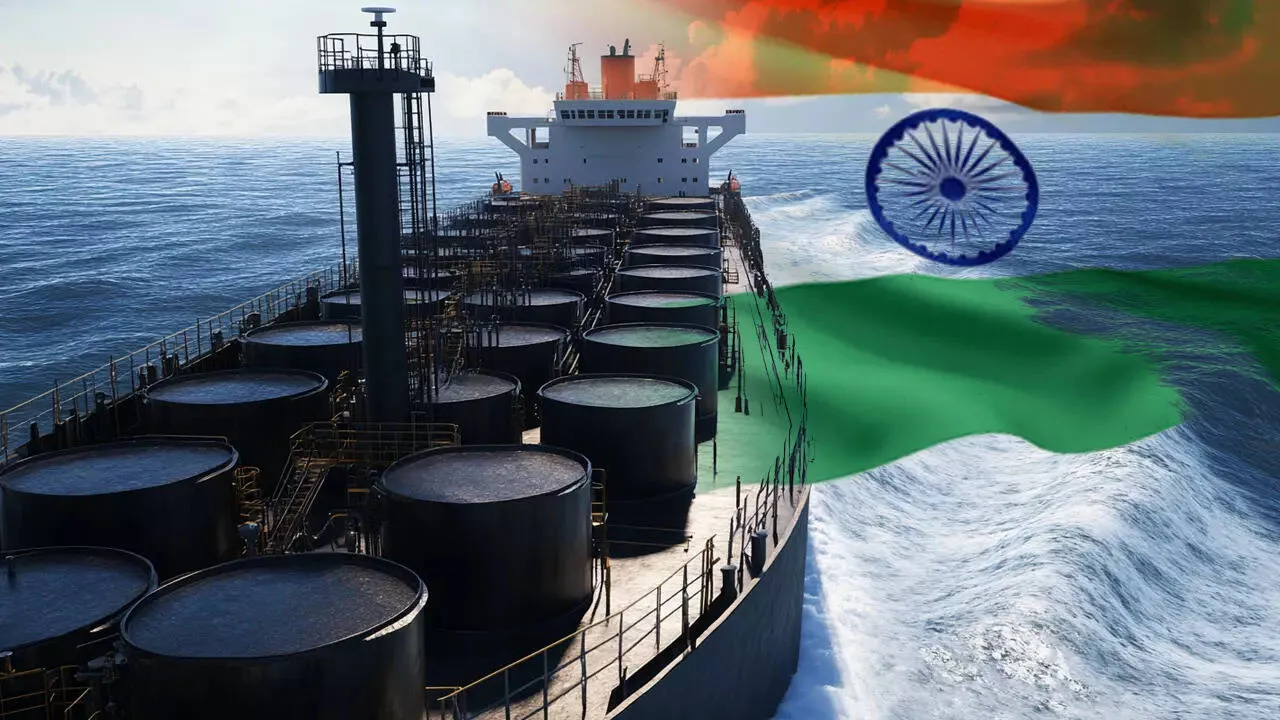
image.png

To its credit, India has made genuine, substantial efforts over the past several years to reduce this structural vulnerability, even if it has not been able to eliminate it entirely. The most significant shift has been the dramatic diversification of India's crude oil sourcing away from near-total reliance on Gulf suppliers toward a considerably more varied import basket, with discounted Russian crude oil now accounting for a substantially larger share of India's total oil imports than it did just a few years ago, rising from a negligible share to a considerably more significant proportion of the country's total crude import basket. That diversification has provided meaningful, if partial, insulation against the kind of acute, physical supply disruption that a genuine Strait of Hormuz closure might otherwise threaten, since a meaningful share of India's crude no longer needs to physically transit that specific chokepoint at all.

However, this diversification has not fully insulated India from Strait of Hormuz-driven price volatility, for a fairly straightforward reason: even crude oil that does not itself physically transit the strait tends to be priced with close reference to global benchmark prices like Brent crude, which do reflect Strait of Hormuz risk premiums given the benchmark's broader role in global oil-price formation. In other words, even India's diversified, non-Gulf crude supply sources tend to become more expensive when Brent crude rises on Strait of Hormuz-related anxiety, since global crude pricing operates as a broadly interconnected market rather than a series of fully independent, geographically isolated pricing regimes — meaning India's diversification strategy has reduced its physical supply-disruption risk considerably more than it has reduced its price-exposure risk to Strait of Hormuz-driven volatility.
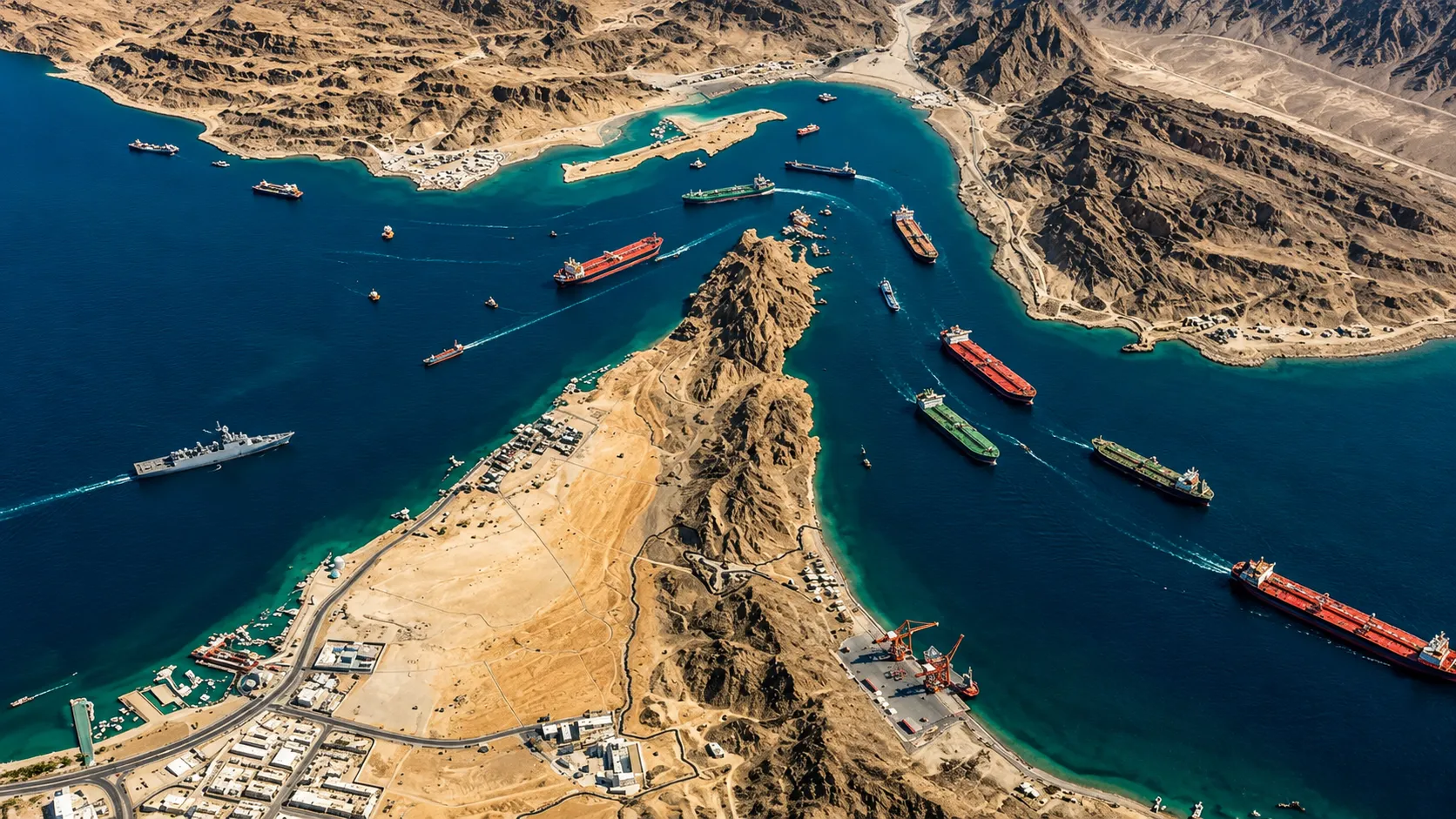

No region faces more concentrated exposure to a Strait of Hormuz disruption than India, China, Japan, and South Korea — a group that together has absorbed the overwhelming majority of everything that flows through that single, 21-mile-wide chokepoint.
Energy-security analysis on Asia's concentrated exposure to the Strait of Hormuz

Beyond crude oil sourcing diversification, India has also pursued a range of other structural measures aimed at reducing its broader energy-security vulnerability, including strategic petroleum reserve capacity expansion, though India's reserves remain considerably smaller relative to daily consumption than those maintained by several developed economies with longer-established strategic reserve programmes, continued investment in renewable energy capacity as part of the country's broader energy-transition push, and ongoing efforts to expand domestic oil and gas exploration and production, even though India's own domestic hydrocarbon reserves remain modest relative to the country's overall consumption needs, meaning import dependence is likely to remain a defining structural feature of India's energy landscape for the foreseeable future regardless of these diversification and domestic-production efforts.

The broader policy conversation around reducing India's Strait of Hormuz-linked vulnerability also increasingly intersects with the country's longer-term energy-transition strategy, given that accelerated adoption of renewable energy, electric vehicles, and other non-oil-dependent technologies represents, over a sufficiently long time horizon, the most structurally durable way to reduce the kind of acute economic exposure to Middle Eastern geopolitical developments that has been so starkly visible this week. That longer-term energy-transition push, while unable to offer any near-term relief from the current crude-price spike, represents the structural direction in which India's policy establishment has increasingly sought to steer the broader economy, even as the practical realities of energy transition timelines mean oil import dependence, and the associated Strait of Hormuz exposure, will remain a defining feature of India's economic vulnerability profile for at least the coming decade, if not considerably longer.

For now, as this week's market turbulence has once again demonstrated with striking clarity, the Strait of Hormuz remains one of the most consequential, if geographically distant, variables shaping the day-to-day trajectory of India's currency, its equity markets, and ultimately its broader economic stability — a sobering reminder that in an interconnected global economy, a narrow shipping lane on the other side of the Indian Ocean can move Mumbai's stock exchanges and Delhi's policy calculus just as surely as any purely domestic economic development might.

International energy-security cooperation frameworks, including coordinated strategic reserve arrangements among major Asian importing nations, have periodically been floated as a potential collective response to exactly this kind of shared Hormuz-linked vulnerability, though meaningful, binding cooperation of this nature has historically proven difficult to achieve given the differing strategic priorities and bilateral relationships each Asian importing nation maintains with Gulf producers and with the United States.

For India's policy establishment, the recurring nature of Hormuz-linked crises — this being far from the first, and unlikely to be the last, such episode to meaningfully move Indian markets and currency — has increasingly reinforced the case for treating energy-security diversification not as a one-off policy response to any single crisis, but as a permanent, ongoing strategic priority deserving sustained investment regardless of whether West Asia tensions happen to be actively escalating in any given month.

That longer-term, structural framing is ultimately the most useful lens through which to view this week's market turbulence — not as an isolated shock to be weathered and then forgotten, but as the latest data point in a decades-long, still-unfinished story about India's search for genuine energy security in an unavoidably interconnected and periodically unstable world.

India's continued diplomatic engagement with both Gulf producer nations and Western powers involved in the broader regional conflict will remain an important, if largely background, variable shaping how quickly any eventual de-escalation might occur — engagement that, while rarely making front-page market headlines in the way crude-price movements do, nonetheless represents an important complementary track to the purely economic and financial responses already discussed.

image.png

For India's 1.4 billion citizens, few of whom will ever personally set foot anywhere near the Persian Gulf, this week's events offer a genuinely striking illustration of just how thoroughly globalised, and how thoroughly interdependent, even the most everyday aspects of economic life — a litre of petrol, a cylinder of cooking gas, the value of a rupee in one's pocket — have become in the modern, interconnected global economy. In the final analysis, the Strait of Hormuz story is not really a story about a waterway at all — it is a story about how deeply, and how permanently, India's economic destiny remains entangled with events unfolding well beyond its own borders and beyond its own direct control, a structural reality no amount of diversification or policy foresight can fully erase, only meaningfully manage. That reality, uncomfortable as it may be, remains the clearest single takeaway from an otherwise turbulent week across India's currency, equity, and commodity markets alike. Future historians examining India's 2026 economic trajectory will likely point to episodes exactly like this one — a shipping lane half a world away moving the rupee, the Sensex, and the price of cooking gas all at once — as emblematic of precisely the kind of interconnected vulnerability and resilience that defined the country's economic story during this particular, genuinely eventful chapter. And for as long as that vulnerability persists, headlines about a narrow strait between Iran and Oman will keep finding their way, however improbably, onto the front pages of India's business newspapers and the trading screens of its stock exchanges alike.

TagsStraitOfHormuzEnergySecurityIndiaOilImportsWestAsiaCrisisGeopoliticsIndiaCrudeOilDependenceEnergyPolicySupplyChainRiskBusinessNewsIndiaIndianEconomy

Reader reviews

Sign in to rate and review this article.
Loading reviews…