The Month the Social Economy Stopped Being a Side Story
Published June 10, 2026 by SEWF — the World Forum of Social Enterprise — the organisation's monthly social enterprise news roundup for June 2026 covers more consequential developments in a single month than most impact publications manage in a quarter. From a $125 billion forest financing commitment with a $6.5 billion delivery gap, to the first Social Exchange platform in Malaysia, to Australia's model grant multiplier programme, to 22 impact investors named best-in-class from a pool of 307, this month's stories are not background noise. They are a map of where the social economy is going — and what it is still struggling to deliver.
Here is what happened, why it matters, and what it means.
BlueMark Named 22 Impact Investors Best-in-Class. The Other 285 Did Not Make the List.
Impact verification firm BlueMark published the seventh edition of its Making the Mark report this month, identifying 22 investors with leading impact measurement and management practices from among the 307 it has assessed to date through its BlueMark IQ platform.
The named leaders include Better Society Capital, IDB Invest, LeapFrog Investments, British International Investment, and Nuveen Private Equity Impact. Funds recognised for strong impact reporting — a related but distinct category — include Open Road Impact, AgDevCo, and the Future of Work Fund.
Two findings from the data deserve specific attention.
The first: close to half of all fund commitments in the BlueMark dataset are now directed toward climate-related themes, with adaptation specifically accounting for 10 per cent. This is not the climate finance allocation of five years ago, when net zero commitments and transition financing dominated the conversation. Adaptation — helping communities and systems survive a changing climate rather than just preventing further change — is a meaningfully different investment category, and its 10 per cent share of commitments represents a significant shift in where impact capital is flowing.
The second: most funds in the dataset invest in private equity. This is consistent with the broader structural reality that impact measurement infrastructure is most developed in private markets, where investor control over portfolio companies makes impact data collection more tractable. The implication for impact bonds, blended finance structures, and listed impact products is that their measurement and verification infrastructure still lags behind what private equity has built.
The gap between 22 leaders and 307 assessed is the number that deserves the most attention. BlueMark is not grading on a curve. The bar for inclusion in the leading practices category is genuine, and the distance between best-in-class and the field tells you something important about the industry: the commitment to impact measurement is broad, but the execution is still concentrated.
The Tropical Forest Finance Facility Has a $125 Billion Target. It Has $6.5 Billion So Far.
The Tropical Forest Finance Facility, launched with a long-term capital target of $125 billion and a short-term goal of $10 billion by end of 2026, has announced $6.5 billion in commitments to date.
The gap between those numbers — $6.5 billion announced against a $10 billion short-term goal and a $125 billion long-term ambition — is the most important accountability data point in global climate finance this month. Not because it represents failure, but because it represents the distance between the scale of the commitment and the pace of delivery that the world's forest ecosystems require.
Tropical forests are the most carbon-dense terrestrial ecosystems on earth. The Amazon, the Congo Basin, the forests of Southeast Asia and the Pacific collectively store more carbon than all existing fossil fuel reserves. Their protection is not a conservation issue supplementary to climate change — it is one of the primary mechanisms by which runaway warming can be slowed at the speed required to matter. The $125 billion target reflects that importance.
$6.5 billion does not reflect it yet.
The announcement of the Facility's current capitalisation is important precisely because it makes the gap visible. Climate finance commitments made in conference rooms are not climate finance delivered to forest communities. The distance between those two things is where the accountability of the next several years will be measured.
Australia's SEDI: The Grant Multiplier Model Every Government Should Copy
The Social Enterprise Development Initiative, backed by the Australian government, has opened its 2026 round — and the 2025 cohort's data makes the strongest possible case for why the model deserves replication globally.
The 2025 SEDI cohort received AU$1 million in government grants. That investment unlocked AU$3.77 million in total capital — a 3.77x multiplier across the cohort, achieved through the combination of grants, loans, equity investment, and other capital that the government's grant enabled grantee organisations to attract.
The programme structure is worth understanding precisely, because it is the mechanism behind that multiplier. SEDI provides capability-building grants to social enterprises working in climate resilience and inclusion — not just cheques, but support for the organisational development, financial reporting, and impact measurement infrastructure that makes social enterprises credible to subsequent capital sources. Organisations that receive SEDI grants become more investable. The grant is not the capital outcome. It is the precondition for the capital outcome.
This is the model that most social enterprise grant programmes get wrong. They fund outputs. SEDI funds capability — the underlying organisational capacity that enables sustainable impact at scale. And the 3.77x return on public capital investment demonstrates that the model works.
The 2026 round is now open.
NatWest SE100: 16 Years of Naming Britain's Best Social Enterprises
The NatWest SE100, the United Kingdom's longest-running index of high-growth and high-impact social enterprises, published its 16th annual list this month. The 2026 edition includes both rankings and pioneer category recognitions across several dimensions.
The Pioneer category winners are the most instructive entry points into what the UK social enterprise sector looks like at its most effective in 2026. Finance Earth was named Climate Pioneer — recognising its work mobilising private capital for nature-based solutions and climate adaptation at the intersection of impact measurement and institutional finance. Six Degrees was named Diversity Pioneer. Turning Point was named Public Sector Pioneer.
These are not honorary designations. The SE100 process includes financial performance and impact data alongside qualitative assessment. The pioneer designations reflect organisations that are not just mission-aligned but demonstrably performing — organisations whose combination of social purpose and business rigour has produced outcomes that the field can learn from.
The 16-year continuity of the SE100 is itself significant. It means the index has tracked social enterprise performance across the 2008 financial crisis, the austerity years, the post-Brexit adjustment, the pandemic, and the current cost-of-living environment. The organisations that remain in the index across those cycles, and the ones that have joined it recently, together constitute one of the most robust data sets on social enterprise resilience and growth in any market globally.
Malaysia Launches Its First Social Exchange. Vietnam Approves Five Years of Sustainable Business Support.
Two Asian policy developments this month represent the kind of institutional infrastructure-building that social enterprise ecosystems require to mature — and that rarely gets covered in international business media.
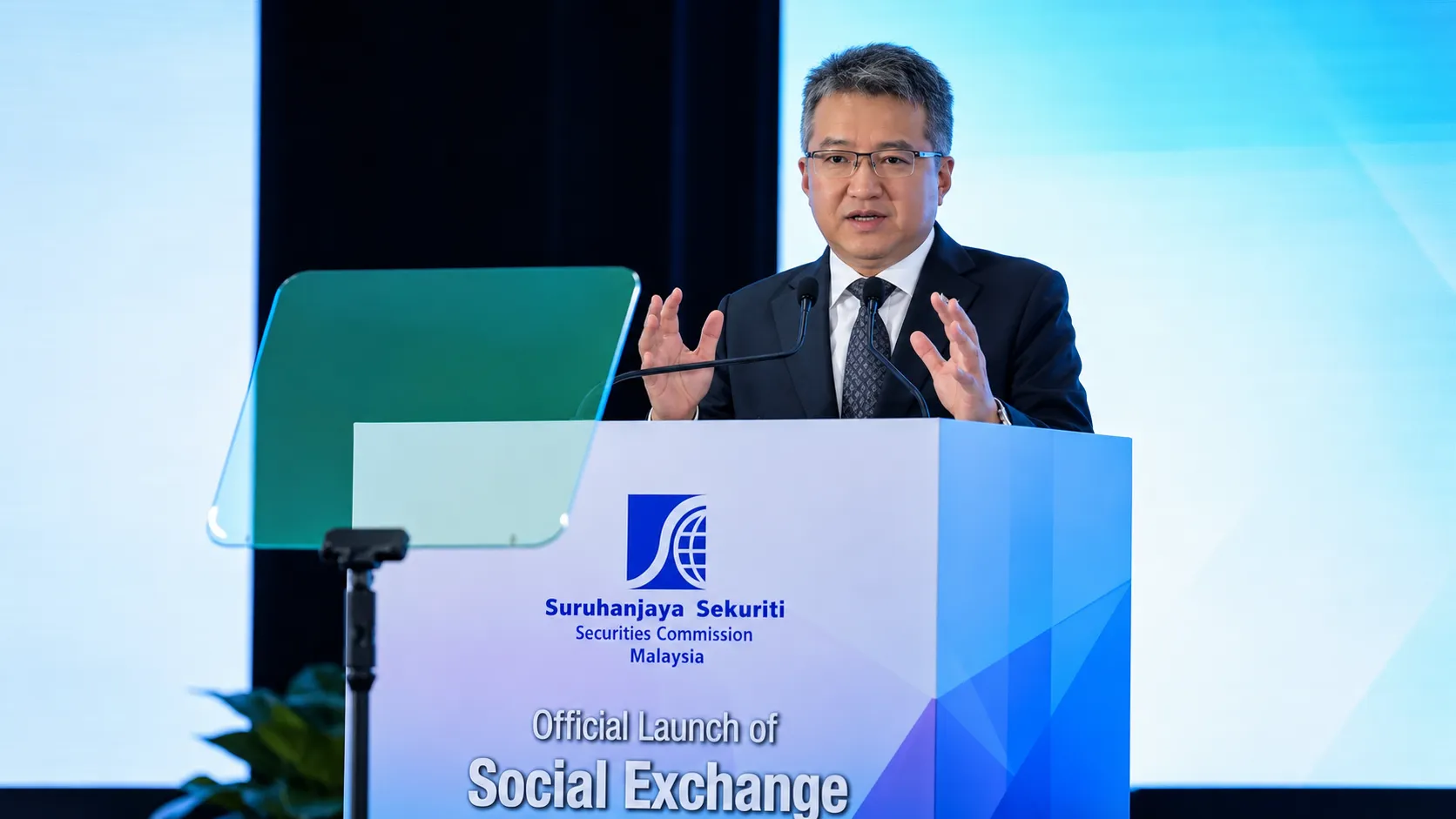
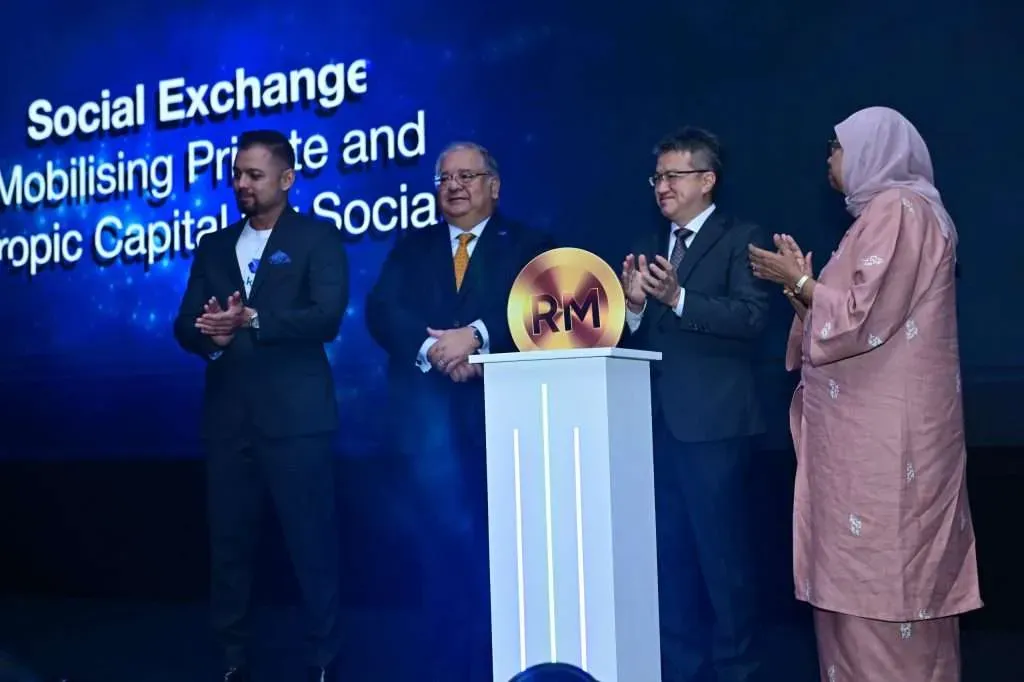
Malaysia's Securities Commission launched the country's first Social Exchange platform, providing a regulated channel for non-profit organisations and social impact projects to raise funds from the public and from capital markets. The Deputy Finance Minister Liew Chin Tong, speaking at the launch, called on corporations and capital markets to take a larger role in funding social enterprises and community-driven initiatives. Eight organisations have joined the platform's first phase, covering healthcare access, food security, and environmental sustainability. A RM2 million government grant and tax incentives for eligible participants provide the initial scaffolding.
The significance of a regulated Social Exchange is structural. It creates a formal channel between social enterprises and capital that previously required bilateral relationships or international intermediaries. Over time, a Social Exchange with enough participants and enough transparent data creates the kind of price discovery and accountability that makes impact investment more efficient — which is what the Malaysian sector needs at this stage of its development.
Vietnam's government, meanwhile, approved a five-year programme running from 2026 to 2030 that aims to help 25,000 enterprises, business households, and cooperatives adopt sustainable practices. The programme explicitly balances economic performance with social responsibility and environmental protection — a framing that moves sustainable business from voluntary aspiration to government-supported target.
Twenty-five thousand organisations. Five years. That is the kind of scale that changes an economy's baseline rather than its edge cases.
Africa: A €30 Million Seed Fund and the First Investment in Kenya's Kakuma
Two Africa stories this month address the same fundamental problem from different angles: the financing gap between angel investment and institutional capital that leaves promising social enterprises without the resources to scale.
Digital Africa, a subsidiary of France's development finance institution Proparco, launched a €30 million seed fund specifically designed for this gap. The fund targets early-stage technology companies that have moved beyond angel investment but do not yet meet institutional investors' requirements — the classic "missing middle" of impact finance. Structured as a 10-year closed-end vehicle with a €50 million ceiling, it aims to support 30 tech-enabled startups across 20 priority African countries, with average initial investments of €300,000 directed at market testing, senior hires, compliance, and product development.
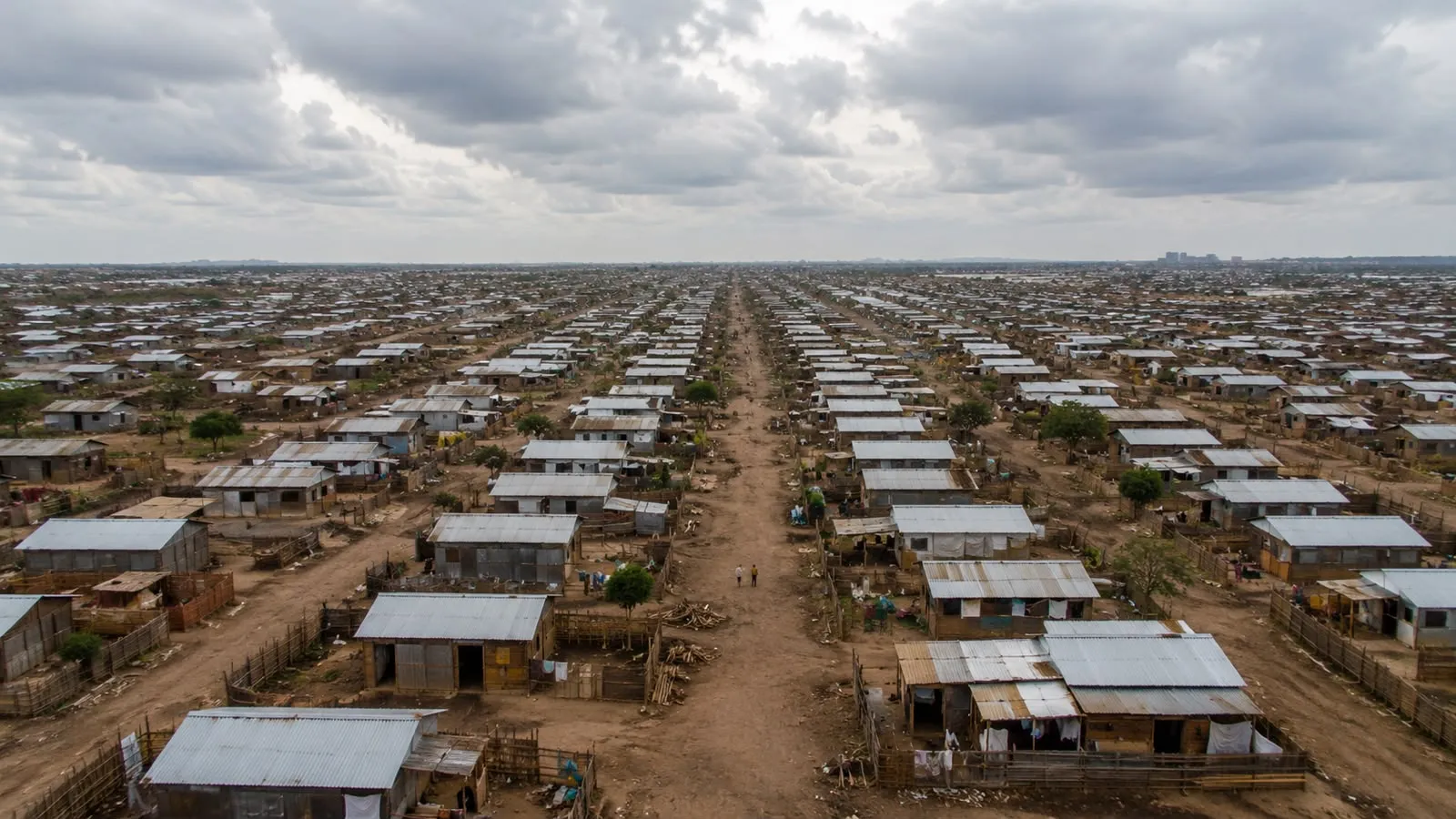
Separately, LIFTA Kenya — a bottled water and plastic recycling company operating in the Kakuma refugee camp — received the first investment from the Refugee Investment Facility, a partnership between the Danish Refugee Council and impact investment firm iGravity. LIFTA draws 44 per cent of its permanent staff and 60 per cent of its casual workers from the local refugee community, addressing both water scarcity and waste management in an area home to more than 300,000 refugees and asylum seekers. The investment uses impact-linked loans, where loan conditions are tied to measurable impact outcomes rather than purely to financial performance.
The Kakuma investment is notable not just for what it funds but for what it demonstrates: that investable social enterprises exist in some of the world's most challenging operating environments, and that the right financial instruments — patient, impact-linked, structured for the context — can reach them.
The UN's Message for July 4: Cooperatives for a Peaceful World
The United Nations has confirmed that the 2026 International Day of Cooperatives, observed on July 4, will carry the theme "Cooperatives for a peaceful world!" The theme draws a direct line between cooperative enterprise structures — democratic ownership, economic inclusion, community governance — and the conditions that make durable peace possible.
It is the kind of theme that can read as aspirational rather than operational. But the cooperative sector is the largest form of democratic enterprise on earth, with 12 per cent of the global population belonging to one of approximately 3 million cooperatives. The economic argument for cooperatives as peace infrastructure is not symbolic. It is structural: communities where economic participation is distributed rather than concentrated are communities where the grievances that fuel conflict are systematically reduced.
Whether CoopsDay 2026 generates the kind of global attention the theme deserves is a different question. But the United Nations choosing this theme, in this geopolitical moment, is itself a signal worth registering.
What This Month's Stories Tell You
Read together, SEWF's June 2026 roundup is not a collection of isolated good news stories from around the world. It is a coherent picture of a social economy in the process of maturing — acquiring the institutional infrastructure, the measurement systems, the policy frameworks, and the capital instruments that allow social enterprise to operate not as a niche within the economy but as a mainstream mode of organising economic activity.
The BlueMark report shows that impact measurement is consolidating around a credible, demanding standard — and that the distance between best-in-class and the field is still significant, which means the standard is real rather than aspirational. Australia's SEDI shows that the right grant structure can multiply its own impact several times over, which is what patient public capital is supposed to do. The TFFF gap shows that forest finance commitments are still a long way from becoming forest finance delivery, which is what accountability looks like when it is taken seriously. Malaysia's Social Exchange and Vietnam's five-year programme show that the policy infrastructure for social enterprise is deepening in markets where it was previously thin.
None of these individually constitutes a revolution. Together, they constitute the steady, unglamorous, institutionally demanding work that makes revolutions possible.
The social economy is not having a moment. It is building a structure. And June 2026 is one of the most instructive months to observe that construction in recent memory.