A Proposed $110 Billion Media Giant Would Create One Of The Most Powerful Entertainment Companies In History. The Real Story Is What It Says About Hollywood’s Fight For Survival.
For years, Hollywood believed streaming was the industry's biggest disruption.
Netflix changed viewing habits. Disney launched Disney+. Warner Bros. Discovery built Max. Paramount expanded Paramount+. Traditional studios spent billions trying to adapt to a world where audiences increasingly consumed content on demand rather than through cable television or movie theaters. The streaming wars became the defining business story of modern entertainment because every major media company was forced to rethink how it operated.
Now, an even bigger story may be emerging.Reports of potential merger discussions between Paramount Global and Warner Bros. Discovery have reignited conversations about one of the largest consolidation moves Hollywood has ever seen. If a deal of this scale eventually materializes, it would create an entertainment powerhouse with an enterprise value approaching $110 billion, bringing together some of the most valuable intellectual property, film studios, television networks and streaming assets in the industry. The implications would extend far beyond shareholders. The deal could fundamentally reshape who controls Hollywood itself.
This Is Not Really A Streaming Story
At first glance, the merger appears to be about streaming competition.
That interpretation is understandable. Both companies own streaming platforms that have struggled to match Netflix's global scale and profitability. Warner Bros. Discovery operates Max, while Paramount controls Paramount+. Combining subscribers, content libraries and distribution capabilities would instantly create a larger digital platform capable of competing more aggressively for audiences.
But streaming is only part of the equation.
The deeper issue is economics. Traditional media companies are discovering that the streaming business is far more difficult than many initially expected. Producing premium content remains expensive. Subscriber growth has slowed in several markets. Profitability continues to challenge many platforms. The era of endless spending and unlimited growth assumptions has largely ended. As a result, media executives are increasingly looking for scale as a solution.
Scale creates leverage.Larger companies can spread content costs across bigger audiences, negotiate stronger distribution agreements and reduce operational redundancies. In an environment where profitability matters more than subscriber counts alone, consolidation becomes an attractive strategy.

Hollywood's Power Structure Is Shrinking
For decades, Hollywood operated through a relatively stable collection of major studios.
Disney, Warner Bros., Paramount, Universal, Sony and a handful of other influential players collectively shaped global entertainment. Competition existed, but power remained distributed across multiple companies. Every studio maintained its own franchises, executives and strategic priorities. The structure created a relatively balanced ecosystem where different companies could pursue different creative visions.
That landscape is changing.
Media consolidation has steadily reduced the number of major decision-makers controlling entertainment. Disney's acquisition of Fox significantly altered the balance of power. Amazon's purchase of MGM demonstrated how technology companies could enter traditional entertainment. A Paramount-Warner combination would continue that trend by concentrating even more influence within fewer organizations.
The result would be a Hollywood increasingly dominated by a smaller group of giants.For audiences, the change might appear invisible. Movies would still release. Television shows would still premiere. Streaming platforms would still compete for attention. Behind the scenes, however, fewer executives would control larger portions of the global entertainment business.
The Real Competitor Is Netflix
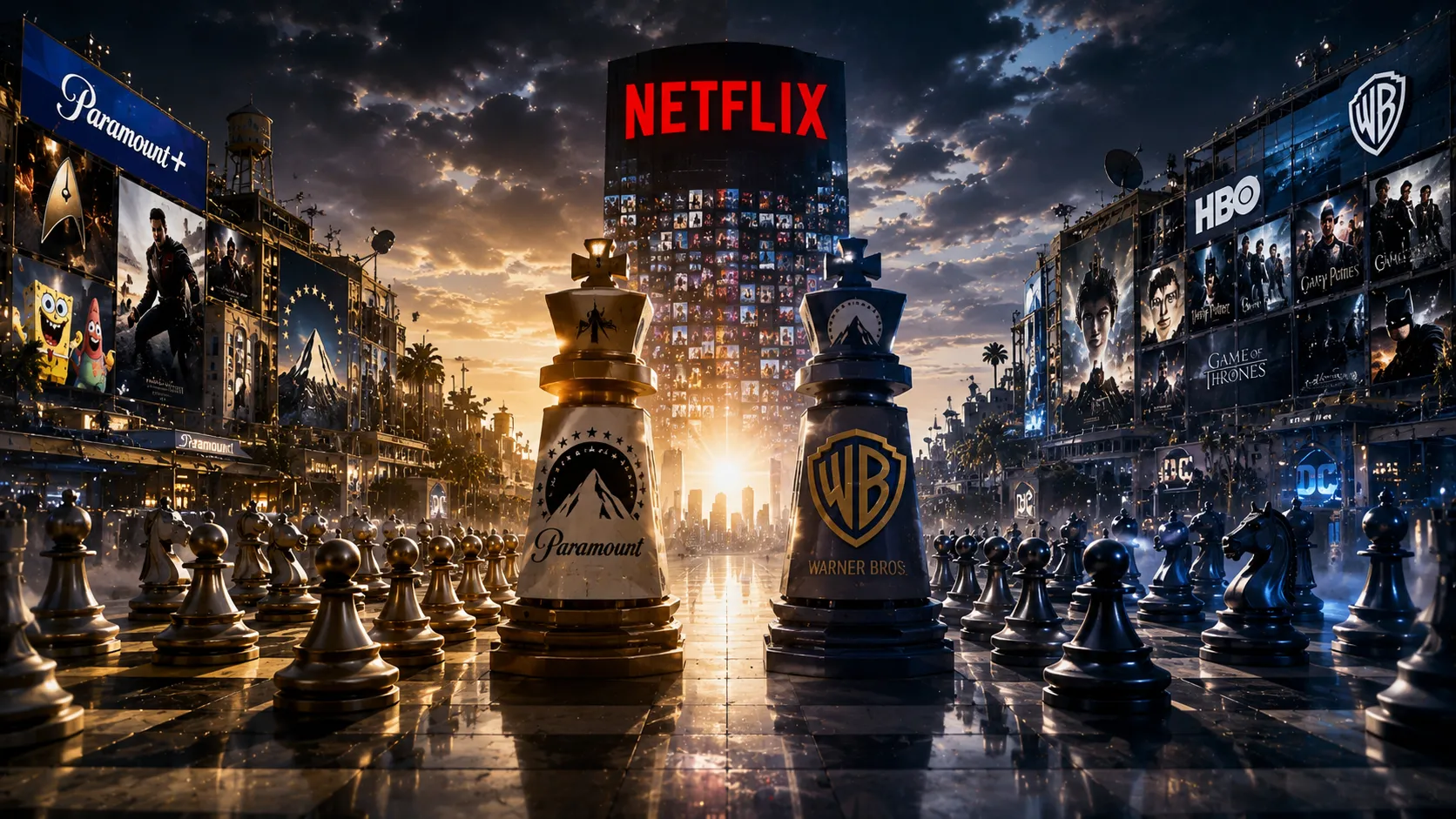
Perhaps the most fascinating aspect of the proposed deal is who it is really targeting.
For much of Hollywood history, studios competed primarily against each other. Warner battled Paramount. Paramount battled Disney. Universal competed with everyone. Today, however, the industry's competitive dynamics look dramatically different.
Netflix changed the game.The streaming giant operates at a global scale that traditional studios continue trying to match. Its subscriber base spans hundreds of millions of users. Its content reaches audiences in virtually every major market. Most importantly, Netflix built its business specifically for the streaming era rather than adapting legacy structures designed for cable television and theatrical distribution.
That difference matters enormously.Traditional media companies still carry obligations tied to older business models. They operate television networks, maintain distribution relationships and manage extensive legacy infrastructure. Netflix largely avoids those constraints. The company can focus almost entirely on streaming because streaming is the business. A merged Paramount-Warner entity would therefore represent more than consolidation.It would represent an attempt to create a competitor large enough to challenge Netflix on comparable terms.
The Value Of Intellectual Property Has Never Been Higher
One of the most attractive aspects of a potential merger is the combined library of intellectual property.
Warner Bros. controls franchises such as DC, Harry Potter, Game of Thrones and numerous film classics. Paramount owns assets including Mission: Impossible, Star Trek, Yellowstone-related properties and decades of television programming. Together, these libraries would represent one of the largest collections of entertainment assets in the world.
That matters because modern media increasingly revolves around recognizable brands.
Audiences face endless content choices. Familiar franchises help companies cut through the noise because consumers already understand the value proposition. Intellectual property has become the entertainment industry's equivalent of infrastructure—a foundational asset capable of generating revenue across films, television, streaming, merchandise and licensing.The merger would therefore create more than a larger company.It would create a content engine with extraordinary scale.
What This Means For Hollywood's Future
The proposed deal reflects a broader reality facing the entertainment industry.
Streaming did not eliminate traditional media companies. Instead, it forced them into a new economic environment where scale became increasingly important. Companies that once operated comfortably as standalone studios now find themselves competing against global technology platforms with massive resources and worldwide reach.
That pressure is accelerating consolidation.Executives increasingly believe that survival may depend on size. Larger content libraries, larger subscriber bases and larger balance sheets create advantages in a market where competition continues intensifying. Whether or not this specific deal ultimately happens, the logic behind it is unlikely to disappear.That is why the Paramount-Warner discussions matter.
The story is not simply about a merger.It is about Hollywood acknowledging that the rules have changed.For decades, entertainment companies competed primarily against one another. Today, they are competing against global platforms, changing consumer behavior and economic realities that reward scale above almost everything else.And if Paramount and Warner Bros. eventually come together, the impact could extend far beyond streaming.It could redefine who holds power in Hollywood for the next generation.