
Every Major Luggage Brand Has Made a Bag for Everyone. NORI Made One for Women.
Here is the thing about "unisex" design in the luggage industry: it is not actually unisex. It is designed for a default user who is implicitly male — a default that shows up in trolley handle heights calibrated for the average male height, internal compartment layouts that prioritise a laptop and minimal clothing, weight distribution that assumes a single carry style, and an aesthetic language that calls itself neutral but tends to express itself in black, grey, and dark navy.
Women who travel — for business, for leisure, solo, with family — have been packing their lives into that default for decades. Not because it works well, but because there was nothing else.
Meenakshi Vyas and Rashika Nayak noticed this. And in 2025, they built NORI.
In May 2026, NORI announced it had raised $350,000 in a pre-seed funding round led by Rebalance, the accelerator known for backing diverse founding teams. The round also included participation from Vijay Shekhar Sharma, Paytm's founder, via VSS Investco, and angel investors from the consumer and e-commerce sectors.
The company has already served over 4,000 customers and is tracking towards ₹2 crore in Annual Recurring Revenue — numbers achieved within months of the brand's launch, without the pre-seed capital having been deployed.
Who Built It — and Why Their Backgrounds Matter
NORI is not a brand founded by people who saw a market opportunity and hired product designers. It is founded by people who spent their careers in the two disciplines most relevant to what NORI is doing.
Meenakshi Vyas spent years in senior roles at Myntra, PharmEasy, and Reliance Retail — three of India's most significant consumer-facing companies, each of which built the infrastructure for understanding, acquiring, and retaining Indian consumers at scale. She understands what Indian women buy, why they buy it, and what they are willing to pay for quality that serves their actual needs.
Rashika Nayak is a product designer who has designed over 800 bags across her career. Not 80. Eight hundred. The depth of technical and material knowledge that comes from that volume of product development — understanding how a compartment needs to be structured, how stitching fails under load, how the weight distribution of a bag affects the carry experience over time — is the kind of expertise that cannot be approximated through market research alone.
What NORI Actually Built — Product by Product
The product line tells the story of the gap the founders identified, and it is worth going through the specifics because the details are where the insight lives.
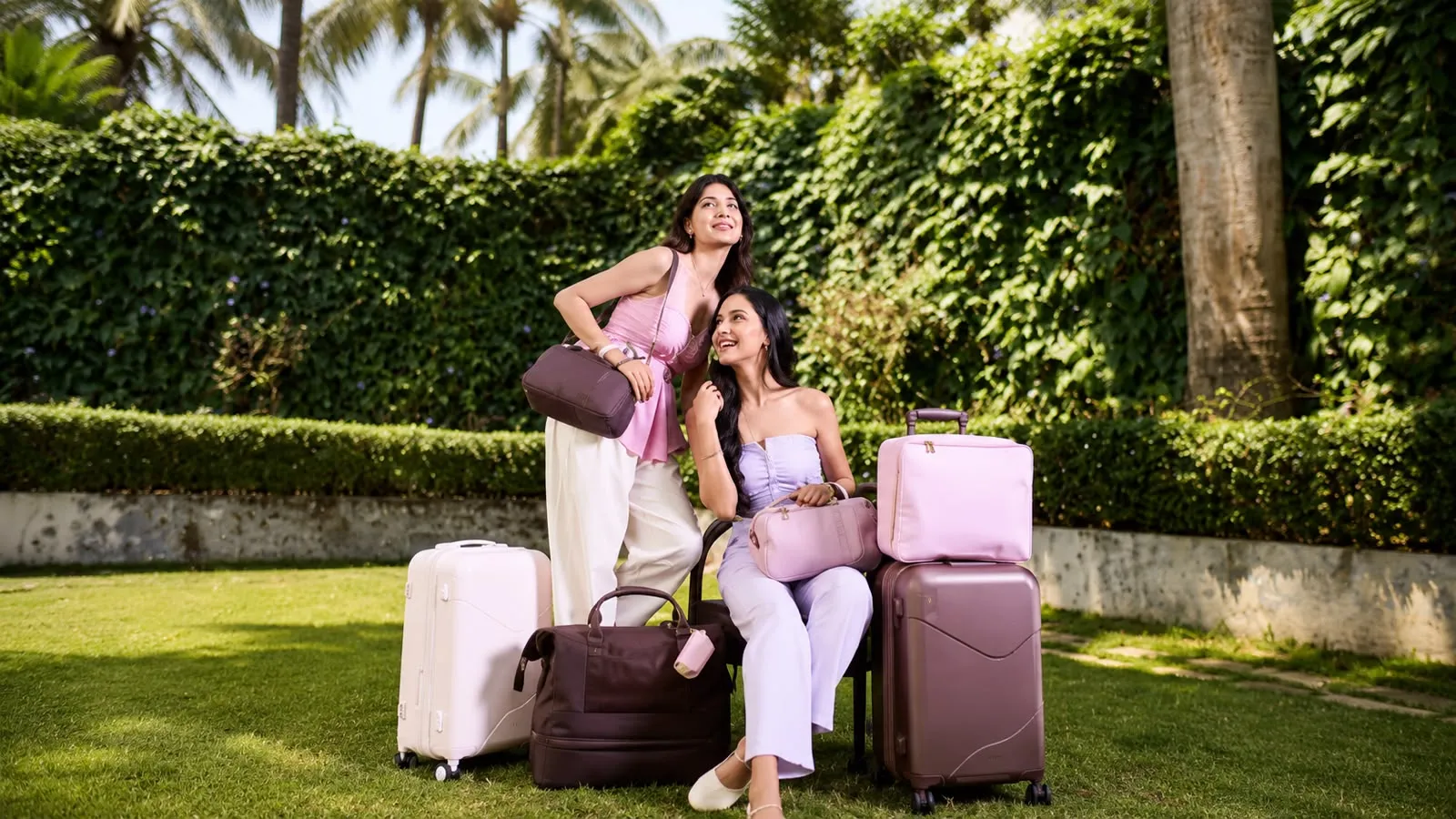
The Carry-On Wheelie is NORI's flagship luggage piece — a 38-litre hard-shell cabin suitcase priced at ₹8,999 (Old Money Brown and Millennial Pink) or ₹9,999 (Butterscotch, with faux-leather finish). The specifications are not generic. The trolley handle height has been calibrated to the average height of Indian women rather than an international average — a small adjustment with a measurable impact on shoulder and neck strain during transit. The interior includes a hidden valuables pocket, interior hooks for carrying extra shopping bags acquired during travel, a built-in weight indicator, and a zip expander. The shell is polycarbonate made with recycled material. The zippers are YKK. The locks are TSA-approved. The warranty is six years after registration.
Each of those decisions is a response to a documented pain point. The handle height is a pain point. The lack of a discreet valuables pocket is a pain point. The inability to carry additional bags acquired during travel is a pain point. The NORI Carry-On is not a clever rebrand of an existing product — it is a specification sheet written from the experience of travelling as a woman.
The Solemate Shoe Organiser carries up to four pairs of shoes while keeping them separate and protected. This solves one of the most consistent packing problems women travellers describe: shoes damage each other, and shoes damage other items, in generic luggage layouts that provide no dedicated footwear section.
The Glowkit Makeup Toiletry Bag has separate sections for skincare products, makeup brushes, and hygiene essentials, along with a built-in mirror. The categories are specific because the packing categories a woman travelling for business or leisure has are specific — and they do not fit neatly into a single generic toiletry compartment.
The Vaulette Innerwear Organiser is designed to allow bras to be packed without being crushed — a problem that generic packing cubes address not at all. It also doubles as a sling bag for day outings, which means it serves a function during the trip rather than only during packing.
The Max and Midi packing cubes are specifically designed for Indian clothing — sarees, dupattas, dresses, and tops — rather than for the Western wardrobe that most packing cube dimensions are calibrated for.
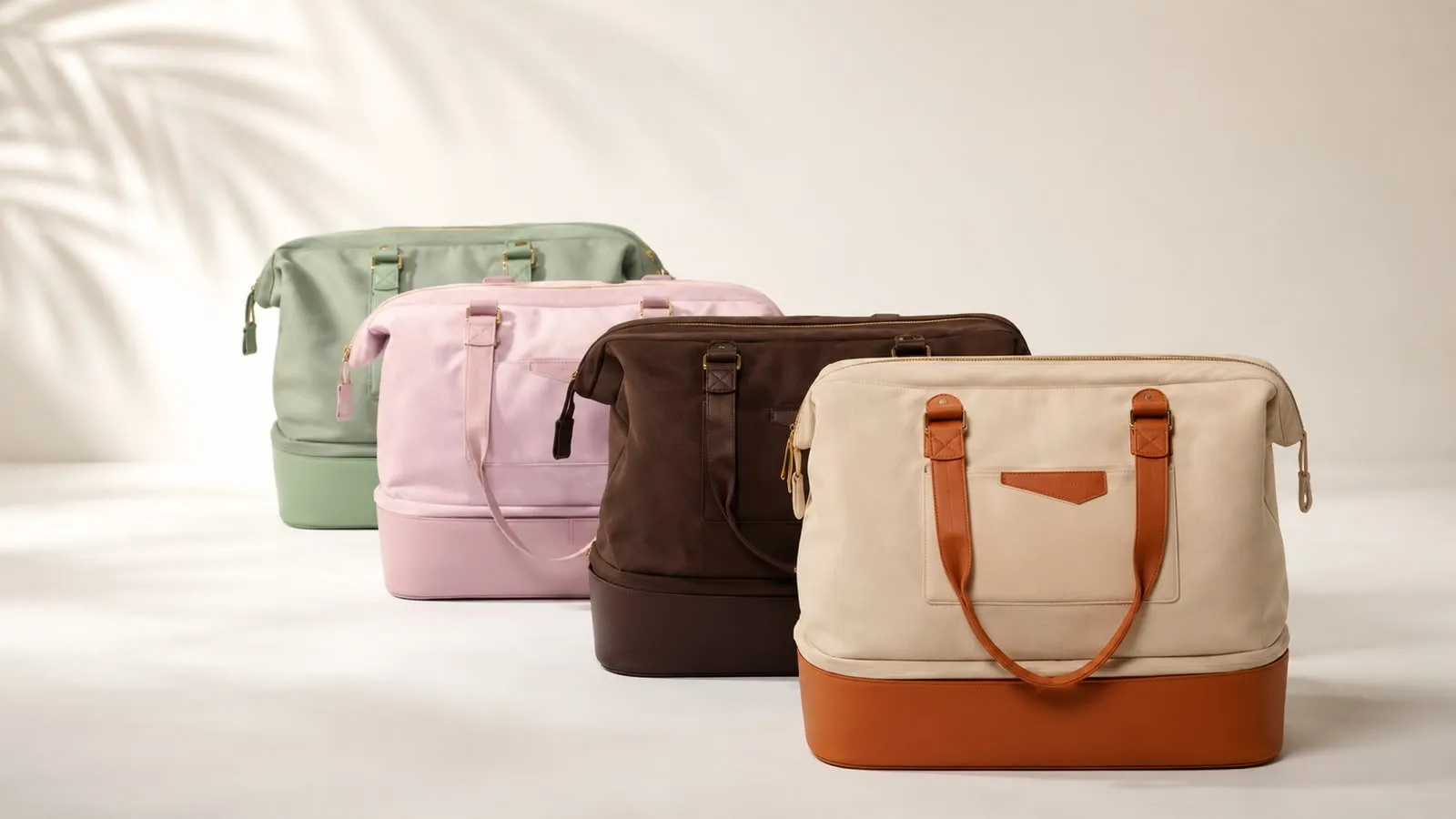
All products are available in five colourways: Creme, Moss, Butterscotch, Millennial Pink, and Old Money Brown. The aesthetic is intentionally feminine — not as a compromise but as a deliberate design position. NORI's founders have been explicit that the "unapologetically expressive" design language is a feature, not a marketing add-on.
The Market NORI Is Entering — and the Gap It Sees
India's travel market is one of the fastest-growing in the world. The number of Indian women travelling solo has grown dramatically over the last decade, driven by rising income levels, greater workforce participation, and a cultural shift in how urban Indian women relate to independent mobility.
The global luggage market is estimated at over $15 billion. India's travel accessories market is growing at a rate that reflects the country's broader tourism and business travel expansion. And within that market, the fastest-growing customer segment is precisely the one that NORI is designing for.
Yet the category has not caught up. Most luggage brands — global and Indian — continue to operate on a "generic design with colour options" model that treats women's travel as a styling question rather than a utility question. The pink suitcase is the industry's answer to women's travel. NORI's answer is a different height on the trolley handle, a specific internal layout, and a full ecosystem of organisers designed for the categories a woman actually carries.
The investor backing reflects a recognition of this gap. Aishwarya Malhi and Vikas Kumar, co-founders of Rebalance, articulated it directly:
Vijay Shekhar Sharma's participation — the founder of Paytm, a company that has spent years building consumer financial products for the Indian market — signals a view that NORI is building a consumer brand with the kind of category differentiation that can sustain a premium price point and loyal repeat customers.
What the $350,000 Is Building Toward
The pre-seed capital will be deployed across product R&D and distribution expansion — both online and offline. NORI's current trajectory suggests that the early traction is real: 4,000+ customers and ₹2 crore ARR achieved before the pre-seed funds have been deployed is the kind of organic early validation that investors use as the most credible evidence that a product is solving a genuine problem.
The direction of travel for NORI is toward a full travel ecosystem for women — not a luggage company with a few organiser products, but a company that owns the complete travel gear relationship with its customer from the first organiser purchase through the luggage upgrade and into every accessory category in between.
That ecosystem vision is what distinguishes NORI's ambition from a single-product D2C brand. The Vaulette doubles as a sling bag. The Solemate travels with its owner beyond the suitcase. The Glowkit goes from packing aid to daily-use toiletry organiser. Each product is designed to live in a woman's life, not just in her luggage.
The luggage industry has had seventy-plus years to design for women. It added a pink colourway and called it done. NORI started from a different question: what does the bag need to do, and for whom? The answer, apparently, is something the $15 billion luggage industry has not yet delivered.