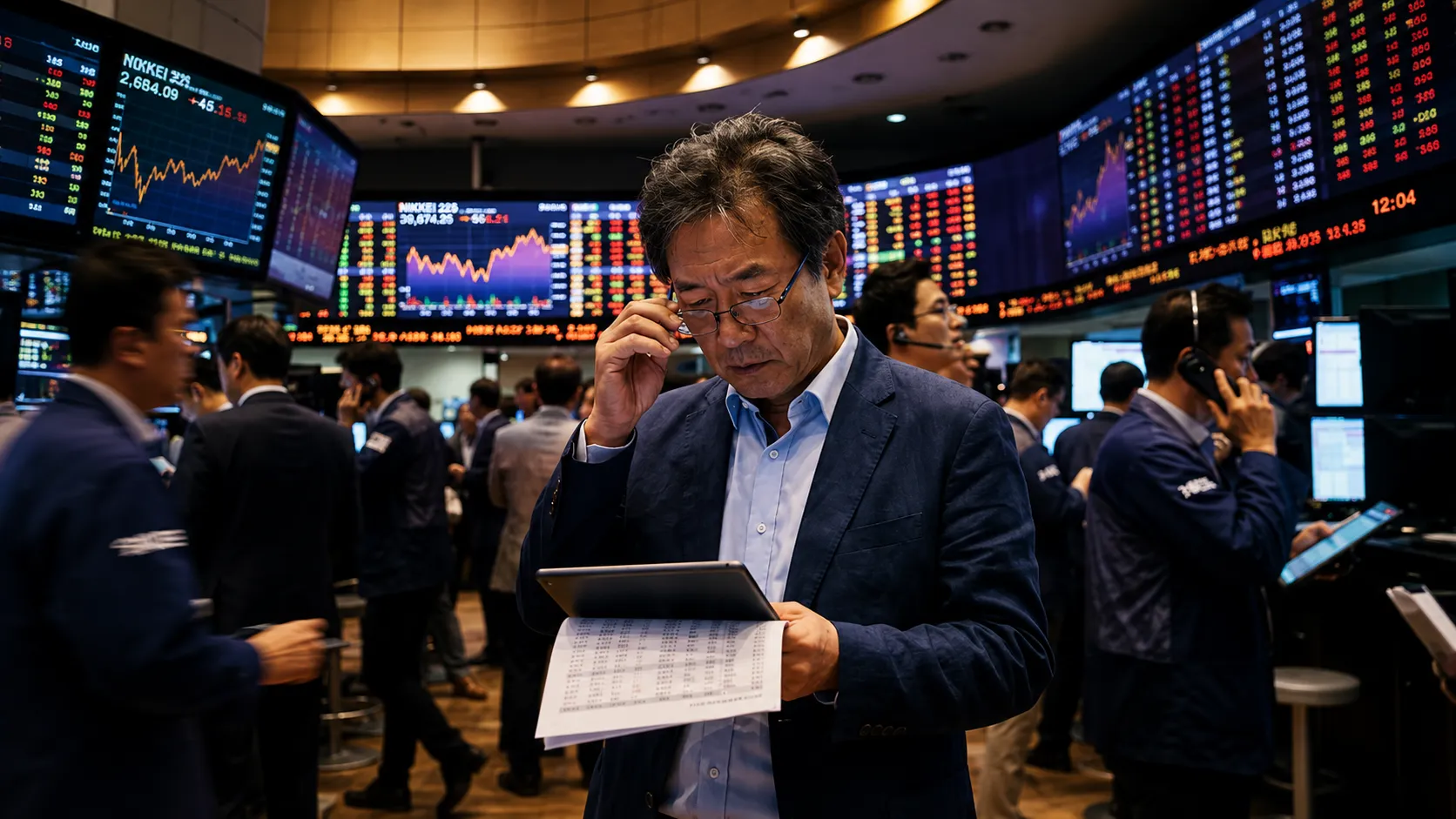
Numbers in global finance rarely tell a complete story on their own, but some are stark enough to demand attention regardless of context. In June 2026, emerging markets collectively witnessed net foreign capital outflows from equities totalling a staggering $46.1 billion — one of the largest single-month exoduses of investor capital from developing economies in recent years, and a figure that has sent ripples through currency markets, bond yields, and stock indices across the developing world, India included.
To understand why this matters — and why it's happening now — requires untangling several threads that have converged over the course of 2026: renewed and escalating conflict in the Middle East, a resurgence of safe-haven demand for the US dollar and developed-market government debt, elevated crude oil prices that disproportionately hurt oil-importing emerging economies, and a broader recalibration by global institutional investors of how much risk they're willing to carry in developing markets during a period of heightened geopolitical uncertainty.
What triggered the exodus
The proximate trigger for the sharpest phase of this capital flight has been the reignition of hostilities between the United States and Iran, which escalated meaningfully through the first half of 2026 and has included, at various points, US military strikes, a reimposed naval blockade on Iranian shipping, and persistent fears — some realized, some so far avoided — of disruption to oil shipments through the Strait of Hormuz, one of the world's most critical energy chokepoints, through which a substantial share of global seaborne oil trade passes. Brent crude prices, which had periodically spiked above $87 a barrel amid the worst of the tensions (and had earlier in the year touched levels above $120 a barrel during the initial shock of the conflict), have kept global energy markets on edge, with every escalation triggering fresh waves of risk-off sentiment across global markets.
For institutional investors — the pension funds, sovereign wealth funds, mutual funds, and hedge funds that collectively drive the bulk of cross-border portfolio investment flows — periods of acute geopolitical uncertainty typically trigger a well-worn playbook: reduce exposure to higher-risk, higher-volatility asset classes (which emerging market equities and currencies generally are, relative to developed market alternatives) and rotate capital toward traditional safe havens, chiefly US Treasury bonds, the US dollar itself, and to a lesser extent, gold and other precious metals. This is precisely the pattern that appears to have played out in June 2026, with the scale of outflows suggesting that the Middle East conflict has moved from being a regional concern that markets could largely look through, to a systemic risk factor that is genuinely reshaping global capital allocation decisions.

Why emerging markets bear the brunt
There's a structural reason why episodes of global risk aversion disproportionately affect emerging markets rather than being spread evenly across the world's capital markets: liquidity and perceived safety. Developed market government bonds, particularly US Treasuries, are viewed by global institutional investors as the closest thing to a "risk-free" asset available at scale — deep, liquid markets backed by governments with strong fiscal credibility and reserve currency status. Emerging market assets, by contrast, are viewed as inherently carrying additional layers of risk: currency volatility, potential political instability, less mature regulatory and legal frameworks, and generally thinner market liquidity that can make it harder to exit positions quickly during periods of stress without moving prices adversely.
This means that when a genuine "flight to safety" moment arrives — as appears to have happened through the middle of 2026 — emerging market assets tend to see outflows not necessarily because the underlying economic fundamentals of any individual emerging economy have deteriorated, but simply because global capital is systematically reducing its overall risk exposure, and emerging markets sit higher on the risk spectrum than developed market alternatives. This dynamic can create a frustrating situation for countries like India, which may have relatively sound domestic economic fundamentals but still find themselves swept up in a broader "emerging markets" outflow wave driven by factors entirely outside their control.
India's specific exposure
India has not been immune to this broader trend, though the country's situation carries some distinctive features worth examining separately from the aggregate emerging-market story. Indian equity markets have seen periods of foreign institutional investor (FII) selling throughout 2026, including a notable episode in mid-July when FIIs snapped an eight-session buying streak and turned net sellers, with outflows of roughly ₹30.6 billion (about $360 million) in a single session — a relatively modest figure in isolation, but part of a broader pattern that has coincided with the rupee's slide past the psychologically significant 96-per-dollar level and a roughly 0.7% single-day decline in the benchmark Nifty 50 index.
India's currency has been particularly exposed to this environment because of the country's heavy dependence on imported crude oil — India imports roughly 85% of its oil needs — meaning that the same Middle East tensions driving the broader emerging-market outflow are simultaneously hitting India through a second, more direct channel: a rising oil import bill that widens the current account deficit and puts additional downward pressure on the rupee, independent of the portfolio outflow dynamic. This "double exposure" — being caught in both the broader emerging-market risk-off wave and facing a direct, country-specific vulnerability through oil dependence — has made India's currency and equity markets somewhat more sensitive to Middle East developments than emerging economies that are less reliant on imported energy.
That said, India retains several structural buffers that distinguish it from more vulnerable emerging economies during periods of capital flight. The Reserve Bank of India held foreign exchange reserves of $674.19 billion as of early July 2026 — among the largest reserve stockpiles of any developing economy — giving the central bank substantial firepower to intervene in currency markets and smooth excessive volatility, as it has been actively doing through dollar sales in both spot and non-deliverable forward markets in recent sessions. India has also cultivated an increasingly deep pool of domestic institutional capital over the past decade, with sustained retail participation through systematic investment plans (SIPs) into mutual funds providing a domestic investor base (DIIs) capable of absorbing at least part of the selling pressure generated by departing foreign investors — a dynamic that was visible in mid-July trading, when domestic institutional inflows of roughly ₹2,927.71 crore helped offset FII outflows of ₹739.69 crore on a single trading session, illustrating how India's growing DII base has become an important stabilizing counterweight during periods of foreign capital retreat.
The currency and bond market transmission
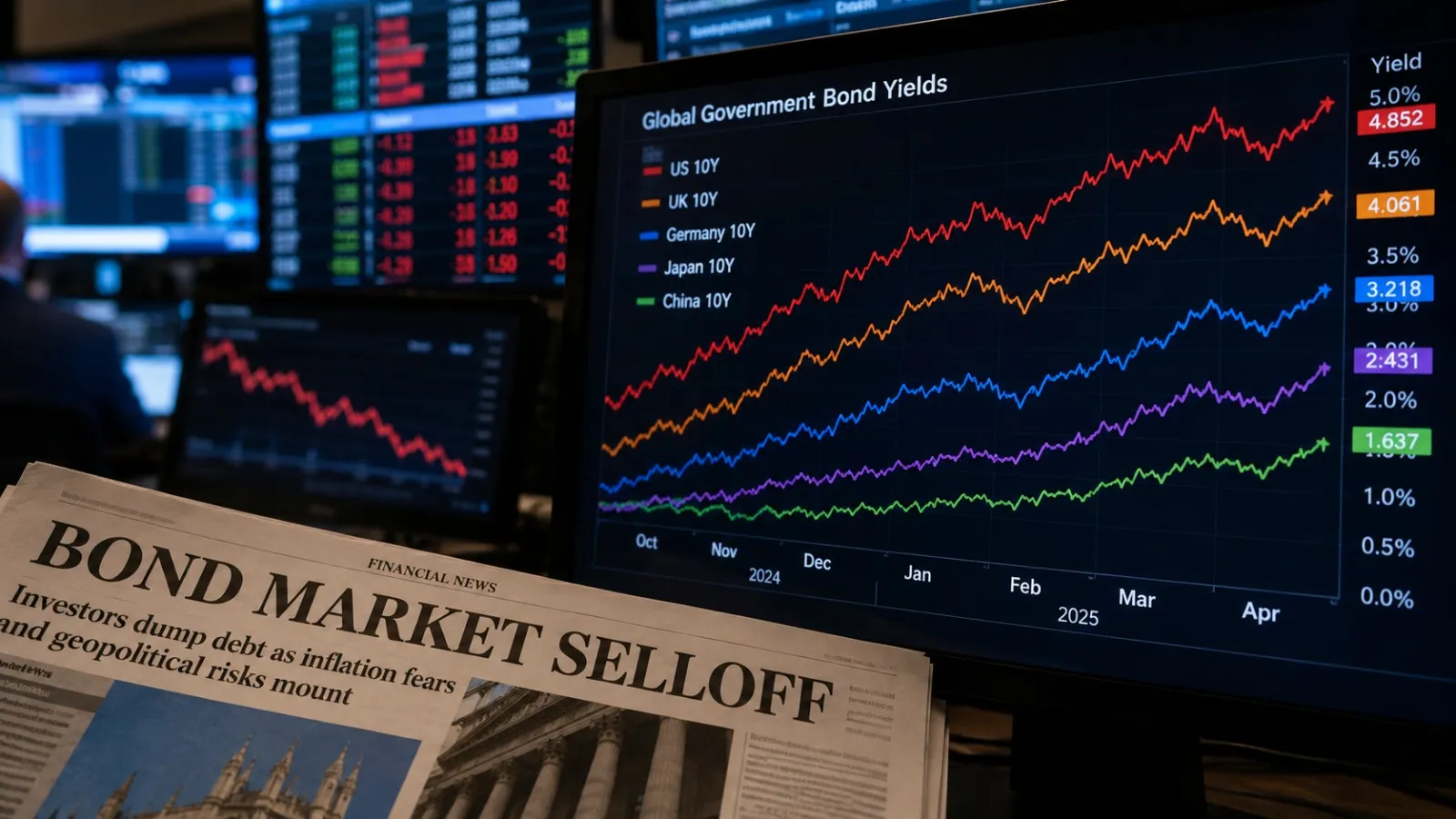
The link between emerging-market capital outflows and currency depreciation is direct and mechanical: when foreign investors sell emerging-market equities and bonds, they typically need to convert the local currency proceeds back into dollars (or their own home currency) to repatriate capital, creating additional dollar demand and local currency selling pressure that compounds whatever currency weakness might already be underway from other factors, like India's oil-driven trade dynamics. This has been visible in India's government bond market as well, where the yield on the benchmark 10-year bond rose 6 basis points to 6.79% in mid-July, reflecting both the direct impact of foreign outflows from Indian debt markets and the broader inflationary concerns tied to rising oil prices and a weakening currency — concerns reinforced by India's retail inflation data, which showed CPI inflation rising to 4.38% in June 2026, breaching the Reserve Bank's medium-term target of 4% for the first time since January 2025.
A tale of two capital pools: FCNR-B shortfall
One of the more nuanced aspects of the capital flow story in India involves the Foreign Currency Non-Resident (FCNR-B) deposit scheme — a mechanism through which non-resident Indians can place foreign currency deposits with Indian banks, providing the country with a source of relatively stable dollar inflows that isn't as sensitive to short-term portfolio investment sentiment as FII equity flows. Following a regulatory relaxation aimed at attracting greater diaspora capital, roughly $7 billion flowed in during the scheme's first fortnight, bringing cumulative inflows to around $10 billion — but this fell well short of market expectations, which had anticipated inflows in the range of $30 billion to $50 billion. This shortfall illustrates how even India's more "sticky," diaspora-driven capital sources have been affected by the broader climate of caution that has taken hold amid 2026's geopolitical turbulence, with even non-resident Indians — who might otherwise be expected to view Indian rupee assets somewhat more favourably than purely foreign institutional investors — appearing more hesitant to commit large sums of capital during a period of heightened uncertainty.

How other emerging markets are faring
While India's specific situation carries distinctive features tied to its oil dependence, the broader $46.1 billion emerging-market outflow figure reflects a phenomenon playing out across the developing world, from Latin America to Southeast Asia to Eastern Europe. Countries with their own specific vulnerabilities — heavy external debt burdens, current account deficits, or direct exposure to the Middle East conflict through trade or energy relationships — have generally seen sharper currency and equity market pressure than those with stronger external balance sheets and larger reserve buffers. This differentiation matters because it suggests that, even amid a broad-based "emerging markets" outflow wave, global investors are not treating all developing economies identically — country-specific fundamentals continue to matter at the margin, even during periods of aggregate risk aversion, rewarding economies like India that have built substantial reserve buffers and diversified investor bases relative to more thinly capitalized emerging markets.
What could reverse the trend
Market participants and economists generally point to a narrow set of catalysts that could meaningfully reverse the current wave of emerging-market outflows: most directly, a genuine and durable de-escalation of the Middle East conflict that removes the primary source of oil price volatility and global risk aversion currently driving capital toward safe havens. Absent that, emerging markets — India included — are likely to remain vulnerable to continued bouts of capital flight each time tensions flare anew, with the direction and magnitude of flows tracking closely with the ebb and flow of the conflict itself.
Beyond the geopolitical trigger, structural factors like relative interest rate differentials between emerging and developed markets, US Federal Reserve monetary policy decisions (which influence the relative attractiveness of dollar-denominated assets versus emerging-market alternatives), and the trajectory of the US dollar index itself will all continue to play a role in shaping the pace and direction of emerging-market capital flows through the remainder of 2026.
What it means for ordinary investors
For retail investors in India and other emerging markets, episodes of large-scale foreign capital outflow can be unsettling, often coinciding with visible stock market declines and currency depreciation that dominate financial headlines. But market veterans generally caution against reading too much into any single month's outflow figure in isolation — capital flows into and out of emerging markets have historically been cyclical, often reversing sharply once the specific catalyst driving outflows (in this case, Middle East-driven risk aversion and oil price volatility) resolves or at least stabilizes. India's growing base of domestic institutional and retail investors, built up over years of sustained SIP inflows into mutual funds, has provided a meaningful cushion during this particular episode of foreign selling — a structural evolution in India's capital markets that didn't exist to nearly the same degree during earlier periods of global risk aversion, and one that may increasingly differentiate how India's markets weather future waves of emerging-market capital flight compared to the more foreign-capital-dependent dynamics of previous decades.