FundingMarket Data Women10 MIN READ

The 96 Rupee Wall: How Middle East Fire Is Torching India's Currency

The Indian rupee slumped past 96 per US dollar on July 14, 2026, its weakest level in nearly two months, as surging crude oil prices and Middle East tensions overwhelmed RBI intervention. Here's what it means for India.

By Aravind Kumar · Author16 July 2026Trending
The 96 Rupee Wall: How Middle East Fire Is Torching India's Currency

There is a number that ordinary Indians rarely think about until it starts hurting their wallets, and this week, that number broke through a psychological wall it hadn't touched in nearly two months. On Tuesday, July 14, 2026, the Indian rupee slid to as low as 96.2375 against the US dollar before closing the session at 96.20 — a level not seen since May 22. It was the currency's second straight day of losses, extending its two-day decline to 0.91%, and it happened despite what traders describe as active, if insufficient, intervention by the Reserve Bank of India.

To understand why a currency can lose ground even when the country's central bank is actively fighting to defend it, you have to follow the story back to the Persian Gulf, where renewed hostilities between the United States and Iran have once again convulsed global energy markets. Brent crude futures surged more than 4% to touch $87 a barrel after Washington reimposed a naval blockade on Iranian shipping, reigniting fears that one of the world's most critical oil chokepoints could see disrupted flows. For a country like India, which imports roughly 85% of its crude oil needs, a rally like that isn't just a headline from a faraway war — it is a direct hit to the trade balance, the current account, and ultimately, the value of the rupee itself.

Why oil and the rupee are joined at the hip

India's relationship between crude prices and currency strength is one of the most predictable transmission mechanisms in emerging-market economics. Every dollar increase in the price of a barrel of oil widens India's import bill, which in turn increases demand for US dollars in the domestic market — Indian oil marketing companies and refiners need dollars to pay their overseas suppliers, and that dollar demand pushes the rupee weaker. When crude spiked toward $87 a barrel this week on the back of the reignited US-Iran conflict, it triggered exactly this chain reaction, sending importers scrambling for dollars and pressuring the rupee even as exporters and the central bank tried to hold the line.

Market participants noted that the rupee's slide wasn't just about oil — it was compounded by a shift in trading psychology. According to a trader at a foreign bank, quoted anonymously in market commentary, the bias in the USD/INR pair had shifted in recent weeks from "sell on upticks" to "buy on dips," meaning traders who had previously bet on rupee strength every time the currency touched a high were now doing the opposite, adding to dollar demand every time the rupee dipped. That shift is significant because it suggests market sentiment has structurally turned more bearish on the rupee, not just reacting to a single news event.

Adding fuel to the fire, once the rupee breached the closely watched 95.80 level — a technical support point that many traders had been defending — it triggered a wave of short-covering that accelerated the slide toward 96. In currency markets, these technical inflection points often matter as much as the underlying economic fundamentals, because large institutional players position themselves around these levels, and once they break, algorithmic and momentum-driven trading can amplify the move.

The RBI's quiet battle

Behind the scenes, the Reserve Bank of India has not been a passive observer. Traders flagged likely dollar sales by the RBI across both the spot market and the non-deliverable forward (NDF) market on Tuesday — a sign that the central bank is actively trying to cushion the rupee's fall rather than allowing an uncontrolled slide. This is consistent with the RBI's long-standing approach to currency management: it rarely tries to defend a specific level indefinitely, but it does intervene to smooth excessive volatility and prevent panic-driven moves.

The RBI has considerable firepower to do this. According to the central bank's latest data, India's foreign exchange reserves stood at $674.19 billion for the week ended July 3, 2026 — among the largest reserve stockpiles of any emerging economy, and a war chest that gives the RBI meaningful room to intervene in currency markets without triggering the kind of reserve-depletion panic that has destabilized other emerging markets in past crises.

Even so, the scale of the challenge is significant. Over the past year, the rupee has depreciated 10.62% against the dollar, and since the start of the West Asia conflict in late February 2026, it has fallen 5.43%. Traders pointed out that the RBI's interventions in recent sessions have come at a "slower pace than expected," given the central bank's existing currency positions and the broader trend of negative capital flows into the country. That combination — persistent geopolitical risk, elevated oil prices, and softer-than-hoped foreign capital inflows — has left the rupee more exposed than many analysts had anticipated even a few months ago.
ChatGPT Image Jul 16, 2026, 04_22_07 PM.png

Inflows that fell short of expectations

One of the more interesting threads in this story involves the Foreign Currency Non-Resident (FCNR-B) deposit scheme, a mechanism the RBI and the government have used in the past to attract dollar inflows from the Indian diaspora during periods of currency stress. Analysts noted that after a related regulatory relaxation, roughly $7 billion came in during the first fortnight, bringing total inflows under the scheme to around $10 billion. That might sound like a substantial number, but the market had actually been positioned for something far larger — estimates of $30 billion to $50 billion in inflows had been circulating among currency desks. The shortfall between expectation and reality has been one of the quieter but more consequential factors weighing on the rupee, because markets had effectively priced in a wave of dollar liquidity that has yet to fully materialize, thanks to the renewed geopolitical uncertainty that has made global investors more cautious about deploying capital into emerging markets generally.


The rupee is likely to remain highly sensitive to oil prices, and traders will be watching closely how firmly the central bank chooses to defend the currency from here.
Editorial Desk

The inflation feedback loop

If a weaker rupee and higher oil prices were happening in isolation, they would be worrying enough. But this week's currency move is unfolding against a backdrop of inflation data that is already flashing warning signs. India's retail inflation, as measured by the Consumer Price Index (CPI), rose to 4.38% in June 2026 — the first time it has breached the RBI's medium-term target of 4% since January 2025. Compounding the picture, the Wholesale Price Index (WPI) print released the following day also came in elevated, reinforcing market expectations that price pressures are building across the economy rather than being confined to a single sector.

This creates a genuinely uncomfortable feedback loop for Indian policymakers. A weaker rupee makes imported goods — starting with crude oil, but extending to everything from edible oils to electronics components — more expensive in rupee terms. That imported inflation then shows up in the CPI basket, pushing headline inflation further away from the RBI's comfort zone. And because a central bank fighting inflation often prefers not to cut interest rates (and may even need to consider tightening), the room to use monetary policy to support economic growth narrows precisely at a moment when global uncertainty is already weighing on business sentiment.

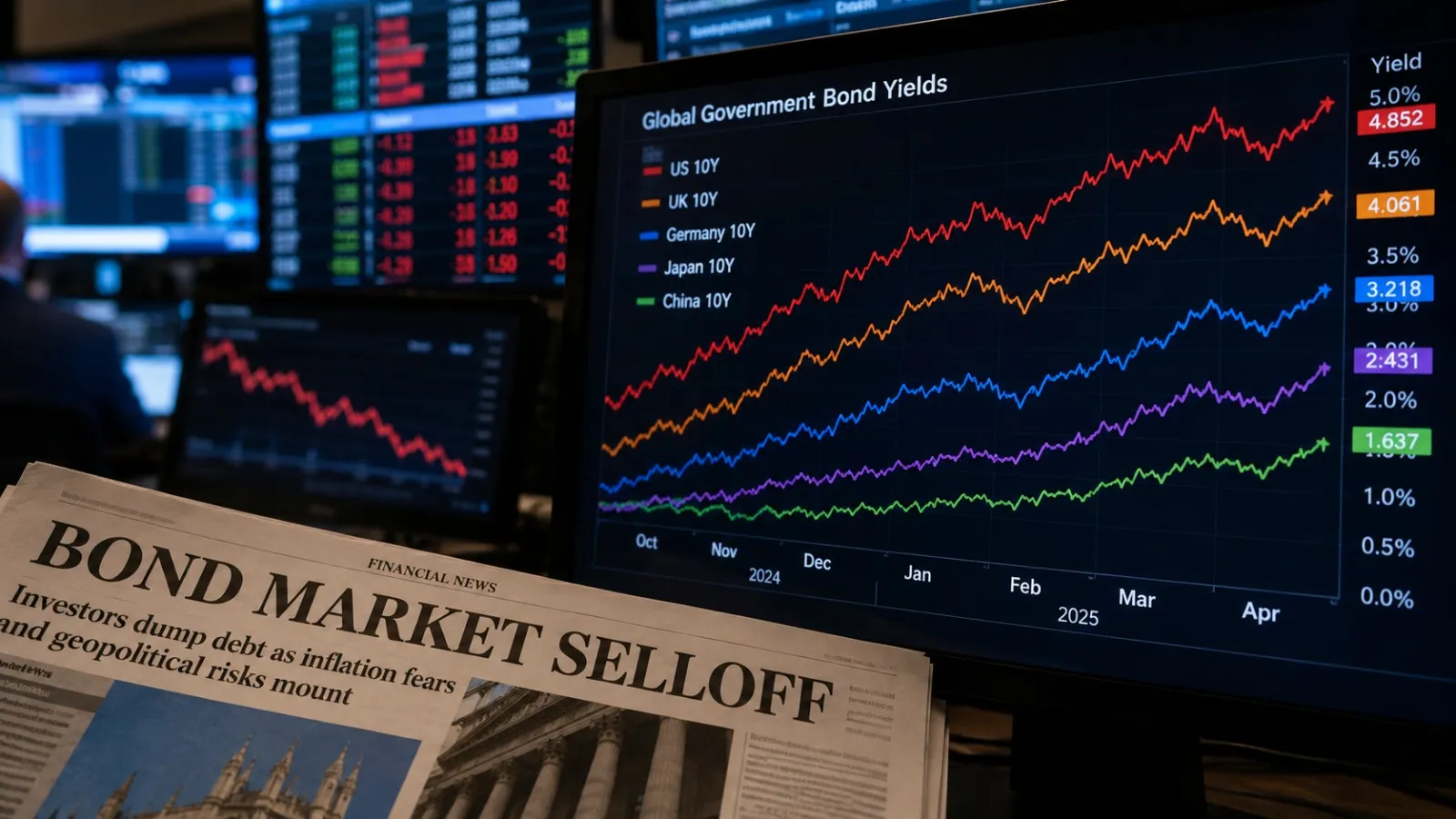
Government bond markets registered this anxiety in real time. The yield on the benchmark 10-year government bond rose 6 basis points to 6.79%, up from 6.73% just a day earlier, as investors demanded a higher return to compensate for the risk of holding rupee-denominated debt in an environment of climbing prices and currency depreciation. Rising bond yields also increase the government's own borrowing costs, adding a fiscal dimension to what began as a purely currency-market story.

What it means for Indian households and businesses

For the average Indian household, a weakening rupee combined with a global oil shock translates fairly directly into higher costs at the fuel pump, on cooking gas, and eventually, if the pass-through continues, on a broad range of consumer goods that rely on imported inputs. Fuel prices at the retail level had, as of mid-July, remained largely steady thanks to earlier revisions by state-owned oil marketing companies, but the underlying pressure from a $87-a-barrel Brent price and a sub-96 rupee is the kind of combination that historically forces price adjustments if it persists.

For businesses, particularly import-dependent sectors like electronics manufacturing, chemicals, and capital goods, a weaker rupee raises input costs and squeezes margins unless they can pass those costs on to consumers — something that becomes harder to do when overall demand is already being watched cautiously amid geopolitical uncertainty. On the other side of the ledger, IT services exporters and other dollar-earning sectors typically benefit from rupee weakness, since their overseas revenues translate into more rupees when converted back home. Notably, market commentary around this week's earnings season pointed out that rupee depreciation has been cited as a tailwind for some technology companies reporting their first-quarter results for the new financial year, helping offset softer demand trends in certain service lines.

ChatGPT Image Jul 16, 2026, 04_24_47 PM.png

Equities feel the ripple

The currency and bond market stress didn't stay contained to those asset classes. Indian equities also took a hit, with the benchmark Nifty 50 index declining roughly 0.7% as the same forces — rising oil prices, a weakening rupee, and broader risk-off sentiment tied to the Middle East conflict — spilled over into stock markets. Sectors with high import dependence or global supply chain exposure were particularly vulnerable, while the flight to safety globally boosted demand for the US dollar as a haven asset, further reinforcing the rupee's weakness in a self-feeding cycle that traders are watching closely heading into the back half of July.

What comes next

Currency analysts are largely in agreement on one point: as long as the West Asia conflict remains unresolved and crude oil prices stay elevated, the rupee is likely to remain highly sensitive to swings in oil, with each escalation or de-escalation in the geopolitical situation capable of moving the currency by a percent or more in a single session. The critical variable to watch, according to traders, is how firmly and consistently the RBI chooses to defend the currency from here — whether it allows a more gradual, managed depreciation that reflects underlying fundamentals, or steps up intervention more aggressively to defend specific psychological levels like 96 or 97.

There is also a structural question hovering over this episode: India's current account and capital account dynamics have shifted somewhat in 2026, with emerging markets broadly experiencing net capital outflows — a trend that has made the rupee's task even harder, since it isn't just fighting a domestic inflation and oil story, but also a broader loss of investor appetite for emerging-market assets relative to perceived safe havens like the US dollar and Treasury bonds.

For now, the rupee sits at a level that would have seemed unlikely just a few months ago, when the currency had been trending toward stability. Whether 96 becomes the new normal or merely a staging post on the way to a further slide will depend on factors far beyond India's control — chiefly, whether the fragile calm in the Strait of Hormuz holds, or whether the region tips further into the kind of prolonged conflict that keeps oil prices structurally elevated. What is clear is that for India's central bank, its exporters, its importers, and its 1.4 billion consumers, the currency market has once again become a live barometer of global risk — and this week, that barometer is flashing red.

TagsRupeeVsDollarIndianEconomyRBICrudeOilPricesForexReservesUSDINRIndiaMarketsEconomicPolicyInflationWatchGlobalBusinessNews

Reader reviews

Sign in to rate and review this article.
Loading reviews…