
The $5.5 Million Bet on a Smarter Fabric Supply Chain
On April 23, 2026, a Bengaluru-based startup that had been operating largely out of the public eye announced a funding round that signaled something significant about the future of fashion. STCH, a contract development and manufacturing platform focused on fabric innovation, raised $5.5 million in a pre-Series A round led by Omnivore . The round also saw participation from Kae Capital and WVC .
The numbers are impressive for a startup barely a year old. But the story behind the numbers is what makes this funding worth paying attention to. STCH is not building another consumer-facing AI tool. It is not creating a virtual try-on feature or a design generator. The startup is building an AI system that can decode, recreate, and manufacture fabric at scale—and global fashion brands are already lining up to use it .
The Problem: Fashion's Most Expensive Bottleneck
To understand why Omnivore and other investors put money into STCH, you have to understand how fabric development works today. The process is largely manual, fragmented, and expensive. When a fashion brand wants to create a new product, it typically sends a sample or a description to manufacturers. Those manufacturers then go through what co-founder Narahari Payala describes as a brutal trial-and-error process.
One may need twenty iterations to get one output right, Payala explained in an interview . Each iteration takes time and money. And in an industry where trends change in weeks, that lag is deadly.
The problem is particularly acute for the backend of fashion. Most AI innovation has focused on the front end—design tools, virtual try-ons, personalized recommendations. But the real opportunity, Payala argues, lies deeper in the supply chain, where manufacturing is centered in Asian markets. Fabric, he says, is the most critical yet least optimized layer .
That is the gap STCH is trying to fill.
The Solution: Fabric GPT
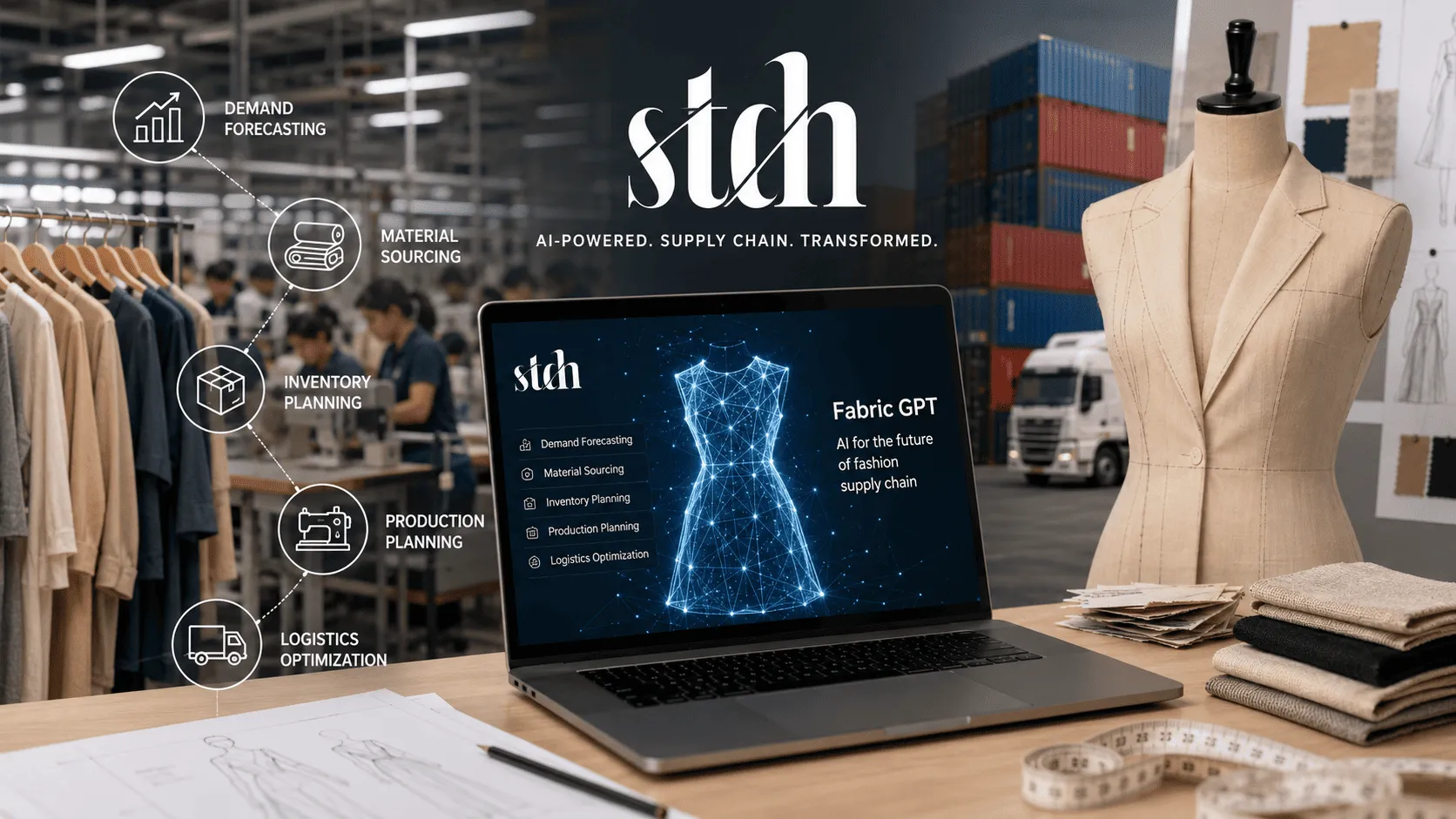
STCH is building what it calls a proprietary AI model dubbed Fabric GPT . The system is trained on large datasets of textile recipes and outcomes, aggregating information from textile mills about how different fibres, chemical treatments, and mechanical processes combine to produce specific fabric attributes.
Fabric is a sequence of what fibre you select and a number of mechanical and chemical treatments that you apply on top of it, Payala told CNBC-TV18. The company is working to create a model that understands the linkages between the processes and the output attributes of a fabric .
The practical application works like this. A brand provides STCH with a product image or a description of a fabric it wants to recreate. The AI system analyzes the fabric across parameters like texture, weight, and finish. It then helps recreate similar fabrics using local manufacturing partners in India and Bangladesh .
The system can also work in the opposite direction. If a brand wants a fabric with specific performance characteristics—say, the softness of cotton with the durability of polyester—the AI can theoretically generate the recipe for achieving that combination.
What we are building is a system that understands the relationship between inputs, be it fibres, chemicals, processes and outputs like softness, durability or texture. Over time, if I want a specific fabric outcome, I should be able to get the exact recipe, Payala told The Economic Times .
The Performance That Convinced Investors
STCH is not pitching a future vision. It is already delivering results.
The startup has an order book exceeding $15 million, driven entirely by repeat demand, according to Payala . The company expects to close about $15 million of its current order book in the next year and is targeting revenue of around ₹100 crore in the financial year 2027 .
The client list includes both global fast-fashion giants and established brands. STCH works with Shein, Next, Roman, Joe Browns, Crocodile, Being Human, CP Brands, and Rainforest across the United Kingdom, Europe, the United States, and India .
The company's current largest market is the United Kingdom, followed by India and parts of Europe. STCH plans to expand further into Germany, France, and Spain, and later into the United States .
The Sustainability Angle
One of the most interesting aspects of STCH's approach is its focus on sustainable materials. The startup is working on textile formulations that replace petrochemical-based synthetics with biodegradable or recycled fibres without compromising on performance .
Payala claims that STCH has developed cotton-based fabrics that mimic the look and feel of polyester, allowing brands to move toward more sustainable materials without sacrificing quality . This is not a niche concern. If we can match the performance of synthetics using biodegradable, agri-waste-based fibres, then any brand would want to adopt that, Payala told CNBC-TV18. More than half of that $900 billion market would shift toward sustainability if performance parameters are met .
The broader ambition is to enable a transition away from synthetic materials by proving that sustainable alternatives can match or exceed the performance of traditional textiles. That is a significant commercial opportunity, not merely an environmental one.
The Founders: Ex-Zetwerk Executives Who Know Textiles
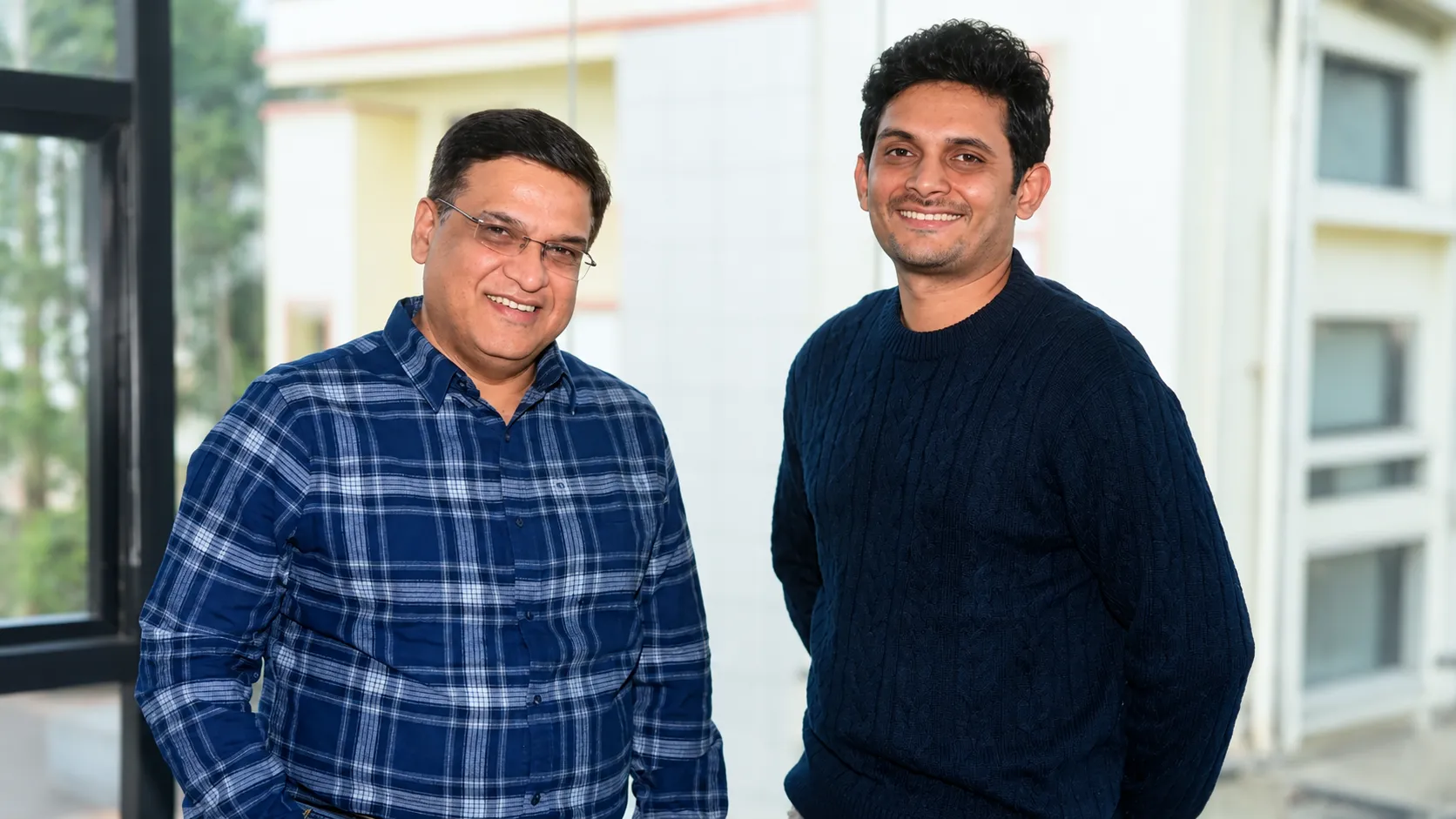
STCH was founded in 2025 by Narahari Payala and Aseem Chitkara, both former executives at Zetwerk, the Bengaluru-based manufacturing platform that has become one of India's most valuable startups . Their backgrounds give them two critical advantages: deep expertise in global sourcing and manufacturing, and existing relationships with brands and factories.
The idea for STCH came from Payala's experience in textile manufacturing and global sourcing. He felt that most innovation in fashion was happening on the consumer side, while the manufacturing layer remained largely unchanged .
The trigger came from a real customer problem. A United Kingdom-based brand approached the team to replace fabrics it was sourcing from Turkey with alternatives from India. It took STCH a few months to recreate those fabrics, but the brand was able to cut sourcing costs by nearly 20 percent. That became the starting point for building a more structured fabric research and development and manufacturing model .
The Operational Model: Committed Capacity, Not Ownership
Unlike traditional manufacturers, STCH operates with committed capacity from partner factories rather than owning them . The startup currently works with a handful of factories whose production capacity is largely dedicated to fulfilling its orders.
This asset-light approach allows STCH to scale quickly without the capital expenditure required to build its own manufacturing facilities. The company takes a fabric from concept to production in about 45 days, working closely with brands to show samples and prototypes regularly before moving to mass production .
Why Omnivore Invested
Omnivore, the lead investor in the round, is known for backing agrifood and climate-focused technology companies . The firm's interest in STCH reflects the growing recognition that textile manufacturing has significant environmental implications and that technology can play a role in making it more sustainable.
Mark Kahn, managing partner at Omnivore, said the founders bring a strong mix of materials science and supply chain expertise. India has the raw materials, the mills, and now with STCH, the AI-native platform to become a global source of sustainable textile innovation .
The comment highlights a broader thesis. India is one of the world's largest textile producers, but it has historically competed on cost rather than innovation. STCH represents a bet that Indian manufacturing can move up the value chain by integrating artificial intelligence into the design and development process.
What the Funding Will Do
The $5.5 million in fresh capital will be deployed across several areas .
First, expanding AI capabilities. STCH plans to invest in its AI stack and continue training its Fabric GPT model on larger datasets from textile mills.
Second, building a fabric research and development laboratory. The company wants to create physical infrastructure where it can test and validate AI-generated fabric recipes.
Third, deepening manufacturing partnerships. STCH plans to expand its network of partner factories across India and Asia.
Fourth, geographic expansion. The company is preparing to enter the United States market, adding to its existing presence in the United Kingdom, Europe, and India .
The Macro Tailwinds
STCH is betting on favorable macroeconomic trends as well as its own technology. Recent trade agreements between India and markets like the United Kingdom and Europe, along with shifting tariff structures, are making Indian textile manufacturing more competitive globally .
The timing is not accidental. Global brands are under pressure to diversify their supply chains away from concentrated sources, and India is a clear beneficiary of that shift. At the same time, sustainability regulations in Europe are forcing brands to pay closer attention to the environmental impact of their materials. STCH is positioning itself as the bridge between these two trends: an Indian manufacturing partner that can deliver sustainable fabrics at scale, powered by AI.
The Bottom Line
STCH is not trying to replace the entire textile industry. It is trying to make one part of it much smarter. The $5.5 million funding round is a bet that global fashion brands will pay for predictability, speed, and sustainability in their fabric supply chains.
The early results are encouraging. A $15 million order book from clients like Shein, Next, and Being Human suggests that the market is ready for this solution. The challenge will be scaling the model without losing the quality and customization that convinced those early clients to sign on.
For the broader Indian startup ecosystem, STCH represents something important: a shift away from consumer-facing apps and toward business-to-business deep tech. The company is not trying to become the next e-commerce unicorn. It is trying to solve a specific, expensive problem in a massive global industry. And investors are betting that the solution is worth billions.