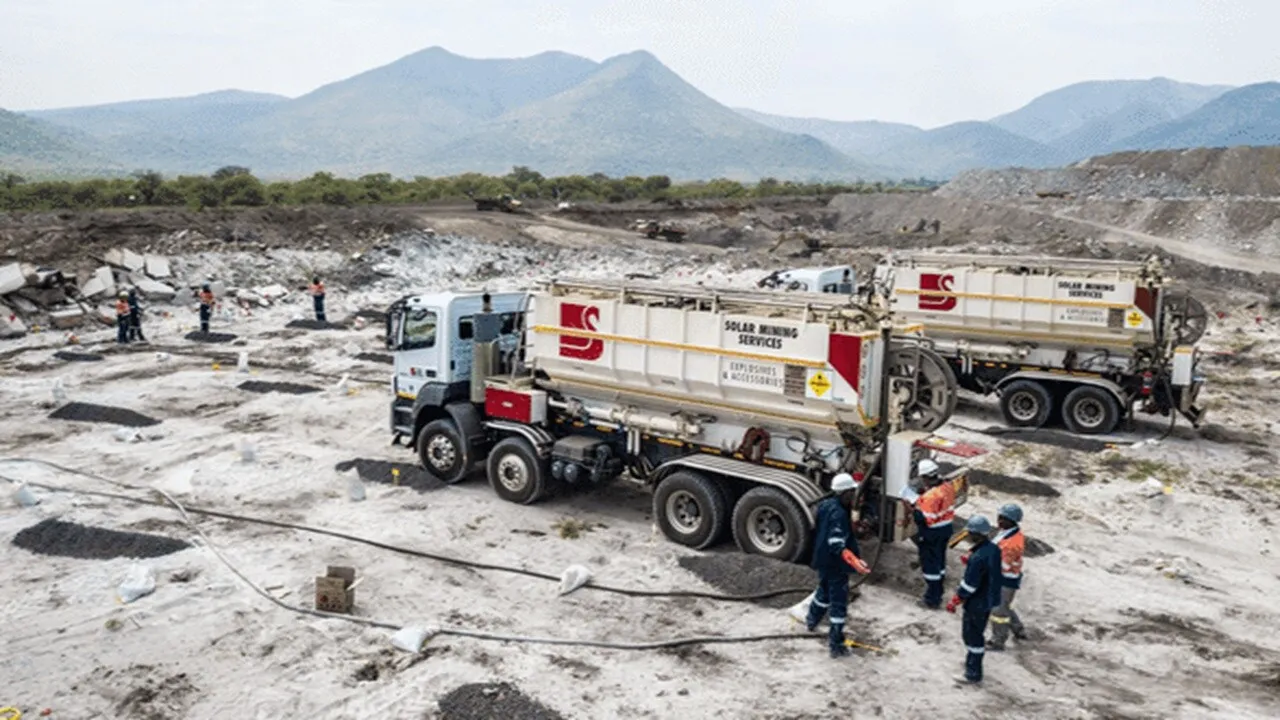
Mumbai: Shares of Solar Industries India, the country's largest manufacturer of industrial and defence explosives, surged in Monday's trading session after the Defence Research and Development Organisation, widely known as DRDO, successfully tested long-range rocket systems, a development that market participants interpreted as a strong signal of forthcoming order opportunities for domestic defence manufacturers. The rally in Solar Industries shares formed part of a broader uptick in sentiment toward India's defence and strategic manufacturing sector, which has increasingly captured investor attention amid the government's sustained push toward self-reliance in defence production.
The stock's sharp move higher reflects a now-familiar pattern in Indian equity markets, where successful weapons and defence systems testing by government research agencies frequently translates into immediate, tangible investor optimism about the prospects of private and public sector companies positioned to benefit from the resulting production and supply contracts. Solar Industries, given its established position as a key supplier of explosives and propellant systems used across a range of defence applications, has repeatedly found itself at the centre of this dynamic whenever DRDO or the broader Indian defence establishment achieves a notable testing milestone.
UNDERSTANDING THE DRDO CONNECTION
Solar Industries has, over the past decade, evolved considerably beyond its historical roots as primarily an industrial explosives manufacturer serving India's mining and infrastructure sectors, building out a substantial and increasingly sophisticated defence manufacturing vertical that now supplies a range of products including ammunition, propellants, and various components used in missile and rocket systems. This diversification strategy has positioned the company as one of the more prominent beneficiaries of India's broader defence indigenisation push, a policy priority that has gained considerable momentum in recent years as the government has sought to reduce the country's historical dependence on imported defence equipment and technology.
The specific rocket systems tested by DRDO, while details of the exact technical specifications and intended applications remain closely guarded given the sensitive nature of defence research and development, are understood to fall within the broader category of long-range strike capabilities that India has been actively developing as part of its evolving strategic posture. Successful tests of this nature typically represent a critical milestone in the multi-year journey from research and development through to eventual production-scale manufacturing and deployment, a journey in which companies like Solar Industries often play an increasingly central role as programmes transition from the developmental phase into serial production.

MARKET REACTION AND TRADING DYNAMICS
The market's reaction to the DRDO test news was swift and pronounced, with Solar Industries shares registering significant gains as investors moved to price in the prospect of expanded order flows stemming from the successful trial. This pattern of rapid, event-driven re-rating has become increasingly characteristic of how Indian markets treat defence sector news, reflecting both the sector's relatively concentrated universe of listed pure-play beneficiaries and the outsized weight that successful weapons testing carries as a leading indicator of future government procurement decisions.
Trading volumes in Solar Industries shares were notably elevated through the session, a pattern consistent with the kind of broad-based investor participation, spanning both institutional and retail segments, that has increasingly characterised trading in India's defence-linked stocks over the past several years. This retail investor enthusiasm for defence sector stories has itself become a notable feature of India's evolving equity market landscape, reflecting both genuine excitement about the sector's structural growth prospects and, at times, a degree of speculative fervour that analysts have periodically cautioned may not always be fully justified by underlying near-term earnings visibility.
THE BROADER DEFENCE INDIGENISATION STORY
Solar Industries' rally needs to be understood within the context of a much broader, multi-year transformation underway across India's defence manufacturing ecosystem. Successive government policy initiatives have progressively increased the emphasis on domestic production of defence equipment, ranging from ammunition and small arms through to increasingly sophisticated systems including missiles, radar, and various categories of unmanned platforms. This policy push has been accompanied by a substantial expansion in the number of private sector companies actively participating in defence manufacturing, a segment of Indian industry that had historically been dominated almost exclusively by public sector undertakings and government-owned ordnance factories.
Solar Industries has positioned itself as one of the more prominent private sector beneficiaries of this broader shift, leveraging its existing expertise in explosives manufacturing, built up over decades of serving the civilian mining and infrastructure sectors, to expand into increasingly complex defence applications. This strategic pivot has been reflected in the company's financial performance over recent years, with its defence-related revenue segment growing to represent an increasingly significant proportion of overall group revenues, even as the company has continued to maintain and grow its traditional industrial explosives business, which continues to benefit from robust demand tied to India's ongoing infrastructure and mining sector expansion.
ANALYST PERSPECTIVES ON THE SECTOR
Market analysts covering the defence manufacturing space have generally maintained a constructive medium-term view on companies like Solar Industries, citing the structural tailwind provided by sustained government defence spending commitments alongside the broader policy emphasis on indigenisation. However, analysts have also periodically cautioned that near-term stock price movements tied to individual testing milestones, of the kind witnessed following Monday's DRDO announcement, can at times run ahead of the actual pace of order finalisation and revenue recognition, given the often lengthy and complex procurement processes that characterise India's defence acquisition framework.
This dynamic creates a recurring pattern in defence sector stock behaviour, wherein successful testing milestones trigger immediate share price appreciation reflecting optimism about future order flows, even though the actual translation of that optimism into confirmed orders, and subsequently into recognised revenue and profit, frequently unfolds over a considerably longer timeframe spanning multiple quarters or even years. Investors navigating this sector are therefore often required to balance genuine enthusiasm about long-term structural growth prospects against the reality of sometimes prolonged and unpredictable procurement cycles.
COMPETITIVE LANDSCAPE AND SECTOR PEERS
Solar Industries operates within an increasingly crowded and competitive landscape of Indian defence manufacturing companies, spanning both established public sector entities and a growing cohort of private sector players that have entered the space in response to the government's liberalised defence procurement and manufacturing policies. This competitive dynamic has, at various points, raised questions among analysts about the sustainability of order flows and pricing power for individual companies, even as the overall addressable market for indigenous defence production continues to expand in line with the government's stated objectives around import substitution and export promotion.
Solar Industries' relatively long track record in explosives and propellant manufacturing, combined with its demonstrated ability to scale production capacity in line with growing demand, has positioned the company favourably relative to some of its more recently established competitors, even as the broader sector continues to attract fresh capital and management attention from a widening pool of Indian industrial conglomerates seeking to participate in what many view as one of the more durable structural growth stories within the domestic manufacturing landscape.
EXPORT POTENTIAL AND FUTURE GROWTH DRIVERS
Beyond the immediate domestic order opportunities that successful DRDO testing programmes may generate, companies like Solar Industries are increasingly eyeing export markets as an additional avenue for growth, particularly as India's defence manufacturing capabilities mature and gain international credibility through successful indigenous testing and deployment programmes. The government has explicitly identified defence exports as a strategic priority, setting ambitious targets for growth in this segment over the coming years as part of its broader vision for India to emerge as a significant global player in defence manufacturing and technology.
For Solar Industries specifically, any successful transition of DRDO-tested systems from the research and development phase into confirmed production orders, whether for domestic deployment or potential export to friendly nations, would represent a meaningful additional growth vector beyond the company's existing revenue base, reinforcing the investment thesis that has driven sustained investor interest in the stock over recent years.
LOOKING AHEAD
As DRDO and India's broader defence establishment continue to advance various weapons and systems development programmes, companies like Solar Industries are likely to remain closely watched by investors seeking exposure to the country's defence indigenisation story. Monday's sharp share price rally serves as a reminder of just how directly and immediately market sentiment toward this sector can respond to individual testing milestones, even as the longer-term investment case ultimately rests on the sector's ability to translate this testing success into sustained, predictable order flows and earnings growth over the coming years.
FINANCIAL PERFORMANCE AND BALANCE SHEET STRENGTH
Solar Industries' ability to capitalise on emerging defence order opportunities rests substantially on the financial and operational foundation the company has built over recent years. The company has consistently maintained a relatively strong balance sheet position compared to many peers across the broader Indian industrial manufacturing landscape, providing it with the financial flexibility to invest in the capacity expansion and technological capability development necessary to compete for increasingly sophisticated defence contracts. This financial discipline has allowed the company to fund much of its defence segment expansion through internal accruals and prudent leverage, rather than relying on the kind of aggressive debt-funded expansion that has, at various points, created balance sheet stress for other companies operating in India's broader industrial and infrastructure sectors.
Analysts tracking the stock have generally pointed to this combination of financial discipline and strategic positioning within the defence indigenisation theme as core pillars of the investment case for Solar Industries, even as they caution that individual share price movements tied to specific news events, such as Monday's DRDO test, should be evaluated within this broader context rather than treated as standalone catalysts justifying dramatic reassessment of the company's medium-term earnings trajectory.
THE POLICY FRAMEWORK SUPPORTING GROWTH
India's defence procurement policy has, over recent years, undergone substantial reform aimed at simplifying and accelerating the process through which private sector companies can participate in defence manufacturing and supply contracts, historically an area where public sector undertakings and government ordnance factories held a near-monopoly position. These reforms have included measures to streamline licensing requirements, encourage joint ventures and technology transfer partnerships with international defence manufacturers, and provide various fiscal incentives aimed at encouraging private capital investment in defence manufacturing capacity.
For companies like Solar Industries, this evolving policy framework has created a considerably more favourable operating environment for expanding participation in defence manufacturing compared to the landscape that existed even a decade ago, providing a structural tailwind that extends well beyond any single testing milestone or order announcement. The continued evolution of this policy framework, including potential further reforms aimed at accelerating domestic defence procurement timelines and expanding the scope for private sector participation in increasingly sophisticated categories of defence equipment, will likely remain a key variable shaping the medium-term growth trajectory for Solar Industries and its industry peers.
INVESTOR CONSIDERATIONS GOING FORWARD
For investors evaluating Solar Industries following this latest rally, the key question centres on how much of the potential future order flow from DRDO's rocket testing programme, and similar initiatives, is already reflected in the current share price following Monday's gains. Given the inherently long and often unpredictable timelines that characterise the transition from successful defence testing to confirmed production orders, some analysts have cautioned that a degree of near-term volatility in the stock should be expected as the market continues to digest and reassess the practical implications of this and similar testing milestones over the coming weeks and months.

VALUATION DEBATE AMONG MARKET WATCHERS
The rally in Solar Industries shares has reignited an ongoing debate among market watchers about how best to value a company that straddles both a stable, cash-generative civilian explosives business and a considerably higher-growth but less predictable defence manufacturing segment. Traditional valuation approaches that rely heavily on trailing earnings multiples can, at times, struggle to fully capture the option value embedded in a company's exposure to potentially transformative defence order wins, leading some analysts to favour sum-of-the-parts valuation frameworks that separately assess the civilian and defence segments using distinct methodologies more appropriate to each business's specific risk and growth characteristics.
This valuation complexity has, at various points, contributed to periods of significant share price volatility for Solar Industries, as the market's collective assessment of the appropriate value to assign to the company's defence order pipeline shifts in response to individual news events, testing milestones, and broader sentiment toward the defence sector as a whole. Monday's rally fits within this established pattern, representing the latest instance of the market recalibrating its assessment of the company's defence segment growth prospects in response to a specific, tangible development.
REGULATORY AND EXPORT CONTROL CONSIDERATIONS
Companies operating in India's defence manufacturing sector, Solar Industries included, must navigate a complex regulatory environment governing the production, storage, and transport of explosive and propellant materials, alongside separate export control regulations that govern the international sale of defence-related products and technologies. These regulatory considerations, while sometimes overlooked amid the excitement generated by successful testing milestones, represent an important operational dimension that can materially affect the pace at which companies are able to scale production capacity and pursue export opportunities in response to growing domestic and international demand for indigenous defence manufacturing capabilities.