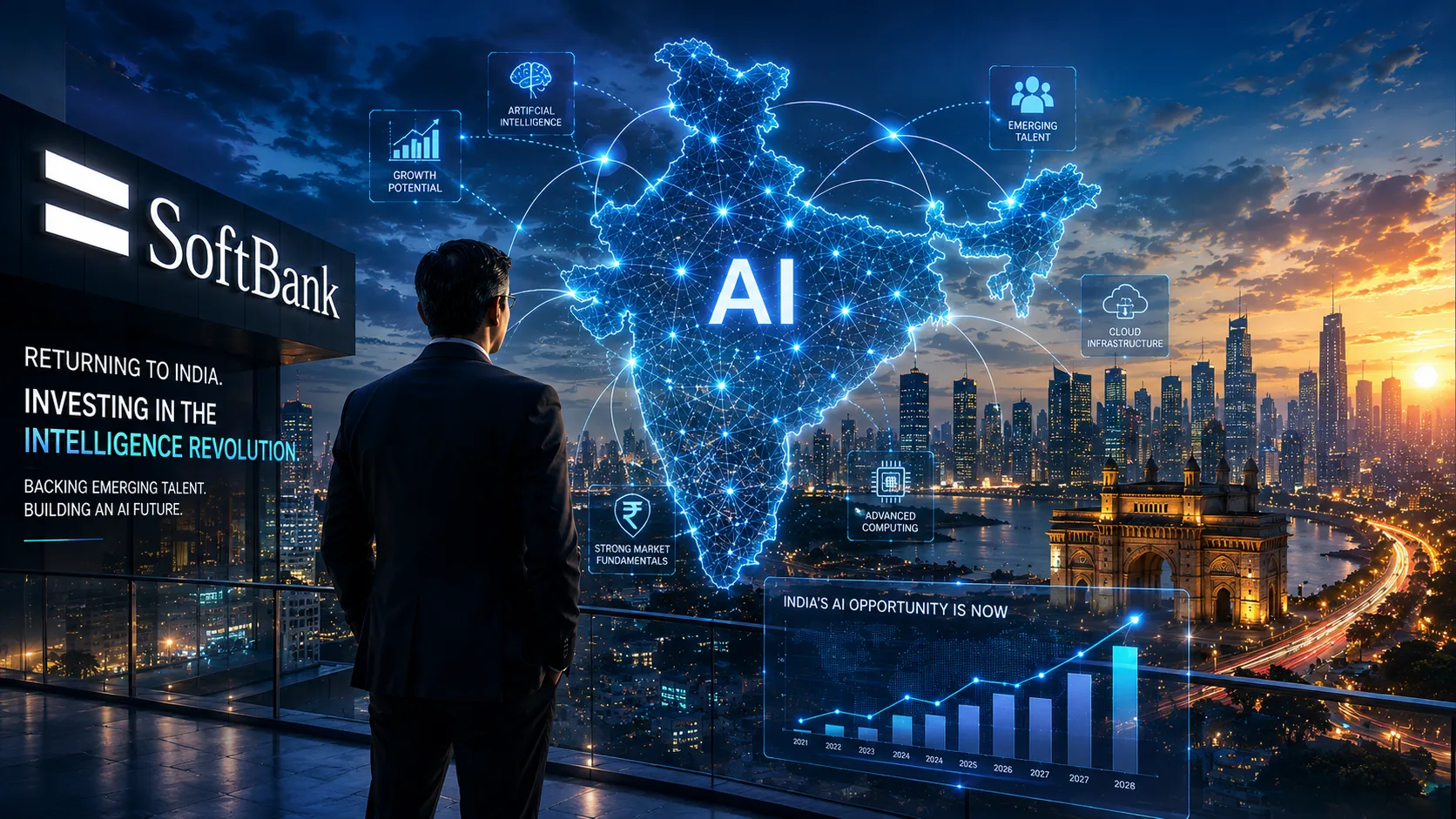
For much of India’s startup boom, SoftBank was not merely participating in the market it was actively shaping it. Through billion-dollar bets across ecommerce, mobility, fintech and consumer internet companies, the Japanese investment giant became one of the defining forces behind India’s unicorn era. Founder Masayoshi Son built a reputation around making large, conviction-led investments that often reflected belief in long-term market transformations rather than short-term trends. For several years, SoftBank’s investment activity represented a broader sense of confidence surrounding India’s entrepreneurial potential.
Over the past few years, however, the relationship appeared to enter a quieter phase. Global technology markets underwent significant corrections, startup valuations reset and investors became more cautious around deployment strategies. SoftBank itself moved through a period of restructuring and portfolio recalibration as market conditions changed across multiple geographies. Yet recent developments increasingly suggest that the company may be preparing for a meaningful return to India, though this time with a noticeably different strategy. Instead of broadly pursuing scale and growth alone, SoftBank now appears increasingly focused on artificial intelligence and the emerging founders building around it. The shift reflects not only a change in investment priorities but also a broader evolution in how investors increasingly view India’s role in the next technology cycle.
SoftBank’s Latest AI Bet May Signal Something Larger
That changing approach became more visible through SoftBank Vision Fund’s recent participation in the funding round of AI startup Emergent. The company raised approximately $70 million in a round co-led by SoftBank and Khosla Ventures, becoming one of SoftBank’s most notable new India-focused investments in recent years. The investment immediately attracted attention not simply because of the funding amount, but because it represented a category that global investors increasingly appear eager to pursue.
Artificial intelligence today occupies a very different position from many previous technology trends. Earlier startup cycles often revolved around user acquisition and rapid expansion. AI increasingly requires investors to think beyond scale and focus more deeply on capability, technical foundations and ecosystem positioning. Companies operating in AI today are not merely building products; they are increasingly building systems capable of influencing entire workflows, industries and technology environments.

Emergent itself operates in a rapidly growing category where artificial intelligence helps automate software development and simplify increasingly complex processes. Businesses of this kind are beginning to attract attention because they sit at the intersection of infrastructure, productivity and AI capability. SoftBank’s participation therefore increasingly appears less like a standalone funding decision and more like an indication that the company sees India’s AI ecosystem as capable of producing globally competitive businesses.
India Is Becoming Increasingly Important In The Global AI Conversation
Artificial intelligence may be changing how global investors think about India. Historically, India frequently occupied familiar positions within international technology ecosystems. The country offered a vast digital consumer base, large engineering communities and a rapidly expanding startup environment. While those strengths remain important today, AI increasingly creates an opportunity for India to move into a different role — one centered not simply around participation but around creation.
Unlike earlier technology cycles where businesses could often scale through distribution and market access alone, AI ecosystems increasingly depend on interconnected capabilities. Talent, research, cloud systems, infrastructure, enterprise demand and technical expertise now collectively determine where strong ecosystems emerge. India increasingly appears to possess many of these characteristics simultaneously.
This changing environment may explain why investors are beginning to revisit the market with renewed attention. The country’s combination of startup maturity, software expertise and engineering talent increasingly positions it as a potential destination for foundational AI businesses. Rather than merely becoming a location where technologies are adopted, India increasingly appears capable of producing companies that help define future technological infrastructure itself.
Masayoshi Son’s Larger AI Ambitions May Be Influencing The Shift
SoftBank’s renewed activity also arrives during a period when Masayoshi Son appears increasingly focused on positioning artificial intelligence at the center of the company’s global strategy. Over the last year, SoftBank significantly expanded exposure to AI through large-scale investments and partnerships involving OpenAI, infrastructure initiatives and broader computing ecosystems. Artificial intelligence increasingly appears to have become one of the company’s strongest long-term investment themes.
Historically, SoftBank often pursued broad technological movements rather than isolated opportunities. During earlier periods, those themes included internet platforms, mobile ecosystems and digital marketplaces. Today, AI increasingly appears to occupy a similar position. The difference is that artificial intelligence may ultimately reshape far more industries simultaneously, making the opportunity substantially larger and potentially more transformative.
Viewed through that lens, India’s growing relevance becomes easier to understand. Markets with engineering talent, startup ecosystems and strong enterprise adoption environments naturally become attractive destinations for investors seeking long-term AI opportunities. India increasingly checks many of those boxes.
Why This Return Could Influence India’s Startup Ecosystem
Venture capital ecosystems rarely operate on capital alone. Signals frequently influence behavior just as strongly as investment itself. When globally influential investors begin re-entering specific categories, broader market sentiment often follows. SoftBank’s renewed attention toward AI therefore may carry implications extending well beyond one startup funding round.
For founders building artificial intelligence businesses, access to capital frequently determines whether ambitious ideas remain concepts or become scalable products. Large investors entering categories can increase confidence around sectors that previously appeared uncertain or difficult. Areas involving enterprise AI, AI tooling, cloud systems and infrastructure software could increasingly attract stronger investor attention if markets interpret SoftBank’s return as a sign of broader opportunity.
The larger significance may not simply involve whether SoftBank is investing in India again. Evidence increasingly suggests that process has already begun. The more important question may involve the kind of India story the company now wants to help build. During earlier years, SoftBank participated in India’s consumer technology revolution. Artificial intelligence increasingly presents an opportunity to shape something much larger: the foundations of India’s next technology era.