
India’s Convenience Economy Is Entering A More Mature Phase
Over the last decade, India’s startup ecosystem transformed the way consumers interact with everyday services. Food delivery changed eating habits. Ride-hailing altered urban transportation. Ecommerce and quick commerce reshaped purchasing behavior by creating expectations around speed and accessibility. Yet beneath those highly visible technology categories, another opportunity quietly continued developing in the background — localized services built around daily life itself. These businesses focused not on changing what people buy, but on simplifying how people manage ordinary routines inside homes and neighborhoods.
For years, investors approached hyperlocal services with caution. Earlier startup experiments frequently encountered operational obstacles that proved difficult to overcome. Building businesses dependent on neighborhood-level supply networks often required balancing customer experience, worker availability and logistics efficiency simultaneously. Unlike software businesses capable of scaling rapidly with relatively low operational complexity, hyperlocal platforms depended heavily on real-world execution. Several earlier ventures struggled to establish sustainable economics, creating the perception that the category itself carried structural limitations.
That perception increasingly appears to be changing. Snabbit’s latest $56 million funding round is emerging as one of the strongest indicators that investor confidence around hyperlocal ecosystems may be entering a new phase. The round attracted participation from investors including Susquehanna Venture Capital, Mirae Asset Venture Investments and Bertelsmann India Investments alongside existing backers such as Nexus Venture Partners and Lightspeed. Reports suggest the company’s valuation climbed to approximately $350–390 million, representing a significant increase within a relatively short period. More importantly, the funding arrives at a time when venture capital firms have become substantially more selective, making confidence around operational categories especially meaningful.
Investors Increasingly Believe Everyday Friction Represents A Large Opportunity
Technology companies historically created value by identifying friction and reducing it. Search engines simplified information access. Ecommerce reduced the effort required to shop. Digital payments removed barriers around transactions. Hyperlocal businesses increasingly appear focused on another category of friction: the invisible inefficiencies embedded within daily life.
Urban living itself has changed dramatically over the past several years. Larger cities continue experiencing population growth, commute times remain substantial and dual-income households increasingly shape urban lifestyles. At the same time, expectations around convenience continue rising because consumers have become accustomed to digital systems capable of responding instantly.
This shift increasingly influences behavior beyond commerce alone. Consumers today often expect rapid and predictable experiences across categories involving household assistance, maintenance and localized services. The idea of scheduling services days in advance increasingly conflicts with broader expectations shaped by digital convenience ecosystems.
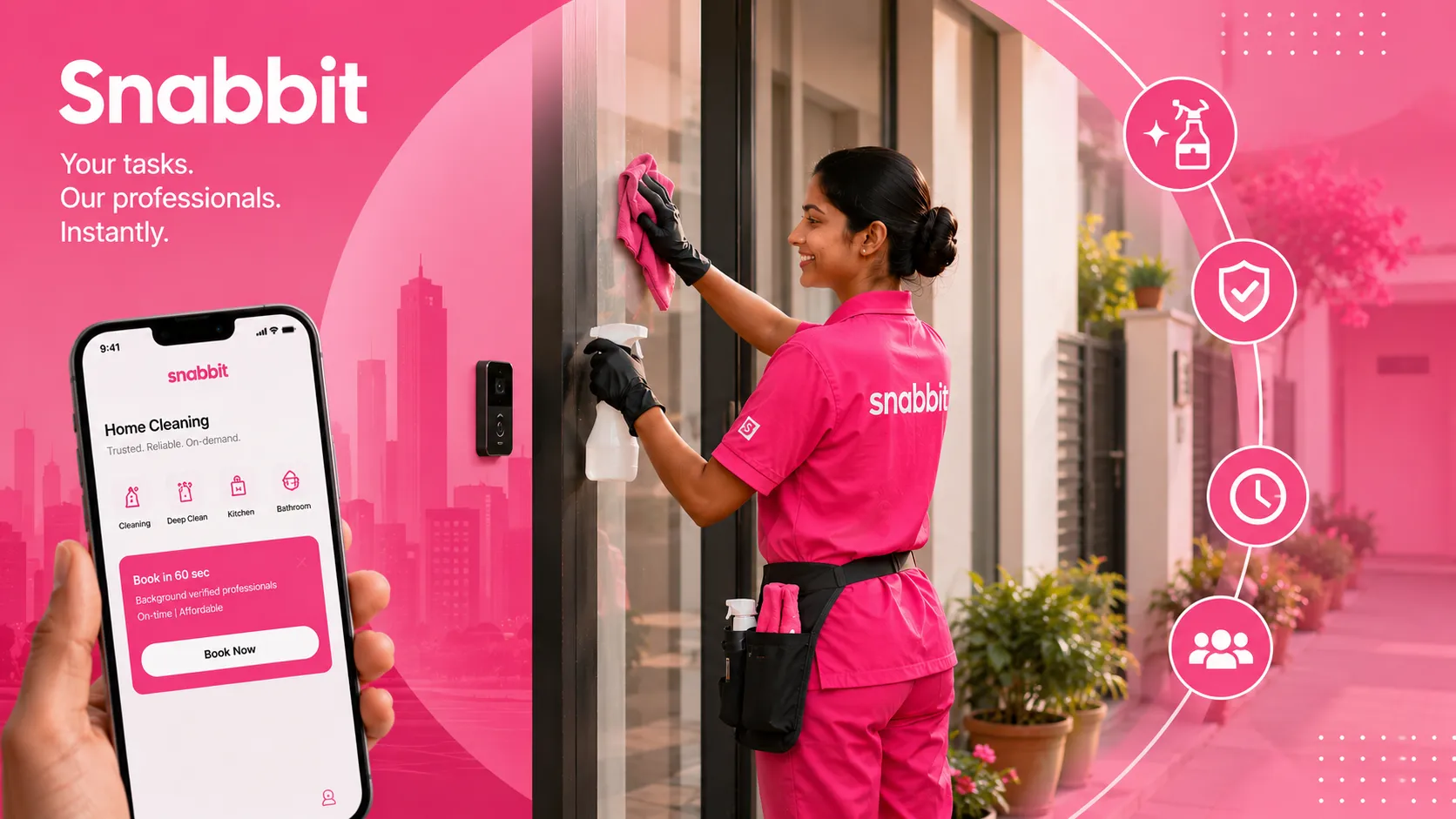
Snabbit appears designed around this evolving reality. By focusing on household assistance tasks including cleaning and domestic support services, the company is attempting to build systems around needs that occur repeatedly but often remain fragmented and difficult to organize efficiently.
Hyperlocal Platforms Are Quietly Building Infrastructure Rather Than Marketplaces
Part of what makes newer businesses such as Snabbit different involves how they increasingly position themselves. Earlier generations of hyperlocal startups often functioned primarily as marketplaces connecting supply and demand. The platform itself frequently acted as an intermediary.
Today’s models increasingly resemble infrastructure systems.
Rather than simply matching users with service providers, businesses increasingly manage quality controls, operational density, worker movement and service consistency. Artificial intelligence and analytics increasingly influence demand forecasting, scheduling systems and route optimization.
This evolution matters because marketplaces frequently become difficult to defend over time. Infrastructure systems, however, often create stronger long-term advantages because they improve operational efficiency as networks expand.
Reports indicate Snabbit crossed approximately one million monthly completed jobs while managing over 40,000 service interactions daily supported by a workforce of roughly 15,000 service providers. Operational performance metrics reportedly also improved as losses per order declined significantly. These details matter because they suggest businesses within the category increasingly focus on economics rather than growth alone. Hyperlocal startups historically struggled precisely in these areas. Stronger efficiency indicators therefore represent important signals not only for Snabbit but for the broader ecosystem itself.
Density Is Becoming The Hidden Driver Behind Hyperlocal Success
One of the less visible but increasingly important factors shaping hyperlocal businesses involves operational concentration.
Technology businesses traditionally pursued expansion through geographic scale. Hyperlocal businesses increasingly appear to operate according to different principles. Instead of expanding broadly and creating dispersed networks, newer companies increasingly seek highly concentrated operating environments where demand and supply remain geographically close.
Snabbit reportedly tracks worker travel behavior carefully and indicated that median movement distances between service tasks remain close to 247 meters. While the number itself may appear relatively minor, it illustrates a broader operational philosophy. Smaller distances can reduce inefficiencies, increase productivity and improve economics across entire networks.
This approach represents a meaningful departure from earlier startup strategies where growth frequently involved entering multiple markets rapidly. Today, stronger economics increasingly appear tied to density and local dominance rather than scale alone.The future of hyperlocal businesses may therefore depend less on national expansion and more on becoming deeply integrated within neighborhood ecosystems.
Investor Attention Around Hyperlocal Services Reflects A Larger Venture Shift
Snabbit’s latest round also reflects changing attitudes across venture capital itself. Earlier startup cycles often rewarded businesses capable of demonstrating rapid expansion regardless of profitability concerns. Today, investor behavior increasingly appears more measured.
Rather than prioritizing growth alone, investors increasingly evaluate sustainability, retention and operating quality. Businesses capable of demonstrating stronger economics while addressing large fragmented markets often receive greater attention.
Household services increasingly represent precisely that type of opportunity.
India’s domestic service economy remains enormous but relatively under-digitized. Millions of workers and households continue operate through informal arrangements and personal networks. Categories involving cleaning, maintenance and neighborhood services collectively create substantial demand, yet many remain operationally fragmented.Technology platforms capable of introducing predictability and structure may therefore unlock opportunities extending far beyond individual services themselves.
Hyperlocal Services May Become The Next Layer Of India’s Convenience Economy
The broader significance of Snabbit’s funding story may ultimately involve what it reveals about the future direction of India’s startup ecosystem.The first generation of digital businesses transformed purchasing behavior. Later companies reorganized transportation and logistics. Hyperlocal businesses increasingly appear interested in reorganizing routines surrounding everyday life itself.
This transition matters because convenience expectations rarely remain confined to individual categories. Once consumers experience seamless interactions within one area, they increasingly expect similar experiences elsewhere.
The future of convenience may therefore involve more than rapid delivery.It may increasingly involve creating environments where ordinary life itself becomes easier to navigate.