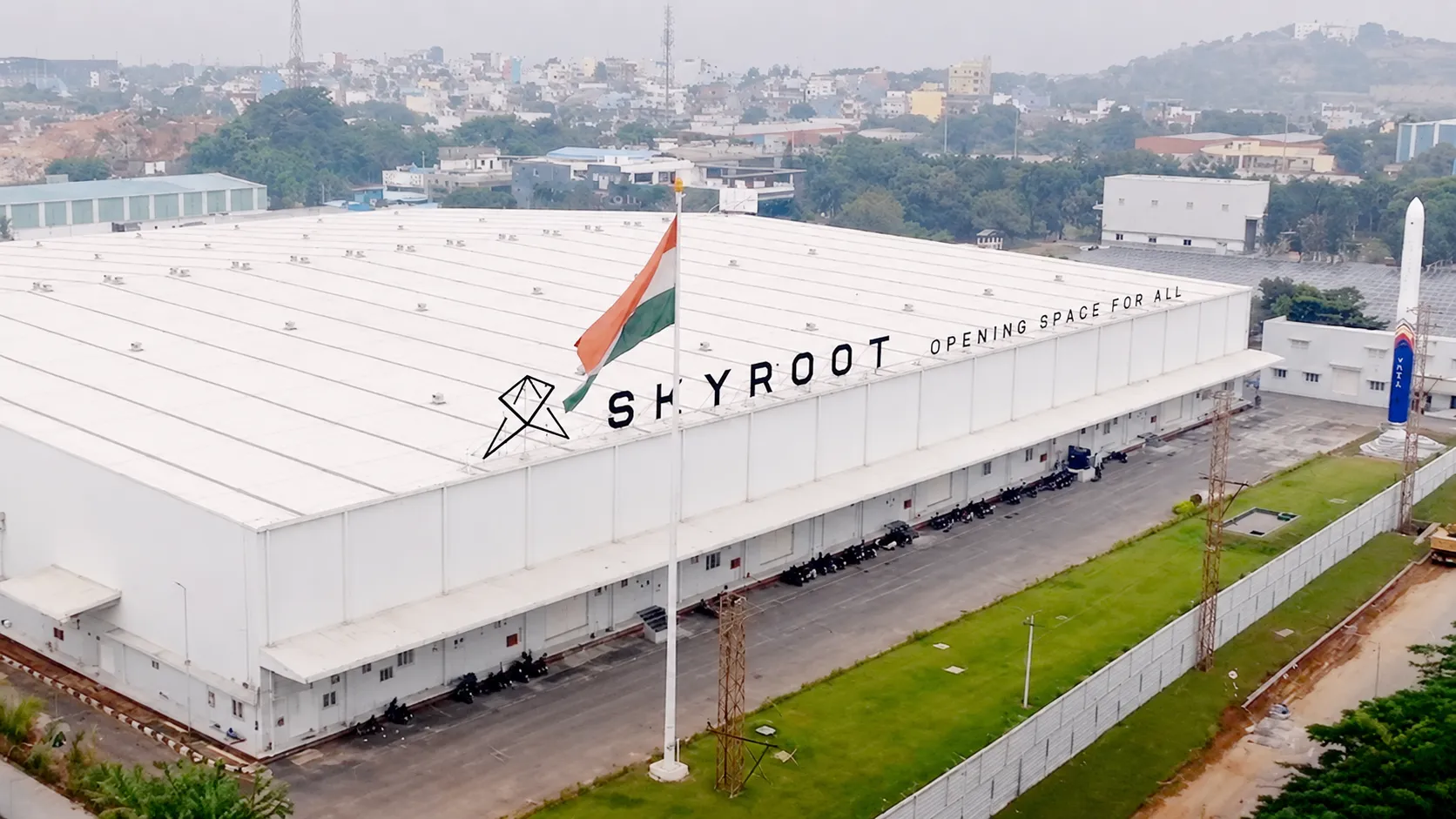
India’s private space sector marked a historic milestone as Hyderabad-based Skyroot Aerospace became the country’s first spacetech unicorn after raising nearly $60 million in fresh funding, taking its valuation to approximately $1.1 billion. The funding round was co-led by Singapore sovereign wealth fund GIC and Sherpalo Ventures, the investment firm founded by veteran Silicon Valley investor Ram Shriram. The round also saw participation from investors including BlackRock, founders of Greenko Group, Arkam Ventures, Playbook Partners, and the Shanghvi Family Office.
The development represents a significant moment not only for Skyroot but also for India’s broader private space ecosystem, which has evolved rapidly in recent years. For decades, India's space activities remained largely centered around the Indian Space Research Organisation (ISRO), with limited private participation. However, policy reforms introduced in 2020 opened the sector to private companies, creating opportunities for startups to participate in areas traditionally dominated by government institutions. Skyroot emerged as one of the early beneficiaries of these reforms and became the first private company to formally access and utilize ISRO facilities after the sector opened to private participation.
Founded in 2018 by former ISRO scientists Pawan Kumar Chandana and Naga Bharath Daka, Skyroot has steadily built its position as one of India’s leading deep-tech startups. The company gained national recognition in 2022 after successfully launching Vikram-S, becoming the first private Indian company to launch a rocket into space. The achievement marked a breakthrough moment for India's private aerospace ambitions and established Skyroot as one of the country’s most closely watched spacetech ventures.
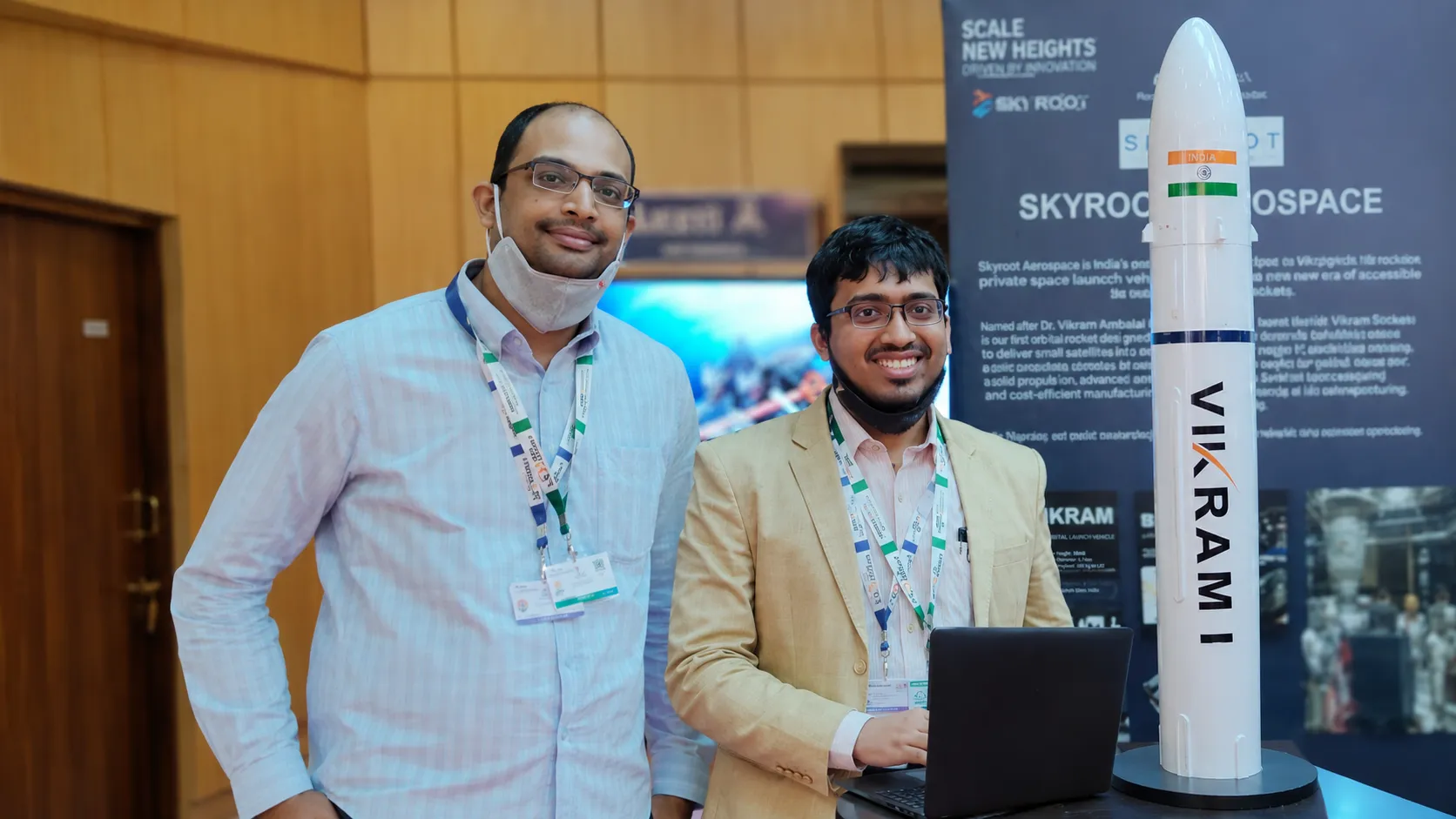
The latest fundraise arrives at a crucial stage in the company’s growth journey as it prepares for the maiden launch of Vikram-1, expected to become India’s first privately developed orbital rocket. Designed as a launch vehicle for small satellites, Vikram-1 aims to address growing global demand for dedicated satellite launch services as governments and businesses increasingly invest in communication systems, earth observation infrastructure, and satellite-based technologies.
Commenting on the development, Pawan Kumar Chandana, Co-founder and Chief Executive Officer of Skyroot Aerospace, said the investment reflects increasing confidence in the company’s long-term vision and technological capabilities. The company stated that the newly raised capital will be deployed toward increasing launch frequency, expanding manufacturing infrastructure, and accelerating development across its future launch systems.
The round also carries strategic importance because of the participation of Ram Shriram, one of Silicon Valley’s most influential early technology investors and among Google’s earliest backers. Sherpalo Ventures co-led the investment and Shriram is expected to join Skyroot’s board. His involvement adds not only capital but also long-term strategic experience as Skyroot enters its next phase of expansion.
Industry observers view Skyroot’s unicorn milestone as a reflection of changing investor sentiment toward India's spacetech sector. Historically, private space companies were often viewed as long-duration and capital-intensive ventures requiring extended investment horizons. However, increasing global demand, stronger policy support, and successful demonstrations by emerging private players have gradually altered those perceptions.
The funding also reflects a broader shift across India’s startup ecosystem, where deep-tech sectors once considered difficult to scale are increasingly attracting institutional capital and global investor attention. Skyroot’s rise suggests that India's startup ambitions are expanding beyond consumer technology and software into high-engineering sectors with long-term strategic significance.
For India’s spacetech ecosystem, this milestone extends beyond a funding announcement. It signals a growing level of global confidence in India’s private aerospace capabilities and reinforces expectations that startups will play an increasingly important role in shaping the future of the country’s space economy.