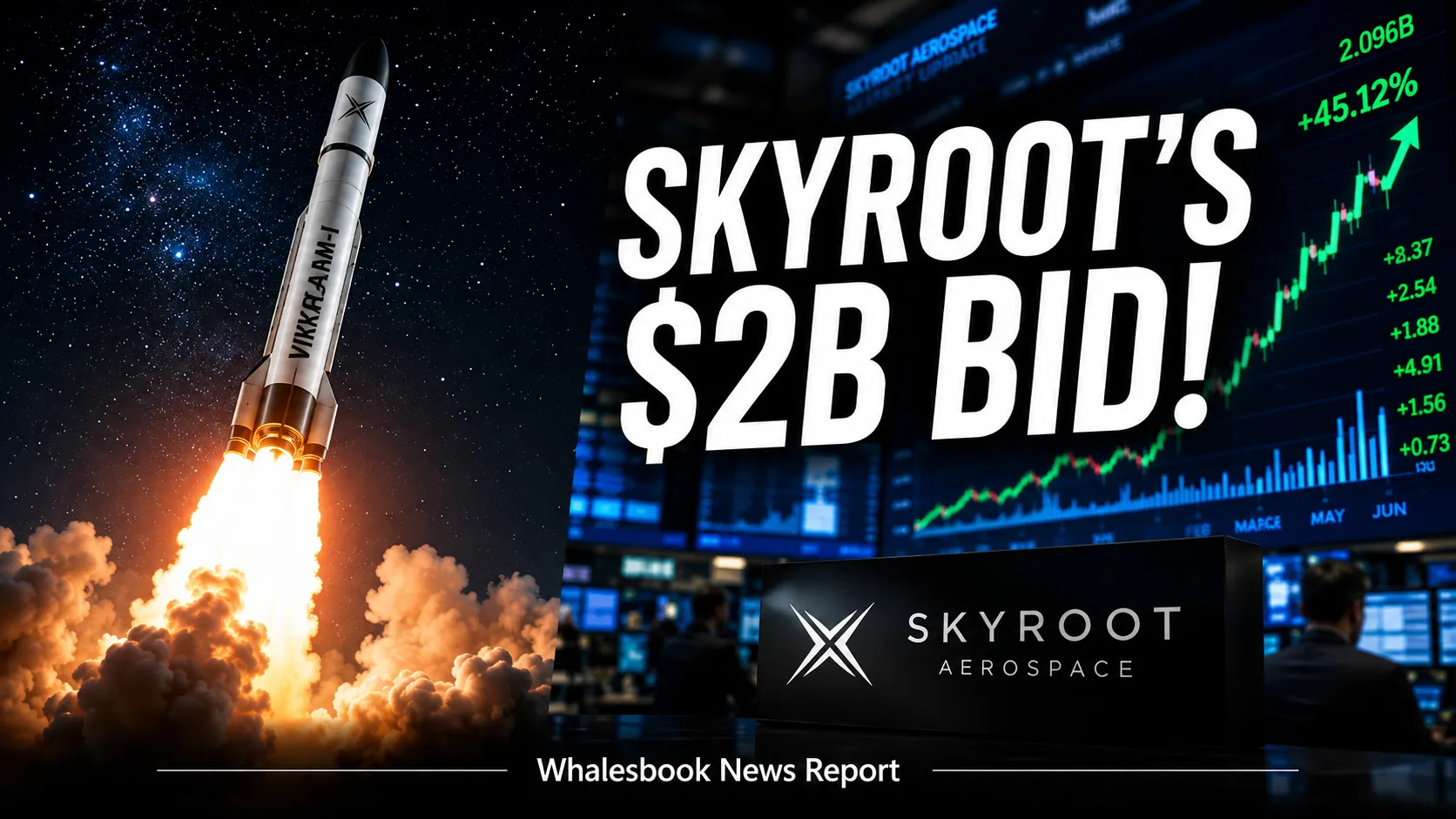
HYDERABAD — Skyroot Aerospace, India's first space-tech unicorn, has asked interested investors to submit competing bids to invest in the company at a valuation of $2 Bn, up roughly 80% from the $1.1 Bn valuation it reached during its previous fundraise in May 2026, according to a Moneycontrol report. The company's ask amounts to a likely total fundraise of around $200 Mn, though the exact structure and size may shift over the coming weeks as the process unfolds.
Unlike a conventional financing round where founders or investment bankers pitch the company to prospective investors, Skyroot's process this time inverts the dynamic: the company is asking interested investors to submit bids, after which it will evaluate offers and decide which investors to partner with. Kotak is reportedly running the fundraise process, with the company aiming to close the round within the next two months.
The "Vikram Effect": Investor Interest Surges After Orbital Milestone
The renewed and intensified investor interest stands in sharp contrast to Skyroot's previous funding round, where most capital came from existing investors and the process took considerably longer to close, reflecting a period when few investors were willing to back a spacetech startup at scale. That shift follows the strong positive momentum generated by Skyroot's Vikram rocket program, including its historic maiden orbital launch, which has visibly reshaped investor sentiment toward India's private space sector over the past several months.
Who's in the Room
Among Indian investors, 360 One Asset is evaluating an investment in Skyroot, while existing backers GIC and Temasek — both Singapore-based sovereign and state investors that have backed Skyroot since earlier rounds — are also considering participating in the new round. The company has expressed a specific interest in bringing more domestic investors onto its cap table this time, a notable shift for a company whose funding base has historically leaned heavily on global institutional capital, including GIC (which led Skyroot's Series B and holds a board seat via Managing Director Mayank Rawat), Temasek, BlackRock (via debt financing) and early venture backer Sherpalo Ventures, the fund of Google founding board member Ram Shriram.
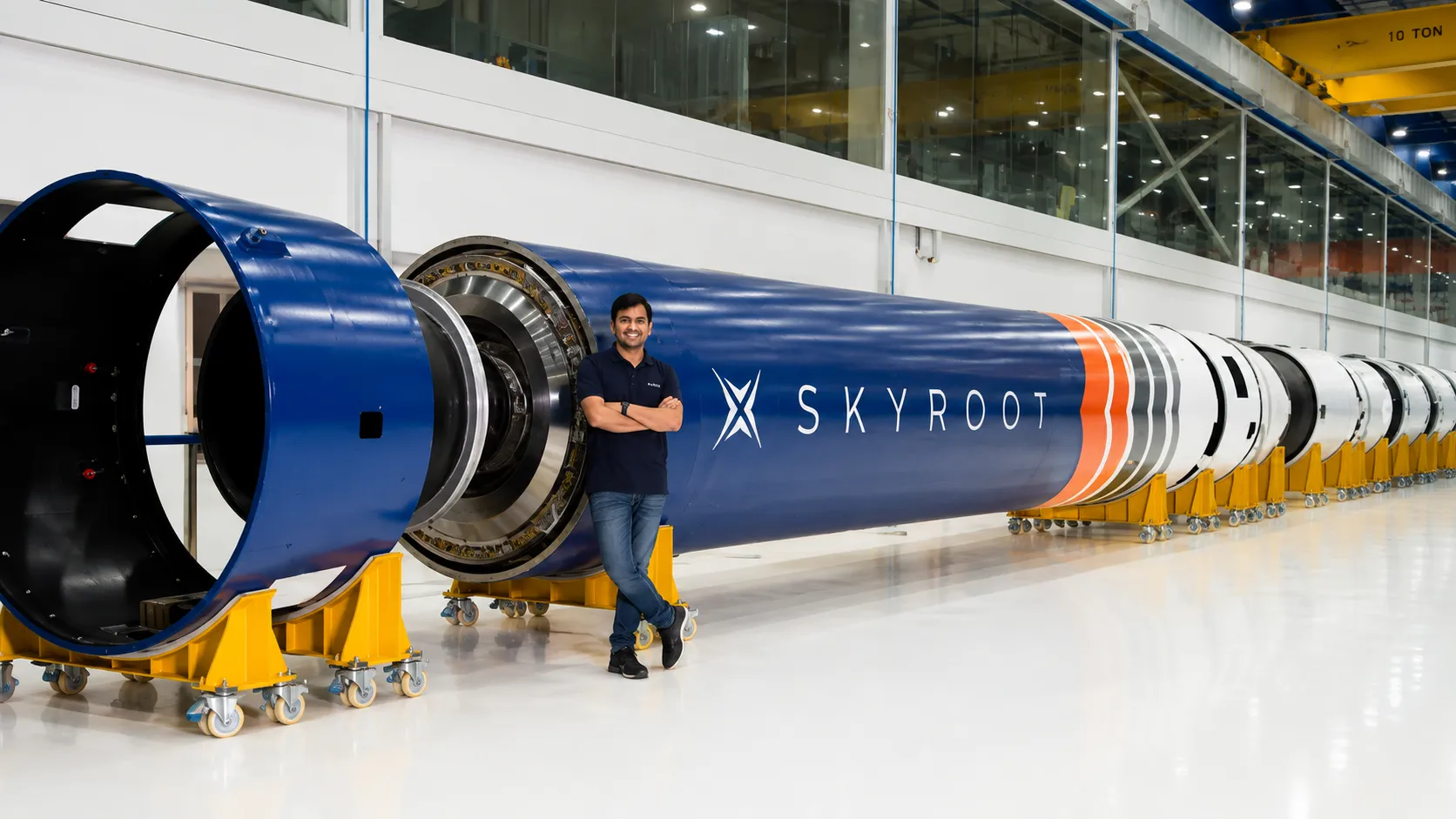
Founded in 2018 by former ISRO scientists Pawan Kumar Chandana and Naga Bharath Daka, Skyroot has raised a total of roughly $106 Mn to date across six funding rounds prior to this process, according to CB Insights data, including a $10.75 Mn debt round from BlackRock in March 2026. The company's flagship Vikram-1 orbital launch vehicle is designed to carry payloads of up to 480 kg to low Earth orbit, building on the earlier success of Vikram-S, which in November 2022 became the first privately built Indian rocket to reach space.
Part of a Broader Institutional Bet on India's Space Sector
Skyroot's fundraise lands within a broader institutionalisation of capital flowing into India's space-tech sector: seasoned venture funds have collectively invested about $600 Mn so far, with roughly 70 companies having raised institutional capital. The ₹1,500 crore Antariksh Venture Capital Fund, managed by SIDBI Venture Capital, represents India's first dedicated institutional platform for space-tech investment, while corporate groups including Infosys and Tata have shown growing interest in the sector, including Infosys' innovation fund's investment in earth-observation startup Galaxeye.
For Skyroot specifically, this would be its second fundraise in less than six months, an unusually rapid cadence that reflects both the company's post-launch momentum and its own ambitions: co-founder Pawan Kumar Chandana has publicly discussed positioning India's space sector to host some of the world's cheapest data centres, framing Skyroot's long-term ambitions well beyond satellite launch services alone.
Why It Matters
An 80% valuation step-up within roughly six months, achieved through a competitive-bid rather than traditional pitch process, is a strong signal of how quickly investor appetite for Indian deep-tech and space-tech has shifted following Skyroot's operational milestones. For India's broader space-tech ecosystem — still a young sector by global standards — Skyroot's fundraise serves as a bellwether for whether high-value, capital-intensive hardware startups can access growth-stage capital at the pace historically reserved for software and consumer internet companies.
• Skyroot Aerospace has invited investor bids for a fundraise targeting a $2 Bn valuation, up ~80% from May's $1.1 Bn.
• The likely raise size is around $200 Mn; Kotak is reportedly running the process.
• GIC, Temasek and 360 One Asset are among investors evaluating participation.
• Skyroot has raised roughly $106 Mn to date across six prior rounds, per CB Insights.
• The company aims to close the round within two months, its second raise in under six months.


