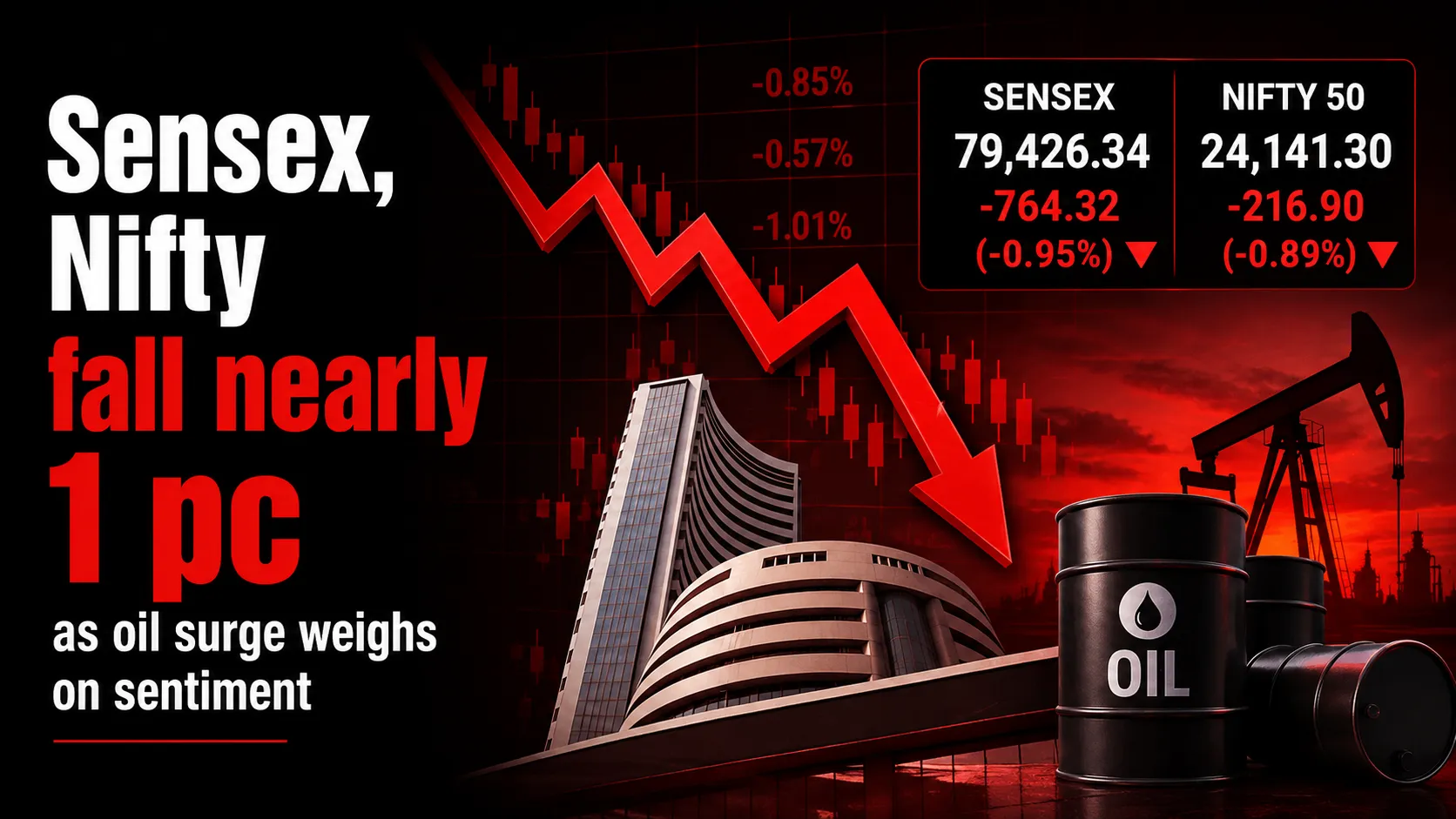
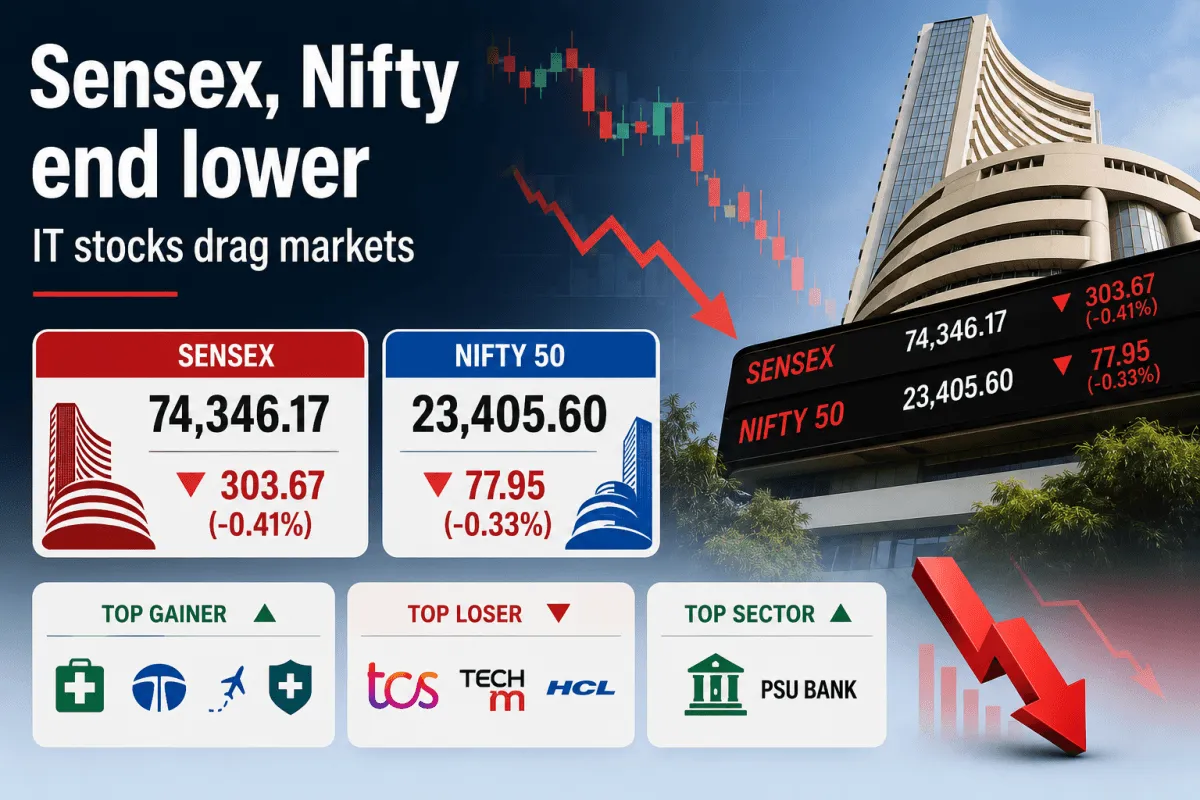
Indian equity markets closed a turbulent session in the red on July 21, 2026, with the BSE Sensex slipping to 77,470 points, down roughly 0.31 per cent, while the NSE Nifty 50 eased to around 24,239, a decline of nearly 0.4 per cent. The retreat, modest in absolute terms but significant in what it signalled, extended a run of cautious sessions that has gripped Dalal Street through much of July, as investors weigh a combination of rising global crude oil prices, a softening rupee and persistent weakness in the banking sector, the single largest weight in both benchmark indices.
For a market that had spent the first half of the month searching for direction amid a packed earnings calendar, the latest bout of selling served as a reminder that domestic fundamentals alone are no longer driving the narrative. Instead, a fast-moving geopolitical situation in West Asia, and its direct transmission into oil markets, has re-emerged as the dominant force shaping sentiment on India's exchanges — a dynamic familiar to veteran market watchers who have seen this movie before, most recently during the energy-driven volatility of the past two years.
Banks Lead The Retreat
The session's losses were not evenly spread. Banking stocks, which carry outsized weight in both the Sensex and the Nifty, bore the brunt of the selling. HDFC Bank, the country's largest private lender by market capitalisation, slipped around 1.1 per cent even as the stock digested a broadly steady set of June-quarter earnings released earlier in the week. The pressure on financials reflected a mix of factors: rising credit costs across the sector, continued capital outflows linked to global risk-off sentiment, and a general repricing of interest-rate expectations following hawkish commentary out of the US Federal Reserve system.
Elsewhere on the sell side, smaller and mid-sized names bore even sharper cuts. MTAR Technologies fell close to 5 per cent, Rallis India shed about 2.7 per cent, and jewellery major Kalyan Jewellers slid roughly 2 per cent, a stock particularly sensitive to gold-price and consumer-discretionary sentiment during periods of currency stress. The breadth of the decline — spanning defence-adjacent manufacturing, agrochemicals and consumer retail — pointed to a market where risk was being trimmed broadly rather than concentrated in a single theme.
Not Every Stock Fell
Even as the headline indices closed lower, the session produced a familiar split-screen effect that has become common in this earnings-heavy stretch of July: broad-based caution at the index level, offset by sharp, stock-specific rallies driven by company news. Karur Vysya Bank surged about 7.4 per cent, Diamond Power Infrastructure gained 7.3 per cent, Bhansali Engineering Polymers rose 6.9 per cent, Action Construction Equipment climbed 6.8 per cent, and Jaiprakash Power Ventures advanced 6.1 per cent. Each of these moves was rooted in company-specific catalysts — earnings beats, order wins or sectoral tailwinds — rather than a broader market rally, underlining how selective institutional and retail flows have become in the current environment.
Market strategists have repeatedly flagged this pattern through the July earnings season: investors are increasingly unwilling to chase the index blindly and are instead rotating aggressively into names that deliver clear, quantifiable good news, while punishing anything that even modestly disappoints. That dynamic has made this earnings season one of the more binary in recent memory, with stock reactions on results days often running into double digits in either direction.
The Oil And Currency Overhang
The macro backdrop driving Monday's caution is impossible to separate from developments half a world away. Brent crude futures have surged past the $90-a-barrel mark for the first time in weeks, a jump of nearly 16 per cent over the preceding week alone, as an escalating military confrontation between the United States and Iran raises fears of supply disruption through the Strait of Hormuz, the chokepoint through which a substantial share of the world's seaborne oil trade passes.
For India, which imports close to 90 per cent of its crude oil requirements, this is not an abstract geopolitical story — it is a direct line to the current account deficit, the fiscal math around fuel subsidies, and the value of the rupee. The domestic currency has been trading in a narrow but weak band against the dollar, appreciating only marginally on some sessions even as it broadly tracks other Asian currencies lower. Higher oil prices mean a larger import bill in dollar terms, which in turn pressures the currency, which in turn raises the cost of everything India imports — a self-reinforcing loop that traders refer to, only half-jokingly, as India's oil-rupee doom cycle.
Adding to the complexity, expectations around US monetary policy have shifted in a way that compounds the pressure. A widely tracked probability gauge for a Federal Reserve rate hike in September has climbed to roughly 52 per cent, up from about 47 per cent just days earlier, after a senior Federal Reserve regional bank president suggested that borrowing costs may need to stay higher for longer to tame inflation reignited by the oil-price spike. A higher-for-longer rate regime in the US typically strengthens the dollar and pulls capital away from emerging markets such as India, adding yet another layer of pressure on both equities and the currency.
Institutional Flows Tell A Mixed Story
Foreign institutional investors and domestic institutional investors found themselves on opposite sides of the trade during the latest session. FIIs turned net buyers, pumping in a net figure north of ₹1,500 crore, even as domestic institutions — largely mutual funds and insurance money — turned net sellers to the tune of roughly ₹620 crore. This divergence is notable: in past periods of oil-driven stress, it has typically been foreign investors pulling money out of Indian markets while domestic flows provided a cushion. The reversal this time suggests foreign investors may be viewing the current dip as a buying opportunity in select pockets, even as domestic funds book some profits after a strong run in earlier months.
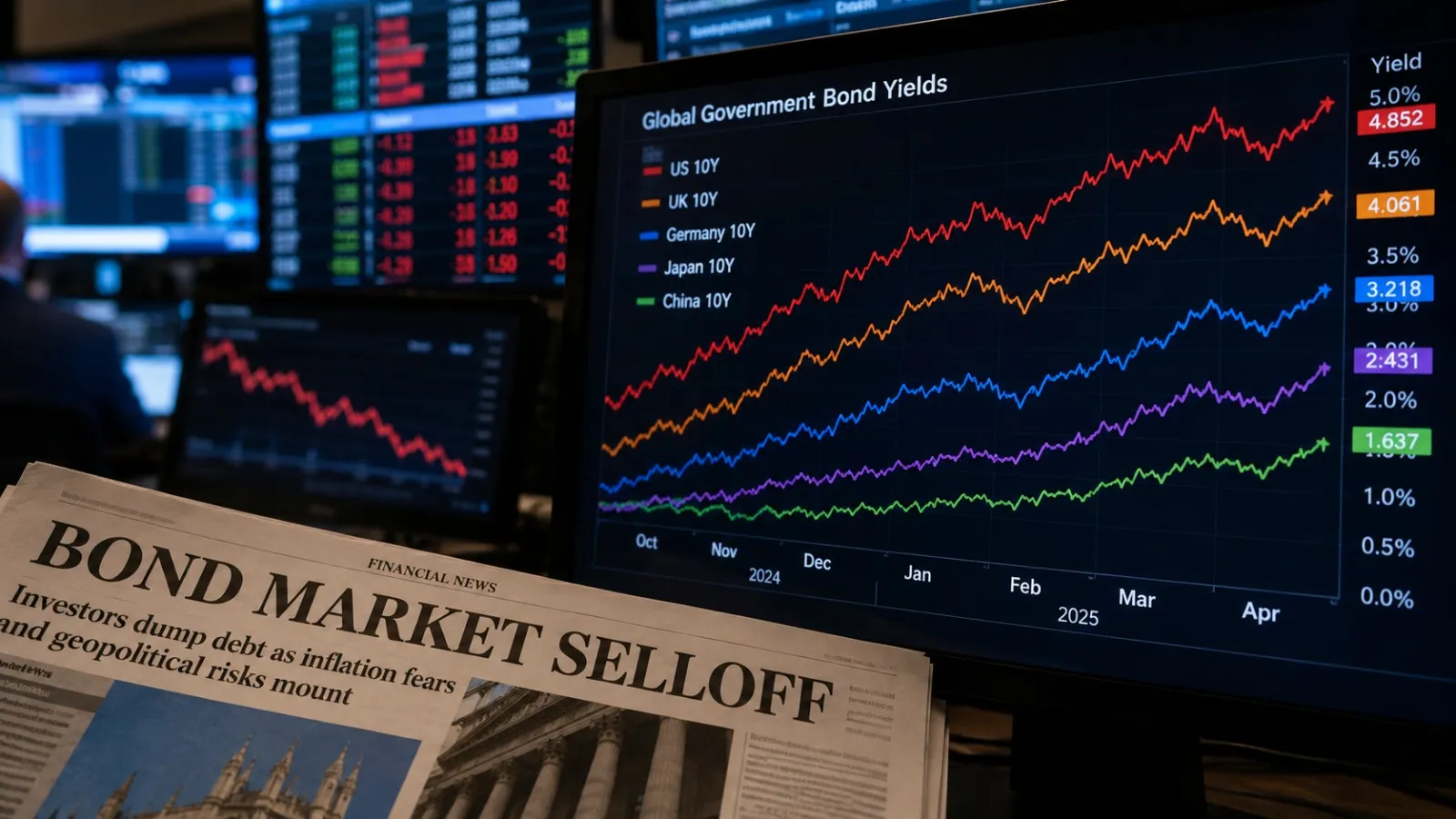
Bond markets, too, are signalling a wait-and-watch posture. Yields on the benchmark 10-year government security are expected to trade in a relatively wide band through the coming sessions, with fixed-income strategists pointing to the twin triggers of crude-driven inflation risk and the ongoing prospect of India's inclusion in global bond indices as factors that could swing sentiment sharply in either direction over the next few weeks.
What The Charts Are Saying Ahead Of July 22
Technically, the Sensex is seen holding within a broader sideways range, with support pegged in the 77,100–77,200 zone and resistance seen in the 77,800–77,900 band. A decisive break above resistance could revive bullish momentum, while a slip below support would open the door to a deeper correction, according to market technicians tracking the index's recent price action. The Nifty's near-term structure mirrors this consolidative tone, with traders broadly expecting stock-specific action to dominate until a clearer directional trigger — likely tied either to a de-escalation in the Middle East or a fresh round of major earnings — emerges.
Early indicators for the next session are not encouraging. GIFT Nifty futures, the most closely watched overnight proxy for the Nifty 50, were seen trading meaningfully lower — down more than 1 per cent from the previous Nifty close in early trade — pointing to a distinctly cautious, if not outright weak, opening for Indian markets on July 22, 2026. Traders will be watching closely whether this translates into a gap-down open or whether buying interest emerges at lower levels, as it has on several occasions this month.
A Familiar Playbook, Replayed Once Again
None of this is entirely new territory for Indian markets. Over the past several years, Dalal Street has repeatedly found itself navigating episodes where a geopolitical flashpoint thousands of kilometres away in the Gulf translated, almost within hours, into visible pressure on the rupee, bond yields and equity indices back home. What distinguishes the current episode, according to several market participants, is the compressed timeline over which the shock has unfolded — a roughly 16 per cent jump in Brent crude inside a single week is a sharper move than markets typically see even during periods of elevated Gulf tension, and the speed of the move has left many institutional desks scrambling to reprice risk models that had, until recently, assumed a more gradual escalation path.
That compressed timeline matters because it reduces the room for orderly hedging. Treasurers at import-heavy companies, foreign exchange desks at banks, and portfolio managers at mutual funds all typically prefer gradual, telegraphed moves that allow positions to be adjusted incrementally. A sharp, week-long spike instead forces reactive rather than proactive positioning, which itself can amplify volatility in both the currency and equity markets — a self-reinforcing dynamic that traders say has been visible in the unusually wide intraday swings recorded across several sessions this month.
Sector Watch: Who Gets Hurt, Who Gets Help
Beyond the immediate winners and losers list from Monday's session, sector strategists are beginning to map out a more considered view of how a prolonged period of elevated crude prices would filter through corporate India's earnings over the next two to three quarters. Paints companies, which rely heavily on crude-linked inputs, and tyre manufacturers, similarly exposed to rubber and crude-derived raw materials, are viewed as among the more direct casualties of a sustained oil rally, since both sectors have historically struggled to pass on input cost increases to price-sensitive end consumers without a lag of at least one or two quarters.
Aviation is viewed as similarly exposed, given that jet fuel typically accounts for a substantial share of airlines' total operating costs, leaving carriers with comparatively little room to absorb a sharp fuel-price spike without either raising fares — a move that risks denting already fragile post-pandemic demand recovery in India's price-sensitive domestic travel market — or accepting materially thinner operating margins in the interim. Oil-marketing companies, which sit between crude producers and end consumers, face a more nuanced dynamic: while higher crude prices increase their raw material costs, regulated fuel pricing mechanisms in India mean their ability to pass through costs depends heavily on government policy decisions around retail fuel pricing, adding a layer of political and regulatory uncertainty on top of the pure commodity risk.
On the other side of the ledger, upstream oil and gas exploration companies with meaningful domestic production stand to benefit from higher realisations on every barrel produced, since their cost base does not rise in step with global crude benchmarks the way a pure importer's does. Certain chemical and speciality manufacturing businesses with strong pricing power have also historically demonstrated a greater ability to pass through crude-linked cost increases relatively quickly, insulating their margins more effectively than peers in more commoditised segments of the market.

The Bigger Picture For Investors
For retail investors watching their portfolios swing on oil headlines out of the Middle East, the message from market veterans has been consistent through this period of volatility: distinguish between macro noise and company-specific fundamentals. Sectors directly exposed to crude — aviation, paints, tyres, and oil-marketing companies — are likely to remain under pressure as long as Brent stays elevated, while upstream energy producers and select defence and infrastructure names with strong order books may continue to see relative outperformance.
Financial advisors, meanwhile, have been urging retail investors not to overreact to single-session moves of the magnitude seen in this latest bout of selling, pointing out that India's benchmark indices have historically recovered from oil-driven shocks within a matter of months once the underlying geopolitical trigger stabilises, even if the interim volatility can feel unsettling to investors watching daily portfolio valuations. Systematic investment plan flows into Indian equity mutual funds, a closely watched proxy for retail investor conviction, have so far shown limited signs of disruption despite the recent bout of index-level weakness, suggesting that at least a segment of India's retail investor base continues to look through short-term geopolitical noise toward longer-term structural growth themes.
The coming days are likely to be shaped as much by developments in the Gulf as by boardrooms in Mumbai. With the bulk of Q1 FY27 earnings season still unfolding and global crude markets remaining on edge, Indian equities appear headed into a stretch where headline risk, rather than steady fundamentals, will set the tone — a dynamic that is likely to keep both bulls and bears on their toes through the remainder of July. Market participants will be watching, in particular, whether the Reserve Bank of India signals any shift in its currency-market intervention posture, and whether upcoming inflation data begins to show visible pass-through from the recent crude spike, as the next major triggers likely to determine whether this current bout of caution deepens into a more sustained correction or proves, as several previous episodes have, to be a comparatively short-lived scare.